UPSC-CMS 2016

114 Questions — Page 4 of 12

Community Medicine

4 questions
Q31

The two important values necessary for describing the variation in a series of observations are:

Q32

The time period from entry of an infective agent into a host until the host develops the capacity for maximal infectivity is called:

Q33

Consider the following statements: Symposium is a method of health education characterised by 1. a series of speeches on a selected topic 2. presentation of different aspects of a topic by 3 or 4 experts. 3. a discussion among the symposium members 4. the chairperson making a comprehensive summary at the end of the session Which of these statements are correct?

Q34

Consider the following diseases: 1. Rift valley fever 2. Yellow Fever 3. Chikungunya fever 4. West Nile fever Which of the above diseases are transmitted by Aedes mosquito?

Internal Medicine

2 questions
Q31

Consider the following statements: Poor prognostic indicators in advanced germ cell tumours show 1. primary sites in mediastinum 2. non-pulmonary metastasis 3. lactate dehydrogenase more than 10 times of normal value Which of the statements given above are correct?

Q32

Which one of the following is the investigation of choice in a patient with haematemesis?

Pharmacology

1 questions
Q31

Match List-I with List-II and select the correct answer using the code given below the Lists:
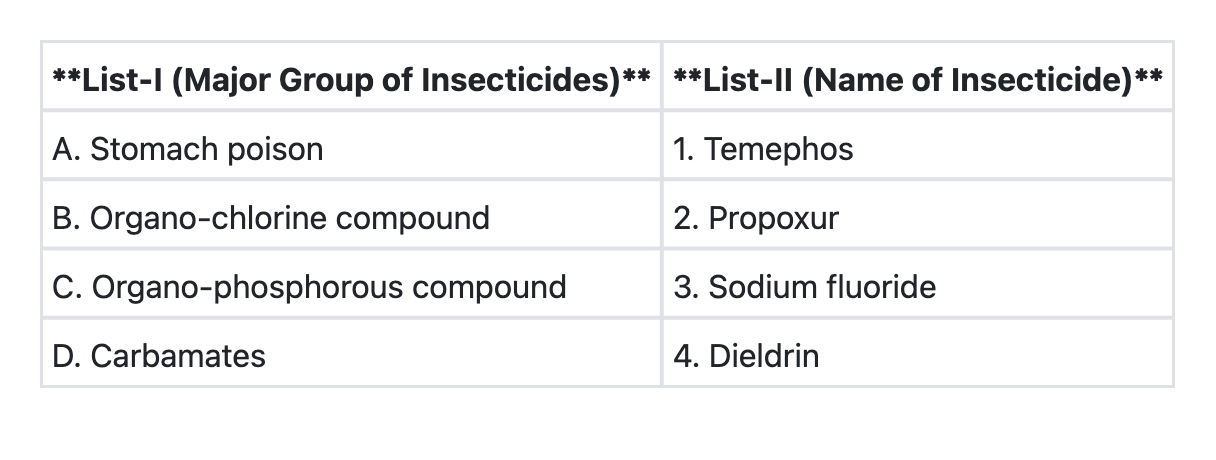
Image for question 31

Physiology

1 questions
Q31

Regarding haemorrhagic shock, which one of the following statements is correct?

Surgery

2 questions
Q31

Which one of the following structures is not removed during a classical radical neck dissection?

Q32

Mousseau-Barbin Tube (M.B.Tube) is used for: