A child presents to the OPD with the finding shown in the image. When should the first surgical repair be performed?

In the intraoperative image of congenital hernia repair, the structure marked by the red arrow is identified as which of the following?

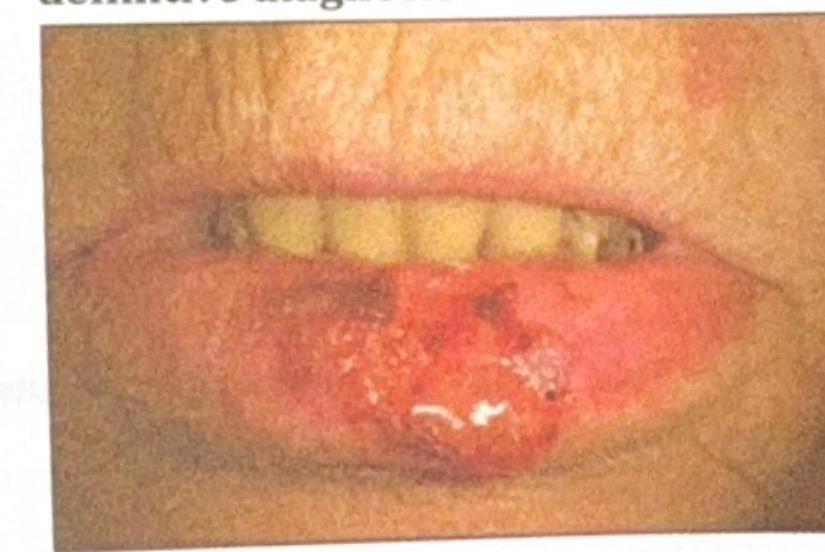
An elderly patient presents with a non-healing ulcerative lesion on the lower lip, as shown in the image. The lesion has been gradually enlarging over the past few months. Suspecting squamous cell carcinoma (SCC), what is the most appropriate method to obtain a biopsy for definitive diagnosis?
How does a skin graft receive nutrition on day 3 after transplantation?
A patient presents with constant chest pain, and the radiological finding is as shown in the image. What is the most appropriate management?
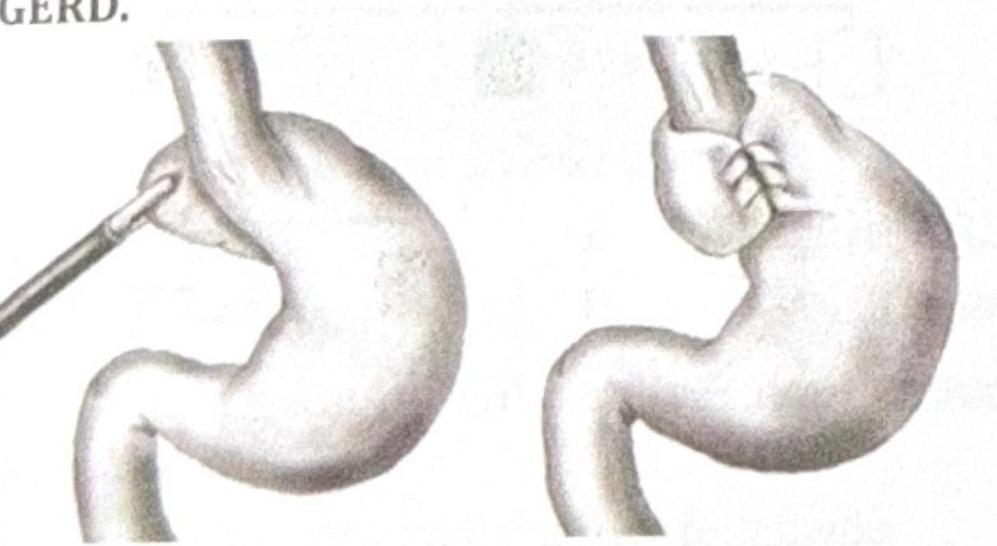
Identify the procedure shown in the image, which is performed in a patient with recurrent GERD.
A patient presents with a penile lesion staged as T3, with clinically palpable lymph nodes. What is the most appropriate management?
Tubectomy is typically performed on which part of the fallopian tube and why?
A patient presents with fecal discharge from the umbilicus. What is the most likely diagnosis?
What is the diagnosis based on the image shown?
NEET-PG 2024 - Surgery NEET-PG Practice Questions and MCQs
Question 11: A child presents to the OPD with the finding shown in the image. When should the first surgical repair be performed?
- A. 3 months (Correct Answer)
- B. 6 months
- C. 12 months
- D. 18 months
Explanation: ***3 months*** - Surgical repair of **cleft lip** is typically performed around **3 months of age** based on current practice guidelines. - The traditional **"Rule of 10s"** (10 weeks old, 10 pounds weight, 10 g/dL hemoglobin) has evolved to **3-6 months** as the optimal timing window, with **3 months** being most common. - Early repair helps with **feeding difficulties**, improves cosmesis, and facilitates normal **parent-infant bonding** while optimizing surgical outcomes. *6 months* - While 6 months is within the acceptable range for cleft lip repair, **3 months is preferred** as the optimal timing in most centers. - Delaying repair to 6 months may impact feeding mechanics and parental bonding, though outcomes remain good. - This timing is **earlier** than the recommended window for **cleft palate repair** (9-18 months). *12 months* - **Cleft palate repair** is typically performed around **9-18 months of age**, with 12 months being a common target to optimize speech development. - Performing **cleft lip repair** at 12 months is significantly **delayed** and would miss the benefits of earlier intervention for feeding, cosmesis, and bonding. *18 months* - 18 months is at the **upper limit** for **cleft palate repair** to minimize speech development issues. - This age is **too late** for the first surgical repair of a cleft lip, which should be performed in early infancy (3-6 months).
Question 12: In the intraoperative image of congenital hernia repair, the structure marked by the red arrow is identified as which of the following?
- A. Femoral vein
- B. Obturator vein
- C. Testicular vein (Correct Answer)
- D. Inferior epigastric vein
Explanation: ***Testicular vein*** - The **testicular vein** is clearly visible within the **spermatic cord** structures, which are typically identified and often dissected during congenital hernia repair. - Its position coursing with the testicular artery and vas deferens is consistent with its anatomical location within the inguinal canal. *Femoral vein* - The **femoral vein** lies more inferiorly and medially within the femoral canal, distinct from the inguinal canal contents visualized in this image. - Identification of the femoral vein would be in the context of a femoral hernia repair, not typically a congenital (indirect inguinal) hernia. *Obturator vein* - The **obturator vein** is located deep within the pelvis, accompanying the obturator nerve and artery through the obturator foramen. - It is not typically encountered or visible during a standard open or laparoscopic inguinal hernia repair. *Inferior epigastric vein* - The **inferior epigastric vein** runs superiorly and medially, forming the medial border of the **inguinal triangle (Hesselbach's triangle)**. - While it's an important landmark in hernia repair (differentiating direct vs. indirect hernias), its anatomical position and trajectory are distinct from the structure indicated by the arrow, which is part of the spermatic cord.
Question 13: An elderly patient presents with a non-healing ulcerative lesion on the lower lip, as shown in the image. The lesion has been gradually enlarging over the past few months. Suspecting squamous cell carcinoma (SCC), what is the most appropriate method to obtain a biopsy for definitive diagnosis?
- A. Incisional (Correct Answer)
- B. Excisional
- C. Deep tissue biopsy
- D. Superficial biopsy from the border with normal tissue
Explanation: ***Incisional*** - An **incisional biopsy** is the most appropriate method for obtaining a definitive diagnosis of suspected squamous cell carcinoma (SCC) of the lip. - This technique involves removing a **wedge-shaped portion of the lesion** that includes both the tumor tissue and a margin extending into normal tissue, with adequate depth to assess invasion. - Incisional biopsy provides sufficient tissue for **histopathological examination**, including assessment of tumor grade, depth of invasion, and other prognostic factors critical for staging and treatment planning. - For larger or suspicious lesions where complete excision might cause significant cosmetic deformity, incisional biopsy allows for **diagnosis confirmation before definitive surgical management**. *Superficial biopsy from the border with normal tissue* - A superficial or shave biopsy is **inadequate for SCC diagnosis** as it does not provide information about the depth of invasion, which is crucial for staging and prognosis. - Squamous cell carcinoma requires assessment of invasion into underlying dermis and deeper structures, which cannot be evaluated with superficial sampling. - Superficial biopsies may lead to **underdiagnosis** or incomplete staging, potentially compromising treatment planning. *Excisional* - While excisional biopsy (complete removal with margins) can be appropriate for **small, well-defined lesions** (<1 cm), it may not be the first choice for larger or gradually enlarging lesions. - Complete excision without prior histological confirmation might result in **inadequate margins** if malignancy is confirmed, requiring re-excision. - For lip lesions, unnecessary wide excision can cause **significant cosmetic and functional defects** if the lesion proves benign or requires specialized reconstruction. *Deep tissue biopsy* - This is not standard terminology in the context of lip lesions and lacks specificity regarding the sampling technique. - The term "deep tissue biopsy" is more commonly used for suspected soft tissue tumors or deep-seated lesions, not for mucocutaneous SCC.
Question 14: How does a skin graft receive nutrition on day 3 after transplantation?
- A. Imbibition
- B. Inosculation (Correct Answer)
- C. Neovascularization
- D. A & B
Explanation: ***Inosculation*** - **Inosculation** is the process where host capillaries directly connect with the graft's existing vessels (or newly formed ones) around day 2-3 post-transplantation. - This establishes blood flow and is the primary mechanism for **nutrient delivery** and waste removal by day 3. *Imbibition* - **Imbibition** is the initial phase (first 24-48 hours) where the graft passively absorbs nutrients from the recipient bed through diffusion. - While essential for initial survival, it is typically insufficient for sustained graft viability by day 3. *Neovascularization* - **Neovascularization** involves the formation of entirely new blood vessels into the graft, a process that typically begins after inosculation and continues for several days to weeks. - On day 3, while *initiation* of new vessel formation may be occurring, the main nutritional support is primarily from established connections through inosculation. *A & B* - While **imbibition** plays a role in the initial survival of the graft, by day 3, **inosculation** is the dominant and more effective mechanism for nutrient supply. - Therefore, selecting both A and B would be incorrect as imbibition's role diminishes significantly as inosculation progresses.
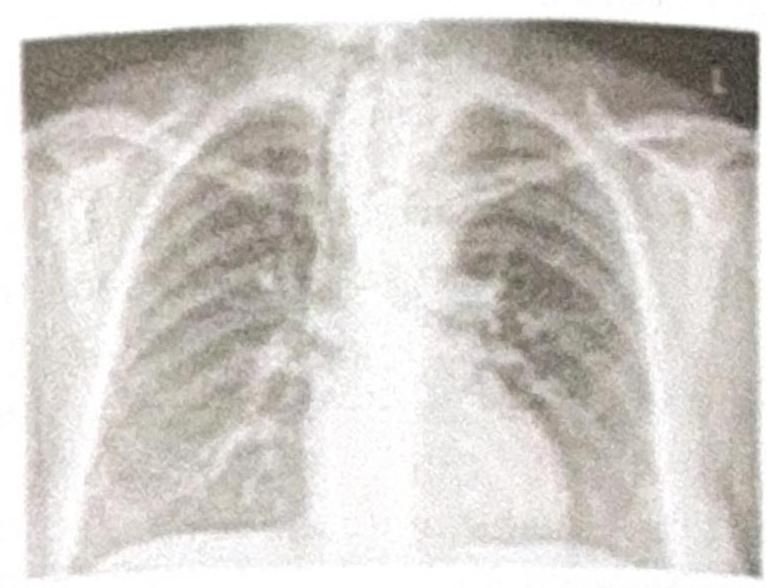
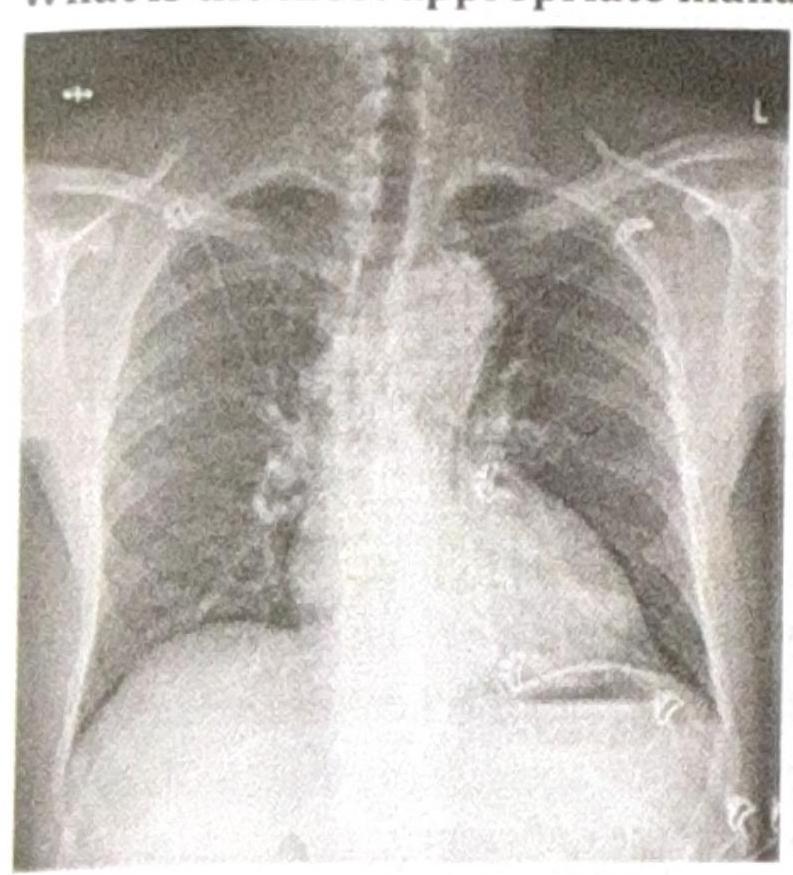
Question 15: A patient presents with constant chest pain, and the radiological finding is as shown in the image. What is the most appropriate management?
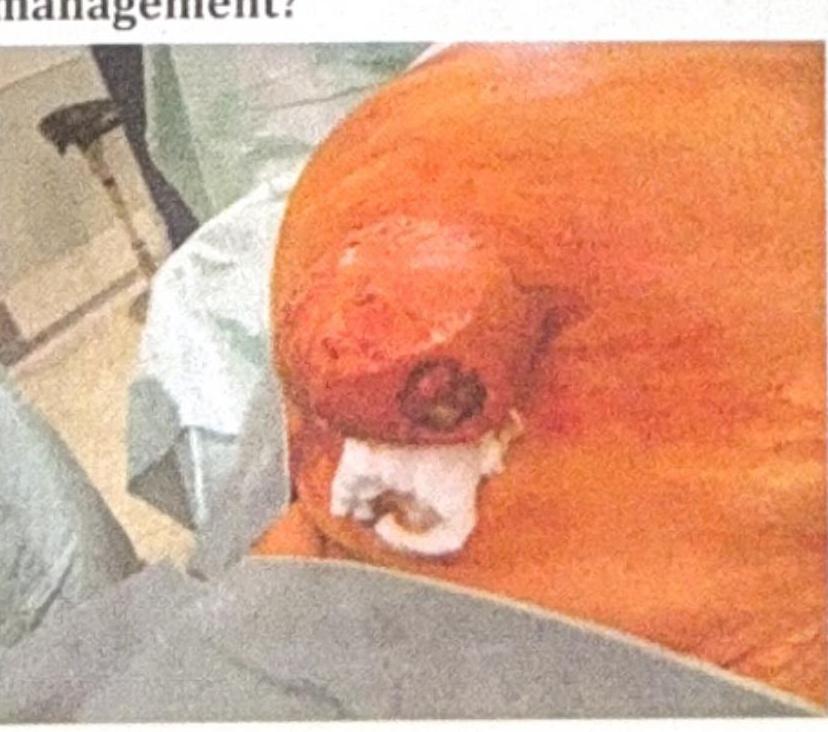
- A. Surgical management (Correct Answer)
- B. Vasodilator
- C. Beta blocker
- D. Beta blocker plus vasodilator
Explanation: ***Surgical management*** - The chest X-ray shows a **widened mediastinum** and abnormal aortic contour, highly suggestive of **aortic dissection involving the ascending aorta (Type A)**. - **Type A aortic dissection** (involving the ascending aorta) is a **surgical emergency** requiring immediate operative repair to prevent life-threatening complications such as cardiac tamponade, acute aortic regurgitation, or rupture. - The constant chest pain with these radiological findings indicates urgent surgical intervention is the definitive management. *Vasodilator* - Vasodilators **alone** should never be used in aortic dissection as they can increase aortic wall shear stress and propagate the dissection. - They must always be preceded by beta-blockade to prevent reflex tachycardia. - Vasodilators do not address the structural defect requiring surgical correction in Type A dissection. *Beta blocker* - Beta-blockers are essential for **initial medical stabilization** to reduce heart rate (target <60 bpm) and blood pressure, thereby decreasing aortic wall stress (dP/dt). - However, in **Type A dissection**, beta-blockers alone do not address the structural defect and are used as a bridge to emergency surgery, not as definitive treatment. - For Type B dissections (descending aorta), medical management with beta-blockers may be definitive in uncomplicated cases. *Beta blocker plus vasodilator* - This combination represents optimal **medical management** for blood pressure and heart rate control in aortic dissection. - In **Type B (descending) aortic dissections**, this is often the definitive treatment for uncomplicated cases. - However, in **Type A dissections** (as indicated by the widened mediastinum suggesting ascending aortic involvement), this serves only as initial stabilization before **mandatory surgical repair**, not as definitive therapy. - Surgery cannot be delayed in Type A dissection due to high mortality risk (1-2% per hour).
Question 16: Identify the procedure shown in the image, which is performed in a patient with recurrent GERD.
- A. Nissen fundoplication (Correct Answer)
- B. Partial gastrectomy
- C. Esophageal banding
- D. Toupet fundoplication
Explanation: ***Nissen fundoplication*** - The image clearly depicts the **fundus of the stomach** being wrapped completely around the lower esophagus and sutured in place, which is the hallmark of a **360-degree Nissen fundoplication**. - This procedure aims to strengthen the **lower esophageal sphincter (LES)** to prevent reflux in patients with recurrent GERD. *Partial gastrectomy* - This procedure involves the **surgical removal of a portion of the stomach** and is typically performed for conditions like gastric cancer or severe ulcers, not primarily for GERD. - The image shows the stomach intact and being wrapped, not resected. *Esophageal banding* - Esophageal banding is a procedure used to treat **esophageal varices** by placing elastic bands around dilated veins, not a surgical intervention for GERD that alters stomach anatomy. - The image shows a gastric maneuver, not banding of the esophagus. *Toupet fundoplication* - A Toupet fundoplication involves a **partial (270-degree) wrap** of the fundus around the esophagus, leaving a small portion unwrapped. - The image distinctly illustrates a **complete 360-degree wrap**, distinguishing it from a Toupet fundoplication.
Question 17: A patient presents with a penile lesion staged as T3, with clinically palpable lymph nodes. What is the most appropriate management?
- A. Penectomy
- B. Penectomy with superficial node dissection
- C. Penectomy with deep ilioinguinal node dissection (Correct Answer)
- D. Chemoradiotherapy
Explanation: ***Penectomy with deep ilioinguinal node dissection*** - A **T3 penile lesion** indicates invasion of the corpus cavernosum or corpus spongiosum, which is an aggressive stage requiring **radical local excision (penectomy)**. - **Clinically palpable lymph nodes** alongside a T3 tumor suggest nodal involvement (N1-N3), necessitating a **deep ilioinguinal lymph node dissection** to remove affected deeper lymph nodes that are not readily accessible by superficial dissection. *Penectomy* - While penectomy addresses the primary tumor, it does not manage the **clinically palpable lymph nodes**, which are crucial for staging and prognosis in advanced penile cancer. - This option would be insufficient given the documented **nodal involvement**, leading to likely recurrence and progression of the disease. *Penectomy with superficial node dissection* - This approach is inadequate for **palpable lymph nodes**, especially with a T3 lesion, because such nodes often indicate involvement of **deeper lymphatics (deep ilioinguinal)**. - Superficial dissection alone would likely leave residual disease, failing to properly stage and treat the extent of the cancer. *Chemoradiotherapy* - **Chemoradiotherapy** is typically reserved for patients who are not surgical candidates, or as a neoadjuvant/adjuvant therapy, not as primary treatment for a **T3 lesion with palpable nodes** where surgical intervention is the standard of care for optimal local and regional control. - While it may be used in certain settings, surgery (penectomy with lymph node dissection) offers the best chance for cure in this scenario.
Question 18: Tubectomy is typically performed on which part of the fallopian tube and why?
- A. Ampulla - uniform thickness of muscle
- B. Ampulla - widest
- C. Isthmus - uniform thickness of muscle
- D. Isthmus - narrowest (Correct Answer)
Explanation: ***Isthmus - narrowest*** - The **isthmus** is preferred for tubectomy because its **narrowest diameter** and thick muscular wall make it easier to ligate and minimize recanalization. - Its narrow lumen also reduces the chances of spontaneous rejoining and pregnancy, ensuring a more effective and permanent sterilization. *Ampulla - uniform thickness of muscle* - The **ampulla** is a wider, more distensible part of the fallopian tube, making it **less suitable for ligation** due to a higher risk of recanalization. - While tubular muscle thickness is a factor, the **ampulla's larger lumen** makes it less ideal for effective and permanent occlusion compared to the isthmus. *Ampulla - widest* - The **ampulla's wider diameter** increases the technical difficulty of creating a secure and permanent occlusion, as ligating a broad segment is less effective. - A wider lumen makes **spontaneous recanalization** more likely, compromising the contraceptive efficacy of the procedure. *Isthmus - uniform thickness of muscle* - While the isthmus does have a relatively **uniform and thick muscular wall**, it is the **narrowness of the lumen** that is the primary reason for its selection in tubectomy. - The consistency of its muscle is a contributing factor to its robustness, but the **small caliber** is key to preventing recanalization.
Question 19: A patient presents with fecal discharge from the umbilicus. What is the most likely diagnosis?
- A. Urachal fistula
- B. Patent vitelline duct (Correct Answer)
- C. Omphalocele
- D. Gastroschisis
Explanation: ***Patent vitelline duct*** - **Fecal discharge from the umbilicus** indicates a persistent communication between the **ileum** and the **umbilicus** through a patent vitelline (omphalomesenteric) duct. - This congenital anomaly represents a remnant of the **omphalomesenteric duct** that **completely failed to involute**, creating a **fistulous tract** allowing intestinal contents to exit through the umbilicus. - This is the **most complete form** of vitelline duct persistence (other forms include Meckel's diverticulum, fibrous band, or umbilical polyp). *Urachal fistula* - A urachal fistula occurs when the **urachus** remains patent, creating a connection between the **bladder** and the umbilicus. - While it can result in umbilical discharge, the discharge would be **urine**, not feces. *Omphalocele* - An omphalocele is a **congenital abdominal wall defect** where abdominal contents protrude into a sac at the base of the umbilicus. - It does not involve a fistulous communication with intestines causing fecal discharge, but rather a **herniation** of organs covered by a peritoneal membrane. *Gastroschisis* - Gastroschisis is a congenital anomaly characterized by the **protrusion of abdominal organs** directly into the amniotic cavity **without a covering sac**, usually to the **right of the umbilicus**. - Like omphalocele, it's a **herniation defect** presenting at birth and does not involve an abnormal fistulous connection causing fecal discharge from the umbilicus.
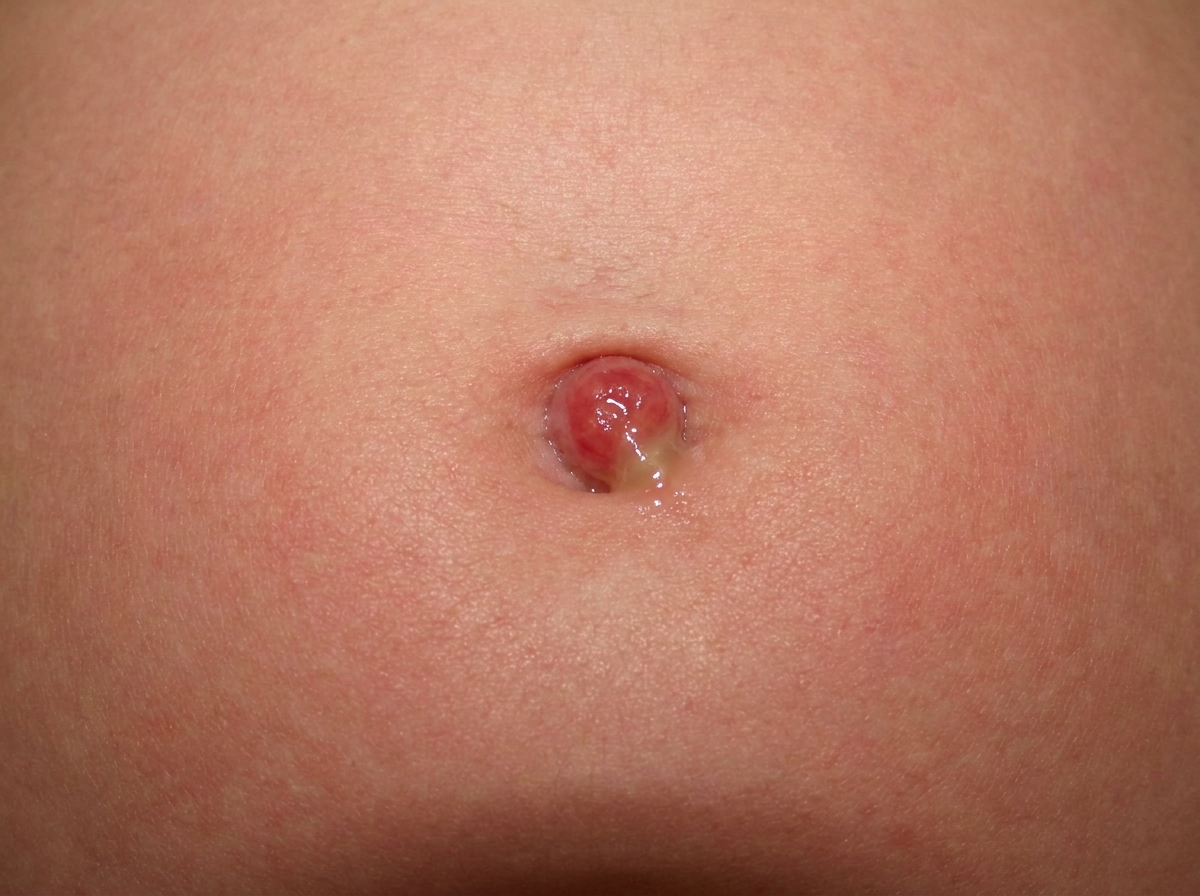
Question 20: What is the diagnosis based on the image shown?
- A. Ileal diverticulum
- B. Urachal cyst
- C. Umbilical fistula (Correct Answer)
- D. Omphalocele
Explanation: ***Umbilical fistula*** - The image shows a **patent vitelline duct (omphalomesenteric duct)**, which creates a direct connection between the umbilicus and the ileum, visible as an umbilical fistula. - This condition presents with **fecal discharge from the umbilicus** or **umbilical prolapse of intestinal mucosa**. *Ileal diverticulum* - An ileal diverticulum, such as a **Meckel's diverticulum**, is a blind pouch protruding from the ileum, usually not communicating with the umbilicus. - It would typically be noted as an **outpouching of the ileal wall**, without an external opening at the umbilicus unless complicated by rupture. *Urachal cyst* - A urachal cyst is a remnant of the **urachus**, which connects the bladder to the umbilicus during fetal development. - It would be located **between the umbilicus and the bladder** and contain urine or serous fluid, not intestinal contents. *Omphalocele* - An omphalocele is a **congenital abdominal wall defect** where abdominal organs protrude into the base of the umbilical cord. - The defect is **covered by a membrane**, and it involves herniation of abdominal contents, not a fistula with the intestine.