A 13-year-old boy presents with jaundice, fatigue, muscle stiffness, tremors, and behavioral changes. Examination reveals an enlarged liver and spleen. A Kayser-Fleischer ring was noted. What is the definitive diagnostic test?
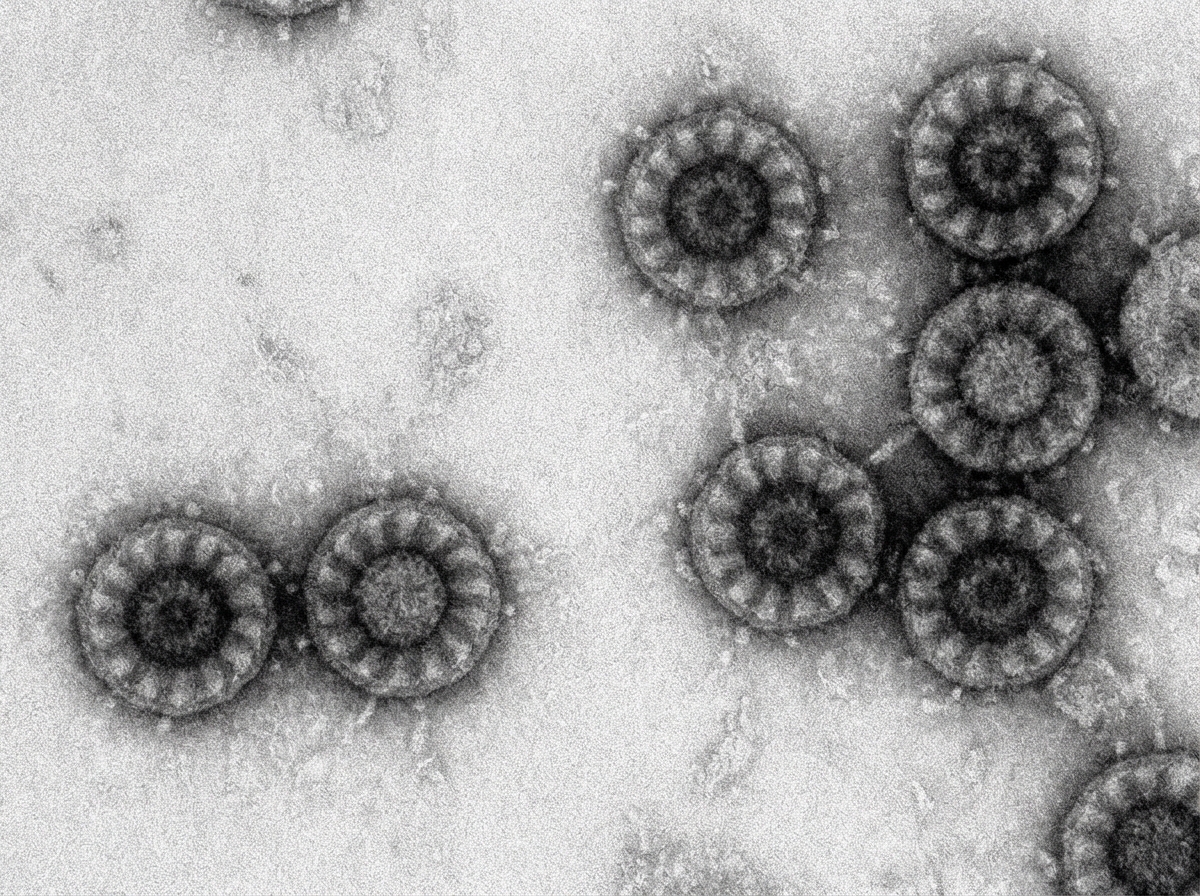
A 2 year old child came with watery diarrhea. Electron Microscopy (EM) Image is shown here. Choose the correct pathogen.
A 6-year-old child presents to the emergency department with sudden onset of palpitations, shortness of breath, and dizziness. The child has no significant past medical history. On examination, the heart rate is 220 beats per minute, blood pressure is $90 / 60 \mathrm{mmHg}$, and the child appears anxious but is otherwise stable. An ECG confirms the diagnosis of paroxysmal supraventricular tachycardia (PSVT). What is the initial recommended dose of adenosine for this child?
A child presents with recurrent infections. Mediastinal imaging reveals an absent thymus gland, and further investigations show low ADA (adenosine deaminase) levels. What is the most likely diagnosis?
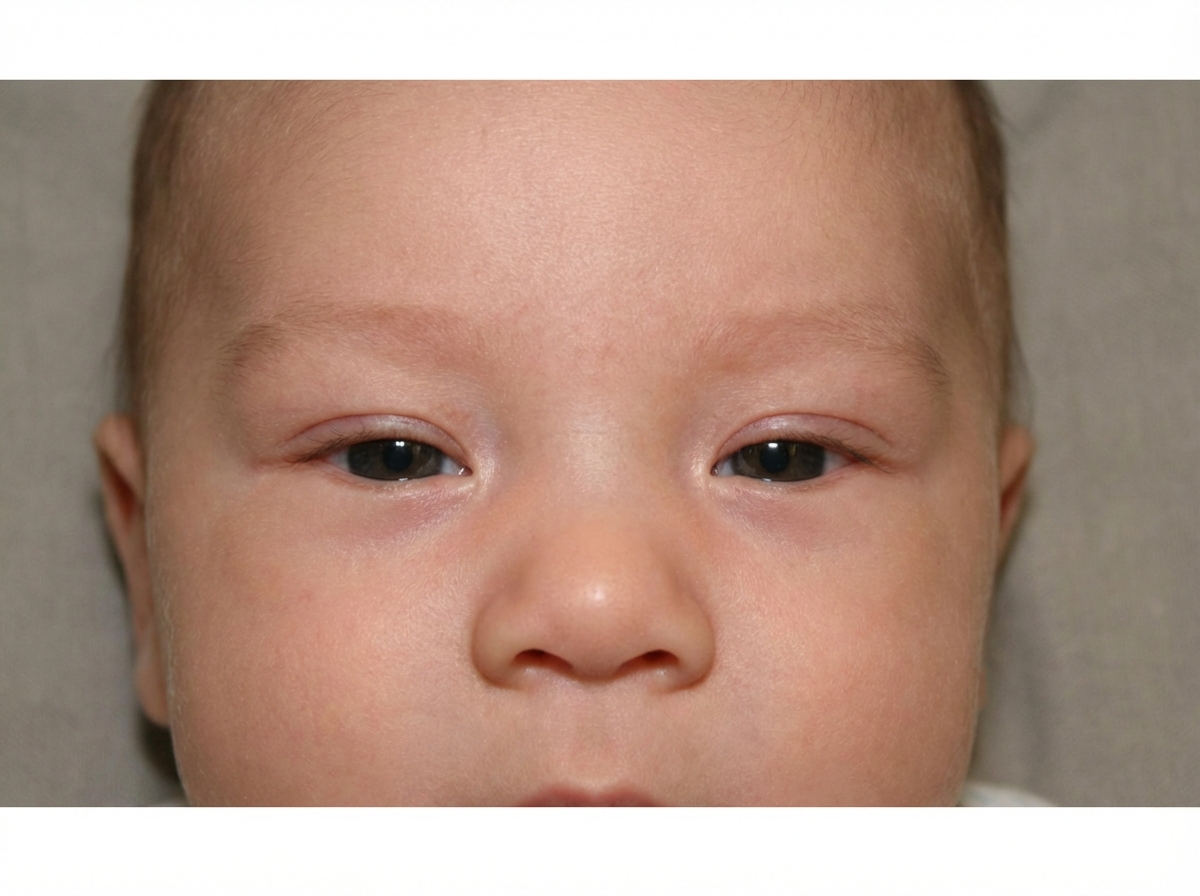
A 2 -month-old child presents with the following condition as shown in the image. What is the ideal management protocol?
A baby presents with hydrocephalus, intracranial calcifications, and chorioretinitis. What is the most probable diagnosis?
A mother delivers in a rural area under the guidance of a skilled care attendant. Which of the following statements is incorrect regarding the care provided by the skilled care attendant at birth?
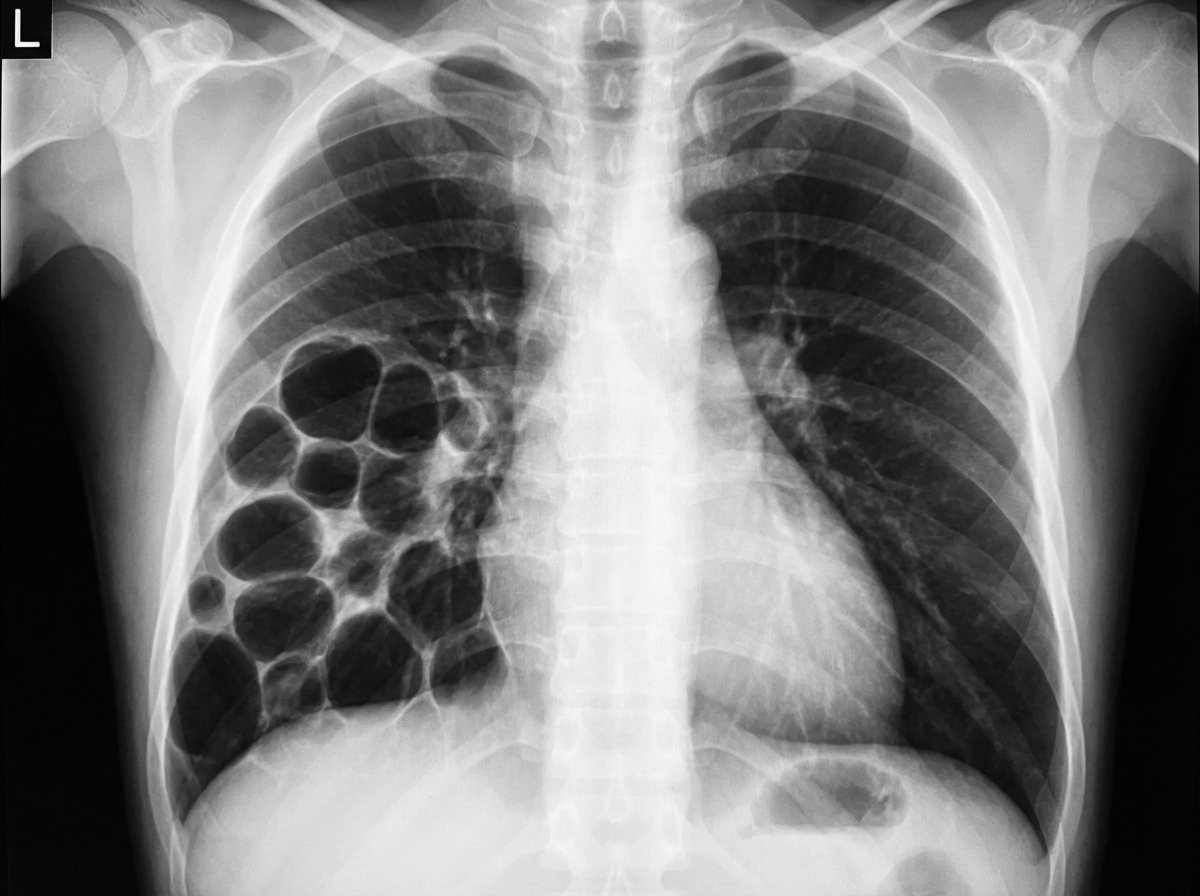
A 3-year-old child presents with respiratory distress and a history of recurrent respiratory infections. Based on the provided imaging, what is the most likely diagnosis?
NEET-PG 2024 - Pediatrics NEET-PG Practice Questions and MCQs
Question 11: A 13-year-old boy presents with jaundice, fatigue, muscle stiffness, tremors, and behavioral changes. Examination reveals an enlarged liver and spleen. A Kayser-Fleischer ring was noted. What is the definitive diagnostic test?
- A. Urinary copper
- B. Serum ceruloplasmin
- C. Hepatic parenchymal copper concentration (Correct Answer)
- D. Slit lamp examination
- E. Genetic testing for ATP7B mutation
Explanation: ***Hepatic parenchymal copper concentration*** - This is considered the **gold standard** for diagnosing **Wilson's disease**, as it directly measures the accumulation of copper in the liver, which is the hallmark of the condition. - A concentration of **>250 mcg/g of dry liver weight** is diagnostic of Wilson's disease, irrespective of other laboratory findings. *Urinary copper* - While **elevated 24-hour urinary copper excretion** is a common finding in Wilson's disease, it can also be influenced by other conditions and may not always be definitively diagnostic on its own. - It is a **screening tool** and part of the diagnostic workup, but not the definitive diagnostic test as it's an indirect measure of copper overload. *Serum ceruloplasmin* - **Low serum ceruloplasmin levels** are characteristic of Wilson's disease because ceruloplasmin is the primary copper-carrying protein in the blood. - However, ceruloplasmin levels can be **normal in some Wilson's patients**, especially those presenting with hepatic manifestations, and can be low in other conditions like severe liver failure or malabsorption. *Slit lamp examination* - A **slit lamp examination** is used to identify **Kayser-Fleischer rings**, which are corneal copper deposits. - While their presence is highly suggestive of Wilson's disease, especially with neurological symptoms, they **may be absent in up to 30-50% of patients** with hepatic-only presentations, and their absence does not rule out the disease. *Genetic testing for ATP7B mutation* - **Molecular genetic testing** can identify mutations in the ATP7B gene, which encodes the copper-transporting ATPase. - While highly specific for confirming Wilson's disease and useful for family screening, it is a **confirmatory test** rather than the definitive diagnostic test, as over 500 different mutations exist and not all are identified in routine testing. - Hepatic copper measurement remains the diagnostic standard as it directly demonstrates the pathophysiologic defect.
Question 12: A 2 year old child came with watery diarrhea. Electron Microscopy (EM) Image is shown here. Choose the correct pathogen.
- A. Norwalk virus
- B. Adenovirus
- C. ECHO virus
- D. Rota virus (Correct Answer)
- E. Astrovirus
Explanation: ***Rota virus*** - The electron micrograph shows **double-layered viral particles** with a distinct wheel-like appearance, characteristic of **Rotavirus**, a major cause of severe watery diarrhea in young children. - Rotavirus is the most common cause of **severe dehydrating diarrhea** in infants and young children worldwide. *Norwalk virus* - Norwalk virus (now commonly referred to as **Norovirus**) particles are typically **smaller** and have an **amorphous** or indistinct surface morphology compared to the clearly structured Rotavirus. - Norovirus causes acute gastroenteritis but its electron microscopic appearance is less distinct and lacks the double-shelled structure seen here. *Adenovirus* - Adenoviruses are **larger, non-enveloped DNA viruses** with a distinct **icosahedral capsid** structure, often appearing hexagonal or pentagonal with prominent 'spikes' at the vertices. - While adenoviruses can cause gastroenteritis, their EM appearance is easily distinguishable from the image provided. *Astrovirus* - Astroviruses are **small, non-enveloped RNA viruses** that appear as **smooth-surfaced, star-shaped particles** on electron microscopy (hence the name "astro"). - They cause gastroenteritis in young children but lack the characteristic double-layered wheel-like structure of rotavirus. *ECHO virus* - ECHO viruses (Enteric Cytopathic Human Orphan viruses) are **picornaviruses**, which are very **small, non-enveloped RNA viruses** with an icosahedral shape. - Their EM image would show much smaller, less complex particles without the characteristic double-layered structure of rotavirus.
Question 13: A 6-year-old child presents to the emergency department with sudden onset of palpitations, shortness of breath, and dizziness. The child has no significant past medical history. On examination, the heart rate is 220 beats per minute, blood pressure is $90 / 60 \mathrm{mmHg}$, and the child appears anxious but is otherwise stable. An ECG confirms the diagnosis of paroxysmal supraventricular tachycardia (PSVT). What is the initial recommended dose of adenosine for this child?
- A. $0.1 \mathrm{mg} / \mathrm{kg}$ (Correct Answer)
- B. $0.2 \mathrm{mg} / \mathrm{kg}$
- C. $0.5 \mathrm{mg} / \mathrm{kg}$
- D. $1.0 \mathrm{mg} / \mathrm{kg}$
- E. $0.05 \mathrm{mg} / \mathrm{kg}$
Explanation: ***0.1 mg/kg*** - The initial recommended dose of **adenosine** for children with **PSVT** is **0.1 mg/kg** given as a rapid intravenous bolus. - This dose is typically followed by a saline flush to ensure rapid delivery to the heart and minimize peripheral metabolism. *0.05 mg/kg* - This dose is **too low** and is below the recommended initial dose for pediatric PSVT. - While it may be safer, it is unlikely to be effective in terminating the arrhythmia and would delay definitive treatment. - The standard starting dose of 0.1 mg/kg has been established to balance efficacy with safety. *0.2 mg/kg* - This dose is typically used as a **second dose** of adenosine if the initial 0.1 mg/kg dose is ineffective in converting PSVT. - The second dose can be **doubled** (e.g., from 0.1 mg/kg to 0.2 mg/kg), with a maximum single dose of 12 mg. *0.5 mg/kg* - This dose is **too high** for the initial administration of adenosine in a pediatric patient and could lead to significant side effects like profound bradycardia or asystole. - Gradual dose escalation is crucial to balance efficacy with safety in children. *1.0 mg/kg* - This dose is **excessively high** for pediatric adenosine administration and is not recommended as an initial or even subsequent dose. - Such a dose would greatly increase the risk of adverse cardiovascular effects.
Question 14: A child presents with recurrent infections. Mediastinal imaging reveals an absent thymus gland, and further investigations show low ADA (adenosine deaminase) levels. What is the most likely diagnosis?
- A. Severe Combined Immunodeficiency (SCID) (Correct Answer)
- B. DiGeorge syndrome
- C. X-linked agammaglobulinemia
- D. Hyper-IgM syndrome
- E. Wiskott-Aldrich syndrome
Explanation: ***Severe Combined Immunodeficiency (SCID)*** - **Recurrent infections**, an **absent thymus gland** (indicating severe T-cell deficiency), and **low ADA levels** are classic features of SCID, specifically **ADA deficiency-SCID**. - ADA deficiency leads to the accumulation of toxic metabolites that destroy **B and T lymphocytes**, severely compromising both humoral and cellular immunity. *DiGeorge syndrome* - Characterized by **thymic hypoplasia or aplasia**, leading to T-cell deficiencies and recurrent infections, similar to the absent thymus. - However, DiGeorge syndrome is typically associated with **hypocalcemia** due to parathyroid hypoplasia, and **cardiac defects**, which are not mentioned, and **low ADA levels** are not a feature. *X-linked agammaglobulinemia* - Primarily affects **B-cell development**, leading to a severe deficiency of antibodies, resulting in recurrent bacterial infections. - **T-cell function** and the **thymus gland** are typically normal in this condition, and low ADA levels are not observed. *Hyper-IgM syndrome* - Characterized by normal or elevated levels of **IgM** but very low levels of **IgG, IgA, and IgE** due to defects in B-cell class switching. - The thymus gland is generally normal, and the primary defect lies in antibody production, not T-cell development or ADA deficiency. *Wiskott-Aldrich syndrome* - An X-linked immunodeficiency presenting with recurrent infections, but classically features the triad of **thrombocytopenia with small platelets**, **eczema**, and **immunodeficiency**. - The thymus is typically present, and **low ADA levels** are not characteristic of this syndrome.
Question 15: A 2 -month-old child presents with the following condition as shown in the image. What is the ideal management protocol?
- A. Operate immediately
- B. Surgery after 6 months of age
- C. Surgery after 2 years of age
- D. Medical management (Correct Answer)
- E. Refer to pediatric ophthalmology for evaluation
Explanation: ***Medical management*** - The image shows **epicanthal folds**, which are normal in many Asian infants and children. They are **congenital, benign skin folds** that cover the inner corner of the eye. - In a 2-month-old child, these folds are a normal variant and typically **recede with age**. No medical intervention, surgical or otherwise, is usually required. *Operate immediately* - **No medical indication** for immediate surgery as epicanthal folds are not a pathological condition requiring urgent correction. - Surgical intervention for cosmetic purposes is typically considered much later in life, if at all, when facial features are more developed. *Surgery after 6 months of age* - Epicanthal folds are **still a normal finding** in infants up to 6 months of age and often persist for several years. - Premature surgical correction could be unnecessary as the folds may resolve naturally with the development of the **nasal bridge**. *Surgery after 2 years of age* - While epicanthal folds can still be present at 2 years of age, surgery is **rarely indicated** unless they cause significant vision problems (e.g., pseudostrabismus) or severe cosmetic concerns that persist into later childhood. - By this age, many children will have developed a more prominent nasal bridge, which can lessen the appearance of the folds naturally. *Refer to pediatric ophthalmology for evaluation* - While specialist referral might be considered if there are concerns about **vision impairment or true strabismus**, isolated epicanthal folds in a 2-month-old infant are a **normal anatomical variant** that does not require specialist evaluation. - Referral would be appropriate only if there were functional concerns beyond the cosmetic appearance of the folds.
Question 16: A baby presents with hydrocephalus, intracranial calcifications, and chorioretinitis. What is the most probable diagnosis?
- A. Toxoplasmosis (Correct Answer)
- B. Syphilis
- C. Cytomegalovirus (CMV) infection
- D. Rubella
- E. Herpes Simplex Virus (HSV) infection
Explanation: **Toxoplasmosis** - The classic triad of **hydrocephalus**, **intracranial calcifications**, and **chorioretinitis** is highly characteristic of congenital toxoplasmosis. - These findings result from the parasite's invasive nature and predilection for the central nervous system and eyes of the developing fetus. - Calcifications in toxoplasmosis are typically **diffuse and scattered** throughout the brain parenchyma. *Syphilis* - Congenital syphilis typically presents with **rhinitis**, **skin rash**, **hepatosplenomegaly**, and **bone abnormalities** (e.g., periostitis, saber shins). - While neurological complications can occur, the specific triad of hydrocephalus, intracranial calcifications, and chorioretinitis is not characteristic. *Cytomegalovirus (CMV) infection* - Congenital CMV can cause **periventricular calcifications** (not diffuse calcifications), **microcephaly**, and **sensorineural hearing loss**. - While chorioretinitis can occur, hydrocephalus is less frequent, and the calcification pattern differs from toxoplasmosis (CMV shows periventricular pattern vs. diffuse in toxoplasmosis). *Rubella* - Congenital rubella syndrome is known for causing the classic triad of **cataracts**, **sensorineural hearing loss**, and **congenital heart defects** (e.g., patent ductus arteriosus, pulmonary artery stenosis). - Intracranial calcifications and hydrocephalus are not typical presentations of congenital rubella. *Herpes Simplex Virus (HSV) infection* - Neonatal HSV typically presents with **vesicular skin lesions**, **encephalitis**, and **disseminated disease** affecting liver and lungs. - While HSV can cause encephalitis with brain involvement, the classic triad of hydrocephalus, diffuse intracranial calcifications, and chorioretinitis is not characteristic of HSV infection.
Question 17: A mother delivers in a rural area under the guidance of a skilled care attendant. Which of the following statements is incorrect regarding the care provided by the skilled care attendant at birth?
- A. Start breastfeeding as early as possible
- B. Cover the baby's head and body
- C. Bathe the baby with warm water (Correct Answer)
- D. Clear the eyes with a sterile swab
- E. Dry the baby thoroughly and stimulate breathing
Explanation: ***Bathe the baby with warm water*** - **Delaying the first bath** for at least 6-24 hours after birth is recommended to prevent **hypothermia** and promote **skin-to-skin contact** for bonding and breastfeeding. - Early bathing can remove **vernix caseosa**, which provides natural antimicrobial protection and moisturization to the newborn's skin. *Start breastfeeding as early as possible* - **Early initiation of breastfeeding**, ideally within the first hour of birth, is crucial for both mother and baby. - It promotes **uterine contractions** to prevent **postpartum hemorrhage** and provides the newborn with **colostrum**, rich in antibodies. *Cover the baby's head and body* - Covering the newborn's head and body is essential to prevent **heat loss** and maintain a stable **body temperature**, immediately after birth. - Newborns are highly susceptible to **hypothermia** due to their large surface area to mass ratio and immature thermoregulation. *Clear the eyes with a sterile swab* - Clearing the newborn's eyes with a sterile swab is a standard part of immediate newborn care to remove any **mucus or blood** that might have entered during delivery. - This helps prevent **ophthalmia neonatorum**, especially if the mother has an infection like gonorrhea or chlamydia. *Dry the baby thoroughly and stimulate breathing* - **Drying the baby immediately** after birth is a critical first step in newborn resuscitation and care. - It helps prevent **hypothermia** and provides **tactile stimulation** to initiate breathing and crying, which is essential for transitioning from fetal to neonatal circulation.
Question 18: A 3-year-old child presents with respiratory distress and a history of recurrent respiratory infections. Based on the provided imaging, what is the most likely diagnosis?
- A. CPAM (Congenital Pulmonary Airway Malformation) (Correct Answer)
- B. Lung abscess
- C. Pyopneumothorax
- D. CDH (Congenital Diaphragmatic Hernia)
- E. Pulmonary sequestration
Explanation: ***CPAM (Congenital Pulmonary Airway Malformation)*** - The imaging shows **cystic lesions** within the lung parenchyma, which are characteristic of CPAM. These lesions can cause **respiratory distress** and predispose to **recurrent infections**. - The age of the child (3 years old) and the history of recurrent respiratory infections are consistent with CPAM, as these malformations often manifest with symptoms in early childhood. *Lung abscess* - A lung abscess typically presents as a **cavity with an air-fluid level** and surrounding consolidation, usually in a single, well-defined area. - While recurrent infections can occur, the widespread cystic appearance on imaging makes an abscess less likely than CPAM. *Pyopneumothorax* - Pyopneumothorax is characterized by the presence of both **pus and air in the pleural space**, leading to a visible air-fluid level that occupies the pleural cavity. - The imaging does not show evidence of gas and fluid within the pleural space, nor the typical chest wall separation seen in pneumothorax. *CDH (Congenital Diaphragmatic Hernia)* - CDH involves the **herniation of abdominal contents** into the chest cavity, displacing lung tissue and often causing severe respiratory distress from birth due to pulmonary hypoplasia. - The images show cystic changes within the lung parenchyma, not abdominal organs in the chest, and the age of presentation makes a new diagnosis of uncorrected CDH less likely, as it usually presents as a neonatal emergency. *Pulmonary sequestration* - Pulmonary sequestration is a congenital malformation characterized by **non-functioning lung tissue with aberrant systemic arterial supply**, typically from the aorta. - While it can present with recurrent infections, the imaging typically shows a **solid or mixed solid-cystic mass**, often in the lower lobes with visible feeding vessels on contrast imaging, rather than the predominantly multicystic appearance seen in CPAM.