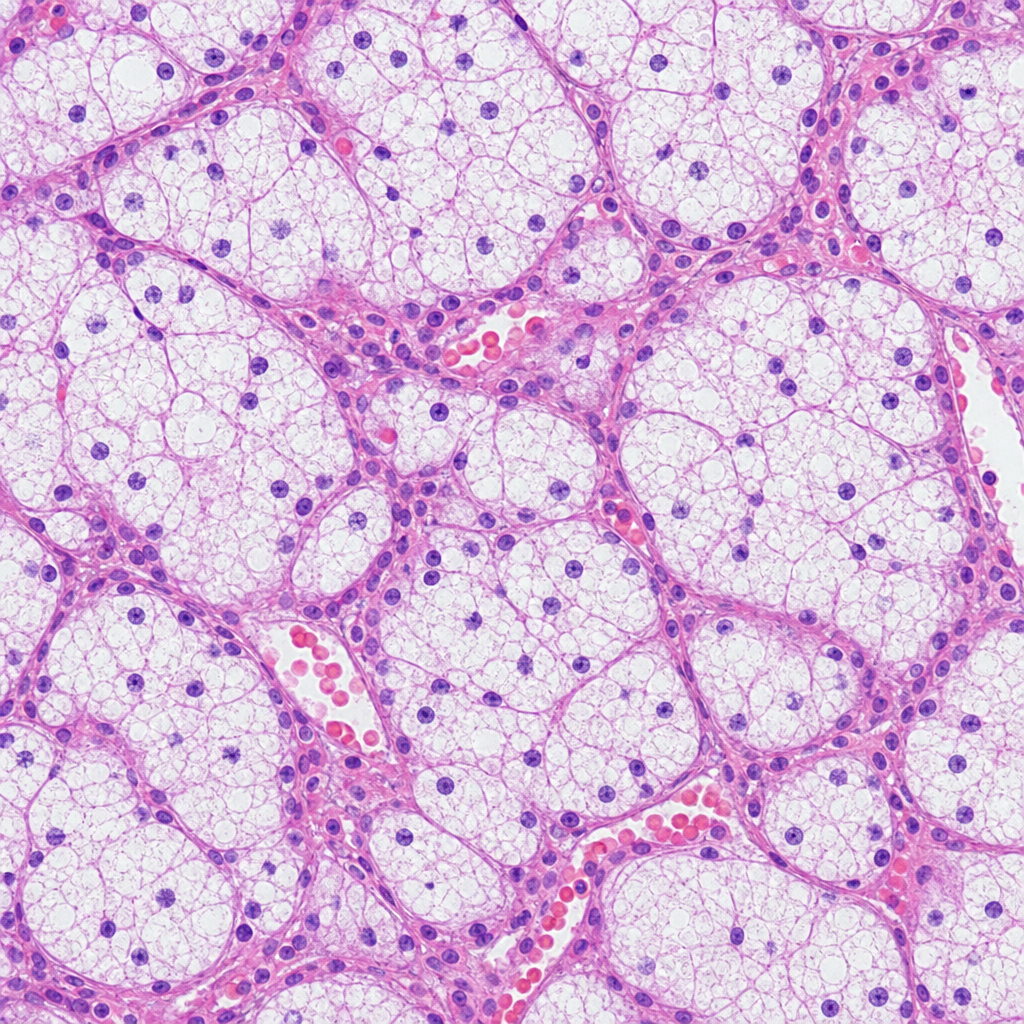
A male patient is not responding to oxygen therapy and has been diagnosed with ARDS (Acute Respiratory Distress Syndrome). What is the role of IL-8 in ARDS?
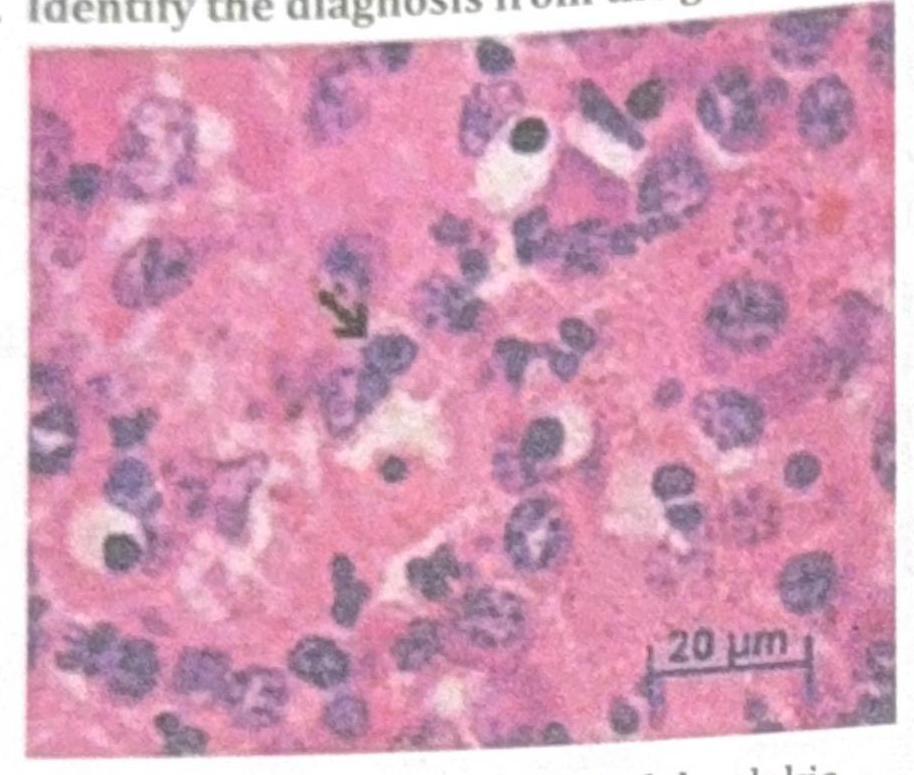
Identify the diagnosis from the given image
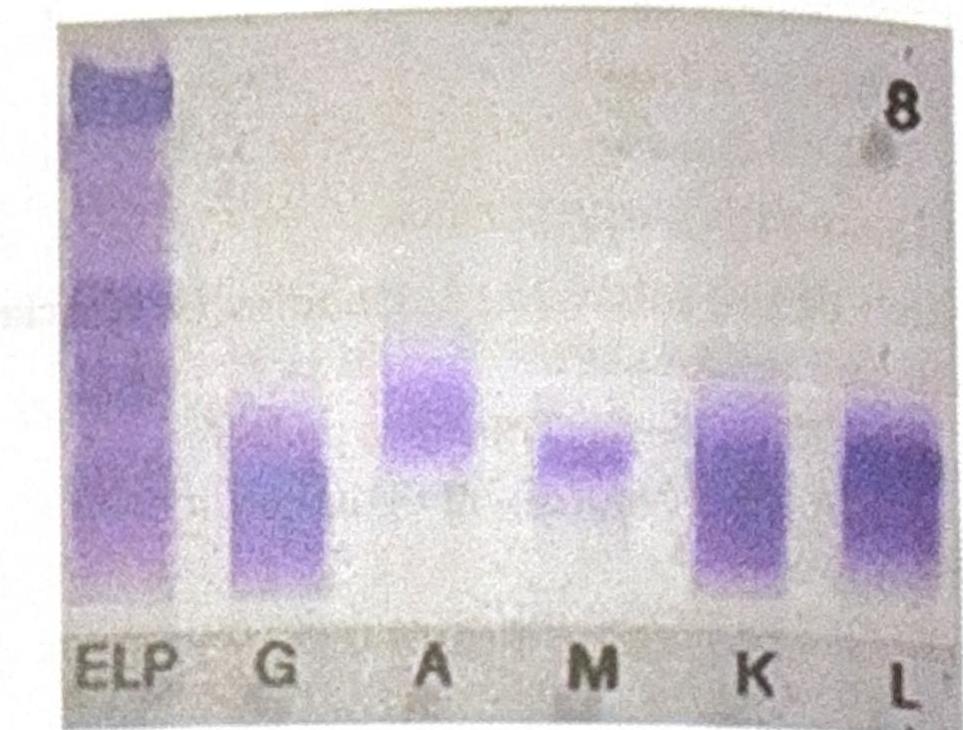
An elderly male patient presented with clinical symptoms and signs consistent with possible multiple myeloma. Electrophoresis shows an M spike, and immunofixation findings are shown below. Which of the following statements best corresponds to the findings?
Which of the following is an intracellular marker or deposition found in Alzheimer's disease?
A child presenting with leukocoria has an intraocular mass. Microscopic examination shows rosettes with scanty cytoplasm and positive synaptophysin. What is the most likely diagnosis?
A 40-year-old female presents with an irregular 5 × 6 cm mass in the right breast. Histopathological examination reveals the image shown. What is the most likely diagnosis?

NEET-PG 2024 - Pathology NEET-PG Practice Questions and MCQs
Question 11: A male patient is not responding to oxygen therapy and has been diagnosed with ARDS (Acute Respiratory Distress Syndrome). What is the role of IL-8 in ARDS?
- A. Endothelial cell activation
- B. Recruitment of neutrophils (Correct Answer)
- C. Macrophage activation
- D. Promote surfactant production
Explanation: Recruitment of neutrophils - **Interleukin-8 (IL-8)**, also known as **CXCL8**, is a powerful **chemotactic cytokine** that primarily attracts and activates neutrophils [3]. - In **ARDS**, this recruitment leads to an influx of neutrophils into the pulmonary interstitium and alveolar spaces, contributing to inflammation and lung injury [1]. *Endothelial cell activation* - While other **cytokines** and inflammatory mediators can activate **endothelial cells** in ARDS [2], IL-8's primary role is not direct endothelial activation but rather **neutrophil chemotaxis** [3]. - **Endothelial cell activation** leads to increased vascular permeability and leukocyte adherence, which is often a consequence of overall inflammation, not solely IL-8 [4]. *Macrophage activation* - **Macrophages** are activated by various stimuli and other **cytokines**, such as **TNF-alpha** and **IFN-gamma**, as part of the inflammatory response. - While macrophages produce IL-8, its main function is not to activate macrophages themselves but to attract **neutrophils**. *Promote surfactant production* - **Surfactant production** is primarily regulated by **Type II pneumocytes** and is often impaired in ARDS due to damage to these cells [1]. - IL-8 is a **pro-inflammatory cytokine** and plays no direct role in promoting surfactant synthesis; in fact, its inflammatory effects can indirectly worsen surfactant dysfunction. **References:** [1] Kumar V, Abbas AK, et al.. Robbins and Cotran Pathologic Basis of Disease. 9th ed. The Lung, p. 681. [2] Kumar V, Abbas AK, et al.. Robbins and Cotran Pathologic Basis of Disease. 9th ed. The Lung, p. 679. [3] Kumar V, Abbas AK, et al.. Robbins and Cotran Pathologic Basis of Disease. 9th ed. Inflammation and Repair, pp. 87-89. [4] Kumar V, Abbas AK, et al.. Robbins and Cotran Pathologic Basis of Disease. 9th ed. Migration in the tissues toward a chemotactic stimulus, pp. 86-87.
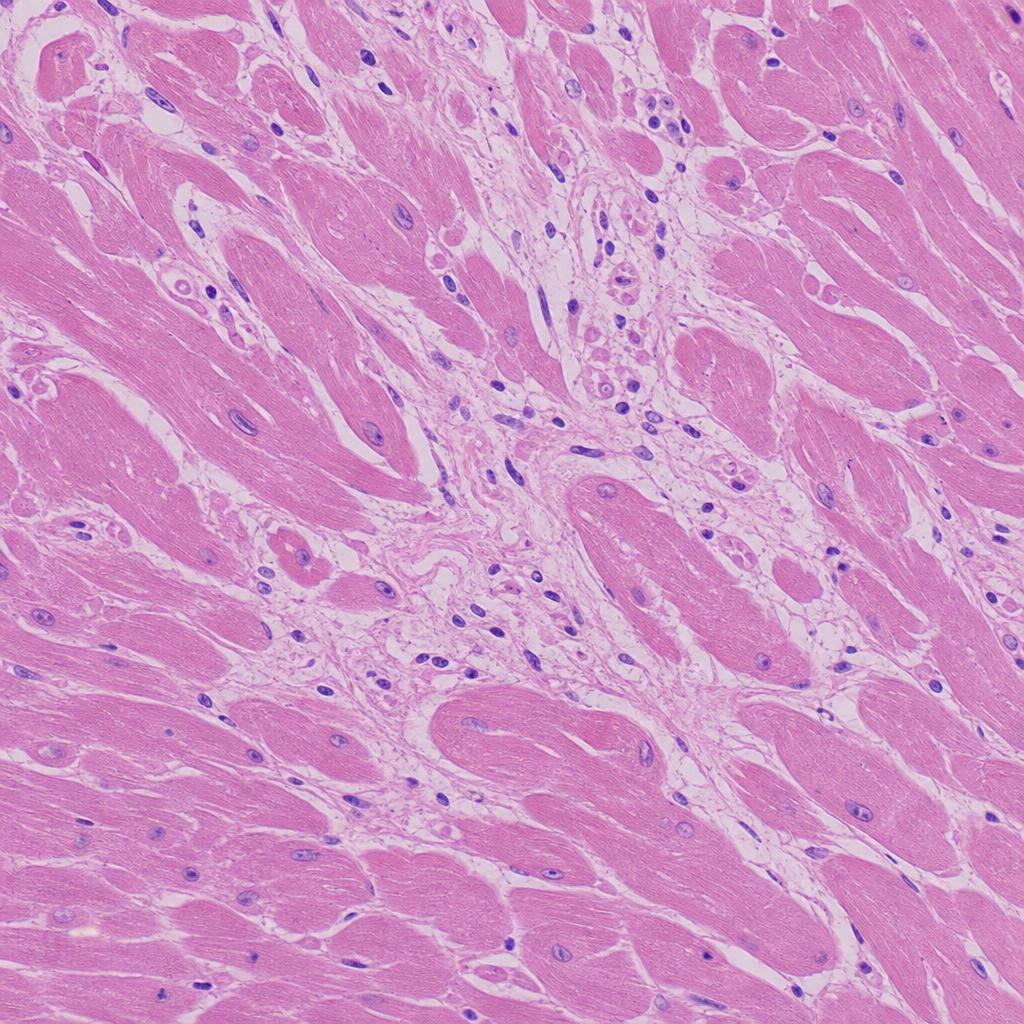
Question 12: Identify the diagnosis from the given image
- A. TB
- B. Malakoplakia (Correct Answer)
- C. BCC
- D. Drug induced lesion
Explanation: ***Malakoplakia*** - The image displays characteristic **Michaelis-Gutmann bodies**, which are concentrically laminated calcified inclusions found within macrophages (**Von Hansemann cells**). These are pathognomic for malakoplakia. - **Von Hansemann cells** are large, foamy macrophages with abundant cytoplasm, also visible in the image, mixed with lymphocytes and plasma cells. *TB* - Tuberculosis (TB) typically presents with **granulomatous inflammation** characterized by caseating necrosis, epithelioid macrophages, Langhans giant cells, and lymphocytes [2]. These features are not apparent in the image. - While TB can involve macrophages, the distinct Michaelis-Gutmann bodies seen here are not a feature of tuberculous granulomas [1]. *BCC* - Basal cell carcinoma (BCC) is a malignant epithelial tumor characterized by nests of basaloid cells with peripheral palisading, clear clefts, and often stromal retraction. This biopsy shows inflammatory cells and calcified inclusions, not epithelial malignancy. - BCC would show atypical epithelial cells and features of a neoplastic process, which are distinctly different from the inflammatory infiltrate and inclusion bodies in the image. *Drug induced lesion* - Drug-induced lesions are highly variable and context-dependent, but they do not typically present with the specific histopathological features of Michaelis-Gutmann bodies within macrophages. - The image depicts a specific and recognizable inflammatory pattern with unique inclusions, which points to a distinct disease entity rather than a non-specific drug reaction. **References:** [1] Cross SS. Underwood's Pathology: A Clinical Approach. 6th ed. (Basic Pathology) introduces the student to key general principles of pathology, both as a medical science and as a clinical activity with a vital role in patient care. Part 2 (Disease Mechanisms) provides fundamental knowledge about the cellular and molecular processes involved in diseases, providing the rationale for their treatment. Part 3 (Systematic Pathology) deals in detail with specific diseases, with emphasis on the clinically important aspects., pp. 198-200. [2] Kumar V, Abbas AK, et al.. Robbins and Cotran Pathologic Basis of Disease. 9th ed. Infectious Diseases, p. 360.
Question 13: An elderly male patient presented with clinical symptoms and signs consistent with possible multiple myeloma. Electrophoresis shows an M spike, and immunofixation findings are shown below. Which of the following statements best corresponds to the findings?
- A. Multiple myeloma with increased IgM
- B. Multiple myeloma with increased IgG (Correct Answer)
- C. Multiple myeloma with increased IgA
- D. Waldenström macroglobulinemia
Explanation: ***Multiple myeloma with increased IgG*** - The immunofixation image shows a distinct, *monoclonal band (M spike)* in the **IgG lane (G)**, corresponding to the initial electrophoresis (ELP) M spike [1]. There is also a corresponding band in the **kappa light chain (K)** lane [1]. - The presence of a dominant band in IgG, along with a matching light chain (either kappa or lambda), indicates an **IgG monoclonal gammopathy**, which is characteristic of the most common type of multiple myeloma [1]. *Multiple myeloma with increased IgM* - This option would correspond to a strong, monoclonal band in the **IgM lane (M)**, which is not the case here. The 'M' lane in the image shows a faint/normal band, not an increased M spike. - Increased IgM monoclonal protein (M spike) is characteristic of **Waldenström macroglobulinemia**, not typically multiple myeloma [2]. *Multiple myeloma with increased IgA* - If the patient had IgA multiple myeloma, there would be a prominent monoclonal band in the **IgA lane (A)**, which is not observed in this immunofixation result. The 'A' lane shows a considerably smaller band compared to IgG. - IgA multiple myeloma is a less common subtype than IgG myeloma and would present with an IgA M spike [1]. *Waldenström macroglobulinemia* - Waldenström macroglobulinemia is characterized by a monoclonal gammopathy of the **IgM type**, which would present as a distinct M spike in the IgM lane [2]. - The immunofixation clearly shows an **IgG M spike**, ruling out Waldenström macroglobulinemia based on the type of monoclonal gammopathy [2]. **References:** [1] Kumar V, Abbas AK, et al.. Robbins and Cotran Pathologic Basis of Disease. 9th ed. Diseases of White Blood Cells, Lymph Nodes, Spleen, and Thymus, pp. 608-609. [2] Kumar V, Abbas AK, et al.. Robbins and Cotran Pathologic Basis of Disease. 9th ed. Diseases of White Blood Cells, Lymph Nodes, Spleen, and Thymus, pp. 606-607.
Question 14: Which of the following is an intracellular marker or deposition found in Alzheimer's disease?
- A. Tau protein (Correct Answer)
- B. A β 40 / 42 (Amyloid-beta 40/42)
- C. Alpha-synuclein
- D. TDP-43
Explanation: ***Tau protein*** - **Tau protein** forms **neurofibrillary tangles** within the neurons, which is a hallmark intracellular lesion in Alzheimer's disease [1]. - These tangles disrupt neuronal transport systems, leading to **synaptic dysfunction** and cell death [1]. *A ̢ 40 / 42 (Amyloid-beta 40/42)* - **Amyloid-beta** peptides aggregate to form **extracellular amyloid plaques**, not intracellular deposits, in Alzheimer's disease [2]. - While central to the pathology, these **plaques** are found outside of the neurons in the brain parenchyma [2]. *Alpha-synuclein* - **Alpha-synuclein** is the primary component of **Lewy bodies**, which are intracellular inclusions characteristic of Parkinson's disease and Lewy body dementia. - It is not a primary marker for Alzheimer's disease pathology. *TDP-43* - **TDP-43 (TAR DNA-binding protein 43)** inclusions are characteristic of **frontotemporal lobar degeneration (FTLD)** and amyotrophic lateral sclerosis (ALS). - While sometimes co-occurs with Alzheimer's, it is not a primary or defining intracellular marker for Alzheimer's disease itself. **References:** [1] Kumar V, Abbas AK, et al.. Robbins and Cotran Pathologic Basis of Disease. 9th ed. The Central Nervous System, pp. 1292-1294. [2] Kumar V, Abbas AK, et al.. Robbins and Cotran Pathologic Basis of Disease. 9th ed. The Central Nervous System, pp. 1290-1292.
Question 15: A child presenting with leukocoria has an intraocular mass. Microscopic examination shows rosettes with scanty cytoplasm and positive synaptophysin. What is the most likely diagnosis?
- A. Retinoblastoma (Correct Answer)
- B. Medulloblastoma
- C. Neuroblastoma
- D. Ependymoma
Explanation: ***Retinoblastoma*** - **Leukocoria** (white pupillary reflex) in a child with an **intraocular mass** is the classic presentation of retinoblastoma, the most common primary intraocular malignancy in childhood [3]. - Histologically, the presence of **rosettes** (Flexner-Wintersteiner rosettes are pathognomonic [1]; Homer Wright rosettes may also be seen) with scanty cytoplasm confirms the diagnosis [3]. - **Positive synaptophysin** staining confirms the neuroblastic/neuroectodermal differentiation characteristic of retinoblastoma. - The **intraocular location** is the key differentiating feature from other rosette-forming tumors. *Medulloblastoma* - This is a highly malignant **cerebellar tumor** (posterior fossa), often presenting with **ataxia, headaches, and hydrocephalus**, not leukocoria or an intraocular mass. - While it can form Homer Wright rosettes and is synaptophysin positive, its **CNS location** (not intraocular) distinguishes it from retinoblastoma. *Neuroblastoma* - This is a tumor of the **sympathetic nervous system**, usually arising in the adrenal medulla or sympathetic ganglia, presenting as an abdominal mass, bone metastases, or raccoon eyes (periorbital ecchymoses from orbital metastases) [2], [4]. - It does **not present as a primary intraocular mass** with leukocoria, though it may rarely metastasize to the orbit. - Can also show Homer Wright rosettes and synaptophysin positivity [4]. *Ependymoma* - This is a **glial tumor** of the central nervous system, typically found in the ventricles of the brain or spinal cord. - It presents with symptoms related to its location (e.g., hydrocephalus, spinal cord compression) and does not cause leukocoria or intraocular masses. - Forms **ependymal rosettes** (perivascular pseudorosettes), which are different from the rosettes in retinoblastoma. **References:** [1] Kumar V, Abbas AK, et al.. Robbins and Cotran Pathologic Basis of Disease. 9th ed. The Eye, p. 1342. [2] Kumar V, Abbas AK, et al.. Robbins and Cotran Pathologic Basis of Disease. 9th ed. Diseases of Infancy and Childhood, pp. 483-484. [3] Cross SS. Underwood's Pathology: A Clinical Approach. 6th ed. Common Clinical Manifestations Of Central And Peripheral Nervous System Disease, pp. 737-738. [4] Kumar V, Abbas AK, et al.. Robbins and Cotran Pathologic Basis of Disease. 9th ed. Diseases of Infancy and Childhood, pp. 484-485.
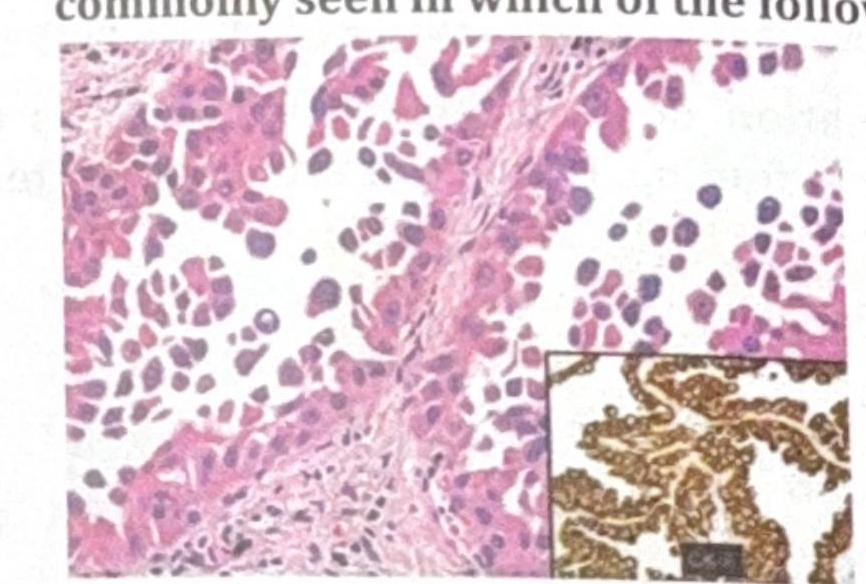
Question 16: A 40-year-old female presents with an irregular 5 × 6 cm mass in the right breast. Histopathological examination reveals the image shown. What is the most likely diagnosis?
- A. Phyllodes tumor (Correct Answer)
- B. Fibroadenoma
- C. Invasive ductal carcinoma
- D. Intraductal papilloma
Explanation: ***Phyllodes tumor*** - The image demonstrates a characteristic **leaf-like or cleft-like stromal growth pattern** often seen in phyllodes tumors [1]. The stroma is cellular and appears to project into ductal spaces, leading to the formation of slit-like spaces [1]. - Phyllodes tumors are typically **large (5 cm or more)**, firm, and solitary, with a rapid growth rate, consistent with the described 5×6 cm mass [1]. - They show a **biphasic pattern** with both epithelial and stromal components, where the stromal component predominates [1]. *Fibroadenoma* - While fibroadenomas are biphasic like phyllodes tumors, they usually present with a more uniform, less cellular stroma and less pronounced epithelial-stromal clefting [1]. - Fibroadenomas also do not typically grow as large as 5-6 cm with such aggressive stromal patterns in a 40-year-old. - The stroma in fibroadenoma is less cellular and lacks the leaf-like architecture [1]. *Invasive ductal carcinoma* - Invasive ductal carcinoma would show **infiltrating cords, nests, or tubules of malignant epithelial cells** invading through the stroma with associated desmoplasia [2]. - The biphasic leaf-like architecture with stromal fronds protruding into epithelial-lined spaces is not characteristic of carcinoma. - While it can present as a large irregular mass, the histological pattern is distinctly different from the image shown [2]. *Intraductal papilloma* - Intraductal papilloma presents with **arborizing fibrovascular cores lined by epithelial cells** within dilated ducts, typically near the nipple. - They are usually small (a few millimeters to 2-3 cm) and do not typically present as large 5-6 cm masses. - The prominent stromal overgrowth with leaf-like pattern seen in the image is not characteristic of papilloma. **References:** [1] Kumar V, Abbas AK, et al.. Robbins and Cotran Pathologic Basis of Disease. 9th ed. The Breast, pp. 1072-1074. [2] Kumar V, Abbas AK, et al.. Robbins and Cotran Pathologic Basis of Disease. 9th ed. The Breast, pp. 1066-1068.