Anatomy
2 questionsAt what age does maximum brain growth occur?
The Image shows the growth curve of different organs with age. Identify A in the graph

NEET-PG 2024 - Anatomy NEET-PG Practice Questions and MCQs
Question 71: At what age does maximum brain growth occur?
- A. 6 months (Correct Answer)
- B. 1 year
- C. 2 years
- D. 3 years
- E. 5 years
Explanation: ***6 months*** - **Brain growth** is most rapid during the early postnatal period, with the brain reaching almost **50% of its adult size by 6 months of age**. - This period involves rapid **synaptogenesis** and myelination, crucial for early cognitive and motor development. *1 year* - While significant **brain growth** continues, the peak rate of increase in brain volume has typically passed by 1 year. - At this age, the brain has reached approximately **75% of its adult size**. *2 years* - By 2 years, the brain is about **80% of its adult size**, indicating ongoing but slower growth compared to the first year. - This period is more characterized by refinement of neural circuits rather than rapid volumetric expansion. *3 years* - At 3 years, the brain has attained around **90% of its adult size**, though important developmental changes continue. - The rate of **neural development** at this stage largely focuses on strengthening existing connections and pruning less used ones. *5 years* - By 5 years, the brain has reached approximately **90-95% of its adult size**, with growth significantly slower than in earlier years. - Development at this age focuses primarily on **synaptic pruning** and refinement of neural networks rather than volumetric growth.
Question 72: The Image shows the growth curve of different organs with age. Identify A in the graph
- A. Brain Growth (Correct Answer)
- B. Somatic Growth
- C. Lymphoid Growth
- D. Gonadal Growth
- E. Reproductive Growth
Explanation: ***Brain Growth*** - This graph shows a rapid increase in size during early childhood, reaching near-adult proportions by age 5-6, which is characteristic of **brain development**. - The brain undergoes significant myelinization and neuronal growth in the first few years of life, reflected in this steep curve. *Somatic Growth* - **Somatic growth** (body as a whole) generally follows a more gradual S-shaped curve, with two major growth spurts: one in infancy and another during puberty. - It does not plateau as early as curve A, but continues to increase significantly through adolescence. *Lymphoid Growth* - **Lymphoid tissues** (e.g., thymus, lymph nodes) show a unique growth pattern, peaking in size around 10-12 years of age and then involuting or decreasing in size during adolescence. - This pattern is distinctly different from curve A, which continuously increases and plateaus. *Gonadal Growth* - **Gonadal growth** (reproductive organs) typically shows minimal growth during childhood, with a pronounced and rapid increase in size starting at puberty (around 10-14 years of age). - This growth pattern is a later and more delayed surge compared to what is depicted in curve A. *Reproductive Growth* - **Reproductive growth** follows essentially the same pattern as gonadal growth, with minimal development during childhood and rapid acceleration during puberty. - Like gonadal tissues, reproductive organs show their major growth spurt much later than the early plateau seen in curve A.
Biochemistry
3 questionsAn infant presents with vomiting after feeding. Benedict's test was positive for a non-glucose reducing substance. What is the most likely diagnosis?
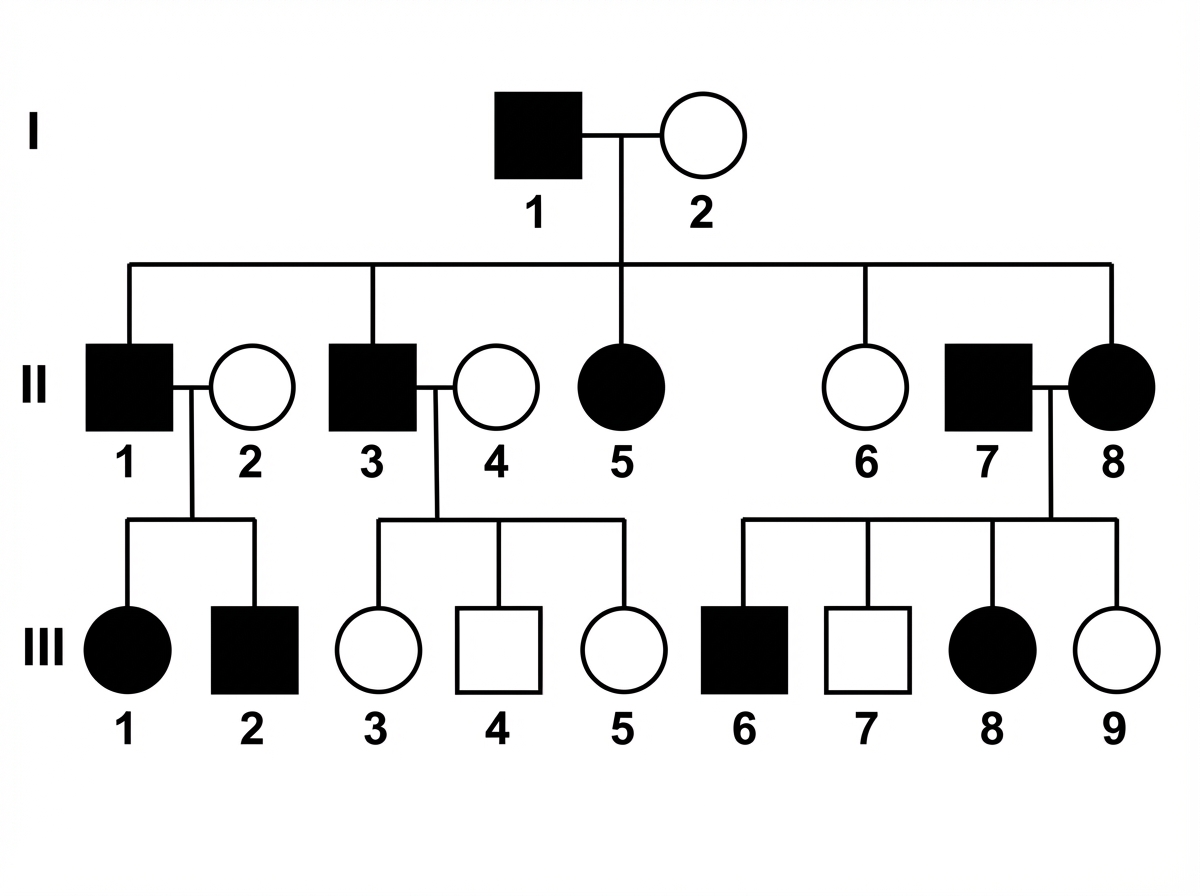
Which disease will show the mode of inheritance depicted in this pedigree?
A mother brings her 14 -year-old mentally retarded son to the OPD, who is suffering from joint pain and has an irresistible urge to bite his fingers and lips. His serum uric acid level was found to be elevated. What is the disorder?
NEET-PG 2024 - Biochemistry NEET-PG Practice Questions and MCQs
Question 71: An infant presents with vomiting after feeding. Benedict's test was positive for a non-glucose reducing substance. What is the most likely diagnosis?
- A. Galactosemia due to GAL-1-P Uridyl Transferase enzyme deficiency (Correct Answer)
- B. Fructosuria due to Fructokinase deficiency
- C. Hereditary fructose intolerance due to Aldolase B deficiency
- D. Primary lactose intolerance
- E. Glycogen storage disease due to Glucose-6-phosphatase deficiency
Explanation: ***Galactosemia due to GAL-1-P Uridyl Transferase enzyme deficiency*** - Vomiting after feeding in an infant, coupled with a **positive Benedict's test** for a **non-glucose reducing substance**, is highly indicative of galactosemia. The accumulation of **galactose-1-phosphate** and **galactitol** leads to toxicity and symptoms. - This enzyme deficiency, causing **classic galactosemia**, prevents the proper metabolism of **galactose**, leading to its buildup. *Fructosuria due to Fructokinase deficiency* - This condition is a **benign metabolic disorder** with no significant clinical symptoms. - While it would lead to fructose in the urine, the infant would not typically present with **vomiting after feeding**. *Hereditary fructose intolerance due to Aldolase B deficiency* - Symptoms usually appear after the introduction of **fructose-containing foods** into the diet, causing severe hypoglycemia and vomiting. - The positive Benedict's test in this scenario would typically indicate a reducing substance in the urine, while fructose intolerance is characterized by **hypoglycemia** and metabolic crises upon fructose ingestion. *Glycogen storage disease due to Glucose-6-phosphatase deficiency* - This disorder primarily causes **hypoglycemia** and liver enlargement, not primarily vomiting after feeding due to a **non-glucose reducing substance**. - Glucose-6-phosphatase deficiency (Von Gierke's disease) leads to an inability to release **glucose from glycogen** and causes severe hypoglycemia, often requiring frequent feeding. *Primary lactose intolerance* - While lactose intolerance can cause vomiting and gastrointestinal symptoms, it is **extremely rare in infants** (primary lactose intolerance is a late-onset condition). - Lactose would be a reducing sugar, but the key differentiator is that **galactose** (from galactosemia) is the non-glucose reducing substance detected in this case, along with the typical **toxic presentation** in neonates.
Question 72: Which disease will show the mode of inheritance depicted in this pedigree?
- A. Achondroplasia (Correct Answer)
- B. Prader-Willi syndrome
- C. Wilson disease
- D. Wiskott-Aldrich syndrome
- E. Hemophilia A
Explanation: ***Achondroplasia*** - This pedigree shows an **autosomal dominant** inheritance pattern, characterized by affected individuals in every generation, affected offspring with at least one affected parent, and direct transmission from father to son (which **rules out X-linked**). Achondroplasia is an autosomal dominant disorder. - The presence of **affected individuals (shaded squares/circles)** in each successive generation and the 1:1 ratio of affected to unaffected offspring from affected parents mating with unaffected individuals supports autosomal dominant inheritance. *Prader-Willi syndrome* - This syndrome is caused by **genomic imprinting** or a chromosomal deletion on chromosome 15, typically inherited from the father. It does not follow a simple Mendelian dominant or recessive inheritance pattern. - While it has a genetic basis, its inheritance pattern is **complex** and involves specific parental origin of the genetic defect, unlike the clear autosomal dominant pattern shown. *Wilson disease* - Wilson disease is an **autosomal recessive** disorder, meaning affected individuals inherit two copies of the mutated gene (one from each parent). - This pedigree does not show skipped generations or unaffected parents having affected offspring, which would be characteristic of **autosomal recessive** inheritance. *Wiskott-Aldrich syndrome* - Wiskott-Aldrich syndrome is an **X-linked recessive** disorder. This means it primarily affects males, and affected fathers cannot pass the trait to their sons. - The pedigree shows **affected females** (shaded circles) and **father-to-son transmission** (e.g., father in second generation to son in third generation, assuming the leftmost branch is the paternal line), which rules out X-linked inheritance. *Hemophilia A* - Hemophilia A is an **X-linked recessive** disorder affecting the Factor VIII gene, predominantly affecting males. - Similar to Wiskott-Aldrich syndrome, the presence of **father-to-son transmission** in the pedigree rules out X-linked inheritance patterns, as affected fathers cannot pass X-linked traits to their sons.
Question 73: A mother brings her 14 -year-old mentally retarded son to the OPD, who is suffering from joint pain and has an irresistible urge to bite his fingers and lips. His serum uric acid level was found to be elevated. What is the disorder?
- A. Lesch-Nyhan syndrome (Correct Answer)
- B. Xanthine oxidase deficiency
- C. CPS II defect
- D. Thymidylate synthetase
- E. Von Gierke disease
Explanation: ***Lesch-Nyhan syndrome*** - This syndrome is characterized by **X-linked recessive inheritance** and a deficiency of the enzyme **hypoxanthine-guanine phosphoribosyltransferase (HGPRT)**, leading to an overproduction of uric acid. - Clinical manifestations include **hyperuricemia**, **gout-like arthritis**, **neurological dysfunction** (mental retardation, dystonia), and a distinctive feature of **self-mutilating behaviors** such as biting fingers and lips. *Xanthine oxidase deficiency* - This condition leads to an accumulation of **hypoxanthine** and **xanthine** due to impaired conversion to uric acid. - While it can cause kidney stones and some joint pain, it typically results in *low* serum uric acid levels and does not present with the characteristic self-mutilating behavior or severe neurological deficits seen in Lesch-Nyhan. *CPS II defect* - **Carbamoyl phosphate synthetase II (CPS II)** is involved in *pyrimidine synthesis*, not purine metabolism. - A defect in CPS II would lead to issues with pyrimidine production and typically presents with megaloblastic anemia or other symptoms related to pyrimidine deficiency, not hyperuricemia or self-mutilation. *Thymidylate synthetase* - **Thymidylate synthetase (TS)** is an enzyme critical for the synthesis of **thymidylate**, a precursor for DNA synthesis. - Inhibition or deficiency of TS is primarily associated with DNA replication issues, megaloblastic anemia, and is a target for chemotherapy, not with hyperuricemia or the neurological and behavioral symptoms described. *Von Gierke disease* - **Von Gierke disease** (Glycogen storage disease type Ia) is caused by deficiency of **glucose-6-phosphatase**, leading to impaired conversion of glucose-6-phosphate to glucose. - While it can cause **hyperuricemia** due to increased uric acid production from accelerated purine degradation, the clinical presentation is distinct with **hepatomegaly**, **hypoglycemia**, **lactic acidosis**, and growth retardation. - It does **not** present with self-mutilating behavior or the severe neurological dysfunction characteristic of Lesch-Nyhan syndrome.
Pediatrics
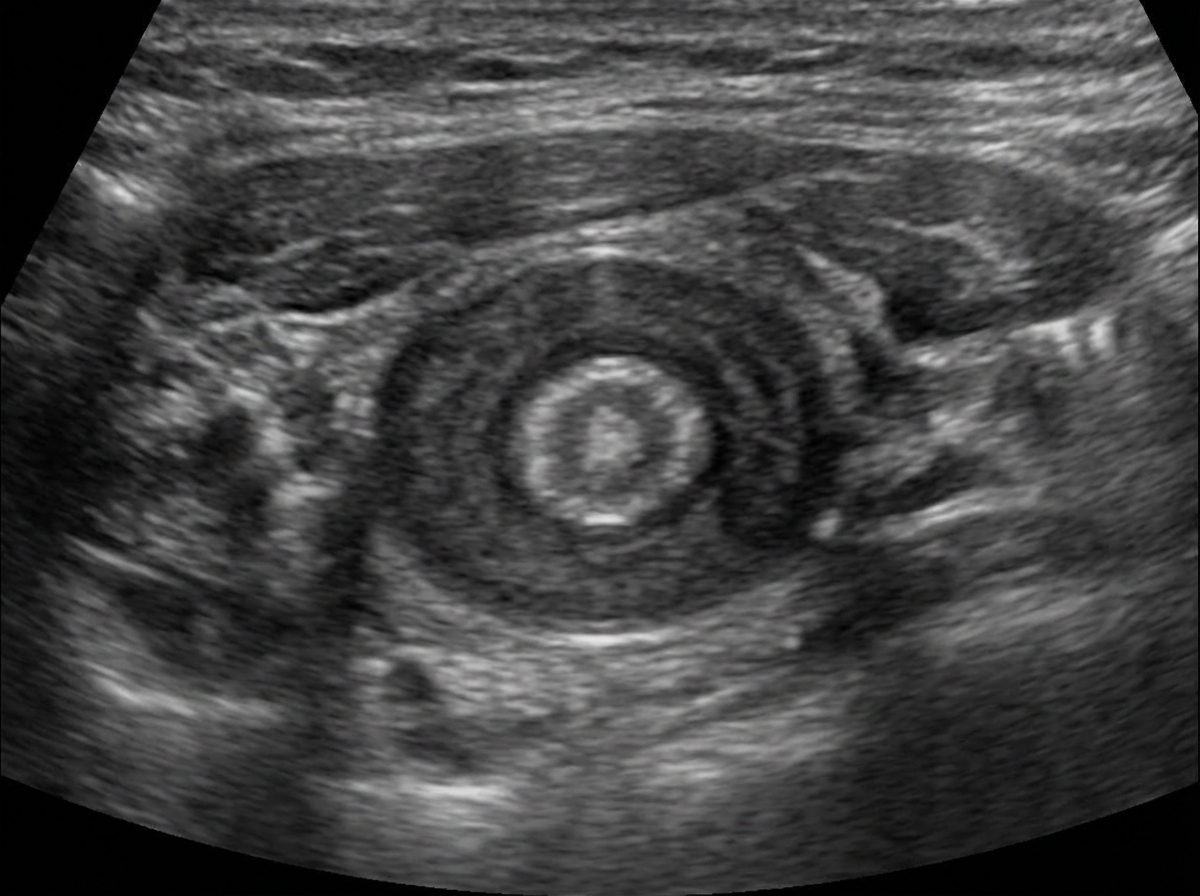
5 questionsA 6-week-old child with a history of vomiting undergoes an ultrasound, which shows an antral nipple sign or target sign, as shown in the image. What is the diagnosis?

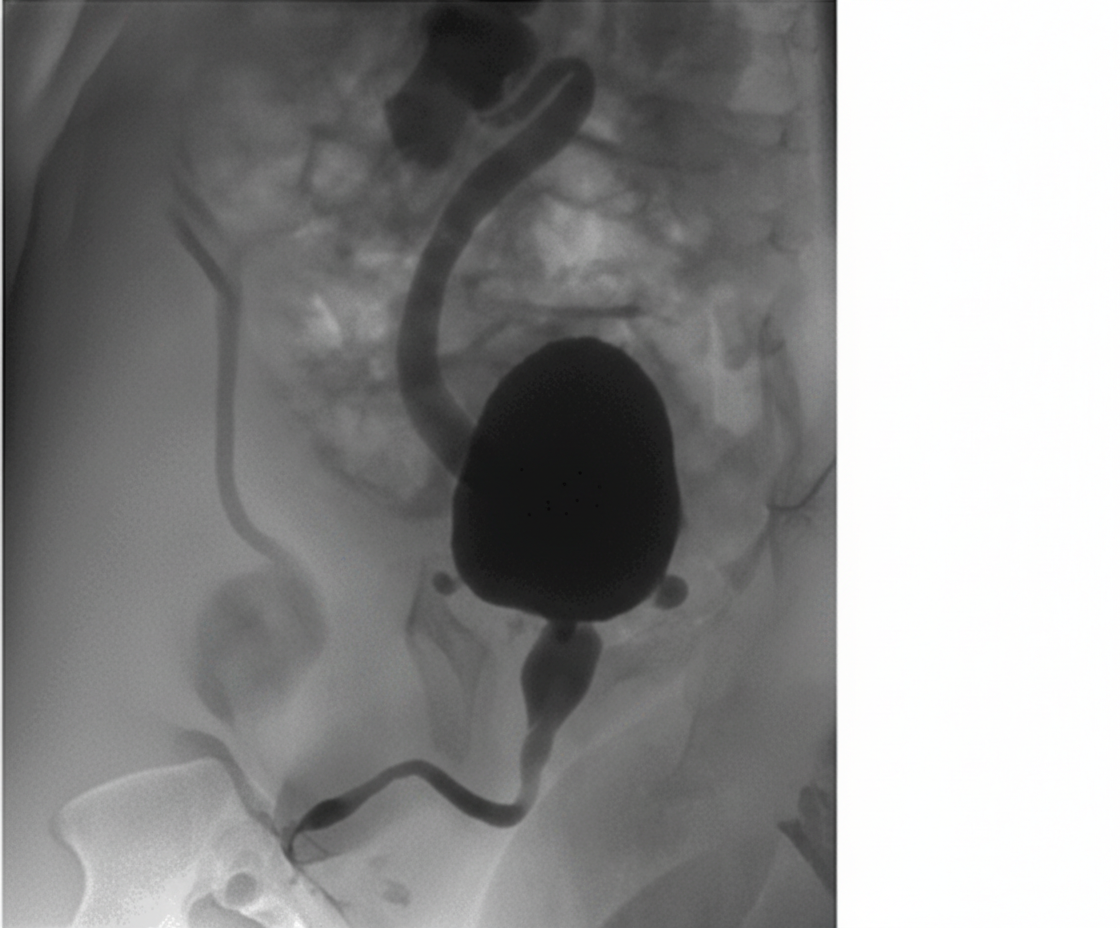
A 3-year-old child presents to the OPD with a history of recurrent urinary tract infections, poor urinary stream, and difficulty voiding. The radiological image is shown below. What is the most appropriate management?

An unimmunized 5 -year-old child presents to the OPD with a white membranous layer on the throat upon inspection. The child's brother is immunized. What is the first step in management?
An unimmunized 5 -year-old child presents to the OPD with a white membranous layer on inspection, suggesting diphtheria. What is the appropriate prophylaxis for a 2 -year-old contact who has completed their vaccination?
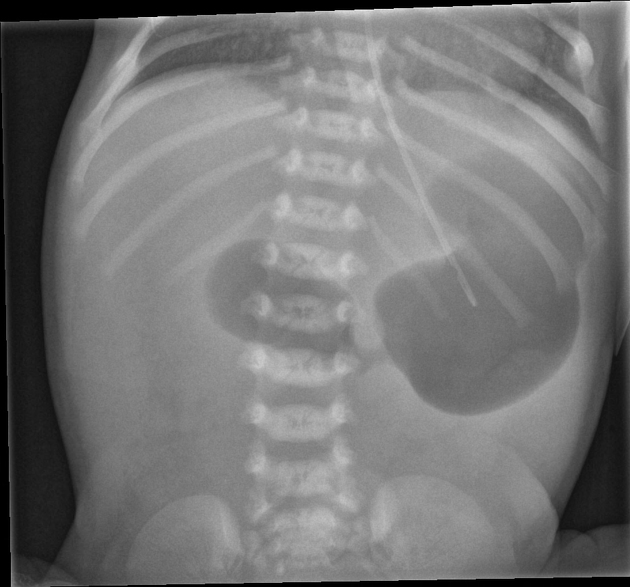
A 6-week-old baby is brought in by the mother with complaints of vomiting. An X-ray shows a single bubble appearance. What is the most likely diagnosis?

NEET-PG 2024 - Pediatrics NEET-PG Practice Questions and MCQs
Question 71: A 6-week-old child with a history of vomiting undergoes an ultrasound, which shows an antral nipple sign or target sign, as shown in the image. What is the diagnosis?
- A. Congenital pyloric stenosis (Correct Answer)
- B. Umbilical hernia
- C. Small bowel obstruction
- D. Jejunal atresia
- E. Duodenal atresia
Explanation: ***Congenital pyloric stenosis*** - The ultrasound findings of an **antral nipple sign** and **target sign** are classic indicators of **hypertrophic pyloric stenosis**. - This condition presents with **projectile vomiting** in infants, typically between 3-6 weeks of age, due to hypertrophy of the pyloric muscle. *Umbilical hernia* - An **umbilical hernia** is a protrusion of abdominal contents through the umbilical ring. It is usually diagnosed clinically and presents as a bulge, not with vomiting. - Ultrasound for an umbilical hernia would show bowel loops or omentum protruding through the abdominal wall defect, not the specific pyloric signs described. *Small bowel obstruction* - While small bowel obstruction can cause vomiting, the ultrasound findings would typically show **dilated loops of bowel** and a **transition point**, not an antral nipple or target sign specifically at the pylorus. - Other clinical features, such as abdominal distention and absence of stool, would also be more prominent. *Jejunal atresia* - **Jejunal atresia** is a congenital anomaly where part of the jejunum is underdeveloped or absent, leading to a complete obstruction. - Ultrasound would reveal **dilated loops of small bowel**, typically without peristalsis past the obstruction, and polyhydramnios antenatally, but not the specific pyloric ultrasound signs. *Duodenal atresia* - **Duodenal atresia** is a congenital obstruction of the duodenum that typically presents with bilious vomiting soon after birth. - The characteristic ultrasound finding is the **"double bubble" sign**, representing a distended stomach and proximal duodenum, not the target or antral nipple sign seen at the pylorus.
Question 72: A 3-year-old child presents to the OPD with a history of recurrent urinary tract infections, poor urinary stream, and difficulty voiding. The radiological image is shown below. What is the most appropriate management?
- A. Endoscopic ablation (Correct Answer)
- B. Dilation of urethra
- C. Dilation of urethra and bladder
- D. Conservative
- E. Vesicostomy
Explanation: ***Endoscopic ablation*** - The image shows a distended bladder with a dilated, elongated posterior urethra and a narrow stream of contrast beyond the bladder neck, characteristic findings of **posterior urethral valves (PUV)**. - **Endoscopic ablation (incision or fulguration)** of the valves is the definitive treatment for PUV to relieve obstruction and prevent further kidney damage. - This is the **gold standard primary treatment** for PUV in children who are large enough to undergo the procedure safely. *Dilation of urethra* - **Dilation** is generally ineffective because PUV are folds of tissue that require incision rather than simple stretching. - This approach does not address the underlying anatomical obstruction caused by the valves and could potentially cause damage to the urethra. *Dilation of urethra and bladder* - **Dilation of the urethra** is not an effective treatment for PUV. The bladder is already dilated due to the obstruction, and further dilation would not resolve the issue. - This approach would not remove the obstruction and could worsen bladder function or lead to further complications like reflux. *Conservative* - **Conservative management** with watchful waiting is not appropriate for PUV, as untreated obstruction can lead to progressive and irreversible kidney damage, bladder dysfunction, and recurrent UTIs. - Timely intervention is crucial to preserve renal function and improve long-term outcomes in boys with PUV. *Vesicostomy* - **Vesicostomy** (temporary bladder diversion) is reserved for specific scenarios such as neonates or very young infants too small for safe endoscopic ablation, severe hydronephrosis with renal failure, or failed primary ablation. - In this **3-year-old child**, endoscopic ablation is preferred as the primary definitive treatment rather than temporary diversion, which would require a second procedure later.
Question 73: An unimmunized 5 -year-old child presents to the OPD with a white membranous layer on the throat upon inspection. The child's brother is immunized. What is the first step in management?
- A. Diphtheria antitoxin (Correct Answer)
- B. Diphtheria toxoid
- C. Penicillin
- D. Isolation and supportive care
- E. Tracheostomy
Explanation: ***Diphtheria antitoxin*** - The presence of a **white membranous layer** on the **throat** in an **unimmunized child**, along with the high contagiousness (brother's immunization is relevant to exposure), strongly suggests **diphtheria**. - **Diphtheria antitoxin (DAT)** is the crucial first-line treatment to neutralize the **exotoxin** produced by *Corynebacterium diphtheriae*, which is responsible for the severe systemic effects. - Antitoxin must be administered **immediately** without waiting for culture confirmation, as it only neutralizes unbound toxin. *Diphtheria toxoid* - **Diphtheria toxoid** is used for **active immunization** (vaccination) to prevent diphtheria, not for emergency treatment of an active infection. - Administering toxoid during an acute infection would not rapidly neutralize the circulating toxin. *Penicillin* - **Penicillin** (or erythromycin) is used to **eradicate the bacteria** (*Corynebacterium diphtheriae*) from the patient's throat and prevent further toxin production and transmission. - While important for source control, it does not neutralize the pre-formed toxin, which is the immediate threat to life. - Antibiotics should be given **after** antitoxin administration. *Isolation and supportive care* - **Isolation** is essential to prevent transmission, but it does not treat the patient's infection. - **Supportive care** is also crucial, but it addresses symptoms rather than the underlying cause or the effects of the toxin. *Tracheostomy* - **Tracheostomy** may be required later for airway obstruction if the membrane extends to the larynx or causes significant respiratory compromise. - However, it is **not the first step** in management; securing airway patency comes after antitoxin administration unless there is immediate life-threatening airway obstruction. - The priority is neutralizing the toxin to prevent further membrane formation and systemic complications.
Question 74: An unimmunized 5 -year-old child presents to the OPD with a white membranous layer on inspection, suggesting diphtheria. What is the appropriate prophylaxis for a 2 -year-old contact who has completed their vaccination?
- A. No prophylaxis needed
- B. Toxoid
- C. Immunoglobulins
- D. Penicillin (Correct Answer)
- E. Erythromycin
Explanation: ***Penicillin*** - For a **fully vaccinated contact** of a diphtheria case, **antibiotic prophylaxis** (e.g., penicillin or erythromycin) is recommended to prevent carriage and transmission of *Corynebacterium diphtheriae*. - This approach aims to eradicate the organism from the respiratory tract, even if the contact is otherwise protected from the disease itself. - **Penicillin** is a commonly used first-line agent for this purpose. *Erythromycin* - **Erythromycin** is also an acceptable antibiotic for diphtheria prophylaxis and is particularly useful in penicillin-allergic patients. - Both penicillin and erythromycin are effective for preventing carriage; the choice between them may depend on local guidelines, patient allergies, and availability. - In this context, either would be clinically appropriate, but penicillin is often listed as the primary option in standard guidelines. *No prophylaxis needed* - This is incorrect because even vaccinated individuals can become **asymptomatic carriers** of *C. diphtheriae* and transmit the infection to unimmunized or under-immunized contacts. - Prophylaxis is crucial for **breaking the chain of transmission** in a household or close contact setting. *Toxoid* - **Diphtheria toxoid** is the active component of the diphtheria vaccine, which stimulates the immune system to produce antibodies against diphtheria toxin, preventing the disease. - While important for ongoing immunity, administering the toxoid as an immediate prophylaxis for a fully vaccinated contact is not the primary intervention for preventing carriage; **antibiotics are used for this purpose**. *Immunoglobulins* - **Diphtheria antitoxin** (DAT), which contains immunoglobulins, is used for the **treatment of active diphtheria disease** by neutralizing the circulating toxin. - It is not indicated for prophylaxis in vaccinated contacts, as their immune system is already primed to handle potential exposure to the toxin, and the goal of prophylaxis here is to prevent colonization rather than toxin effects.
Question 75: A 6-week-old baby is brought in by the mother with complaints of vomiting. An X-ray shows a single bubble appearance. What is the most likely diagnosis?
- A. Duodenal atresia
- B. Annular pancreas
- C. Congenital hypertrophic pyloric stenosis (CHPS) (Correct Answer)
- D. Jejunal atresia
- E. Malrotation with midgut volvulus
Explanation: ***Congenital hypertrophic pyloric stenosis (CHPS)*** - The **single bubble appearance** observed in the X-ray, along with vomiting in a 6-week-old, is characteristic of an obstruction at the gastric outlet due to **pyloric stenosis**. The "bubble" represents the dilated stomach. - Infants with CHPS typically present with **non-bilious projectile vomiting** around 3-6 weeks of age, often accompanied by good appetite. *Duodenal atresia* - This condition classically presents with a **"double bubble" sign** on X-ray, representing dilation of the stomach and the proximal duodenum. - Vomiting is usually **bilious** and occurs earlier, often from birth. *Annular pancreas* - Annular pancreas can cause duodenal obstruction, leading to a **"double bubble" sign** similar to duodenal atresia. - The presentation would also be earlier, typically with **bilious vomiting** from birth or shortly thereafter. *Jejunal atresia* - Jejunal atresia would result in **multiple dilated loops of small bowel** proximal to the obstruction with air-fluid levels, rather than a single bubble. - The vomiting would be **bilious** and abdominal distension would be more prominent. *Malrotation with midgut volvulus* - This presents with **bilious vomiting** and can occur at any age, though commonly in the first few weeks of life. - X-ray findings include a **"corkscrew" or "whirl" sign** on contrast studies, or a gasless abdomen if complete obstruction occurs. - Unlike the single bubble of pyloric stenosis, malrotation typically shows abnormal bowel gas patterns or a paucity of gas in the abdomen.