Diagnosis
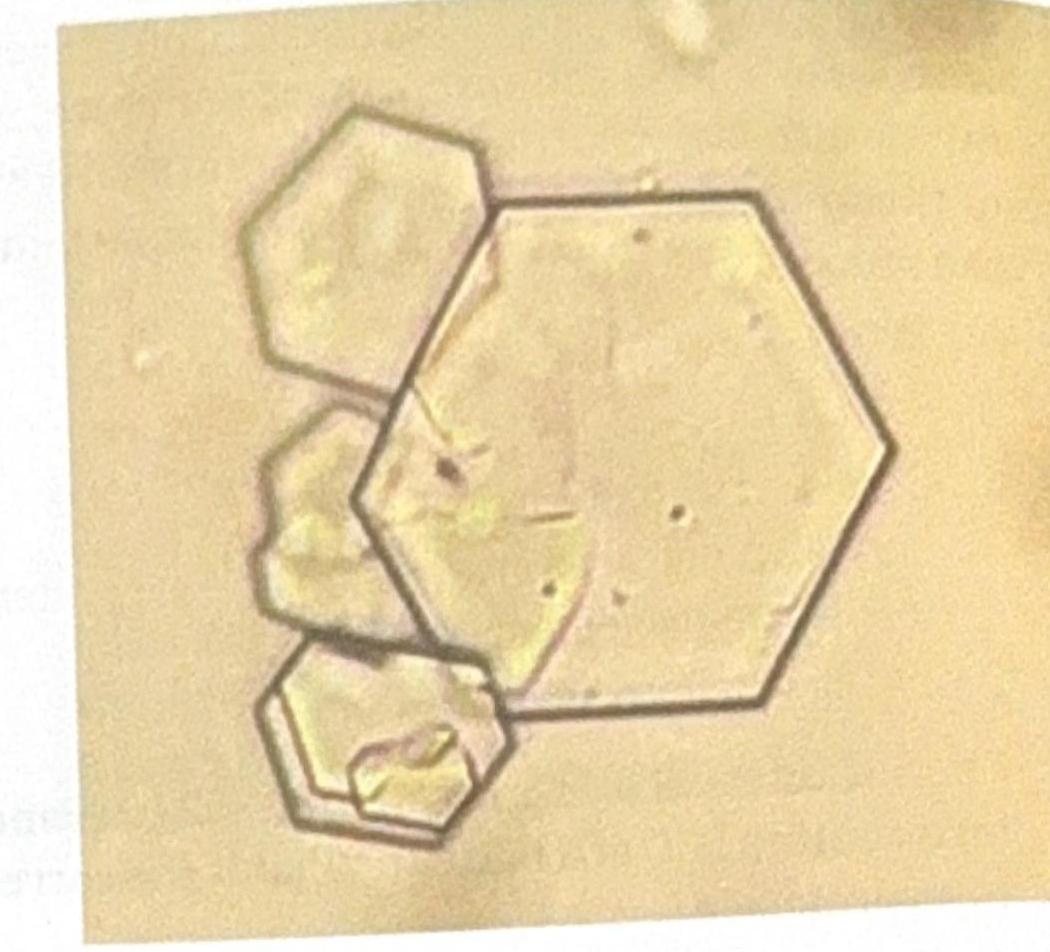
1 questionsA young patient presents to the OPD with recurrent colicky abdominal pain. Urine examination shows the presence of red blood cells (RBCs) and the following crystal shape in the figure. What is the most likely diagnosis?
NEET-PG 2024 - Diagnosis NEET-PG Practice Questions and MCQs
Question 41: A young patient presents to the OPD with recurrent colicky abdominal pain. Urine examination shows the presence of red blood cells (RBCs) and the following crystal shape in the figure. What is the most likely diagnosis?
- A. Cystine stone (Correct Answer)
- B. Glomerulonephritis
- C. Oxalate stone
- D. Polycystic kidney disease
- E. Uric acid stone
Explanation: ***Cystine stone*** - The image displays classic **hexagonal** crystals, which are pathognomonic for **cystine stones**. - Recurrent colicky abdominal pain in a young patient with hematuria (RBCs in urine) is highly suggestive of **nephrolithiasis** (kidney stones), and the crystal morphology confirms cystine as the cause. - Cystine stones are associated with **cystinuria**, an autosomal recessive disorder causing defective renal tubular reabsorption of cystine. *Glomerulonephritis* - While glomerulonephritis can cause hematuria, the presence of **hexagonal crystals** in the urine is not a feature of this condition. - Glomerulonephritis typically involves **dysmorphic RBCs** and **RBC casts** in the urine, not hexagonal crystals. *Oxalate stone* - **Calcium oxalate crystals** typically appear as **envelope-shaped (dihydrate)** or **dumbbell-shaped (monohydrate)**. - While oxalate stones are the most common cause of kidney stones and colicky pain, their crystal morphology is distinct from the hexagonal shape seen here. *Polycystic kidney disease* - Polycystic kidney disease is a genetic disorder characterized by **multiple cysts** in the kidneys, which can cause pain and hematuria. - However, it does **not** typically present with specific crystal shapes like those shown in the image, as the primary pathology is structural, not related to crystal formation. *Uric acid stone* - **Uric acid crystals** typically appear as **rhomboid or diamond-shaped** crystals, often with a yellow-brown color. - While uric acid stones can cause similar symptoms (colicky pain, hematuria), the crystal morphology is distinctly different from the hexagonal cystine crystals shown in the image. - Uric acid stones are associated with **hyperuricemia**, **low urine pH**, and conditions like gout.
Internal Medicine
7 questionsA patient presents with large sweaty hands, macroglossia, and frontal bossing. What is the best test for confirmation of the diagnosis?
A patient presents with recurrent lung infections, and the chest X-ray provided shows a characteristic finding. What is the most likely diagnosis?
Which of the following statements regarding von Willebrand disease is incorrect?
A patient presents with headache, confusion, and a diagnosis of a brain tumor. The family history reveals brain and kidney tumors. What is the most likely diagnosis?
A 26-year-old woman presents to the OPD with distended neck veins and difficulty in breathing. On further evaluation, the patient is diagnosed with myasthenia gravis. Radiological imaging reveals an anterior mediastinal mass on CT. What is the most likely diagnosis?
A patient underwent a gastrectomy. Which vitamin replacement is required?
A 45-year-old patient presents with hypertension, hematuria, and flank pain. An MRI scan is performed, and the image provided shows multiple cystic lesions in both kidneys. What is the most likely diagnosis?

NEET-PG 2024 - Internal Medicine NEET-PG Practice Questions and MCQs
Question 41: A patient presents with large sweaty hands, macroglossia, and frontal bossing. What is the best test for confirmation of the diagnosis?
- A. GHRH levels
- B. IGF-1 (Correct Answer)
- C. IGF-2
- D. GH levels after glucose suppression
- E. Random GH level
Explanation: ***IGF-1*** - Elevated **IGF-1 (Insulin-like Growth Factor 1)** is the most reliable screening test for acromegaly, reflecting integrated GH secretion over time. - The clinical signs of **large sweaty hands**, **macroglossia**, and **frontal bossing** are classic symptoms of acromegaly, caused by excessive growth hormone (GH) production, which then stimulates IGF-1. *GHRH levels* - **Growth hormone-releasing hormone (GHRH)** levels are typically only measured when investigating ectopic GHRH production as a rare cause of acromegaly, which is not the primary diagnostic step. - While GHRH stimulates GH, its direct measurement is not the standard initial diagnostic test for suspected pituitary-driven acromegaly. *IGF-2* - **IGF-2 (Insulin-like Growth Factor 2)** plays a role in fetal growth and certain tumor-related syndromes, but it is not the primary mediator or diagnostic marker for acromegaly in adults. - IGF-1, not IGF-2, is the main growth factor responsible for the anabolic effects of growth hormone. *GH levels after glucose suppression* - Measuring **GH levels after glucose suppression** (oral glucose tolerance test with 75g glucose) is a confirmatory test for acromegaly, used when IGF-1 levels are equivocal or borderline. - In healthy individuals, glucose suppresses GH secretion to <1 ng/mL, but in acromegaly, GH levels remain elevated (failure to suppress), confirming autonomous GH hypersecretion. *Random GH level* - **Random GH levels** are unreliable for diagnosing acromegaly due to the pulsatile nature of GH secretion, with significant variation throughout the day. - A single normal GH level does not exclude acromegaly, and a single elevated level can occur in healthy individuals during normal secretory peaks, making it inadequate as a diagnostic test.
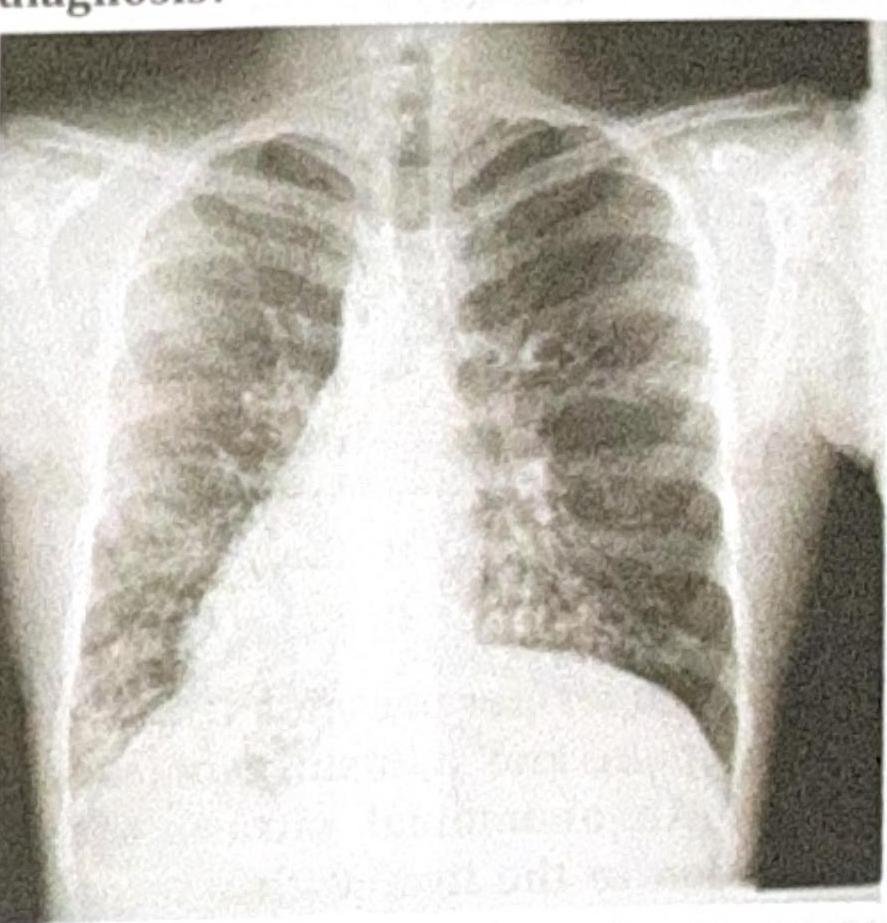
Question 42: A patient presents with recurrent lung infections, and the chest X-ray provided shows a characteristic finding. What is the most likely diagnosis?
- A. Kartagener syndrome (Correct Answer)
- B. Cystic fibrosis
- C. DiGeorge syndrome
- D. Down syndrome
Explanation: ***Kartagener syndrome*** - This syndrome is a subgroup of **primary ciliary dyskinesia** and is characterized by the triad of **situs inversus** (dextrocardia as seen on the chest X-ray), **chronic sinusitis**, and **bronchiectasis**. - Recurrent lung infections are a common presentation due to impaired mucociliary clearance leading to bronchiectasis. *Cystic fibrosis* - While cystic fibrosis does present with **recurrent lung infections** and **bronchiectasis**, it is not typically associated with **situs inversus** or other malformations of organ placement. - Diagnosis is usually supported by a **positive sweat chloride test** and genetic testing for CFTR mutations. *DiGeorge syndrome* - This syndrome is characterized by **T-cell immunodeficiency**, **hypocalcemia**, and **congenital heart defects**. - Recurrent infections in DiGeorge syndrome are due to immunodeficiency, not primarily due to impaired ciliary function or situs inversus. *Down syndrome* - Down syndrome is a chromosomal disorder associated with intellectual disability, distinctive facial features, and an increased risk of several health problems, including **congenital heart disease** and **immune dysfunction**. - Recurrent lung infections can occur due to weakened immune function or structural airway abnormalities, but it does not cause situs inversus or primary ciliary dyskinesia.
Question 43: Which of the following statements regarding von Willebrand disease is incorrect?
- A. Type 2 von Willebrand disease is associated with a moderate bleeding tendency.
- B. Type 3 von Willebrand disease is associated with severe deficiency of factor VIII.
- C. Type 1 von Willebrand disease presents with severe bleeding since childhood. (Correct Answer)
- D. Type 2 von Willebrand disease includes subtypes with varying defects in von Willebrand factor.
Explanation: ***Type 1 von Willebrand disease presents with severe bleeding since childhood.*** - This statement is incorrect because **Type 1 von Willebrand disease (vWD)** is characterized by a **partial quantitative deficiency** of von Willebrand factor (vWF), leading to **mild to moderate bleeding** that typically presents later in life or with specific challenges like surgery. - **Severe bleeding since childhood** is more characteristic of **Type 3 vWD**, which involves a near-complete absence of vWF. *Type 2 von Willebrand disease is associated with a moderate bleeding tendency.* - This statement is correct as **Type 2 vWD** involves **qualitative defects** in vWF, meaning the protein is present but doesn't function correctly [1]. - This typically results in a **moderate bleeding tendency**, which can vary depending on the specific subtype (2A, 2B, 2M, 2N). *Type 3 von Willebrand disease is associated with severe deficiency of factor VIII.* - This statement is correct because **Type 3 vWD** is characterized by a near-complete absence of vWF, which is essential for stabilizing **Factor VIII** in circulation [2]. - The severe deficiency of vWF leads to a **marked decrease in Factor VIII levels**, resulting in a bleeding phenotype that can be difficult to distinguish from severe hemophilia A. *Type 2 von Willebrand disease includes subtypes with varying defects in von Willebrand factor.* - This statement is correct as **Type 2 vWD** is subdivided into four main types (2A, 2B, 2M, 2N), each with distinct **qualitative defects** in the von Willebrand factor protein [2]. - These subtypes are differentiated by issues such as **multimerization defects**, increased platelet binding, or decreased affinity for Factor VIII [2].
Question 44: A patient presents with headache, confusion, and a diagnosis of a brain tumor. The family history reveals brain and kidney tumors. What is the most likely diagnosis?
- A. Neurofibromatosis
- B. Li-Fraumeni syndrome
- C. VHL syndrome (Correct Answer)
- D. Churg-Strauss syndrome
Explanation: ***VHL syndrome*** - **Von Hippel-Lindau (VHL) syndrome** is an inherited disorder characterized by the growth of tumors and cysts in various parts of the body, including the **brain (hemangioblastomas)** and **kidneys (renal cell carcinoma)**. - The presentation of a brain tumor, kidney tumors, and a positive family history for both organs strongly points to VHL syndrome. *Neurofibromatosis* - **Neurofibromatosis (NF)** typically presents with **cafe-au-lait spots**, neurofibromas, optic gliomas, and Lisch nodules. - While it involves brain tumors, kidney tumors are not a primary feature of NF. *Li-Fraumeni syndrome* - **Li-Fraumeni syndrome** is associated with an increased risk of various cancers, including **sarcomas**, **breast cancer**, **adrenocortical carcinomas**, and **leukemia**. - While brain tumors can occur, the specific combination of brain and kidney tumors with a clear family history is less characteristic of Li-Fraumeni than VHL syndrome. *Churg-Strauss syndrome* - **Churg-Strauss syndrome (Eosinophilic Granulomatosis with Polyangiitis)** is a systemic vasculitis characterized by **asthma**, **eosinophilia**, and **granulomatous inflammation**. - It does not involve the development of brain or kidney tumors.
Question 45: A 26-year-old woman presents to the OPD with distended neck veins and difficulty in breathing. On further evaluation, the patient is diagnosed with myasthenia gravis. Radiological imaging reveals an anterior mediastinal mass on CT. What is the most likely diagnosis?
- A. Thymoma (Correct Answer)
- B. Aortic aneurysm
- C. CA lung
- D. Cardiomegaly
Explanation: ***Thymoma*** - **Thymomas** are frequently associated with myasthenia gravis, occurring in roughly 10-15% of patients with the condition. - An **anterior mediastinal mass** in a patient with myasthenia gravis is highly suggestive of a thymoma, which can compress surrounding structures leading to symptoms like distended neck veins and dyspnea [1]. *Aortic aneurysm* - While an aortic aneurysm can cause a mediastinal mass and potentially lead to pressure symptoms, it is not directly associated with the pathogenesis of **myasthenia gravis**. - **Distended neck veins** and **dyspnea** could be symptoms of a large aneurysm, but the link to myasthenia gravis makes a thymoma more likely. *CA lung* - Lung cancer can present as a mediastinal mass, but it is not typically associated with **myasthenia gravis** as a paraneoplastic syndrome, especially in a 26-year-old. - While lung cancer could cause **distended neck veins** (due to SVC syndrome) and **dyspnea**, the co-occurrence with myasthenia gravis points away from this diagnosis. *Cardiomegaly* - **Cardiomegaly** refers to an enlarged heart and is not typically described as an "anterior mediastinal mass." - Although it can cause **dyspnea**, it does not explain the **distended neck veins** in this context or the specific association with **myasthenia gravis**.
Question 46: A patient underwent a gastrectomy. Which vitamin replacement is required?
- A. Vitamin A
- B. Vitamin C
- C. Vitamin D
- D. Vitamin B12 (Correct Answer)
Explanation: ***Vitamin B12*** - **Gastrectomy** removes all or part of the stomach, which is the site of **intrinsic factor** production by parietal cells. - Intrinsic factor is essential for the absorption of **Vitamin B12** (cobalamin) in the terminal ileum; without it, severe B12 deficiency will develop [1]. *Vitamin A* - Vitamin A (retinol) is a **fat-soluble vitamin** primarily absorbed in the small intestine, and its absorption is generally not directly affected by gastrectomy. - Deficiency is usually linked to malabsorption syndromes affecting the small intestine or severe hepatic dysfunction. *Vitamin C* - Vitamin C (ascorbic acid) is a **water-soluble vitamin** absorbed in the small intestine, and its absorption is largely independent of gastric function. - While gastrectomy might impact overall nutrient intake, there's no specific mechanism linking it directly to Vitamin C malabsorption. *Vitamin D* - Vitamin D is a **fat-soluble vitamin** absorbed in the small intestine, and its absorption is primarily dependent on the presence of bile salts and an intact small bowel. - Gastrectomy does not directly impair Vitamin D absorption, although general nutritional deficiencies can occur if dietary intake is insufficient post-surgery.
Question 47: A 45-year-old patient presents with hypertension, hematuria, and flank pain. An MRI scan is performed, and the image provided shows multiple cystic lesions in both kidneys. What is the most likely diagnosis?
- A. Renal cyst
- B. Renal tumor
- C. Autosomal Dominant Polycystic Kidney Disease (ADPKD) (Correct Answer)
- D. Chronic kidney disease with cystic degeneration
- E. Acquired cystic kidney disease
Explanation: ***Autosomal Dominant Polycystic Kidney Disease (ADPKD)*** - The presence of **hypertension, hematuria, and flank pain** in conjunction with an MRI showing **multiple bilateral renal cystic lesions** is highly characteristic of ADPKD. - ADPKD is a genetic disorder leading to the gradual enlargement of **cysts in both kidneys**, often accompanied by complications such as pain, bleeding into cysts, and eventually **renal failure**. *Renal cyst* - A **simple renal cyst** is typically a solitary, benign lesion and would not explain the **hypertension, hematuria, or multiple bilateral cysts** seen on imaging. - While common, a simple cyst usually causes no symptoms unless it becomes very large or ruptures. *Renal tumor* - A renal tumor, such as **renal cell carcinoma**, typically presents as a **solid mass** or a complex cystic mass, not multiple simple cysts bilaterally. - While it can cause hematuria, flank pain, and hypertension, the imaging description of **multiple cystic lesions in both kidneys** points away from a single tumor. *Chronic kidney disease with cystic degeneration* - While **chronic kidney disease (CKD)** can sometimes be associated with acquired renal cysts, especially in patients on dialysis, these cysts are typically **smaller, fewer in number**, and develop over a longer course than what is implied here. - This condition does not typically present with the extensive, bilateral cystic burden seen in ADPKD as the primary pathology. *Acquired cystic kidney disease* - **Acquired cystic kidney disease (ACKD)** typically develops in patients with **end-stage renal disease**, particularly those on **long-term dialysis**. - While it can present with bilateral renal cysts, it usually occurs in the context of **pre-existing chronic kidney disease**, and the patient would have a known history of renal dysfunction. - The clinical presentation here, with a 45-year-old presenting acutely with hypertension, hematuria, and flank pain without mention of dialysis or CKD history, favors **ADPKD** over ACKD.
Radiology
1 questionsA 45-year-old farmer presents with right upper quadrant pain and a history of exposure to livestock. An abdominal ultrasound shows a cystic lesion in the liver with internal floating membranes, described as the "Water lily sign." Based on this finding, what is the most likely Gharbi classification stage of the hydatid cyst?

NEET-PG 2024 - Radiology NEET-PG Practice Questions and MCQs
Question 41: A 45-year-old farmer presents with right upper quadrant pain and a history of exposure to livestock. An abdominal ultrasound shows a cystic lesion in the liver with internal floating membranes, described as the "Water lily sign." Based on this finding, what is the most likely Gharbi classification stage of the hydatid cyst?
- A. Gharbi Stage I
- B. Gharbi Stage II
- C. Gharbi Stage III (Correct Answer)
- D. Gharbi Stage IV
Explanation: ***Gharbi Stage III*** - This stage is characterized by a **cystic lesion with internal floating membranes** (daughter cysts or detached endocyst), which is consistent with the "Water lily sign" described. - The membranes are indicative of a **degenerating or ruptured endocyst** within the main cyst, signifying a more advanced stage than simple cysts. *Gharbi Stage I* - This stage represents a **simple, unilocular cyst** with an anechoic (fluid-filled) lumen, without any internal structures or membranes. - It would appear as a clearly defined, fluid-filled mass with a smooth wall, lacking the internal complexity shown in the image. *Gharbi Stage II* - Gharbi Stage II is characterized by a **cyst with internal septations**, indicating the presence of multiple daughter cysts within the main cyst. - While it involves internal structures, these are typically well-defined septa rather than freely moving, detached membranes. *Gharbi Stage IV* - This stage describes a **heterogeneous, degenerating cyst** with a solid-like appearance, often without a clear cystic lumen. - It reflects a more advanced, often calcified or completely inactivated cyst, which does not match the clear cystic structure with floating membranes seen in the image.
Surgery
1 questionsA 78-year-old immobile patient presents with a pressure ulcer on the sacral area, as shown in the image below. How would you grade this bedsore?

NEET-PG 2024 - Surgery NEET-PG Practice Questions and MCQs
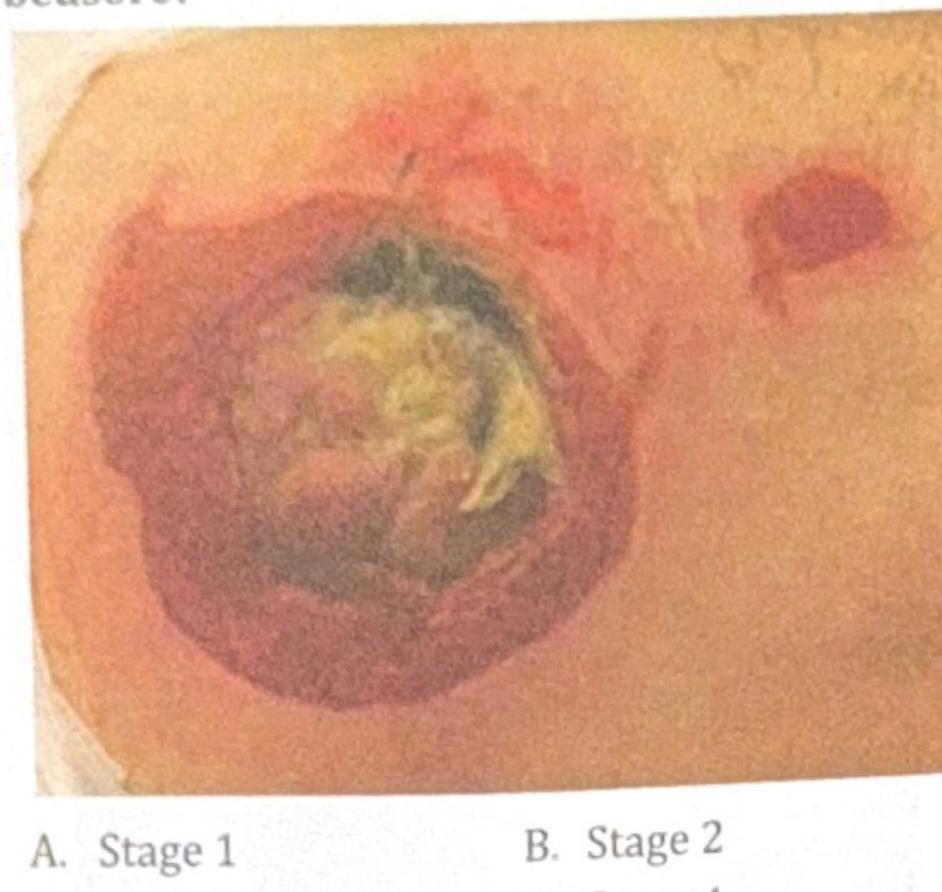
Question 41: A 78-year-old immobile patient presents with a pressure ulcer on the sacral area, as shown in the image below. How would you grade this bedsore?
- A. Stage 1
- B. Stage 2
- C. Stage 3
- D. Stage 4 (Correct Answer)
Explanation: *Stage 1* - A Stage 1 pressure ulcer is characterized by **non-blanchable erythema** of intact skin, typically over a bony prominence. - There is no break in the skin, which is not what is visible in the image. *Stage 2* - A Stage 2 pressure ulcer involves **partial-thickness skin loss** presenting as a shallow open ulcer with a red-pink wound bed, without slough or bruising. - The depth and tissue involvement shown in the image are far more extensive than a Stage 2 ulcer. *Stage 3* - A Stage 3 pressure ulcer involves **full-thickness tissue loss** where subcutaneous fat may be visible, but bone, tendon, or muscle are not exposed. - The visible structures in the image suggest involvement beyond the subcutaneous fat layer, distinguishing it from a Stage 3 ulcer. ***Stage 4*** - The image shows **full-thickness tissue loss** with visible **bone, tendon, or muscle**, indicating a Stage 4 pressure ulcer. - There is also evidence of **slough and eschar** in the wound bed, which is consistent with severe tissue damage extending beyond the subcutaneous fat. - This is the **correct answer** as the exposed deeper structures are pathognomonic for Stage 4.