Biochemistry
1 questionsA 45-year-old patient presents with symptoms of anemia, depigmented hair, and myelopathy. Which of the following mineral deficiencies is most likely associated with this clinical presentation?
NEET-PG 2024 - Biochemistry NEET-PG Practice Questions and MCQs
Question 31: A 45-year-old patient presents with symptoms of anemia, depigmented hair, and myelopathy. Which of the following mineral deficiencies is most likely associated with this clinical presentation?
- A. Copper (Correct Answer)
- B. Iron
- C. Fluoride
- D. Zinc
- E. Selenium
Explanation: ***Copper*** - **Copper deficiency** can lead to anemia due to its role in iron metabolism, **depigmented hair** (achromotrichia) due to impaired melanin synthesis, and **myelopathy** due to its involvement in maintaining the myelin sheath. - Symptoms often mimic those of **vitamin B12 deficiency**, including neurological manifestations like ataxia and spasticity. *Iron* - **Iron deficiency** is the most common cause of anemia but does not typically cause **depigmented hair** or **myelopathy**. - Its neurological symptoms are usually limited to **restless legs syndrome** and **pica**, not demyelination. *Fluoride* - **Fluoride deficiency** is primarily associated with an increased risk of dental caries and does not cause anemia, hair depigmentation, or myelopathy. - Excessive intake (fluorosis) can lead to **bone and tooth abnormalities**. *Zinc* - **Zinc deficiency** can cause immune dysfunction, **dermatitis**, impaired wound healing, and growth retardation. - It may rarely cause anemia in severe cases but does not typically cause hair depigmentation or myelopathy as primary symptoms. *Selenium* - **Selenium deficiency** is associated with **Keshan disease** (cardiomyopathy) and **Kashin-Beck disease** (osteoarthropathy). - While it can cause muscle weakness and fatigue, it does not typically present with the specific triad of anemia, hair depigmentation, and myelopathy seen in copper deficiency.
Internal Medicine
7 questionsA young patient in an endemic area presents with pleural fluid showing LDH level greater than 0.6 times the serum LDH, protein level greater than 0.5 times the serum protein, and lymphocytic predominance. What is the most likely diagnosis?
A patient presents with acute epigastric pain and an increase in serum lipase. Several days after stabilization, a chest X-ray shows bilateral diffuse infiltrates. What is the most common pathology explaining the chest X-ray findings?
A 62-year-old patient presents with left-sided arm and leg weakness, right-sided facial paralysis with lateral rectus gaze palsy, and nystagmus. Based on the clinical presentation, which of the following syndromes is most consistent with these symptoms?
A patient with a history of hypertension presents with atrial fibrillation, shortness of breath, and bilateral basal crackles on auscultation. Which of the following would be the least important in the management of this patient?
The PR interval was measured at 0.21 seconds on a routine ECG of a patient. What is the correct interpretation?
In Type 1 Diabetes Mellitus (DM) stage 3 beta cell destruction, which of the following is the most likely presentation?
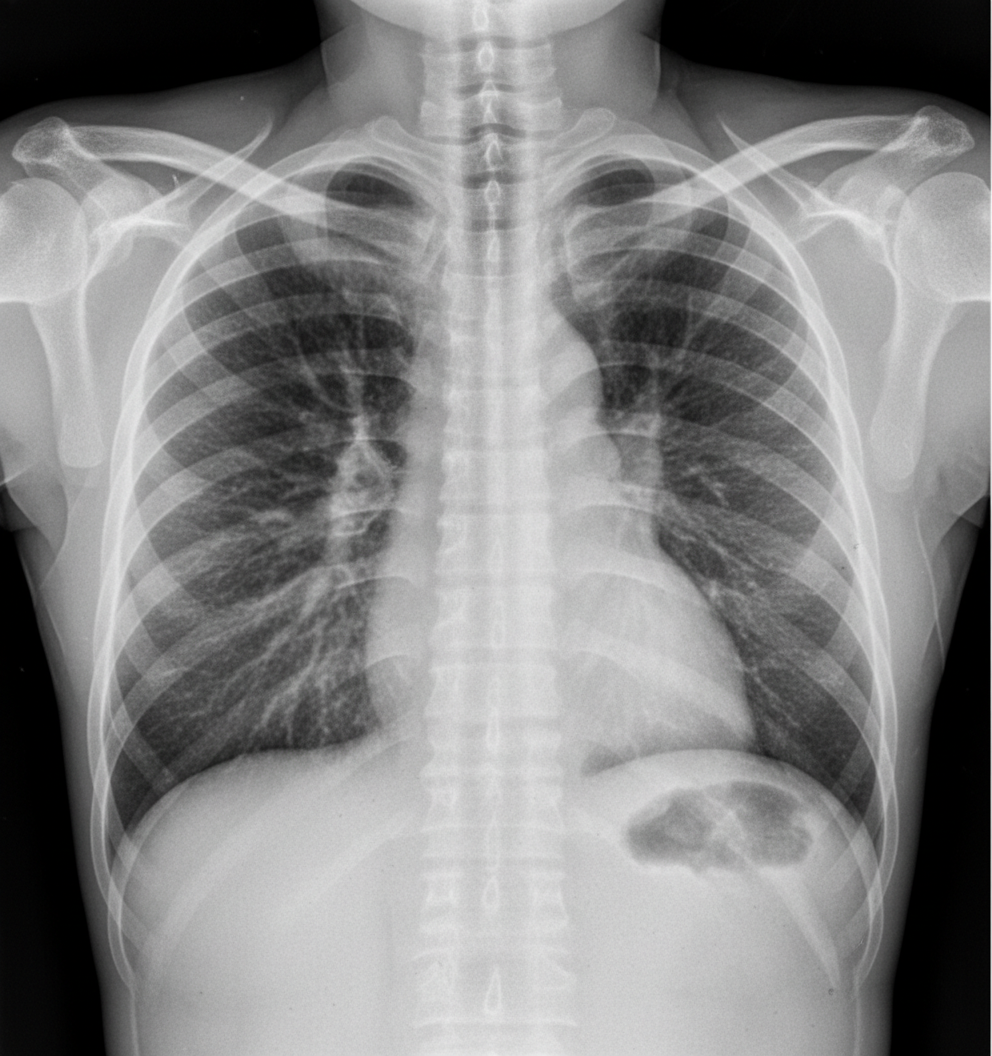
What is the most common cause of death in idiopathic pulmonary fibrosis (IPF)?
NEET-PG 2024 - Internal Medicine NEET-PG Practice Questions and MCQs
Question 31: A young patient in an endemic area presents with pleural fluid showing LDH level greater than 0.6 times the serum LDH, protein level greater than 0.5 times the serum protein, and lymphocytic predominance. What is the most likely diagnosis?
- A. Tuberculosis (Correct Answer)
- B. Heart failure
- C. Hepatic failure
- D. Renal failure
- E. Malignancy
Explanation: ***Tuberculosis*** - The patient's presentation with **exudative pleural fluid** (LDH > 0.6 times serum LDH, protein > 0.5 times serum protein) in an **endemic area** strongly suggests tuberculosis. - The **lymphocytic predominance** in the pleural fluid is a hallmark characteristic of tuberculous pleurisy. - **Young age** and **endemic area** further support TB as the most likely diagnosis. *Heart failure* - Pleural effusions due to heart failure are typically **transudative**, meaning they have low protein and LDH levels. - While heart failure can lead to pleural effusions, the fluid characteristics (exudative, lymphocytic predominance) do not fit this diagnosis. *Hepatic failure* - Pleural effusions in hepatic failure (e.g., due to cirrhosis) are usually **transudative** and result from fluid shifting from the abdomen (hepatic hydrothorax). - The fluid analysis in this scenario (exudative, lymphocytic predominance) is inconsistent with hepatic failure. *Renal failure* - Pleural effusions associated with renal failure (e.g., uremic pleurisy) can be exudative, but they often present with a **neutrophilic predominance** or may be hemorrhagic. - The specific lymphocytic predominance points away from typical renal failure-associated effusions. *Malignancy* - While malignant pleural effusions (lymphoma, metastatic carcinoma) can present with **lymphocytic predominance** and exudative characteristics, the clinical context is crucial. - The patient's **young age** and presentation in an **endemic area for tuberculosis** makes TB far more likely than malignancy. - In endemic areas, TB should be ruled out first before considering malignancy in young patients with lymphocytic pleural effusions.
Question 32: A patient presents with acute epigastric pain and an increase in serum lipase. Several days after stabilization, a chest X-ray shows bilateral diffuse infiltrates. What is the most common pathology explaining the chest X-ray findings?
- A. Increased PCWP
- B. Pulmonary thromboembolism
- C. Non-cardiogenic pulmonary edema (Correct Answer)
- D. Aspiration pneumonitis
- E. Pleural effusion
Explanation: ***Non-cardiogenic pulmonary edema*** - The patient's presentation with **acute epigastric pain** and **elevated serum lipase** is consistent with **acute pancreatitis**, which is a known cause of **ARDS (acute respiratory distress syndrome)**. - The chest X-ray findings of **bilateral diffuse infiltrates** without signs of cardiomegaly or pleural effusions are characteristic of **non-cardiogenic pulmonary edema** caused by ARDS. - ARDS complicates approximately **10-20% of severe acute pancreatitis cases** and presents with hypoxemia and bilateral pulmonary infiltrates. *Increased PCWP* - **Increased pulmonary capillary wedge pressure (PCWP)** is characteristic of **cardiogenic pulmonary edema**, where a failing heart causes increased pressure in the lungs. - The X-ray findings and clinical context of pancreatitis suggest a **non-cardiac cause** for the pulmonary edema, and PCWP would be **normal or low in ARDS**. *Pulmonary thromboembolism* - **Pulmonary embolism (PE)** often presents with **dyspnea, pleuritic chest pain**, and sometimes **tachycardia** or **hemoptysis**. - Chest X-rays in PE are often **normal** or show subtle findings like **Westermark sign** or **Hampton's hump**, which are not seen here. - The **bilateral diffuse infiltrates** are not typical of PE. *Aspiration pneumonitis* - **Aspiration pneumonitis** typically occurs in patients with impaired consciousness or dysphagia and usually presents with infiltrates in **dependent lung segments**, often the right lower lobe. - While pancreatitis can lead to nausea and vomiting, the **diffuse and bilateral** nature of the infiltrates is less typical for a primary aspiration event. *Pleural effusion* - **Pleural effusions** are a common complication of acute pancreatitis (occurring in up to **20% of cases**), typically left-sided or bilateral. - However, the described chest X-ray findings of **bilateral diffuse infiltrates** represent **parenchymal disease**, not simply fluid in the pleural space. - Pleural effusions would appear as **blunting of costophrenic angles** or fluid layering, not diffuse infiltrates.
Question 33: A 62-year-old patient presents with left-sided arm and leg weakness, right-sided facial paralysis with lateral rectus gaze palsy, and nystagmus. Based on the clinical presentation, which of the following syndromes is most consistent with these symptoms?
- A. Foville syndrome (Correct Answer)
- B. Benedict's syndrome
- C. Millard-Gubler syndrome
- D. Wallenberg syndrome
Explanation: ***Foville syndrome*** - This syndrome is characterized by a **pontine lesion** affecting the **abducens nucleus (cranial nerve VI)**, leading to ipsilateral gaze palsy, and the **facial nucleus (cranial nerve VII)**, causing ipsilateral facial weakness. [1] - The **crossed hemiparesis (left-sided arm and leg weakness)** results from involvement of the corticospinal tracts, and **nystagmus** can occur due to vestibular nucleus involvement, consistent with the patient's presentation. [1] *Benedict's syndrome* - This is a midbrain syndrome involving the **red nucleus** and **oculomotor nerve (cranial nerve III)**, causing ipsilateral oculomotor palsy and contralateral cerebellar ataxia. - It does not explain the patient's **facial weakness** or **abducens palsy**. *Millard-Gubler syndrome* - This pontine syndrome involves the **abducens nerve (cranial nerve VI)** and **facial nerve (cranial nerve VII)** in the pontine base, leading to ipsilateral gaze palsy and ipsilateral facial paralysis. - However, the hemiparesis in Millard-Gubler syndrome is typically **contralateral** to the lesion, but the facial paralysis and gaze palsy are usually due to direct nerve involvement rather than nuclear involvement, and **nystagmus** is not a characteristic feature. *Wallenberg syndrome* - This syndrome, also known as **lateral medullary syndrome**, is caused by a lesion in the **dorsolateral medulla** and presents with a constellation of symptoms including **ipsilateral ataxia**, **Horner's syndrome**, **high-pitched dysphagia**, and **contralateral loss of pain and temperature sensation**. [1] - It does not typically involve **facial weakness**, **abducens palsy**, or **hemiparesis** in the manner described.
Question 34: A patient with a history of hypertension presents with atrial fibrillation, shortness of breath, and bilateral basal crackles on auscultation. Which of the following would be the least important in the management of this patient?
- A. Start on anticoagulants
- B. Start β-blocker
- C. Cardioversion to correct rhythm if hemodynamically remains unstable even after medical management
- D. IV Digoxin for control rate (Correct Answer)
- E. Administer diuretics for fluid overload
Explanation: ***IV Digoxin for control rate*** - While **Digoxin** can be used for **rate control in atrial fibrillation**, its role is limited, especially in patients with **congestive heart failure** due to its delayed onset of action and narrow therapeutic window. - In a patient with **shortness of breath** and **bilateral basal crackles** (suggesting acute decompensated heart failure), rapid rate control with a **β-blocker** or **calcium channel blocker** is usually preferred for immediate symptom relief. - Digoxin is not first-line therapy in this acute setting and is therefore the **least important** among the management options listed. *Start on anticoagulants* - **Anticoagulation** is crucial for patients with **atrial fibrillation** to prevent **thromboembolic events**, particularly strokes. - Given the patient's history of **hypertension** and presence of **atrial fibrillation**, their **CHA2DS2-VASc score** is likely elevated, necessitating anticoagulation. *Start β-blocker* - **Beta-blockers** are first-line agents for **rate control in atrial fibrillation**, especially in patients with **hypertension** and signs of **heart failure**. - They effectively reduce ventricular response rate, improve diastolic filling, and can alleviate symptoms like **shortness of breath**. *Cardioversion to correct rhythm if hemodynamically remains unstable even after medical management* - If a patient with **atrial fibrillation** and signs of **heart failure** remains **hemodynamically unstable** despite initial medical management (e.g., rate control, diuretics), **cardioversion** (electrical or pharmacological) is an essential intervention to restore sinus rhythm. - This can acutely improve cardiac output and resolve symptoms of **decompensated heart failure**. *Administer diuretics for fluid overload* - **Diuretics** (e.g., furosemide) are essential for managing the **volume overload** in this patient, as evidenced by **bilateral basal crackles** and **shortness of breath**. - Reducing preload helps improve **pulmonary congestion** and alleviates acute heart failure symptoms. - Loop diuretics are a cornerstone of acute decompensated heart failure management.
Question 35: The PR interval was measured at 0.21 seconds on a routine ECG of a patient. What is the correct interpretation?
- A. Second degree heart block
- B. First degree heart block (Correct Answer)
- C. Normal rhythm
- D. Complete heart block
Explanation: ***First degree heart block*** - A **PR interval** greater than **0.20 seconds** (or 200 milliseconds) is the defining characteristic of **first-degree atrioventricular (AV) block** [1]. - In this condition, every atrial impulse is conducted to the ventricles, but the conduction is **delayed** [1]. *Second degree heart block* - This involves some, but not all, **P waves** being followed by a **QRS complex**, indicating **intermittent conduction failure** at the AV node [1]. - It presents as either **Mobitz type I (Wenckebach)** with progressive PR lengthening before a dropped beat, or **Mobitz type II** with sudden, unexpected dropped beats without prior PR prolongation [1]. *Normal rhythm* - A **normal PR interval** typically falls between **0.12 and 0.20 seconds** (120-200 milliseconds). - A measurement of **0.21 seconds** is outside this normal range, indicating an abnormality in AV conduction. *Complete heart block* - This is characterized by a complete dissociation between atrial and ventricular activity, where **no atrial impulses** are conducted to the ventricles. - On the ECG, this appears as P waves and QRS complexes occurring independently, with **regular but asynchronous** rhythms.
Question 36: In Type 1 Diabetes Mellitus (DM) stage 3 beta cell destruction, which of the following is the most likely presentation?
- A. Dysglycemic symptomatic
- B. Normoglycemic symptomatic
- C. Dysglycemic asymptomatic
- D. Hyperglycemia symptomatic (Correct Answer)
- E. Normoglycemic asymptomatic
Explanation: ***Hyperglycemia symptomatic*** - **Type 1 DM stage 3** is characterized by sufficient **beta-cell destruction** to cause overt hyperglycemia. - This level of hyperglycemia typically leads to classic symptoms such as **polyuria, polydipsia, and weight loss**. *Dysglycemic symptomatic* - **Dysglycemic** refers to abnormal blood sugar levels, but this term is too broad and doesn't specify the degree or symptomatic nature as precisely as **hyperglycemia symptomatic**. - While patients are symptomatic, the primary issue is **hyperglycemia**, making that a more specific and accurate description. *Normoglycemic symptomatic* - **Normoglycemic** implies normal blood sugar levels, which is inconsistent with **Type 1 DM stage 3** where significant beta-cell destruction has occurred. - This stage is defined by definite hyperglycemia, so a patient cannot be symptomatic while having normal glucose levels due to the disease. *Dysglycemic asymptomatic* - While there is **dysglycemia**, **asymptomatic presentation** is more characteristic of earlier stages (Type 1 DM stage 2), where hyperglycemia is present but not yet severe enough to cause overt symptoms. - In **stage 3**, beta-cell destruction is substantial, leading to glucose levels that are high enough to cause noticeable symptoms. *Normoglycemic asymptomatic* - **Normoglycemic asymptomatic** describes **Type 1 DM stage 1**, where autoimmunity is present but beta-cell destruction has not yet progressed enough to affect glucose levels. - This is the earliest stage of Type 1 DM, well before the overt hyperglycemia seen in stage 3.
Question 37: What is the most common cause of death in idiopathic pulmonary fibrosis (IPF)?
- A. Respiratory failure (Correct Answer)
- B. Pulmonary edema
- C. Cancer
- D. Pulmonary arterial hypertension (PAH)
- E. Acute exacerbation of IPF
Explanation: ***Respiratory failure*** - **Progressive fibrosis** of the lung tissue in idiopathic pulmonary fibrosis (IPF) directly impairs gas exchange, leading to **hypoxemia** and hypercapnia. - This deterioration ultimately culminates in **respiratory failure**, which is the primary cause of mortality in most IPF patients. *Pulmonary edema* - While pulmonary edema can occur in systemic conditions, it is not the **primary or most common cause of death** specifically in IPF. - IPF is characterized by **fibrotic remodeling**, not primarily fluid overload in the alveoli. *Cancer* - Patients with IPF have an **increased risk of lung cancer**, but it is not the most common cause of death compared to respiratory failure. - The development of cancer is a **complication**, not the direct mechanism by which most IPF patients succumb to the disease. *Pulmonary arterial hypertension (PAH)* - PAH can be a significant complication of IPF, contributing to increased morbidity and mortality, but it is typically a **secondary contributor to death**, often by worsening respiratory mechanics. - Its presence usually **compounds respiratory failure**, rather than being the standalone, most common cause of death. *Acute exacerbation of IPF* - Acute exacerbations represent episodes of **rapid clinical deterioration** with worsening dyspnea and hypoxemia, often idiopathic or triggered by infections. - While they are a **significant cause of mortality** (accounting for a substantial proportion of IPF deaths), the underlying mechanism still relates to respiratory failure, making chronic progressive respiratory failure the most common overall cause of death.
Pathology
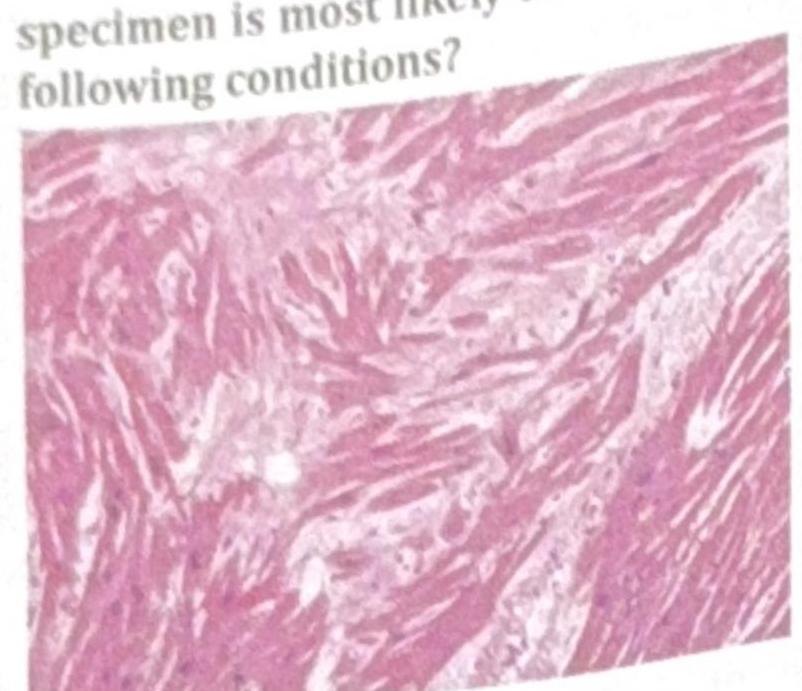
1 questionsAn athlete collapsed and expired while playing school basketball. Histology of the cardiac specimen is most likely to indicate which of the following conditions?

NEET-PG 2024 - Pathology NEET-PG Practice Questions and MCQs
Question 31: An athlete collapsed and expired while playing school basketball. Histology of the cardiac specimen is most likely to indicate which of the following conditions?
- A. Dilated cardiomyopathy (DCM)
- B. Restrictive cardiomyopathy (RCM)
- C. Arrhythmogenic right ventricular dysplasia (ARVD)
- D. Hypertrophic cardiomyopathy (HCM) (Correct Answer)
Explanation: ***Hypertrophic cardiomyopathy (HCM)*** - The image shows **myocardial disarray and hypertrophy**, characterized by haphazardly arranged and abnormally branched cardiac muscle cells with large, irregular nuclei, which is a classic histologic finding in HCM [1]. - HCM is the most common cause of **sudden cardiac death in young athletes**, often during exertion, due to ventricular arrhythmias arising from the disarrayed myocardium [1]. *Dilated cardiomyopathy (DCM)* - Histology for DCM typically shows **myocyte atrophy**, thinning of the ventricular walls, and interstitial fibrosis, not the marked disarray and hypertrophy seen here [3]. - DCM leads to **progressive cardiac enlargement and systolic dysfunction**, and while it can cause sudden death, it is less common in athletes than HCM [4]. *Restrictive cardiomyopathy (RCM)* - RCM is characterized by **stiff, non-compliant ventricles** with impaired diastolic filling, often due to conditions like amyloidosis or sarcoidosis, showing interstitial infiltration or fibrosis. - The image does not show evidence of significant **interstitial infiltration or severe fibrosis** characteristic of RCM; instead, it highlights myocyte pathology. *Arrhythmogenic right ventricular dysplasia (ARVD)* - ARVD is characterized by the **replacement of right ventricular myocardium with fibrofatty tissue**, which would be evident histologically as fat and fibrous infiltration [2]. - While ARVD can cause sudden death in athletes, the displayed image primarily shows **myocyte hypertrophy and disarray**, not extensive fibrofatty replacement [2]. **References:** [1] Kumar V, Abbas AK, et al.. Robbins and Cotran Pathologic Basis of Disease. 9th ed. The Heart, pp. 577-578. [2] Kumar V, Abbas AK, et al.. Robbins and Cotran Pathologic Basis of Disease. 9th ed. The Heart, pp. 576-577. [3] Kumar V, Abbas AK, et al.. Robbins and Cotran Pathologic Basis of Disease. 9th ed. The Heart, p. 576. [4] Kumar V, Abbas AK, et al.. Robbins and Cotran Pathologic Basis of Disease. 9th ed. The Heart, pp. 559-560.
Pharmacology
1 questionsA Myasthenia Gravis patient on mycophenolate and pyridostigmine presents with hypercalcemia. Apart from the obvious drug-related cause, what other condition could be associated with hypercalcemia in this patient?
NEET-PG 2024 - Pharmacology NEET-PG Practice Questions and MCQs
Question 31: A Myasthenia Gravis patient on mycophenolate and pyridostigmine presents with hypercalcemia. Apart from the obvious drug-related cause, what other condition could be associated with hypercalcemia in this patient?
- A. Drug induced
- B. Parathyroid adenoma
- C. Small Cell Lung Cancer (SCLC)
- D. Non-Small Cell Lung Cancer (NSCLC) (Correct Answer)
- E. Sarcoidosis
Explanation: ***Non-Small Cell Lung Cancer (NSCLC)*** - **Hypercalcemia of malignancy** is a common paraneoplastic syndrome in NSCLC, particularly squamous cell carcinoma, due to the production of **parathyroid hormone-related protein (PTHrP)**. - Patients with myasthenia gravis, especially those with thymoma, have an increased risk of developing other malignancies, including lung cancer, making this an important consideration. *Drug induced* - While certain medications can cause hypercalcemia, the question specifically asks for a condition **apart from the obvious drug-related cause**. - Medications like **thiazide diuretics**, **lithium**, or excessive **vitamin D** supplementation are known causes of hypercalcemia. *Parathyroid adenoma* - A parathyroid adenoma causes **primary hyperparathyroidism**, characterized by elevated PTH and hypercalcemia. - While possible, the association with myasthenia gravis and the increased risk of malignancy make **paraneoplastic syndrome** a more contextual answer here given the prompt. *Small Cell Lung Cancer (SCLC)* - SCLC is more commonly associated with other paraneoplastic syndromes like **SIADH (syndrome of inappropriate antidiuretic hormone secretion)** due to ectopic ADH production, or **Cushing's syndrome** due to ectopic ACTH production. - While hypercalcemia can rarely occur, it is **less common** and typically not due to PTHrP in SCLC compared to NSCLC. *Sarcoidosis* - Sarcoidosis can cause hypercalcemia through increased production of **1,25-dihydroxyvitamin D** by activated macrophages in granulomas, leading to enhanced intestinal calcium absorption. - However, in the context of a myasthenia gravis patient with the clinical scenario described, **malignancy-associated hypercalcemia** (particularly NSCLC) is a more likely and clinically relevant consideration.