Behavioral Science
1 questionsA patient does not understand the meaning of the doctor's words. What type of barrier does this represent?
NEET-PG 2024 - Behavioral Science NEET-PG Practice Questions and MCQs
Question 271: A patient does not understand the meaning of the doctor's words. What type of barrier does this represent?
- A. Cultural
- B. Linguistic (Correct Answer)
- C. Psychological
- D. Environmental
- E. Physical
Explanation: ***Linguistic*** - This barrier occurs when there is a **lack of shared language** or when an individual does not understand the specific **vocabulary or jargon** being used. - In a medical context, this often manifests as a patient not understanding complex medical terms or explanations. *Cultural* - This barrier arises from differences in **beliefs, values, customs, or social norms** between individuals. - It would involve misunderstandings based on cultural perspectives rather than the literal meaning of words themselves. *Psychological* - This type of barrier relates to the emotional or mental state of the individuals involved, such as **anxiety, fear, or a lack of attention**. - While emotional factors can affect understanding, the core issue described here is specifically about the comprehension of words. *Environmental* - This barrier refers to **physical distractions or unsuitable surroundings** that hinder effective communication. - Examples include noise, inadequate privacy, or uncomfortable settings, which are not suggested by the patient's inability to understand the doctor's words. *Physical* - This barrier involves **sensory impairments** such as hearing loss, visual deficits, or speech difficulties. - While physical impairments can affect communication, the scenario describes comprehension of word meaning rather than sensory limitations.
Biochemistry
1 questionsA patient with homocystinuria presents with ectopia lentis (dislocation of the lens). Which vitamin should be supplemented?
NEET-PG 2024 - Biochemistry NEET-PG Practice Questions and MCQs
Question 271: A patient with homocystinuria presents with ectopia lentis (dislocation of the lens). Which vitamin should be supplemented?
- A. Vitamin B12
- B. Vitamin B6 (Correct Answer)
- C. Thiamine
- D. Vitamin B9 (Folate)
- E. Vitamin C
Explanation: ***Vitamin B6*** - Many cases of **homocystinuria** are due to a deficiency in **cystathionine beta-synthase (CBS)**, an enzyme that requires **pyridoxal phosphate (active B6)** as a cofactor. - Supplementing with **high doses of vitamin B6** can significantly improve outcomes in patients with **B6-responsive homocystinuria** by increasing residual CBS enzyme activity. *Vitamin B12* - While vitamin B12 (cobalamin) is a cofactor for **methionine synthase**, an enzyme involved in homocysteine metabolism, it is not the primary treatment for **homocystinuria due to CBS deficiency**. - B12 deficiency can lead to increased homocysteine levels, but B12 supplementation alone will not address the underlying enzyme defect in most cases of homocystinuria. *Thiamine* - **Thiamine (Vitamin B1)** is essential for carbohydrate metabolism and nerve function, but it has no direct role in the metabolic pathway involved in homocystinuria. - Thiamine deficiency causes **beriberi** and **Wernicke-Korsakoff syndrome**, symptoms distinctly different from homocystinuria. *Vitamin B9 (Folate)* - **Folate** is a cofactor for **methionine synthase**, working alongside vitamin B12 to convert homocysteine back to methionine. - While folate deficiency can contribute to hyperhomocysteinemia, it is not the primary therapeutic intervention for homocystinuria caused by **CBS deficiency**. *Vitamin C* - **Vitamin C (ascorbic acid)** is important for collagen synthesis and acts as an antioxidant, but it has no role in homocysteine metabolism or the treatment of homocystinuria. - Vitamin C deficiency causes **scurvy**, which presents with bleeding gums, petechiae, and poor wound healing—completely unrelated to homocystinuria.
Biostatistics
1 questionsA study recorded the survival times (in months) of 8 patients diagnosed with pancreatic cancer who received a new chemotherapy regimen. The survival times were: 2, 3, 4, 4, 5, 6, 7, 8 months. What is the median survival time for these patients?
NEET-PG 2024 - Biostatistics NEET-PG Practice Questions and MCQs
Question 271: A study recorded the survival times (in months) of 8 patients diagnosed with pancreatic cancer who received a new chemotherapy regimen. The survival times were: 2, 3, 4, 4, 5, 6, 7, 8 months. What is the median survival time for these patients?
- A. 4.0
- B. 4.5 (Correct Answer)
- C. 5.0
- D. 5.5
- E. 3.5
Explanation: ***4.5*** - The given survival times are already ordered: 2, 3, 4, 4, 5, 6, 7, 8. - Since there is an **even number of observations (n=8)**, the median is the average of the two middle values, which are the 4th and 5th values. (4 + 5) / 2 = **4.5**. *3.5* - This value would result from incorrectly averaging the 3rd and 4th observations (3 + 4) / 2 = 3.5. - This error occurs when miscounting the middle positions in an even-numbered dataset. *4.0* - This value represents the **fourth observation** in the ordered list, not the true median for an even number of data points. - While it is one of the middle values, the median for an even dataset requires averaging the two middle-most values. *5.0* - This value represents the **fifth observation** in the ordered list, not the true median for an even number of data points. - It would be the median if the dataset contained an odd number of observations and 5 was the middle term. *5.5* - This value would be the mean of 5 and 6, which are the 5th and 6th values, not the correct middle values. - This calculation does not represent the correct methodology for finding the median in this dataset.
Community Medicine
1 questionsWhich of the following diseases has the largest submerged portion in the iceberg model of disease?
NEET-PG 2024 - Community Medicine NEET-PG Practice Questions and MCQs
Question 271: Which of the following diseases has the largest submerged portion in the iceberg model of disease?
- A. Influenza (Correct Answer)
- B. Chickenpox
- C. Tetanus
- D. Rabies
Explanation: **The Iceberg Model of Disease** represents the concept that for many diseases, only a small portion of cases (the "tip" above water) are clinically apparent and reported, while a much larger portion (the "submerged" part) consists of asymptomatic, subclinical, or undiagnosed cases. ***Influenza*** - Has the **largest submerged portion** among the given options, with **50-75% of infections being asymptomatic or mild** and going undiagnosed - High transmissibility and varied clinical presentation contribute to significant hidden burden - Only severe cases requiring hospitalization typically get reported, representing just the "tip of the iceberg" - Classic example of diseases with large subclinical-to-clinical ratio *Chickenpox* - Most cases are **clinically apparent** with characteristic vesicular rash - Asymptomatic infections are rare due to distinctive clinical features - High visibility of cases reduces the submerged portion significantly *Tetanus* - **Severe, acute neurological condition** with distinct clinical manifestations (trismus, risus sardonicus, opisthotonus) - Almost all cases are diagnosed due to dramatic presentation - Virtually no submerged portion - what exists clinically is recognized *Rabies* - **Nearly uniformly fatal** once symptoms appear, making all symptomatic cases clinically evident - No asymptomatic or mild phase after symptom onset - Minimal to no submerged portion in the iceberg model
Ophthalmology
3 questionsA patient presents with eye ache and difficulty in vision after watching a movie. What will be the first line of management?
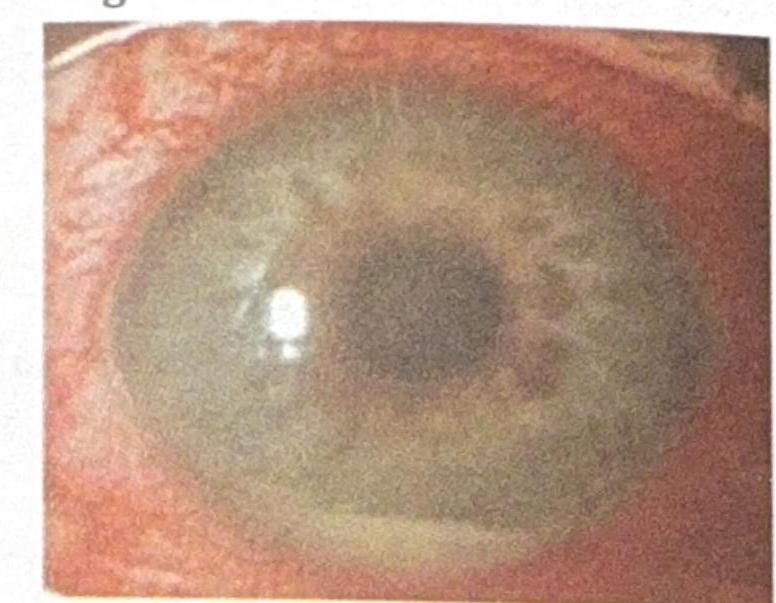
A patient presents with sudden painful diminution of vision, difficulty looking in light (photophobia), and circumcorneal congestion with hypopyon. What is the most likely diagnosis?
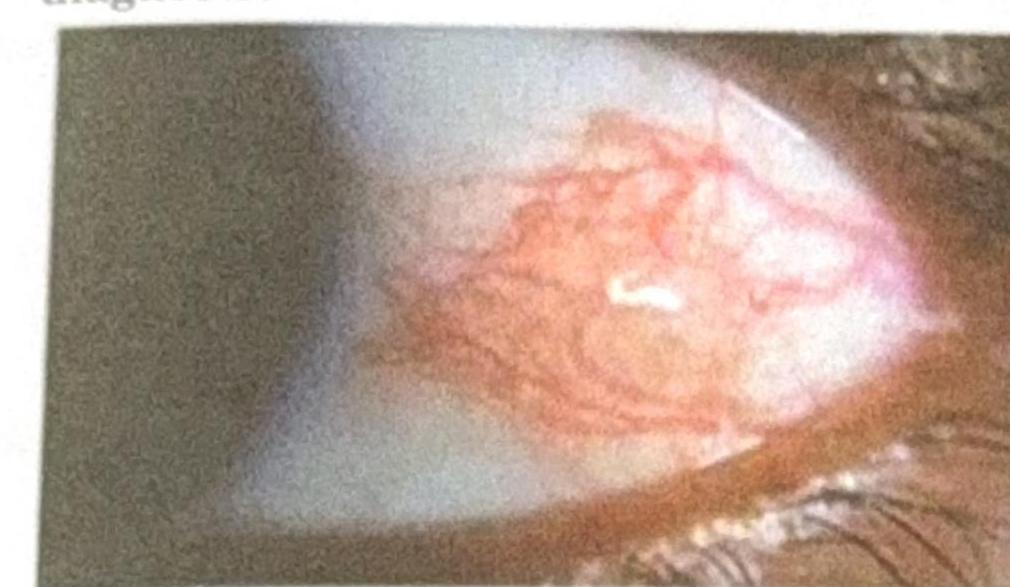
A patient presents with a nodular swelling near the limbus, which does not blanch with topical vasoconstrictors and recurs after treatment. Based on the image and clinical presentation, what is the most probable diagnosis?
NEET-PG 2024 - Ophthalmology NEET-PG Practice Questions and MCQs
Question 271: A patient presents with eye ache and difficulty in vision after watching a movie. What will be the first line of management?
- A. Mannitol with Moxifloxacin
- B. Mannitol with Atropine
- C. Mannitol with lubricating eye drops
- D. Mannitol with Pilocarpine (Correct Answer)
Explanation: ***Mannitol with Pilocarpine*** - This combination is appropriate for **acute angle-closure glaucoma (AACG)**, which can be triggered by pupillary dilation (e.g., in a dark movie theater). **Mannitol** is an osmotic diuretic that rapidly reduces intraocular pressure. - **Pilocarpine** is a miotic agent that constricts the pupil, pulling the iris away from the trabecular meshwork and opening the drainage angle to facilitate aqueous humor outflow. *Mannitol with Moxifloxacin* - While mannitol helps with intraocular pressure, **Moxifloxacin is an antibiotic** used to treat bacterial infections. - There is no indication of an ocular infection in this scenario, so an antibiotic would not be the first-line treatment for sudden eye pain and vision difficulty after watching a movie. *Mannitol with Atropine* - Adding **Atropine, a cycloplegic agent**, would cause further pupillary dilation, which would worsen acute angle-closure glaucoma and increase intraocular pressure. - Atropine is contraindicated in AACG and would exacerbate the patient's condition. *Mannitol with lubricating eye drops* - While mannitol helps with intraocular pressure, **lubricating eye drops** are used for dry eyes or surface irritation, not for acute angle-closure glaucoma. - Lubricating drops do not address the underlying pathology of increased intraocular pressure due to angle closure.
Question 272: A patient presents with sudden painful diminution of vision, difficulty looking in light (photophobia), and circumcorneal congestion with hypopyon. What is the most likely diagnosis?
- A. Acute conjunctivitis
- B. Episcleritis
- C. Acute congestive glaucoma
- D. Acute anterior uveitis (Correct Answer)
Explanation: ***Acute anterior uveitis*** - The constellation of **sudden painful diminution of vision**, **photophobia**, **circumcorneal congestion**, and **hypopyon** (pus in the anterior chamber, visible as a whitish fluid level in the image) is highly characteristic of acute anterior uveitis. - This condition involves inflammation of the iris and ciliary body, leading to these severe symptoms and signs. *Acute conjunctivitis* - Characterized by **redness**, **itching**, and **discharge**, but typically lacks significant pain, photophobia, or vision loss. - Hypopyon is not a feature of acute conjunctivitis; the congestion is diffuse and not pericorneal. *Episcleritis* - Presents with **localized redness** and mild discomfort, but generally without pain, photophobia, or vision changes. - Episcleritis does not typically involve the anterior chamber with hypopyon. *Acute congestive glaucoma* - Involves severe eye pain, blurred vision, ciliary congestion, and often a **fixed, mid-dilated pupil** due to acutely elevated intraocular pressure. - While it shares some symptoms like pain, photophobia, and blurred vision, **hypopyon is not a typical finding** in acute congestive glaucoma, which differentiates it from uveitis.
Question 273: A patient presents with a nodular swelling near the limbus, which does not blanch with topical vasoconstrictors and recurs after treatment. Based on the image and clinical presentation, what is the most probable diagnosis?
- A. Scleritis with rheumatoid arthritis (Correct Answer)
- B. Episcleritis with rheumatoid arthritis
- C. Pinguecula
- D. Dry eye
Explanation: ***Scleritis with rheumatoid arthritis*** - The image shows **deep, violaceous conjunctival injection** with surrounding edema and a nodular appearance near the limbus, consistent with **nodular scleritis**. Scleritis is inflammation of the sclera, often characterized by severe pain and association with systemic autoimmune diseases like **rheumatoid arthritis**, which can cause destructive lesions and recurrence. - The characteristic **deep vessel engorgement that does not blanch with phenylephrine** and the history of recurrence further support scleritis. *Episcleritis with rheumatoid arthritis* - Episcleritis presents with a **more superficial, bright red injection** involving the episclera, which generally **blanches with topical phenylephrine** and is less painful than scleritis. - While episcleritis can be associated with rheumatoid arthritis, the clinical features described (nodular swelling, deep injection) are more typical of scleritis. *Pinguecula* - A pinguecula is a **yellowish patch or bump** on the conjunctiva, typically on the nasal side of the eye, that is **not inflamed** unless irritated. - It consists of **degenerated collagen fibers** and elastic tissue, and does not present with the diffuse, deep vascular injection seen in the image. *Dry eye* - Dry eye is characterized by **ocular dryness, irritation, and sometimes a foreign body sensation**, but it typically causes **diffuse conjunctival hyperemia** rather than a localized, nodular, deep inflammation with surrounding edema as shown. - While dry eye can be associated with autoimmune diseases, its appearance is not consistent with the depicted nodular lesion.
Pathology
1 questionsA child presenting with leukocoria has an intraocular mass. Microscopic examination shows rosettes with scanty cytoplasm and positive synaptophysin. What is the most likely diagnosis?
NEET-PG 2024 - Pathology NEET-PG Practice Questions and MCQs
Question 271: A child presenting with leukocoria has an intraocular mass. Microscopic examination shows rosettes with scanty cytoplasm and positive synaptophysin. What is the most likely diagnosis?
- A. Retinoblastoma (Correct Answer)
- B. Medulloblastoma
- C. Neuroblastoma
- D. Ependymoma
Explanation: ***Retinoblastoma*** - **Leukocoria** (white pupillary reflex) in a child with an **intraocular mass** is the classic presentation of retinoblastoma, the most common primary intraocular malignancy in childhood [3]. - Histologically, the presence of **rosettes** (Flexner-Wintersteiner rosettes are pathognomonic [1]; Homer Wright rosettes may also be seen) with scanty cytoplasm confirms the diagnosis [3]. - **Positive synaptophysin** staining confirms the neuroblastic/neuroectodermal differentiation characteristic of retinoblastoma. - The **intraocular location** is the key differentiating feature from other rosette-forming tumors. *Medulloblastoma* - This is a highly malignant **cerebellar tumor** (posterior fossa), often presenting with **ataxia, headaches, and hydrocephalus**, not leukocoria or an intraocular mass. - While it can form Homer Wright rosettes and is synaptophysin positive, its **CNS location** (not intraocular) distinguishes it from retinoblastoma. *Neuroblastoma* - This is a tumor of the **sympathetic nervous system**, usually arising in the adrenal medulla or sympathetic ganglia, presenting as an abdominal mass, bone metastases, or raccoon eyes (periorbital ecchymoses from orbital metastases) [2], [4]. - It does **not present as a primary intraocular mass** with leukocoria, though it may rarely metastasize to the orbit. - Can also show Homer Wright rosettes and synaptophysin positivity [4]. *Ependymoma* - This is a **glial tumor** of the central nervous system, typically found in the ventricles of the brain or spinal cord. - It presents with symptoms related to its location (e.g., hydrocephalus, spinal cord compression) and does not cause leukocoria or intraocular masses. - Forms **ependymal rosettes** (perivascular pseudorosettes), which are different from the rosettes in retinoblastoma. **References:** [1] Kumar V, Abbas AK, et al.. Robbins and Cotran Pathologic Basis of Disease. 9th ed. The Eye, p. 1342. [2] Kumar V, Abbas AK, et al.. Robbins and Cotran Pathologic Basis of Disease. 9th ed. Diseases of Infancy and Childhood, pp. 483-484. [3] Cross SS. Underwood's Pathology: A Clinical Approach. 6th ed. Common Clinical Manifestations Of Central And Peripheral Nervous System Disease, pp. 737-738. [4] Kumar V, Abbas AK, et al.. Robbins and Cotran Pathologic Basis of Disease. 9th ed. Diseases of Infancy and Childhood, pp. 484-485.
Pediatrics
2 questionsA baby presents with hydrocephalus, intracranial calcifications, and chorioretinitis. What is the most probable diagnosis?
A mother delivers in a rural area under the guidance of a skilled care attendant. Which of the following statements is incorrect regarding the care provided by the skilled care attendant at birth?
NEET-PG 2024 - Pediatrics NEET-PG Practice Questions and MCQs
Question 271: A baby presents with hydrocephalus, intracranial calcifications, and chorioretinitis. What is the most probable diagnosis?
- A. Toxoplasmosis (Correct Answer)
- B. Syphilis
- C. Cytomegalovirus (CMV) infection
- D. Rubella
- E. Herpes Simplex Virus (HSV) infection
Explanation: **Toxoplasmosis** - The classic triad of **hydrocephalus**, **intracranial calcifications**, and **chorioretinitis** is highly characteristic of congenital toxoplasmosis. - These findings result from the parasite's invasive nature and predilection for the central nervous system and eyes of the developing fetus. - Calcifications in toxoplasmosis are typically **diffuse and scattered** throughout the brain parenchyma. *Syphilis* - Congenital syphilis typically presents with **rhinitis**, **skin rash**, **hepatosplenomegaly**, and **bone abnormalities** (e.g., periostitis, saber shins). - While neurological complications can occur, the specific triad of hydrocephalus, intracranial calcifications, and chorioretinitis is not characteristic. *Cytomegalovirus (CMV) infection* - Congenital CMV can cause **periventricular calcifications** (not diffuse calcifications), **microcephaly**, and **sensorineural hearing loss**. - While chorioretinitis can occur, hydrocephalus is less frequent, and the calcification pattern differs from toxoplasmosis (CMV shows periventricular pattern vs. diffuse in toxoplasmosis). *Rubella* - Congenital rubella syndrome is known for causing the classic triad of **cataracts**, **sensorineural hearing loss**, and **congenital heart defects** (e.g., patent ductus arteriosus, pulmonary artery stenosis). - Intracranial calcifications and hydrocephalus are not typical presentations of congenital rubella. *Herpes Simplex Virus (HSV) infection* - Neonatal HSV typically presents with **vesicular skin lesions**, **encephalitis**, and **disseminated disease** affecting liver and lungs. - While HSV can cause encephalitis with brain involvement, the classic triad of hydrocephalus, diffuse intracranial calcifications, and chorioretinitis is not characteristic of HSV infection.
Question 272: A mother delivers in a rural area under the guidance of a skilled care attendant. Which of the following statements is incorrect regarding the care provided by the skilled care attendant at birth?
- A. Start breastfeeding as early as possible
- B. Cover the baby's head and body
- C. Bathe the baby with warm water (Correct Answer)
- D. Clear the eyes with a sterile swab
- E. Dry the baby thoroughly and stimulate breathing
Explanation: ***Bathe the baby with warm water*** - **Delaying the first bath** for at least 6-24 hours after birth is recommended to prevent **hypothermia** and promote **skin-to-skin contact** for bonding and breastfeeding. - Early bathing can remove **vernix caseosa**, which provides natural antimicrobial protection and moisturization to the newborn's skin. *Start breastfeeding as early as possible* - **Early initiation of breastfeeding**, ideally within the first hour of birth, is crucial for both mother and baby. - It promotes **uterine contractions** to prevent **postpartum hemorrhage** and provides the newborn with **colostrum**, rich in antibodies. *Cover the baby's head and body* - Covering the newborn's head and body is essential to prevent **heat loss** and maintain a stable **body temperature**, immediately after birth. - Newborns are highly susceptible to **hypothermia** due to their large surface area to mass ratio and immature thermoregulation. *Clear the eyes with a sterile swab* - Clearing the newborn's eyes with a sterile swab is a standard part of immediate newborn care to remove any **mucus or blood** that might have entered during delivery. - This helps prevent **ophthalmia neonatorum**, especially if the mother has an infection like gonorrhea or chlamydia. *Dry the baby thoroughly and stimulate breathing* - **Drying the baby immediately** after birth is a critical first step in newborn resuscitation and care. - It helps prevent **hypothermia** and provides **tactile stimulation** to initiate breathing and crying, which is essential for transitioning from fetal to neonatal circulation.