Forensic Medicine
3 questionsWhich of the following is true regarding adipocere formation?
Who orders the autopsy in the case of a Road Traffic Accident (RTA)?
Mees' lines and raindrop pigmentation on the hands are seen in which type of poisoning?
NEET-PG 2024 - Forensic Medicine NEET-PG Practice Questions and MCQs
Question 221: Which of the following is true regarding adipocere formation?
- A. Preservation by saponification (Correct Answer)
- B. High temperature needed
- C. Cool and dry climate needed
- D. Occurs within minutes to hours
Explanation: ***Preservation by saponification*** - Adipocere, also known as **grave wax**, is formed through the process of **saponification**, where body fat hydrolyzes into fatty acids. - This process leads to the formation of a **waxy, grayish-white substance** that can preserve the body tissues. *High temperature needed* - Adipocere formation is actually favored by **cooler temperatures**, which slow down putrefaction and create a more conducive environment for saponification. - **High temperatures** typically accelerate decomposition, making adipocere formation less likely. *Cool and dry climate needed* - While a **cool environment** is favorable, adipocere formation primarily requires a **moist or wet environment**, such as burial in damp soil or immersion in water. - A **dry climate** would generally lead to mummification rather than adipocere formation. *Occurs within minutes to hours* - Adipocere formation is a **slow process** that usually takes **several weeks to months** (typically 3 weeks to 3 months) to become evident, and even longer to fully develop. - It does not occur within minutes or hours, which is the timeframe for early post-mortem changes like livor mortis or rigor mortis.
Question 222: Who orders the autopsy in the case of a Road Traffic Accident (RTA)?
- A. A. Forensic expert
- B. B. Police (Correct Answer)
- C. C. Lawyer
- D. D. Forensic doctor
Explanation: **B. Police** - In cases of Road Traffic Accidents (RTAs) and other **medico-legal deaths**, the **police** are typically responsible for ordering an autopsy. - This is because the death is suspicious and may involve criminal investigation, requiring formal authorization from law enforcement to establish the cause and manner of death. *A. Forensic expert* - A **forensic expert** performs the autopsy but does not have the authority to order it. - Their role is to conduct the examination and provide expert findings to the investigating authorities. *C. Lawyer* - A **lawyer** may be involved in the legal proceedings related to the RTA but does not have the authority to order an autopsy. - Their role is to represent clients and use the autopsy findings as evidence in court. *D. Forensic doctor* - A **forensic doctor** (or forensic pathologist) is the medical professional who conducts the autopsy. - They do not initiate the autopsy themselves but perform it upon the request of authorized parties, such as the police or a medical examiner/coroner.
Question 223: Mees' lines and raindrop pigmentation on the hands are seen in which type of poisoning?
- A. Arsenic (Correct Answer)
- B. Thallium
- C. Cadmium
- D. Lead
Explanation: **Arsenic** - **Mees' lines** (transverse white bands on fingernails) and **raindrop pigmentation** (hyperpigmentation with scattered hypopigmented spots) are classic dermatological manifestations of chronic arsenic poisoning. - Arsenic interferes with cellular respiration and DNA repair, leading to systemic effects including characteristic skin changes. *Thallium* - Thallium poisoning is often associated with diffuse **hair loss (alopecia)**, sensory neuropathy, and gastrointestinal symptoms. - It does not typically cause Mees' lines or raindrop pigmentation. *Cadmium* - Chronic cadmium exposure is primarily associated with **renal dysfunction** (Fanconi syndrome), **osteomalacia**, and lung disease. - It does not cause the specific nail or skin pigmentation described. *Lead* - Lead poisoning typically manifests with **gastrointestinal symptoms** (colic), neurological deficits (foot drop), and **anemia**. - While it can cause some dermatological changes, **Mees' lines** and **raindrop pigmentation** are not characteristic features.
Internal Medicine
1 questionsA patient presents with tingling sensation in both legs, polyuria, and weight loss. The bone marrow aspirate findings are shown in the image. What is the most likely diagnosis?

NEET-PG 2024 - Internal Medicine NEET-PG Practice Questions and MCQs
Question 221: A patient presents with tingling sensation in both legs, polyuria, and weight loss. The bone marrow aspirate findings are shown in the image. What is the most likely diagnosis?
- A. Multiple myeloma with renal failure
- B. Subacute combined degeneration (SACD) with Vitamin B12 deficiency
- C. Subacute combined degeneration (SACD) with diabetes
- D. Amyloidosis (Correct Answer)
Explanation: ***Amyloidosis*** - The image shows **amyloid infiltration** in the bone marrow, characterized by amorphous, eosinophilic deposits that can surround cellular elements. - The clinical symptoms of **tingling sensation** (neuropathy), **polyuria** (renal involvement), and **weight loss** are classic manifestations of systemic amyloidosis due to deposition in nerves, kidneys, and other organs. *Multiple myeloma with renal failure* - While multiple myeloma can cause renal failure and neuropathy, the image provided is more consistent with **amyloid deposition** rather than typical plasma cell proliferation seen in myeloma. - The bone marrow aspirate in multiple myeloma would show a significant increase in **atypical plasma cells**. *Subacute combined degeneration (SACD) with Vitamin B12 deficiency* - SACD causes neurological symptoms like tingling and paresthesia, but it is due to **demyelination** of the spinal cord, not amyloid deposition. - Bone marrow findings in **Vitamin B12 deficiency** would typically show megaloblastic anemia. *Subacute combined degeneration (SACD) with diabetes* - Diabetes can cause neuropathy and polyuria, however, the bone marrow aspirate in this case is not related to diabetes. - SACD is primarily associated with **Vitamin B12 deficiency**, not directly with diabetes, although diabetic neuropathy is common.
Microbiology
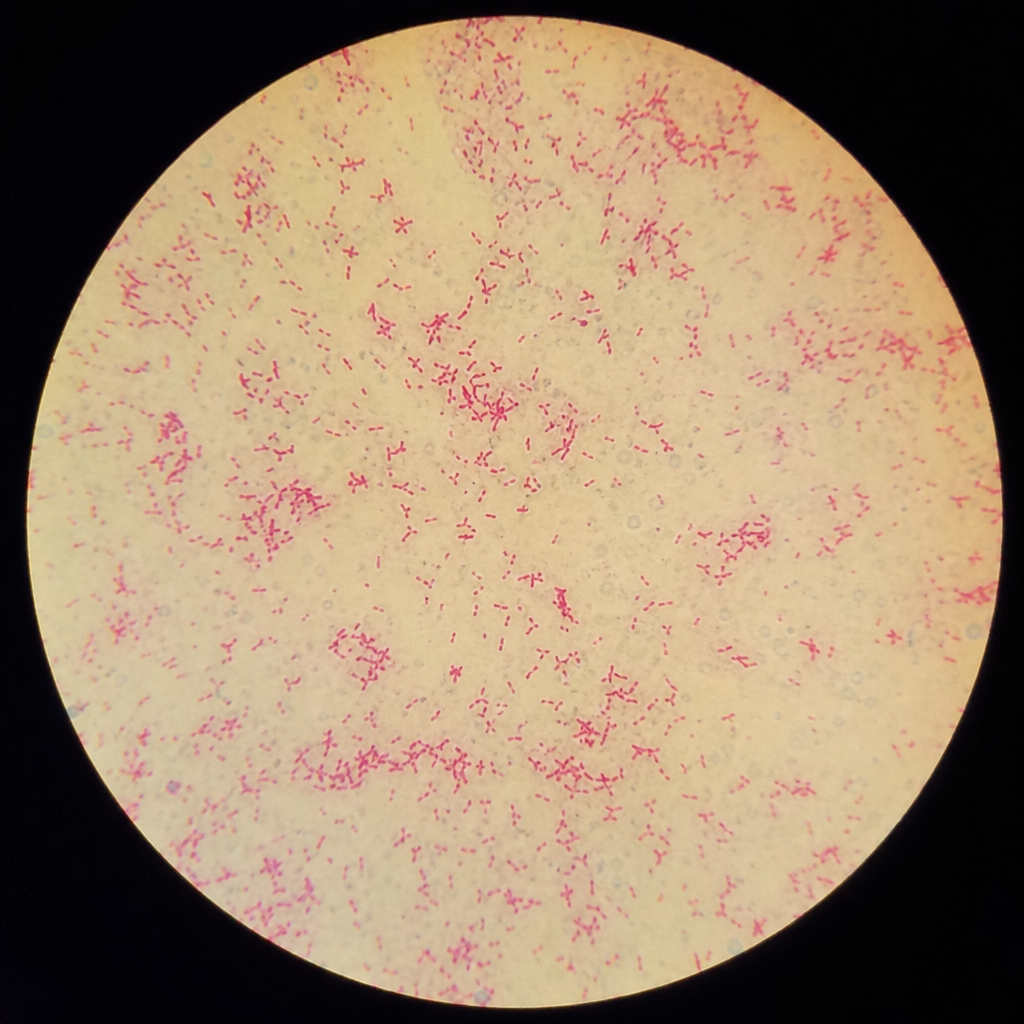
1 questionsThe image shows microscopic organisms. What is the most appropriate description of these organisms?

NEET-PG 2024 - Microbiology NEET-PG Practice Questions and MCQs
Question 221: The image shows microscopic organisms. What is the most appropriate description of these organisms?
- A. Wall contains silica and chlorophyll
- B. Present only in bone marrow
- C. Bacteria (Correct Answer)
- D. Not resistant to acid
Explanation: ***Unicellular bacteria*** - The image depicts **bacteria**, which are by definition unicellular prokaryotic microorganisms - Bacteria exhibit varied morphologies (cocci, bacilli, spirilla) which can be visualized under microscopy - This is the most appropriate description among the given options for microscopic bacterial forms *Wall contains silica and chlorophyll* - Silica cell walls are characteristic of **diatoms** (photosynthetic protists), not bacteria - Bacteria have peptidoglycan cell walls, not silica - While some bacteria contain pigments, they do not contain chlorophyll in the same form as eukaryotic organisms *Present only in bone marrow* - This statement is anatomically incorrect for bacteria - Bacteria are ubiquitous and can be found in virtually all environments - Bone marrow primarily contains hematopoietic cells, not bacteria in normal conditions *Not resistant to acid* - This is not a defining characteristic that can be determined from microscopic appearance alone - Many bacteria (e.g., *Mycobacterium tuberculosis*) are **acid-fast** and highly resistant to acid - Acid resistance varies among different bacterial species and requires specific staining (Ziehl-Neelsen) to determine
OB/GYN
2 questionsA 27 -week pregnant woman with a fetus diagnosed with congenital anomalies is considering a Medical Termination of Pregnancy (MTP). Whose presence is not required for the authorization of MTP in this case?
A USG (ultrasound) shows two babies, one of whom appears to be one month older than the other. What is the term for this condition?
NEET-PG 2024 - OB/GYN NEET-PG Practice Questions and MCQs
Question 221: A 27 -week pregnant woman with a fetus diagnosed with congenital anomalies is considering a Medical Termination of Pregnancy (MTP). Whose presence is not required for the authorization of MTP in this case?
- A. A. Obstetrician
- B. B. Lawyer (Correct Answer)
- C. C. Pediatrician
- D. D. Sonologist
Explanation: **B. Lawyer** - The **Medical Termination of Pregnancy Act (MTP Act)** in India specifies the medical professionals required for MTP authorization. A lawyer's presence is not mandated for this medical decision. - Legal authorization involves medical personnel and, in certain cases, a **Medical Board**, but not legal professionals directly in the authorization process. *A. Obstetrician* - An **obstetrician** or gynecologist is a medical expert specializing in pregnancy and childbirth, making their presence crucial for assessing the patient's and fetal condition. - The **MTP Act** requires the opinion of at least two registered medical practitioners, especially for pregnancies beyond 20 weeks, making an obstetrician essential. *C. Pediatrician* - In cases of **fetal anomalies**, a **pediatrician** (or a neonatologist) is highly likely to be part of the Medical Board formed to evaluate the anomaly and assess the prognosis for the child. - Their expertise helps in understanding the **severity and potential outcomes** of the congenital anomaly, informing the MTP decision. *D. Sonologist* - A **sonologist** (radiologist performing ultrasound) is critical for accurately diagnosing and detailing the **congenital anomalies** through imaging. - Their report provides essential **diagnostic information** that forms the basis for the MTP decision, especially in cases where anomalies are the primary concern.
Question 222: A USG (ultrasound) shows two babies, one of whom appears to be one month older than the other. What is the term for this condition?
- A. Superfetation
- B. Superfecundation
- C. Twin-to-twin transfusion syndrome (Correct Answer)
- D. Dichorionic diamniotic twins
Explanation: ***Twin-to-twin transfusion syndrome*** - The observation of one baby appearing a month older than the other on ultrasound, particularly in a twin pregnancy, is highly suggestive of **twin-to-twin transfusion syndrome (TTTS)**, where there is an unequal sharing of blood between the twins. - This imbalance leads to one twin (the recipient) becoming larger and plethoric, while the other (the donor) becomes smaller and anemic, creating a noticeable size discrepancy, inaccurately noted as an "older" twin. *Superfetation* - **Superfetation** is the rare phenomenon of a second, new pregnancy occurring during an existing pregnancy, resulting in two fetuses of different gestational ages. - While it results in fetuses of different ages, it specifically refers to conception at different times, which is distinct from the described unequal growth within a single multiple pregnancy. *Superfecundation* - **Superfecundation** refers to the fertilization of two or more ova from the same ovulatory cycle by sperm from different acts of coitus or from different fathers. - It results in twins (or multiples) conceived at roughly the same time, but by different sperm, and does not explain a significant age or size discrepancy between the fetuses. *Dichorionic diamniotic twins* - **Dichorionic diamniotic (DCDA) twins** are the most common type of twins, each having their own placenta and amniotic sac. - While they are two separate pregnancies, this term primarily describes the placental and amniotic sac arrangement and does not inherently explain a significant size discrepancy or "age" difference between the twins without an underlying complication like TTTS.
Obstetrics and Gynecology
1 questionsA 14-year-old victim of sexual assault with 22 weeks gestation has been brought for Medical Termination of Pregnancy (MTP). Which of the following statements is true?
NEET-PG 2024 - Obstetrics and Gynecology NEET-PG Practice Questions and MCQs
Question 221: A 14-year-old victim of sexual assault with 22 weeks gestation has been brought for Medical Termination of Pregnancy (MTP). Which of the following statements is true?
- A. One doctor is involved
- B. MTP done in 2nd trimester only when mother's life is in danger
- C. MTP can be carried out up to 24 weeks (Correct Answer)
- D. MTP cannot be more than 20 weeks
Explanation: ***MTP can be carried out up to 24 weeks*** - The **Medical Termination of Pregnancy (Amendment) Act, 2021**, allows termination of pregnancy up to **24 weeks** for certain vulnerable groups, including survivors of sexual assault and minors. - As a 14-year-old victim of sexual assault, she falls under the category which permits MTP up to 24 weeks. *One doctor is involved* - For pregnancies between 12 and 20 weeks, the opinion of **two registered medical practitioners** is required for MTP. - Beyond 20 weeks up to 24 weeks, as in this case, the opinion of **two registered medical practitioners** is also mandatory. *MTP done in 2nd trimester only when mother's life is in danger* - While danger to the mother's life is a valid reason for MTP, the **MTP Act 2021** has expanded the grounds for MTP in the second trimester (beyond 12 weeks) to include other categories like **sexual assault survivors** and **minors**, even if the mother's life is not immediately in danger. - The primary consideration here is the **vulnerability** of the pregnant person, not solely imminent danger to life. *MTP cannot be more than 20 weeks* - This statement is incorrect as per the **Medical Termination of Pregnancy (Amendment) Act, 2021**. - The Act raised the upper gestation limit from 20 to **24 weeks** for specific categories of women, including victims of sexual assault and minors, aligning with the current case.
Pathology
1 questionsIdentify the gene commonly involved in the condition shown in the image?

NEET-PG 2024 - Pathology NEET-PG Practice Questions and MCQs
Question 221: Identify the gene commonly involved in the condition shown in the image?
- A. RAS
- B. RET
- C. BRAF V600E (Correct Answer)
- D. P53
Explanation: ***BRAF V600E*** - The image displays cells with **Langerhans cell morphology**, including folded nuclei and abundant pale cytoplasm, which are characteristic of **Langerhans cell histiocytosis (LCH)** [1]. - The **BRAF V600E mutation** is the most common genetic alteration found in LCH, present in about 50-60% of cases and activating the MAPK pathway [1]. *RAS* - **RAS mutations** are frequently seen in various cancers, including colorectal adenocarcinoma, pancreatic adenocarcinoma, and non-small cell lung cancer. - While RAS pathway activation can occur in LCH, a direct RAS mutation is not the most common genetic driver; rather, downstream effectors like BRAF V600E are more prominent [1]. *RET* - **RET mutations** are primarily associated with **medullary thyroid carcinoma** (in both sporadic and inherited forms like MEN 2A and MEN 2B) and can also be found in certain types of lung cancer. - They are not a characteristic genetic alteration for Langerhans cell histiocytosis. *P53* - The **TP53 gene** encodes the tumor suppressor protein p53, and mutations in this gene are among the most frequent genetic alterations across a wide spectrum of human cancers. - Although p53 plays a critical role in cell cycle regulation and apoptosis, it is not a primary or common driver mutation specifically associated with Langerhans cell histiocytosis [1]. **References:** [1] Kumar V, Abbas AK, et al.. Robbins and Cotran Pathologic Basis of Disease. 9th ed. Diseases of White Blood Cells, Lymph Nodes, Spleen, and Thymus, pp. 629-630.
Pharmacology
1 questionsWhich of the following chelating agents is indicated in iron overdose?
NEET-PG 2024 - Pharmacology NEET-PG Practice Questions and MCQs
Question 221: Which of the following chelating agents is indicated in iron overdose?
- A. Desferrioxamine (Correct Answer)
- B. BAL
- C. Calcium Edetate
- D. DTPA
- E. Penicillamine
Explanation: ***Desferrioxamine*** - **Desferrioxamine** is a **chelate** formed by the bacterium *Streptomyces pilosus* that has a high affinity for **iron**. - It is currently the most commonly used chelating agent for **acute iron overdose** and **chronic iron overload** conditions like hemochromatosis or transfusional hemosiderosis. *BAL* - **BAL (dimercaprol)** is a chelating agent primarily used for poisoning with **arsenic**, **mercury**, and **gold**. - It works by forming stable cyclic compounds with these metals, facilitating their excretion. *Calcium Edetate* - **Calcium edetate (Calcium-EDTA)** is primarily used for **lead poisoning**. - It works by forming a stable, water-soluble complex with lead, which is then excreted by the kidneys. *DTPA* - **Diethylenetriamine pentaacetate (DTPA)** is a chelating agent primarily used for poisoning with **plutonium** and other **radioactive metals**. - It is not indicated for iron overdose. *Penicillamine* - **Penicillamine** is a chelating agent primarily used for **copper** overload (Wilson's disease) and can also be used for **lead** and **mercury** poisoning. - It is not effective for iron chelation in overdose situations.