Internal Medicine
1 questionsA 25-year-old male presents with a burning sensation during urination and purulent discharge from the penis, which started 5 days ago. He reports unprotected sexual intercourse with a new partner two weeks ago. Examination reveals an erythematous urethral meatus with noticeable purulent discharge. A Gram stain of the discharge reveals intracellular gramnegative diplococci. The patient is otherwise healthy with no known drug allergies. What is the most appropriate treatment for this patient?
NEET-PG 2024 - Internal Medicine NEET-PG Practice Questions and MCQs
Question 191: A 25-year-old male presents with a burning sensation during urination and purulent discharge from the penis, which started 5 days ago. He reports unprotected sexual intercourse with a new partner two weeks ago. Examination reveals an erythematous urethral meatus with noticeable purulent discharge. A Gram stain of the discharge reveals intracellular gramnegative diplococci. The patient is otherwise healthy with no known drug allergies. What is the most appropriate treatment for this patient?
- A. Metronidazole 500 mg orally twice daily for 7 days
- B. Doxycycline 100 mg orally twice daily for 7 days
- C. Ceftriaxone 500 mg intramuscularly
- D. Cefixime 400 mg orally once (Correct Answer)
Explanation: ***Cefixime 400 mg orally once*** - This patient presents with symptoms and a Gram stain consistent with **gonococcal urethritis** (**intracellular gram-negative diplococci**) [1]. - Oral cefixime is an alternative first-line option for **uncomplicated gonococcal infections** when intramuscular ceftriaxone is not feasible or available [1]. *Metronidazole 500 mg orally twice daily for 7 days* - **Metronidazole** is primarily used to treat **anaerobic bacterial infections** and **parasitic infections** (e.g., trichomoniasis, bacterial vaginosis). - It is not effective against **Neisseria gonorrhoeae**, the causative agent of this patient's condition. *Doxycycline 100 mg orally twice daily for 7 days* - **Doxycycline** is the treatment of choice for **Chlamydia trachomatis infections** and is often co-administered empirically with gonorrhea treatment due to high rates of co-infection [1]. - While it addresses potential chlamydial co-infection, it is not the primary treatment for **gonococcal urethritis** itself. *Ceftriaxone 500 mg intramuscularly* - **Ceftriaxone 500 mg IM (or 1 gram in some guidelines)** is the **preferred first-line treatment for uncomplicated gonococcal infections** due to its high efficacy and single-dose administration [1]. - While an excellent choice, the question asks for the *most appropriate* given the options, and oral cefixime is an acceptable alternative, especially in scenarios where IM injections are impractical.
Pharmacology
9 questionsWhich of the following statements regarding the patch shown in the figure is correct?
Lidocaine is used in a loading dose for the treatment of arrhythmias. The loading dose of this drug depends upon which of the following factors?
A person was taking an antihypertensive drug and continued taking it despite developing constipation, dry mouth, and dizziness. He was taking it regularly but forgot to take it during a trip abroad and has now developed a hypertensive emergency. Which antihypertensive was he likely taking?
A patient being treated for hypertriglyceridemia developed flushing, gout, hyperglycemia, and raised liver enzymes. Which drug is the most likely cause?
Which of the following drugs, when given with erythromycin, can cause QT prolongation and Torsades de Pointes?
A 45-year-old male with a history of chronic alcohol use is admitted to the hospital. He presents with anxiety, tremors, and agitation after his last drink 24 hours ago. Which of the following medications is most appropriate for controlling alcohol withdrawal symptoms?
Which of the following statements about Ciclesonide is incorrect?
Why is atropine mixed with diphenoxylate in combination medications?
A patient presents with symptoms of tachycardia, tachypnea, hypertension, and hypocalcemia after consuming an unknown substance. The patient also has high anion gap metabolic acidosis. Which of the following substances was most likely consumed?
NEET-PG 2024 - Pharmacology NEET-PG Practice Questions and MCQs
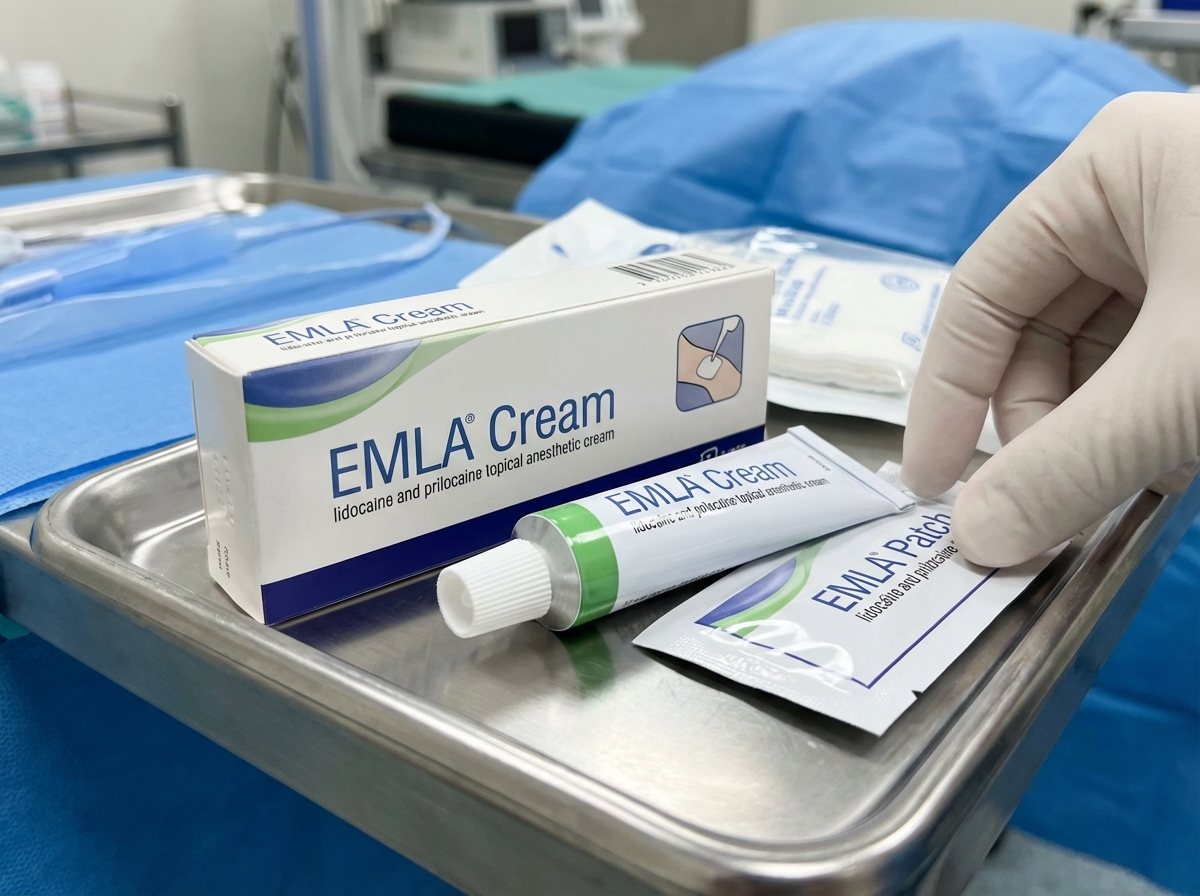
Question 191: Which of the following statements regarding the patch shown in the figure is correct?
- A. It is an equal mixture of local anesthetics.
- B. Excessive use can result in methemoglobinemia. (Correct Answer)
- C. 5 ml of a 5 percent mixture contains 50 mg of lignocaine.
- D. It contains lignocaine and ropivacaine in a ratio of 50 percent each.
- E. It should be applied for at least 2 hours before minor procedures.
Explanation: ***Excessive use can result in methemoglobinemia.*** - The patch shown is likely an **EMLA patch**, which contains **lidocaine** and **prilocaine**. Excessive absorption of prilocaine, especially with large doses or prolonged application, can lead to the formation of **methemoglobinemia**. - **Prilocaine** is metabolized into **ortho-toluidine**, which is an oxidizing agent that can convert hemoglobin to methemoglobin, reducing the blood's oxygen-carrying capacity. *It is an equal mixture of local anesthetics.* - The EMLA patch is a 1:1 mixture of **lidocaine** and **prilocaine**, but the claim that it contains "an equal mixture of local anesthetics" is vague and could imply other compositions not specific to EMLA. - While it's an equal ratio of two specific local anesthetics, the option's wording is not precise enough to be the *most correct* statement. *5 ml of a 5 percent mixture contains 50 mg of lignocaine.* - A 5% solution means 5 grams (5000 mg) per 100 ml. Therefore, 1 ml contains 50 mg of lignocaine. - Thus, 5 ml of a 5% mixture would contain 250 mg of **lignocaine**, not 50 mg. This statement is mathematically incorrect. *It contains lignocaine and ropivacaine in a ratio of 50 percent each.* - **EMLA patches** contain **lidocaine** (lignocaine) and **prilocaine**, not ropivacaine. - While it is a 50% concentration for each active ingredient, the specific combination of local anesthetics mentioned in this option is incorrect. *It should be applied for at least 2 hours before minor procedures.* - For most minor procedures, **EMLA cream** typically requires **30-60 minutes** of application time to achieve adequate topical anesthesia. - While longer application times (up to 2 hours) may enhance depth of anesthesia for certain procedures, stating that it "should be applied for at least 2 hours" is excessive and not a standard recommendation for minor procedures.
Question 192: Lidocaine is used in a loading dose for the treatment of arrhythmias. The loading dose of this drug depends upon which of the following factors?
- A. Clearance
- B. Volume of distribution (Correct Answer)
- C. Half-life
- D. Bioavailability
- E. Elimination rate constant
Explanation: ***Volume of distribution*** - The **loading dose** of a drug is primarily determined by its **volume of distribution (Vd)** and the **target plasma concentration**. - A larger **Vd** means the drug distributes widely into tissues, requiring a larger loading dose to achieve the desired concentration in the central compartment. *Clearance* - **Clearance** dictates the **maintenance dose** needed to sustain a steady-state concentration once the loading dose has been administered. - It reflects the rate at which the drug is eliminated from the body, not how much is initially needed to fill the distribution volume. *Half-life* - **Half-life** determines the **time required to reach steady-state** and the **dosing interval** for maintaining therapeutic concentrations. - While related to clearance and Vd, it does not directly determine the magnitude of the initial loading dose itself. *Bioavailability* - **Bioavailability** is the fraction of administered drug that reaches the systemic circulation in an unchanged form. - It influences the oral dose required to achieve a certain plasma concentration, but the concept of loading dose is typically considered for the intravenous route where bioavailability is 100%. *Elimination rate constant* - The **elimination rate constant (ke)** describes the rate of drug elimination and is related to clearance and volume of distribution (ke = Cl/Vd). - Like clearance, it determines the **maintenance dose** and dosing frequency, not the initial loading dose required to achieve therapeutic levels.
Question 193: A person was taking an antihypertensive drug and continued taking it despite developing constipation, dry mouth, and dizziness. He was taking it regularly but forgot to take it during a trip abroad and has now developed a hypertensive emergency. Which antihypertensive was he likely taking?
- A. Amlodipine
- B. Clonidine (Correct Answer)
- C. Lisinopril
- D. Telmisartan
- E. Metoprolol
Explanation: **Clonidine** - The described symptoms of **constipation, dry mouth, and dizziness** are common side effects of **clonidine**, an alpha-2 adrenergic agonist. - The development of a **hypertensive emergency** upon abrupt cessation of the drug strongly suggests clonidine, as it is known for causing **rebound hypertension** due to a sudden increase in sympathetic outflow. *Amlodipine* - **Amlodipine**, a dihydropyridine calcium channel blocker, primarily causes **peripheral edema, headache, and flushing**, not typically constipation or rebound hypertension upon withdrawal. - While it can cause dizziness, the combination of side effects and withdrawal symptoms does not fit amlodipine. *Lisinopril* - **Lisinopril**, an ACE inhibitor, is known for causing **cough and angioedema**. - It does not typically cause constipation, dry mouth, or rebound hypertension upon discontinuation. *Telmisartan* - **Telmisartan**, an angiotensin receptor blocker (ARB), generally has a **favorable side effect profile** and does not commonly cause constipation or dry mouth. - Withdrawal of ARBs does not typically lead to a **hypertensive emergency** in the way clonidine does. *Metoprolol* - **Metoprolol**, a beta-blocker, can cause **fatigue and bradycardia** but does not typically cause the anticholinergic effects (dry mouth, constipation) seen with clonidine. - While abrupt withdrawal of beta-blockers can lead to rebound tachycardia and hypertension, the severity and acute nature of the hypertensive emergency described is more characteristic of clonidine withdrawal.
Question 194: A patient being treated for hypertriglyceridemia developed flushing, gout, hyperglycemia, and raised liver enzymes. Which drug is the most likely cause?
- A. Atorvastatin
- B. Fenofibrate
- C. Nicotinic acid (Correct Answer)
- D. Ezetimibe
- E. Gemfibrozil
Explanation: ***Nicotinic acid*** - **Nicotinic acid (Niacin)** is known to cause **flushing** due to prostaglandin release. - It also commonly leads to **hyperglycemia**, **hyperuricemia** (which can precipitate gout), and **elevated liver enzymes** as side effects. *Atorvastatin* - While atorvastatin can cause **elevated liver enzymes** and, less commonly, **myopathy**, it does not typically cause flushing, gout, or hyperglycemia. - Its primary role is to lower **LDL cholesterol**, with a lesser effect on triglycerides. *Fenofibrate* - **Fenofibrate** is used to treat hypertriglyceridemia and can rarely cause **elevated liver enzymes** and **gallstones**. - It is not associated with significant flushing, hyperglycemia, or gout. *Gemfibrozil* - **Gemfibrozil** is another fibrate used for hypertriglyceridemia treatment. - While it can cause **elevated liver enzymes** and **myopathy** (especially when combined with statins), it does not cause the characteristic flushing or hyperglycemia seen with nicotinic acid. *Ezetimibe* - **Ezetimibe** primarily inhibits cholesterol absorption and is generally well-tolerated. - Common side effects are mild and include abdominal pain and diarrhea, with no association to flushing, gout, or hyperglycemia.
Question 195: Which of the following drugs, when given with erythromycin, can cause QT prolongation and Torsades de Pointes?
- A. Astemizole (Correct Answer)
- B. Cetirizine
- C. Loratadine
- D. Promethazine
- E. Fexofenadine
Explanation: ***Astemizole*** - **Astemizole** is a second-generation antihistamine that undergoes extensive metabolism by the **CYP3A4 enzyme**. - Concomitant use with **erythromycin**, a potent **CYP3A4 inhibitor**, significantly increases astemizole plasma concentrations, leading to **QT prolongation** and an elevated risk of **Torsades de Pointes**. *Cetirizine* - **Cetirizine** is another second-generation antihistamine that is primarily eliminated via **renal excretion** and does not undergo significant CYP450 metabolism. - Therefore, its co-administration with **erythromycin** does not typically lead to clinically significant drug interactions impacting cardiac repolarization. *Fexofenadine* - **Fexofenadine** is a second-generation antihistamine and active metabolite of terfenadine that is primarily eliminated via **biliary excretion** and has minimal hepatic metabolism. - While it is a substrate of **P-glycoprotein** (which can be inhibited by erythromycin), fexofenadine has a much safer cardiac profile and does not typically cause **QT prolongation** even with CYP3A4 inhibitors. *Loratadine* - **Loratadine** is a second-generation antihistamine that is metabolized by **CYP2D6** and **CYP3A4**, but its active metabolite, desloratadine, has a lower propensity for QT prolongation. - While erythromycin is a CYP3A4 inhibitor, the risk of **QT prolongation** with **loratadine** is generally considered much lower than with astemizole, even with concurrent use. *Promethazine* - **Promethazine** is a first-generation antihistamine and phenothiazine derivative that primarily acts as a **dopamine D2 receptor antagonist**. - While it can cause **QT prolongation** on its own at high doses, its metabolism is complex and not predominantly dependent on **CYP3A4** to the extent that interaction with **erythromycin** poses the same severe risk as with astemizole.
Question 196: A 45-year-old male with a history of chronic alcohol use is admitted to the hospital. He presents with anxiety, tremors, and agitation after his last drink 24 hours ago. Which of the following medications is most appropriate for controlling alcohol withdrawal symptoms?
- A. Lorazepam (Correct Answer)
- B. Fomepizole
- C. Disulfiram
- D. Buspirone
- E. Naltrexone
Explanation: ***Lorazepam*** - **Lorazepam**, a **benzodiazepine**, is the first-line treatment for alcohol withdrawal symptoms due to its ability to enhance **GABAergic activity**, which is deficient during withdrawal. - Its **intermediate half-life** and **lack of active metabolites** make it suitable for patients with liver impairment, common in chronic alcohol users. *Fomepizole* - **Fomepizole** is an antidote used to treat poisoning from **methanol** or **ethylene glycol**, not alcohol withdrawal. - It works by inhibiting **alcohol dehydrogenase**, an enzyme involved in the metabolism of these toxic alcohols. *Disulfiram* - **Disulfiram** is an **aldehyde dehydrogenase inhibitor** used to deter alcohol consumption in recovering alcoholics by causing unpleasant reactions if alcohol is consumed. - It is **not used to treat acute alcohol withdrawal symptoms** and can be dangerous if given during withdrawal due to potential interactions. *Buspirone* - **Buspirone** is an **anxiolytic** that acts as a **serotonin receptor agonist** and is used for generalized anxiety disorder. - It is **ineffective for acute alcohol withdrawal** due to its slow onset of action and lack of anticonvulsant properties. *Naltrexone* - **Naltrexone** is an **opioid receptor antagonist** used for relapse prevention and reducing alcohol craving in patients with alcohol use disorder. - It is **not effective for acute alcohol withdrawal symptoms** and does not prevent seizures or delirium tremens, which are life-threatening complications of withdrawal.
Question 197: Which of the following statements about Ciclesonide is incorrect?
- A. Oral candidiasis is common with its use. (Correct Answer)
- B. It is a prodrug activated by bronchial esterase.
- C. It has comparable efficacy to other inhalational corticosteroids.
- D. It has fewer side effects than other inhalational corticosteroids.
- E. It has low systemic bioavailability due to extensive first-pass metabolism.
Explanation: ***Oral candidiasis is common with its use.*** * Ciclesonide is a **prodrug** that is activated in the lungs, which minimizes systemic exposure and reduces the risk of local side effects like **oral candidiasis**. * Therefore, oral candidiasis is **less common** with ciclesonide compared to other inhaled corticosteroids that deliver the active drug directly to the oral cavity. *It is a prodrug activated by bronchial esterase.* * Ciclesonide is indeed a **prodrug** that is converted into its active metabolite, **des-ciclesonide**, by **esterases** primarily found in the lungs. * This specific activation mechanism helps ensure that the drug's therapeutic effects are localized to the airways while minimizing systemic exposure. *It has comparable efficacy to other inhalational corticosteroids.* * Studies have shown that ciclesonide provides **comparable efficacy** to other established inhaled corticosteroids in controlling asthma symptoms and improving lung function. * Its potent anti-inflammatory effects are effective in reducing airway hyperresponsiveness and inflammation. *It has fewer side effects than other inhalational corticosteroids.* * Because ciclesonide is a prodrug activated in the lungs and has a **high protein binding capacity**, it has a reduced likelihood of systemic side effects. * This contributes to a **favorable safety profile**, with a lower incidence of both local and systemic adverse drug reactions compared to some other inhaled corticosteroids. *It has low systemic bioavailability due to extensive first-pass metabolism.* * Ciclesonide has **very low systemic bioavailability** (<1%) when administered via inhalation. * The active metabolite des-ciclesonide that does reach systemic circulation undergoes **extensive first-pass metabolism** in the liver, further reducing systemic exposure. * This pharmacokinetic property contributes to its excellent safety profile and minimal systemic adverse effects.
Question 198: Why is atropine mixed with diphenoxylate in combination medications?
- A. Atropine decreases the adverse effects of diphenoxylate
- B. To prevent abuse of diphenoxylate (Correct Answer)
- C. To enhance the antidiarrheal effect
- D. Atropine produces direct spasmolytic action
- E. Atropine increases the bioavailability of diphenoxylate
Explanation: ***To prevent abuse of diphenoxylate*** - **Diphenoxylate** is an opioid derivative with potential for abuse due to its CNS effects at high doses. - Adding **atropine** discourages abuse by producing unpleasant anticholinergic side effects (e.g., dry mouth, blurred vision, urinary retention) if high doses are ingested. *Atropine decreases the adverse effects of diphenoxylate* - **Atropine** does not decrease the adverse effects of diphenoxylate; rather, it introduces its own set of **anticholinergic** side effects. - The combination is designed to make recreational use unpleasant, not to mitigate side effects of diphenoxylate itself. *To enhance the antidiarrheal effect* - While atropine has some anticholinergic properties that can reduce gut motility, its primary purpose in this combination is **not to enhance the antidiarrheal effect**. - **Diphenoxylate** is the primary antidiarrheal agent, and the amount of atropine included is typically subtherapeutic for significant antidiarrheal action. *Atropine produces direct spasmolytic action* - Although **atropine** does have **spasmolytic** effects by blocking muscarinic receptors in the gut, this is not the main reason for its addition to diphenoxylate. - The dosage of atropine in the combination is usually low enough to cause unpleasant systemic effects but not necessarily to significantly contribute to the antispasmodic action at therapeutic doses of diphenoxylate. *Atropine increases the bioavailability of diphenoxylate* - **Atropine** does not affect the **pharmacokinetics** or **bioavailability** of diphenoxylate. - The two drugs are combined for abuse deterrence purposes, not for any pharmacokinetic interaction or enhancement of drug absorption.
Question 199: A patient presents with symptoms of tachycardia, tachypnea, hypertension, and hypocalcemia after consuming an unknown substance. The patient also has high anion gap metabolic acidosis. Which of the following substances was most likely consumed?
- A. Iron
- B. Methanol
- C. Ethylene glycol (Correct Answer)
- D. Digoxin
- E. Isopropanol
Explanation: ***Ethylene glycol*** - Ethylene glycol poisoning is characterized by **tachycardia**, **tachypnea**, **hypertension**, **hypocalcemia**, and a **high anion gap metabolic acidosis** due to the accumulation of toxic metabolites like oxalic and glycolic acids. - The formation of **calcium oxalate crystals** in the kidneys contributes to hypocalcemia and acute kidney injury, a hallmark of severe ethylene glycol toxicity. *Iron* - Iron overdose typically presents with **gastrointestinal symptoms** (vomiting, diarrhea, abdominal pain), shock, and metabolic acidosis, but not specifically with hypocalcemia or the characteristic crystal formation seen with ethylene glycol. - While it can cause metabolic acidosis, the absence of **hypocalcemia** and specific renal effects pointing to oxalate crystals differentiates it from ethylene glycol. *Methanol* - Methanol poisoning causes a **high anion gap metabolic acidosis**, visual disturbances (e.g., "snowstorm" vision), and central nervous system depression. - It does not typically lead to **hypocalcemia** or the kidney damage associated with calcium oxalate crystal formation. *Isopropanol* - Isopropanol (rubbing alcohol) poisoning causes **CNS depression**, **hypotension**, and an **osmolar gap** without significant anion gap metabolic acidosis. - It does not cause **hypocalcemia** or the high anion gap metabolic acidosis characteristic of ethylene glycol toxicity. *Digoxin* - Digoxin toxicity primarily affects the **cardiac system**, causing bradycardia, arrhythmias (e.g., ventricular fibrillation, heart block), and **gastrointestinal symptoms**. - It does not cause a high anion gap metabolic acidosis, hypocalcemia, or the other systemic sympathetic effects described in the scenario.