Anesthesiology
5 questionsWhat is the purpose of Positive End-Expiratory Pressure (PEEP)?
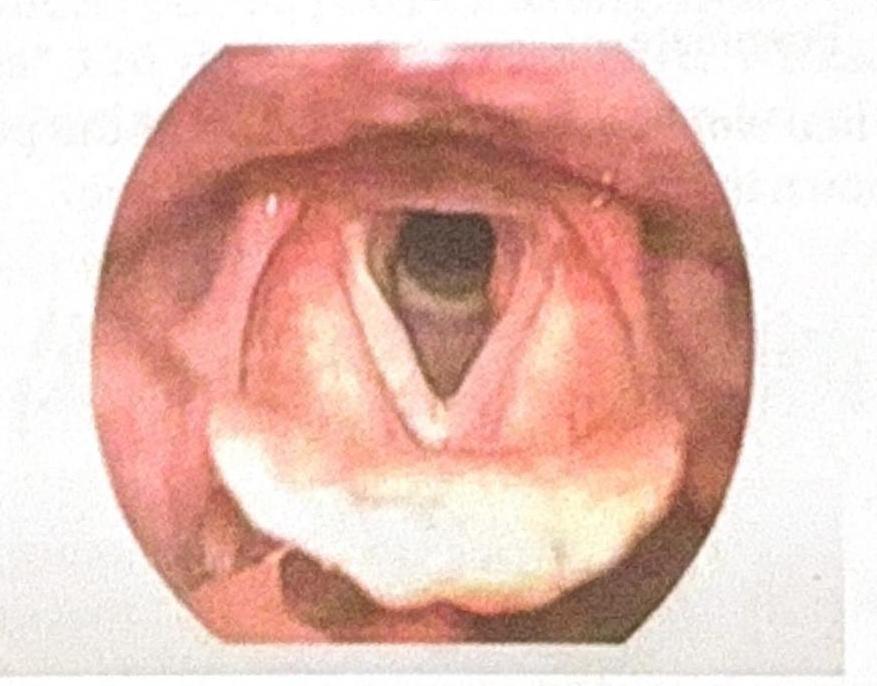
What is the staging system used for the condition seen in the patient after a history of intubation, as shown in the image?

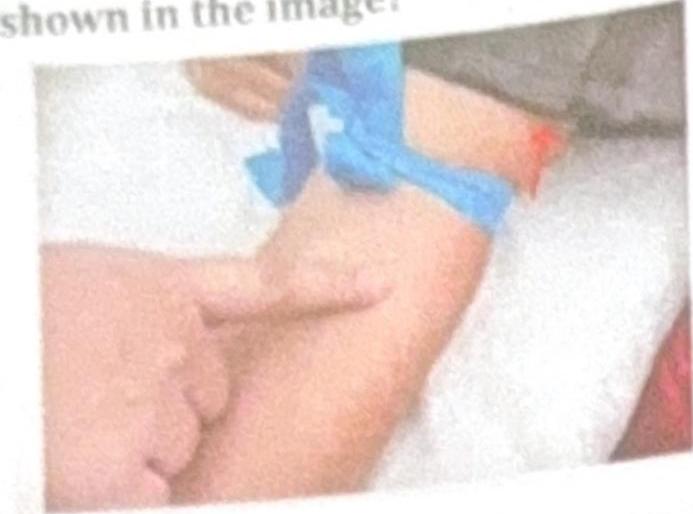
What is the name of the nerve block technique shown in the image?

A patient presented with rigidity, tremors, and trismus after being administered an anesthetic agent. Which anesthetic agent is most likely to have been administered?
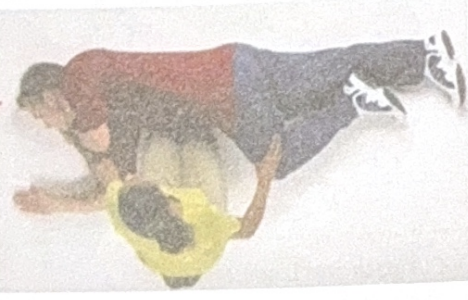
In which clinical scenario would you find a patient requiring the vital signs assessment technique shown in the image?

NEET-PG 2024 - Anesthesiology NEET-PG Practice Questions and MCQs
Question 11: What is the purpose of Positive End-Expiratory Pressure (PEEP)?
- A. To prevent atelectasis (Correct Answer)
- B. To decrease preload
- C. To increase venous return
- D. To increase respiratory rate (RR)
Explanation: ***To prevent atelectasis*** - PEEP maintains a positive pressure in the airways at the end of exhalation, which helps to keep **alveoli open** and prevents their collapse. - This recruitment of collapsed alveoli improves **oxygenation** and reduces the work of breathing. *To decrease preload* - While PEEP can indirectly decrease cardiac preload by increasing intrathoracic pressure, its primary purpose is not cardiovascular but rather respiratory. - The impact on preload is a potential side effect that requires careful monitoring, especially in patients with compromised cardiac function. *To increase venous return* - PEEP actually tends to **decrease venous return** due to increased intrathoracic pressure compressing the vena cava and reducing the pressure gradient for blood flow back to the heart. - This can lead to a reduction in cardiac output, which is a potential adverse effect. *To increase respiratory rate (RR)* - PEEP does not directly increase the respiratory rate; instead, it is a setting on a mechanical ventilator that affects lung volumes and oxygenation. - Respiratory rate is typically set independently or influenced by the patient's ventilatory drive.
Question 12: What is the staging system used for the condition seen in the patient after a history of intubation, as shown in the image?
- A. Cormack and Lehane (Correct Answer)
- B. AJCC
- C. TNM
- D. Radkowski
Explanation: ***Cormack and Lehane*** - The **Cormack and Lehane classification** system is used to grade the view of the **larynx** during **direct laryngoscopy** for intubation. - Given the history of intubation and the image showing the laryngeal view, this system is the most appropriate for staging the visual difficulty or success of intubation. *AJCC* - The **American Joint Committee on Cancer (AJCC) staging system** is primarily used for **oncological staging**, classifying the extent of cancer. - It is not relevant for assessing the view of the larynx during intubation. *TNM* - **TNM staging** (Tumor, Node, Metastasis) is a widely used system for classifying the **progression of cancer**. - This system is specific to cancer staging and is not applicable to the assessment of airways for intubation. *Radkowski* - The **Radkowski staging system** is used to classify **pediatric subglottic stenosis**, a narrowing of the airway below the vocal cords. - While it deals with airway issues, the question focuses on the view during intubation, not the severity of subglottic stenosis, and the image does not specifically point to this condition.
Question 13: What is the name of the nerve block technique shown in the image?
- A. Intra-arterial anesthesia (Correct Answer)
- B. Bier's block
- C. Regional anesthesia
- D. Axillary block
Explanation: ***Intra-arterial anesthesia*** - The image shows a **cannula inserted directly into an artery**, indicated by the blood reflux and the context of anesthesia, suggesting direct drug delivery into the arterial system. - This method is used for specific types of regional pain management or diagnostic procedures where direct arterial access is required for **localized drug distribution**. *Bier's block* - A Bier's block, or **intravenous regional anesthesia**, involves injecting local anesthetic into a **vein** in an extremity after it has been exsanguinated and isolated by a tourniquet. - The image clearly shows a **bright red blood flash**, characteristic of arterial cannulation, not venous. *Regional anesthesia* - This is a broad term referring to the **anesthesia of a specific region** of the body and encompasses various techniques. - While intra-arterial anesthesia is a type of regional anesthesia, "regional anesthesia" itself is too general to specifically describe the technique shown. *Axillary block* - An **axillary block** is a type of peripheral nerve block targeting the brachial plexus in the axilla to anesthetize the arm. - The image does not depict the axillary region or the characteristic needle placement for an axillary block; instead, it shows direct vascular access.
Question 14: A patient presented with rigidity, tremors, and trismus after being administered an anesthetic agent. Which anesthetic agent is most likely to have been administered?
- A. Halothane (Correct Answer)
- B. Nitrous Oxide (N2O)
- C. Thiopentone sodium
- D. Etomidate
Explanation: ***Halothane*** - The combination of **rigidity**, **tremors**, and **trismus** after an anesthetic agent suggests **malignant hyperthermia (MH)**, a rare but life-threatening inherited condition. - **Halothane (and other volatile anesthetics)**, along with succinylcholine, are known triggers for malignant hyperthermia. *Nitrous Oxide (N2O)* - While an anesthetic agent, **nitrous oxide** is not a known trigger for **malignant hyperthermia**. - It works by modulating **NMDA receptors** and does not typically cause rigidity, tremors, or trismus as a side effect. *Thiopentone sodium* - **Thiopentone sodium** is a **barbiturate** anesthetic and is not associated with triggering **malignant hyperthermia**. - Its effects primarily involve potentiation of **GABA-A receptors**, leading to sedation and hypnosis. *Etomidate* - **Etomidate** is a short-acting intravenous anesthetic that is not a known trigger for **malignant hyperthermia**. - It is typically associated with minimal cardiovascular depression but can cause **adrenocortical suppression** with prolonged use.
Question 15: In which clinical scenario would you find a patient requiring the vital signs assessment technique shown in the image?
- A. Pulse absent, breath present
- B. Pulse and breath both not present
- C. Pulse and breath present
- D. Pulse present, breath absent (Correct Answer)
Explanation: ***Pulse present, breath absent*** - The image depicts a **mouth-to-mouth resuscitation** technique, specifically rescue breaths being administered by one person to another. - This technique is applied when a person has a **detectable pulse** but is **not breathing** or is only gasping, indicating respiratory arrest while the heart is still circulating blood. *Pulse absent, breath present* - This scenario would represent **cardiac arrest** where the heart has stopped, but the person is still attempting to breathe. This is a rare, transient state. - In such a case, the primary intervention would be **chest compressions**, not just rescue breathing, as circulation is the immediate priority. *Pulse and breath both not present* - This describes **cardiopulmonary arrest (CPA)**, where both the heart and lungs have ceased functioning. - The appropriate intervention is **cardiopulmonary resuscitation (CPR)**, which involves a combination of **chest compressions and rescue breaths (30:2 ratio)**, not just rescue breaths alone. *Pulse and breath present* - If both vital signs are present, the person is **conscious and breathing adequately**, or unconscious but breathing normally. - No advanced respiratory intervention like mouth-to-mouth resuscitation is needed; the priority would be maintaining their airway and monitoring their condition.
OB/GYN
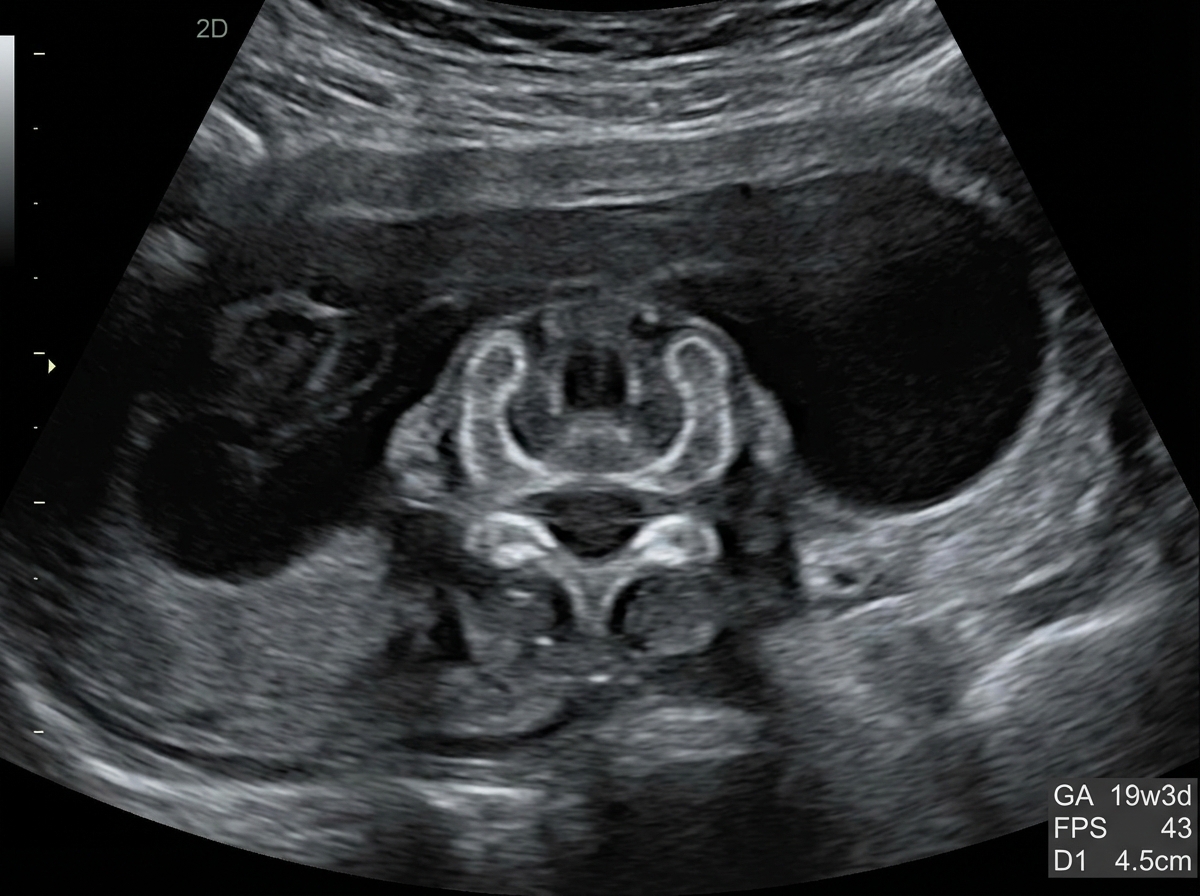
1 questionsA 25-year-old pregnant woman, at 18 weeks of gestation, undergoes a routine ultrasound scan. The ultrasound images provided show below. Based on the imaging findings, what is the most likely diagnosis?

NEET-PG 2024 - OB/GYN NEET-PG Practice Questions and MCQs
Question 11: A 25-year-old pregnant woman, at 18 weeks of gestation, undergoes a routine ultrasound scan. The ultrasound images provided show below. Based on the imaging findings, what is the most likely diagnosis?
- A. Spina bifida (Correct Answer)
- B. Anencephaly
- C. Encephalocele
- D. Holoprosencephaly
- E. Iniencephaly
Explanation: ***Spina bifida*** - The ultrasound image shows a **defect in the posterior elements of the fetal spine**, with characteristic splaying or widening of the vertebral arches. - This is a **neural tube defect** resulting from incomplete closure of the spinal column during embryonic development. - Associated findings on prenatal ultrasound may include the **"lemon sign"** (scalloping of frontal bones) and **"banana sign"** (abnormal cerebellar shape). - Spina bifida is typically detected on **second-trimester anatomy scan** (18-20 weeks). *Anencephaly* - This condition involves the **absence of a major portion of the brain, skull, and scalp** due to failure of anterior neural tube closure. - On ultrasound, anencephaly presents with **absent calvarium above the orbits** and absent cerebral hemispheres, which is distinctly different from a spinal defect. - This would be a **cranial abnormality**, not a spinal column defect. *Encephalocele* - An **encephalocele** is a protrusion of brain tissue and meninges through a defect in the skull, most commonly at the **occipital region**. - On ultrasound, this appears as a **cranial mass** extending beyond the skull contour, not a spinal defect. *Holoprosencephaly* - This condition results from **failure of forebrain (prosencephalon) to divide properly** into two hemispheres. - Ultrasound findings include **single ventricle**, fused thalami, and absent midline structures, often with associated **facial anomalies**. - The imaging would show **brain abnormalities**, not spinal column defects. *Iniencephaly* - This is a rare **neural tube defect** characterized by extreme retroflexion of the head with severe spinal defects in the cervical and thoracic regions. - On ultrasound, iniencephaly shows the fetal head in extreme **hyperextension** with the face looking upward, creating a characteristic "stargazing" appearance. - This differs from the typical spinal defect pattern seen in spina bifida.
Pharmacology
1 questionsWhich of the following is correct about the EMLA patch shown in the image below?

NEET-PG 2024 - Pharmacology NEET-PG Practice Questions and MCQs
Question 11: Which of the following is correct about the EMLA patch shown in the image below?
- A. Adverse effect is methemoglobinemia
- B. Contains bupivacaine & lignocaine
- C. Eutectic mixture is used (Correct Answer)
- D. 0.5% concentration of lignocaine has 50 mg in 1 gm is used
- E. Requires application for at least 15 minutes for adequate anesthesia
Explanation: ***Eutectic mixture is used*** - EMLA stands for **Eutectic Mixture of Local Anesthetics**, indicating that it uses a mixture of lidocaine and prilocaine to lower their melting points, allowing them to remain liquid at room temperature. - This liquid form enhances skin penetration, providing more effective topical anesthesia compared to individual agents. *Adverse effect is methemoglobinemia* - While methemoglobinemia is a potential side effect of **prilocaine**, which is part of the EMLA cream, it is usually only seen with **excessive doses** or in susceptible individuals (e.g., infants). - Given its topical application and typical dosing, it is not the most common or direct feature associated with correct use of the EMLA patch. *Contains bupivacaine & lignocaine* - The EMLA patch contains **lidocaine (lignocaine)** and **prilocaine**, not bupivacaine. - Bupivacaine is another local anesthetic, but it is not a component of the EMLA formulation. *0.5% concentration of lignocaine has 50 mg in 1 gm is used* - The EMLA patch typically contains a 2.5% concentration of **lidocaine** and 2.5% of **prilocaine**, meaning 25 mg of each per gram of cream. - A 0.5% concentration would be 5 mg per gram, so the stated concentration and amount are incorrect for the EMLA formulation. *Requires application for at least 15 minutes for adequate anesthesia* - EMLA requires a **minimum of 60 minutes** of application time for adequate dermal anesthesia, not 15 minutes. - For procedures on intact skin, the recommended application time is **60-120 minutes** to achieve optimal anesthetic effect.
Radiology
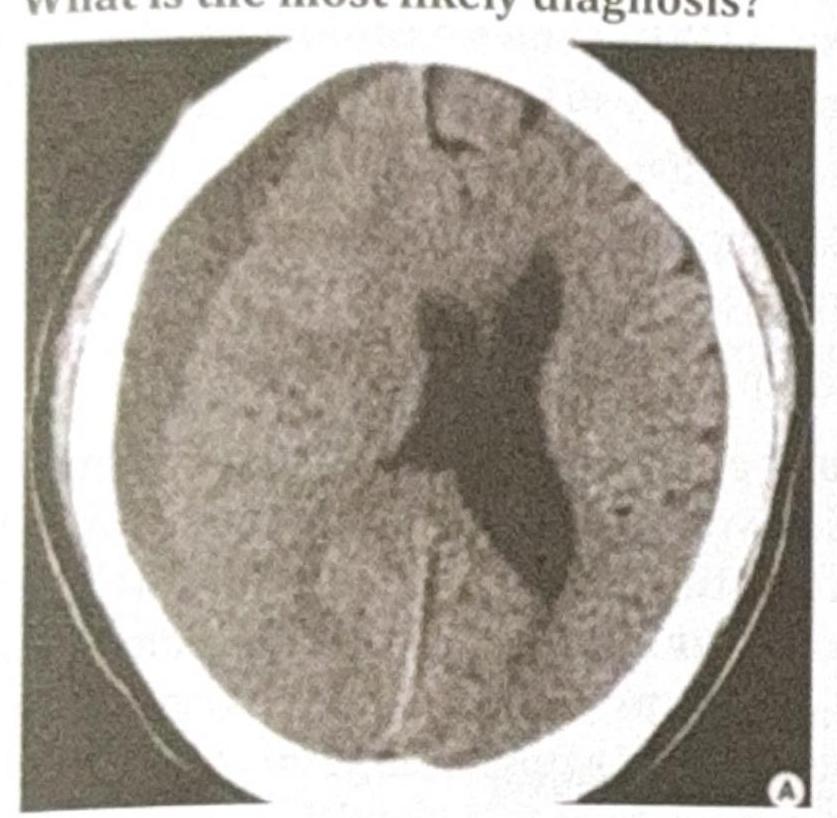
2 questionsAn 80-year-old male with a history of frequent falls presents with progressive headache, confusion, and mild hemiparesis over the past few weeks. A CT scan of the head is performed, and the image provided shows a crescent-shaped, hypodense collection over the left cerebral hemisphere with a slight midline shift. What is the most likely diagnosis?

A 40-year-old male presents with a history of headaches, fever, and new-onset seizures. An MRI of the brain is performed, revealing a ring-enhancing lesion with central restricted diffusion on diffusion-weighted imaging (DWI). What is the most likely diagnosis?
NEET-PG 2024 - Radiology NEET-PG Practice Questions and MCQs
Question 11: An 80-year-old male with a history of frequent falls presents with progressive headache, confusion, and mild hemiparesis over the past few weeks. A CT scan of the head is performed, and the image provided shows a crescent-shaped, hypodense collection over the left cerebral hemisphere with a slight midline shift. What is the most likely diagnosis?
- A. Acute subdural hematoma
- B. Epidural hematoma
- C. Chronic subdural hematoma (Correct Answer)
- D. Intracerebral hemorrhage
Explanation: ***Chronic subdural hematoma*** - The presented CT scan shows a **crescent-shaped, hypodense collection** over the left cerebral hemisphere, which is characteristic of a chronic subdural hematoma. **Hypodensity** indicates older, liquefied blood. - The patient's age (**80-year-old** with **frequent falls**), and the **progressive symptoms** (headache, confusion, mild hemiparesis over weeks) are highly consistent with a chronic rather than acute presentation. *Acute subdural hematoma* - An acute subdural hematoma would typically present as a **hyperdense** (bright) crescent-shaped collection on CT due to fresh blood. - Symptoms would usually be more acute and severe, developing over hours to days, which does not match the "past few weeks" progression. *Epidural hematoma* - An epidural hematoma is typically **lens-shaped (biconvex)**, not crescent-shaped, and usually results from a traumatic arterial bleed. - While it can cause midline shift, its characteristic shape and often acute presentation (often with a lucid interval) differentiate it from the described scenario. *Intracerebral hemorrhage* - An intracerebral hemorrhage occurs within the brain parenchyma, appearing as a **hyperdense mass within the brain tissue** on CT, not as a collection over the cerebral hemisphere. - The symptoms would depend on the location but would not typically involve a crescent-shaped collection outside the brain parenchyma.
Question 12: A 40-year-old male presents with a history of headaches, fever, and new-onset seizures. An MRI of the brain is performed, revealing a ring-enhancing lesion with central restricted diffusion on diffusion-weighted imaging (DWI). What is the most likely diagnosis?
- A. Glioblastoma multiforme
- B. Metastatic brain tumor
- C. Brain abscess (Correct Answer)
- D. Toxoplasmosis
Explanation: ***Brain abscess*** - A **ring-enhancing lesion** with **central restricted diffusion** on DWI is highly characteristic of a brain abscess, due to the presence of pus containing densely packed inflammatory cells and bacteria with high viscosity. - The clinical presentation of **headaches, fever**, and **new-onset seizures** is consistent with an infectious process and increased intracranial pressure. - This combination of imaging and clinical features is pathognomonic for pyogenic brain abscess. *Glioblastoma multiforme* - While GBM can present with **ring-enhancing lesions** and seizures, it typically exhibits **facilitated diffusion** (high ADC values) on DWI due to necrotic tumor core, not restricted diffusion. - GBM is a highly infiltrative tumor with extensive **vasogenic edema**. - Fever is uncommon in GBM unless there is secondary infection. *Metastatic brain tumor* - Metastatic lesions can be **ring-enhancing** and cause seizures, but **restricted diffusion** is not typical unless there is acute hemorrhage or superimposed infection. - The presence of **fever** points away from uncomplicated metastasis. - Multiple lesions at the gray-white matter junction are more typical of metastases. *Toxoplasmosis* - Toxoplasmosis in **immunocompromised individuals** (HIV/AIDS with CD4 <100) causes **multiple ring-enhancing lesions** with predilection for basal ganglia. - Restricted diffusion is **not consistently seen** with toxoplasmosis, unlike pyogenic abscesses. - The specific DWI finding of central restricted diffusion makes brain abscess the most definitive diagnosis.
Surgery
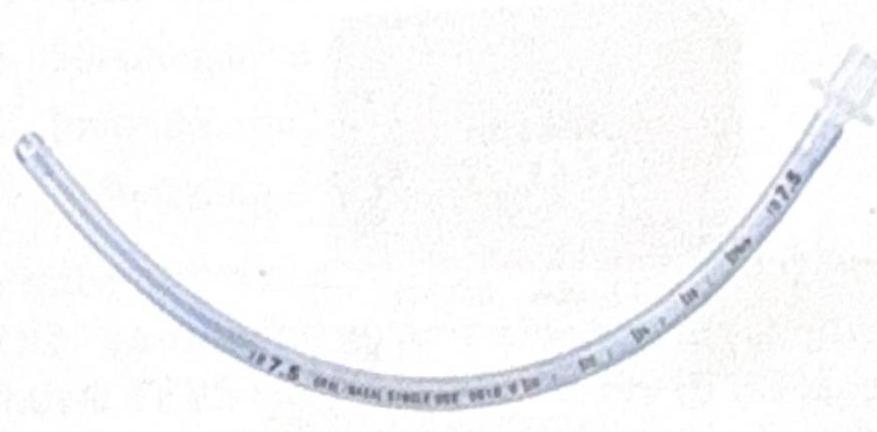
1 questionsIdentify the instrument shown in the image:
NEET-PG 2024 - Surgery NEET-PG Practice Questions and MCQs
Question 11: Identify the instrument shown in the image:
- A. Nasogastric tube
- B. Uncuffed endotracheal (ET) tube (Correct Answer)
- C. Oropharyngeal tube
- D. Tracheostomy tube
Explanation: ***Uncuffed endotracheal (ET) tube*** - This image displays a transparent, flexible tube with a distinct connector at one end and no inflated cuff near the distal tip, which is characteristic of an **uncuffed endotracheal tube**. - Uncuffed ET tubes are commonly used in **pediatric patients** where a cuff could potentially damage the narrower, cone-shaped trachea. *Nasogastric tube* - A nasogastric tube typically has a much **smaller diameter** and a distinctly different tip design, often with multiple side ports for fluid aspiration or administration. - It does not feature the large, universal connector seen on endotracheal tubes. *Oropharyngeal tube* - An oropharyngeal (Guedel) airway is a **rigid, curved device** inserted into the mouth to maintain an open airway, and it looks distinctly different from the flexible tube shown. - It does not extend into the trachea like an ET tube. *Tracheostomy tube* - A tracheostomy tube is typically shorter, often with a curved neck flange for securement to the neck, and frequently made with an outer and inner cannula, which are absent in the image. - While it helps maintain an airway, its design is specific for insertion directly into a tracheostomy stoma, unlike the longer tube for oral/nasal intubation.