Biochemistry
1 questionsWhat is the primary function of IL-8?
NEET-PG 2024 - Biochemistry NEET-PG Practice Questions and MCQs
Question 171: What is the primary function of IL-8?
- A. Chemotaxis (Correct Answer)
- B. Lymphocyte proliferation
- C. TH1 activation
- D. Fever
- E. B cell activation
Explanation: ***Chemotaxis*** - **IL-8** (also known as **CXCL8**) is a potent **chemokine** that primarily functions to recruit and activate **neutrophils** to sites of inflammation. - It guides these immune cells by forming a chemical gradient, allowing them to extravasate from blood vessels and migrate to the infected or injured tissue. *Lymphocyte proliferation* - Lymphocyte proliferation is primarily stimulated by **IL-2**, which acts as a growth factor for T cells. - While IL-8 contributes to the inflammatory environment, its direct role in inducing lymphocyte cell division is minor compared to its chemotactic function. *TH1 activation* - **TH1 cell activation** is mainly driven by **IL-12** and **IFN-γ**, which promote the differentiation and function of T helper 1 cells, crucial for fighting intracellular pathogens. - IL-8's role is unrelated to guiding TH1 cell differentiation. *Fever* - Fever is primarily induced by **pyrogenic cytokines** such as **IL-1**, **IL-6**, and **TNF-α**, which act on the hypothalamus to raise body temperature. - While IL-8 is part of the inflammatory response that can sometimes coincide with fever, it does not directly act as a pyrogen. *B cell activation* - **B cell activation** and differentiation are primarily regulated by interleukins such as **IL-4**, **IL-5**, **IL-6**, and **IL-21**, which promote antibody production and class switching. - IL-8 does not play a significant role in B cell function; its action is focused on innate immunity, particularly neutrophil recruitment.
Internal Medicine
3 questionsA 40-year-old farmer presents with fever, calf tenderness, conjunctival suffusion, retro-orbital pain, and hypokalemia. What is the diagnosis?
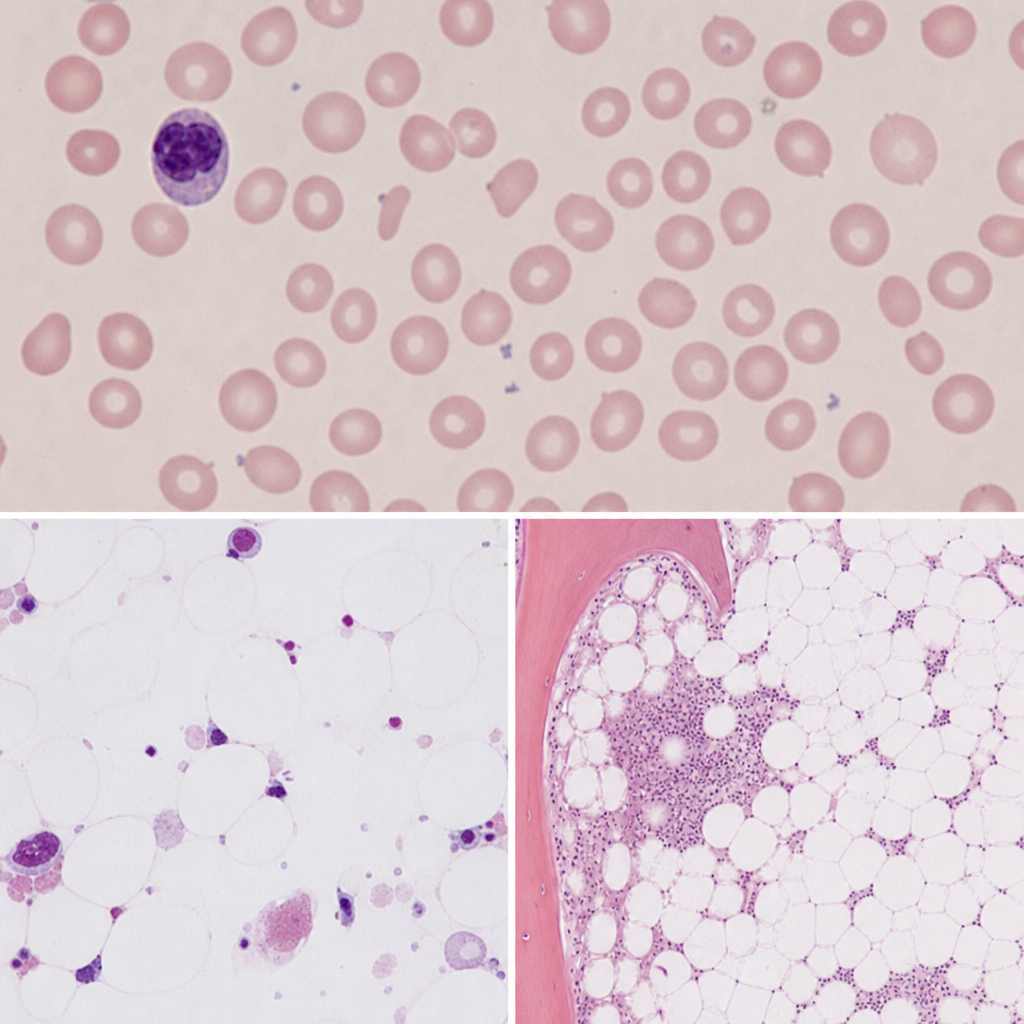
Which viral infection is most likely responsible for triggering this aplastic crisis in the patient?
A patient living with HIV presents with foulsmelling stools. Microscopic examination of the stool reveals no cysts or ova, but a 200-micrometer larva is observed. What is the most likely pathogen?
NEET-PG 2024 - Internal Medicine NEET-PG Practice Questions and MCQs
Question 171: A 40-year-old farmer presents with fever, calf tenderness, conjunctival suffusion, retro-orbital pain, and hypokalemia. What is the diagnosis?
- A. Malaria
- B. Dengue
- C. Leptospira (Correct Answer)
- D. Influenza
- E. Typhoid fever
Explanation: ***Leptospira*** - The combination of **fever**, **calf tenderness**, **conjunctival suffusion** (red eyes without purulent discharge), **retro-orbital pain**, and **hypokalemia** is highly suggestive of **leptospirosis**. - A farmer's occupation increases the risk of exposure to contaminated water or soil, which is a common transmission route for Leptospira. - **Calf tenderness** and **conjunctival suffusion** are particularly characteristic features. *Malaria* - Characterized by **cyclic fevers**, **chills**, and **sweats**, often with **splenomegaly** and **anemia**. - **Calf tenderness**, **conjunctival suffusion**, and **retro-orbital pain** are not typical primary symptoms of malaria. *Dengue* - Often presents with **high fever**, **severe headache** (especially retro-orbital), **muscle and joint pain** ("breakbone fever"), and **rash**. - **Conjunctival suffusion** and significant **calf tenderness** are not classic features, and hypokalemia is less common than with leptospirosis. *Influenza* - Acute respiratory illness with **fever**, **cough**, **sore throat**, **muscle aches**, and **fatigue**. - While muscle aches can occur, **calf tenderness**, **conjunctival suffusion**, and **hypokalemia** are not characteristic of influenza. *Typhoid fever* - Presents with **sustained fever**, **relative bradycardia**, **rose spots**, and **hepatosplenomegaly**. - **Conjunctival suffusion**, **calf tenderness**, and **retro-orbital pain** are not typical features of typhoid fever.
Question 172: Which viral infection is most likely responsible for triggering this aplastic crisis in the patient?
- A. Parvovirus B19 (Correct Answer)
- B. Epstein-Barr Virus (EBV)
- C. Hepatitis B Virus (HBV)
- D. Cytomegalovirus (CMV)
Explanation: ***Parvovirus B19*** - **Parvovirus B19** specifically targets and destroys **red blood cell precursors** in the bone marrow, leading to a temporary cessation of erythropoiesis [1]. - In patients with underlying hemolytic anemias (e.g., **sickle cell disease**, **hereditary spherocytosis**), this temporary aplasia can trigger a severe **aplastic crisis** due to their already shortened red blood cell lifespan [2]. *Epstein-Barr Virus (EBV)* - While EBV can cause various hematologic complications, including some myelosuppression, it is not typically associated with triggering acute **aplastic crises** due to direct erythroid precursor destruction [3]. - EBV is primarily known for causing **infectious mononucleosis** and is linked to lymphoproliferative disorders [3]. *Hepatitis B Virus (HBV)* - HBV infection primarily affects the **liver** and is not a common cause of acute **aplastic crisis** by directly targeting bone marrow hematopoietic cells. - Chronic HBV infection can rarely be associated with **aplastic anemia**, but not usually with an acute crisis. *Cytomegalovirus (CMV)* - CMV can cause myelosuppression, especially in **immunocompromised individuals**, and may lead to pancytopenia. - However, CMV does not typically induce the sudden and severe **erythroid aplasia** characteristic of an aplastic crisis in hemolytic anemia patients, as seen with Parvovirus B19 [1].
Question 173: A patient living with HIV presents with foulsmelling stools. Microscopic examination of the stool reveals no cysts or ova, but a 200-micrometer larva is observed. What is the most likely pathogen?
- A. Strongyloides stercoralis (Correct Answer)
- B. Ascaris lumbricoides
- C. Ancylostoma duodenale
- D. Schistosoma mansoni
Explanation: ***Strongyloides stercoralis*** - The presence of **larvae** in the stool [2], particularly **rhabditiform larvae**, is characteristic of *Strongyloides stercoralis* infection, as this parasite has an **autoinfective cycle** involving larval stages in the human host [2]. - In HIV-positive patients, *Strongyloides* can cause **hyperinfection syndrome**, leading to severe gastrointestinal symptoms like foul-smelling stools, and increased larval shedding [2]. *Ascaris lumbricoides* - *Ascaris lumbricoides* is a large intestinal nematode, but it typically presents with **ova** (eggs) in the stool, not larvae, as the eggs hatch in the small intestine. - While it can cause gastrointestinal symptoms, the hallmark microscopic finding in stool samples is the presence of **mammillated or decorticated eggs**. *Ancylostoma duodenale* - *Ancylostoma duodenale* (hookworm) infections are identified by the presence of **eggs** in the stool [1], which are typically oval with a thin shell and contain a developing larva. - Hookworm larvae usually develop in **soil** and infect humans through skin penetration, rather than being commonly found in stool samples from intestinal infection [1]. *Schistosoma mansoni* - *Schistosoma mansoni* is a **blood fluke** that causes intestinal schistosomiasis, characterized by the presence of **spined eggs** in the stool. - The parasite's life cycle involves **freshwater snails** as intermediate hosts, and a **larval stage (cercariae)** that penetrates human skin, but larvae are not typically found in human stool.
Microbiology
5 questionsA patient was diagnosed with Escherichia coli O157:H7 infection. In this designation, what does the "H" stand for?
A man presents with dysuria and urethral discharge after a history of unprotected sex. The Gram stain of his discharge is shown. What is the best culture medium for isolating the organism responsible?

A young boy who used to wash his contact lenses in tap water or with unhygienic lens fluid developed keratitis. Microscopy revealed an organism with spiked or star-shaped structures. Identify the correct organism responsible.
A patient in the ICU with a central venous catheter (CVC) develops an infection. Microscopy reveals ovoid budding yeast cells. What is the most likely organism?
A farmer presents with a subcutaneous wound on his foot with discharge. Microscopy of a white granule from the wound shows Gram-positive filamentous rods. What is the most likely organism?
NEET-PG 2024 - Microbiology NEET-PG Practice Questions and MCQs
Question 171: A patient was diagnosed with Escherichia coli O157:H7 infection. In this designation, what does the "H" stand for?
- A. Lipopolysaccharide (LPS)
- B. Capsule
- C. Flagella (Correct Answer)
- D. Fimbriae
Explanation: **Flagella** - The "H" in bacterial designations like *Escherichia coli* O157:H7 refers to the **H antigen**, which is associated with bacterial **flagella**. - Flagellar antigens are important for serotyping bacteria, identifying different strains based on their unique flagellar protein compositions. *Lipopolysaccharide (LPS)* - The "O" in bacterial designations like *E. coli* O157 refers to the **O antigen**, which is part of the **lipopolysaccharide (LPS)** layer on the outer membrane of Gram-negative bacteria. - LPS is a major component of the bacterial outer membrane and acts as an **endotoxin**. *Capsule* - The "K" in some bacterial serotypes (e.g., *Klebsiella pneumoniae* K1) refers to the **K antigen**, which is associated with the **capsule**. - The capsule is a protective layer surrounding some bacteria that helps them evade phagocytosis. *Fimbriae* - **Fimbriae** (also known as pili) are short, hair-like appendages on the surface of some bacteria that aid in **adhesion** to host cells. - While fimbriae have their own antigenic properties, they are not typically designated by the "H" prefix in standard serotyping, which specifically refers to flagellar antigens.
Question 172: A man presents with dysuria and urethral discharge after a history of unprotected sex. The Gram stain of his discharge is shown. What is the best culture medium for isolating the organism responsible?
- A. Thayer-Martin agar (Correct Answer)
- B. MacConkey agar
- C. Chocolate agar
- D. TCBS agar
Explanation: ***Thayer-Martin agar*** - The image shows numerous **polymorphonuclear leukocytes (neutrophils)** with intracellular, gram-negative diplococci, which is characteristic of **Neisseria gonorrhoeae**. - **Thayer-Martin agar** is a selective medium specifically formulated for the isolation of *Neisseria gonorrhoeae* from specimens containing flora. *MacConkey agar* - **MacConkey agar** is a selective and differential medium used primarily for the isolation of Gram-negative **enteric bacilli** and differentiation based on lactose fermentation. - It is not suitable for *Neisseria* species, which are fastidious organisms requiring enriched media. *Chocolate agar* - **Chocolate agar** is an enriched, non-selective medium that supports the growth of fastidious organisms like *Neisseria* species and *Haemophilus influenzae*. - While *Neisseria gonorrhoeae* grows on chocolate agar, **Thayer-Martin agar** is preferred for specimens from sites with normal flora as it inhibits contaminants. *TCBS agar* - **Thiosulfate Citrate Bile Salts Sucrose (TCBS) agar** is a selective medium used for the isolation of *Vibrio* species, particularly *Vibrio cholerae*. - This medium is completely unsuitable for the growth of *Neisseria gonorrhoeae*, which has entirely different nutritional and environmental requirements.
Question 173: A young boy who used to wash his contact lenses in tap water or with unhygienic lens fluid developed keratitis. Microscopy revealed an organism with spiked or star-shaped structures. Identify the correct organism responsible.
- A. Balantidium
- B. Pseudomonas
- C. Acanthamoeba (Correct Answer)
- D. Staphylococcus aureus
Explanation: ***Acanthamoeba*** - *Acanthamoeba* is a **free-living amoeba** found in water, soil, and inadequately disinfected contact lens solutions, specifically linked to **keratitis** in contact lens wearers. - Its characteristic morphology, often described as having **spiked or star-shaped structures**, refers to the **acanthopodia** (spine-like pseudopods) that are distinctive features visible microscopically. *Balantidium* - *Balantidium coli* is a **ciliated protozoan** and primarily causes **intestinal infections** (balantidiasis), not keratitis. - It would be distinguished microscopically by its **large size**, **kidney-shaped macronucleus**, and **cilia**, not spiked structures. *Pseudomonas* - *Pseudomonas aeruginosa* is a **bacterium** and a common cause of **bacterial keratitis**, especially in contact lens wearers, but it is not a protozoan. - Microscopically, it would appear as **rod-shaped bacteria**, not organisms with spiked or star-shaped structures. *Staphylococcus aureus* - *Staphylococcus aureus* is a **bacterium** and a frequent cause of various infections, including **bacterial keratitis**. - Under a microscope, it presents as **Gram-positive cocci in clusters**, not as an amoeba with spiked or star-shaped protrusions.
Question 174: A patient in the ICU with a central venous catheter (CVC) develops an infection. Microscopy reveals ovoid budding yeast cells. What is the most likely organism?
- A. Candida (Correct Answer)
- B. Staphylococcus epidermidis
- C. Escherichia coli
- D. Staphylococcus aureus
Explanation: ***Candida*** - **Gram-positive ovoid budding organisms** are characteristic findings for yeast, with **Candida** species being the most common cause of CVC-related fungal infections in ICU patients. - Patients with CVCs are at high risk for candidemia due to compromised skin barriers and often receiving broad-spectrum antibiotics, which can disrupt the normal flora. *Staphylococcus epidermidis* - This is a **Gram-positive coccus** that grows in clusters and is a common cause of CVC-related **bacterial infections**, developing **biofilms** on catheters. - It does not present as an ovoid budding organism on microscopy. *Escherichia coli* - This is a **Gram-negative rod**, typically associated with **urinary tract infections** and sepsis from an abdominal source. - It would not appear as a Gram-positive ovoid budding organism and is not a common cause of primary CVC-related bloodstream infections unless there's an associated abdominal source. *Staphylococcus aureus* - This is a **Gram-positive coccus** that grows in grape-like clusters and can cause severe CVC-related bloodstream infections, often leading to **endocarditis** or widespread dissemination. - Like *S. epidermidis*, it is a bacterium and does not exhibit ovoid budding.
Question 175: A farmer presents with a subcutaneous wound on his foot with discharge. Microscopy of a white granule from the wound shows Gram-positive filamentous rods. What is the most likely organism?
- A. Staphylococcus aureus
- B. Histoplasma
- C. Nocardia (Correct Answer)
- D. Sporothrix
Explanation: ***Nocardia*** - The presence of **white granules** in the discharge, along with **Gram-positive, filamentous rods**, is highly characteristic of *Nocardia* infection, often forming **sulfur granules** (though not always yellow). - *Nocardia* is a common soil bacterium, making it a likely pathogen in a **farmer with a subcutaneous wound** related to environmental exposure. *Staphylococcus aureus* - While *Staphylococcus aureus* can cause skin infections and abscesses, it presents as **Gram-positive cocci in clusters**, not filamentous rods. - It does not typically form **granules** in the discharge in the same manner as *Nocardia*. *Histoplasma* - *Histoplasma* is a **dimorphic fungus** that causes systemic infections, often acquired by inhaling spores. - It would appear as **yeast forms** in tissue or cultures, not Gram-positive filamentous rods, and is not typically associated with subcutaneous wounds forming granules. *Sporothrix* - *Sporothrix schenckii* causes **sporotrichosis**, characterized by a **subcutaneous nodule** that progresses along lymphatic channels. - It is a **dimorphic fungus** (yeast in tissue, mold in culture) and would not appear as Gram-positive filamentous rods on microscopy.
Pediatrics
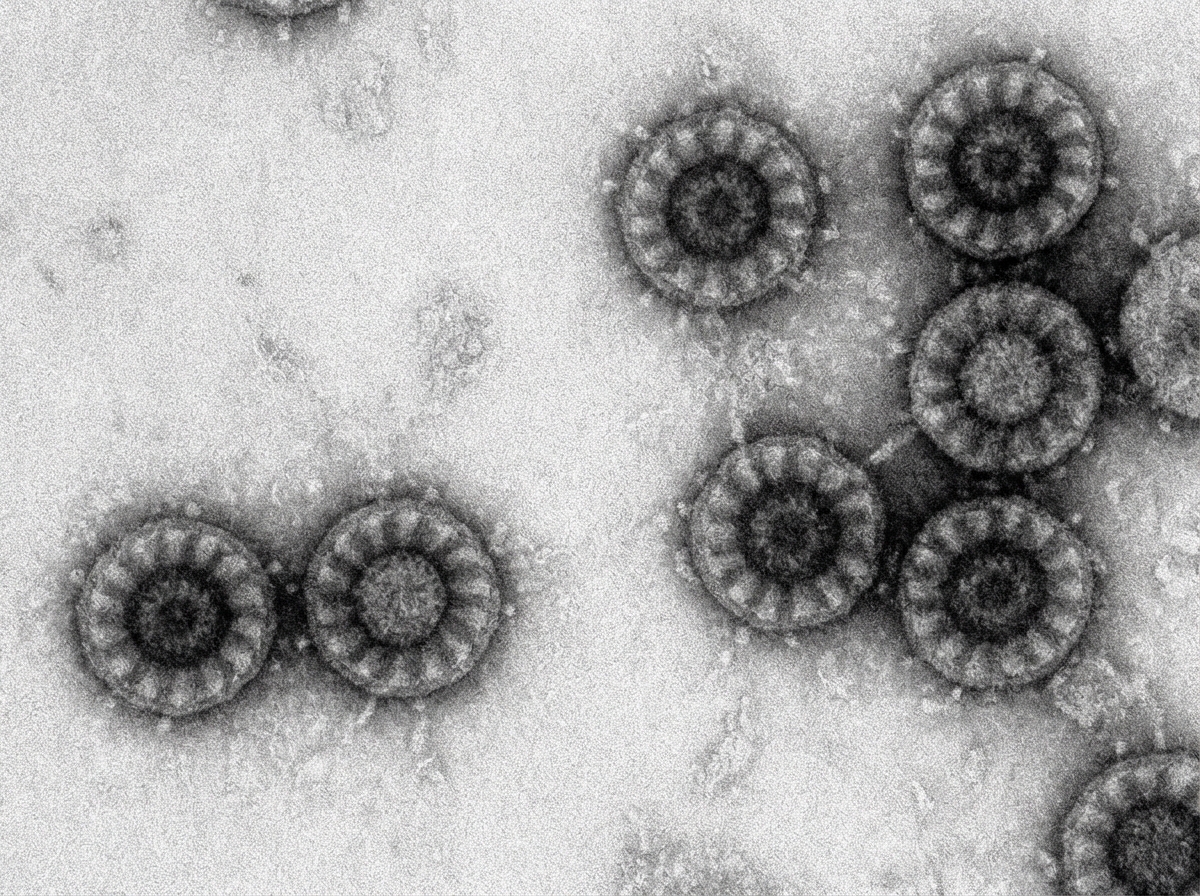
1 questionsA 2 year old child came with watery diarrhea. Electron Microscopy (EM) Image is shown here. Choose the correct pathogen.

NEET-PG 2024 - Pediatrics NEET-PG Practice Questions and MCQs
Question 171: A 2 year old child came with watery diarrhea. Electron Microscopy (EM) Image is shown here. Choose the correct pathogen.
- A. Norwalk virus
- B. Adenovirus
- C. ECHO virus
- D. Rota virus (Correct Answer)
- E. Astrovirus
Explanation: ***Rota virus*** - The electron micrograph shows **double-layered viral particles** with a distinct wheel-like appearance, characteristic of **Rotavirus**, a major cause of severe watery diarrhea in young children. - Rotavirus is the most common cause of **severe dehydrating diarrhea** in infants and young children worldwide. *Norwalk virus* - Norwalk virus (now commonly referred to as **Norovirus**) particles are typically **smaller** and have an **amorphous** or indistinct surface morphology compared to the clearly structured Rotavirus. - Norovirus causes acute gastroenteritis but its electron microscopic appearance is less distinct and lacks the double-shelled structure seen here. *Adenovirus* - Adenoviruses are **larger, non-enveloped DNA viruses** with a distinct **icosahedral capsid** structure, often appearing hexagonal or pentagonal with prominent 'spikes' at the vertices. - While adenoviruses can cause gastroenteritis, their EM appearance is easily distinguishable from the image provided. *Astrovirus* - Astroviruses are **small, non-enveloped RNA viruses** that appear as **smooth-surfaced, star-shaped particles** on electron microscopy (hence the name "astro"). - They cause gastroenteritis in young children but lack the characteristic double-layered wheel-like structure of rotavirus. *ECHO virus* - ECHO viruses (Enteric Cytopathic Human Orphan viruses) are **picornaviruses**, which are very **small, non-enveloped RNA viruses** with an icosahedral shape. - Their EM image would show much smaller, less complex particles without the characteristic double-layered structure of rotavirus.