Anatomy
5 questionsWhat is the most common site of congenital diaphragmatic hernia?
A patient presents with loss of sensation on the lateral 3½ fingers and thenar atrophy. Which nerve is most likely involved?
A patient with a nerve injury was asked to form an "O" with their index finger and thumb but was unable to do so. Which muscle is most likely affected?
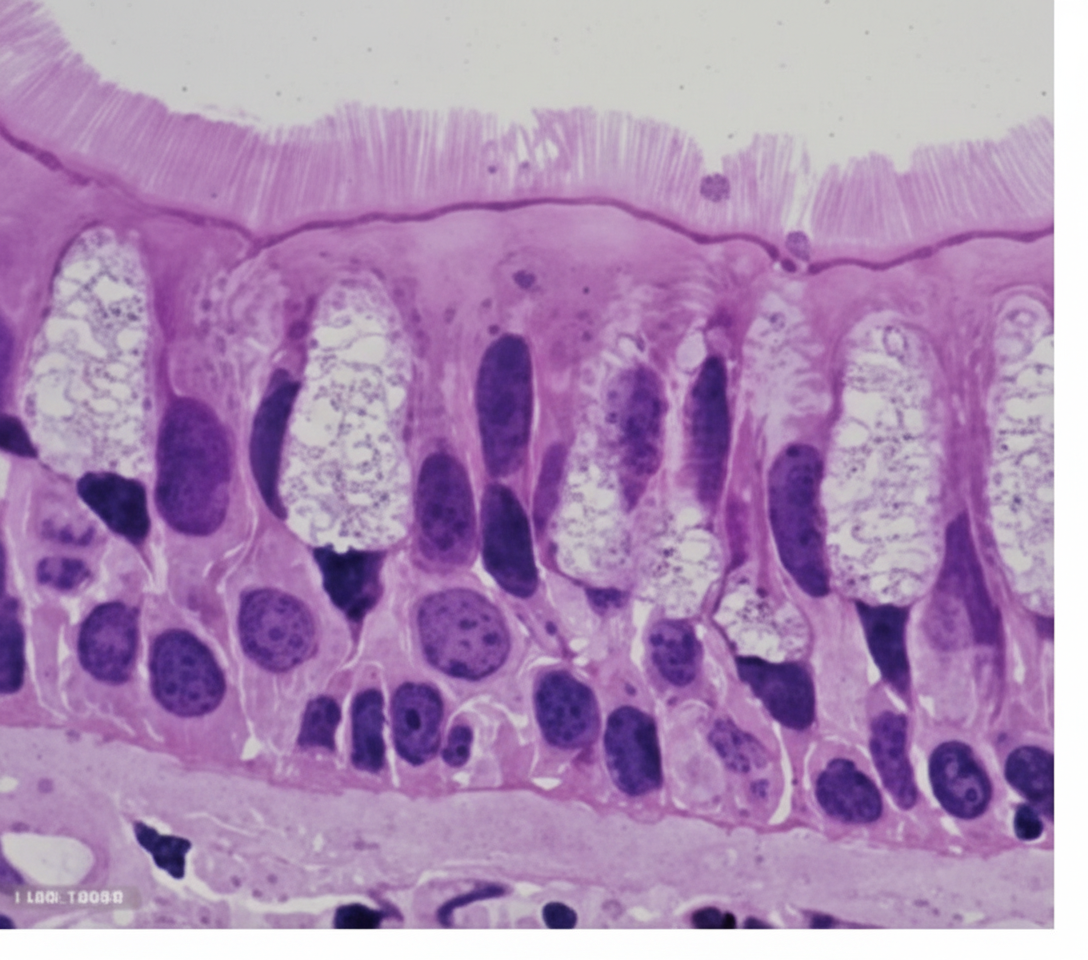
This type of epithelium is most commonly seen in which of the following organs?
Which tongue papillae do not have taste buds?
NEET-PG 2024 - Anatomy NEET-PG Practice Questions and MCQs
Question 131: What is the most common site of congenital diaphragmatic hernia?
- A. Central tendon
- B. Posterolateral (Correct Answer)
- C. Crural
- D. Anterolateral
- E. Esophageal hiatus
Explanation: ***Posterolateral*** - The **posterolateral** region, specifically the foramen of Bochdalek, is the most common site for congenital diaphragmatic hernia (CDH). - This type of hernia accounts for approximately 80-90% of all CDH cases and usually occurs on the **left side**. *Central tendon* - Hernias through the **central tendon** are extremely rare and are distinct from the more common forms of CDH. - Defects in the central tendon are often associated with **pericardial defects** rather than typical diaphragmatic hernias which allow abdominal contents into the thoracic cavity. *Crural* - Hernias involving the **crura** of the diaphragm are typically **hiatal hernias** (e.g., sliding or paraesophageal), which are different in origin and presentation from CDH. - These are usually acquired and involve the stomach moving into the mediastinum, rather than a congenital defect leading to abdominal viscera migrating into the chest. *Anterolateral* - While congenital diaphragmatic hernias can occur **anterolaterally** through the foramen of Morgagni, these are much less common than posterolateral hernias. - Morgagni hernias account for a small percentage of CDH cases (around 2-5%) and are typically located on the right side, often containing omentum or colon. *Esophageal hiatus* - The **esophageal hiatus** is the normal opening in the diaphragm through which the esophagus passes. - While hiatal hernias can occur at this site, these are typically **acquired hernias** in adults, not congenital diaphragmatic hernias. - Congenital CDH refers to developmental defects in the diaphragm itself, not enlargement of normal openings.
Question 132: A patient presents with loss of sensation on the lateral 3½ fingers and thenar atrophy. Which nerve is most likely involved?
- A. Median (Correct Answer)
- B. Ulnar
- C. Radial
- D. Anterior interosseous nerve
Explanation: ***Median*** - The **median nerve** provides sensation to the **lateral 3½ fingers** (thumb, index, middle, and radial half of the ring finger) and innervates the **thenar muscles**, making its involvement consistent with the described symptoms [1]. - **Thenar atrophy** points directly to motor innervation loss of the thenar eminence, which is a key function of the median nerve. *Ulnar* - The **ulnar nerve** supplies sensation to the **medial 1½ fingers** (little finger and ulnar half of the ring finger) and innervates most of the **intrinsic hand muscles**, but not the thenar muscles [1]. - Damage typically causes **hypothenar atrophy** and **clawing** of the 4th and 5th digits, which are not described here. *Radial* - The **radial nerve** primarily provides sensation to the **dorsal aspect of the hand** and innervates the **extensor muscles of the forearm and hand**. - Its injury would typically lead to **wrist drop** and sensory loss in the dorsal hand, not thenar atrophy or lateral finger sensory loss. *Anterior interosseous nerve* - The **anterior interosseous nerve** is a **purely motor branch of the median nerve** that innervates muscles involved in **flexion of the thumb IP joint** and **index finger DIP joint**. - It does not have any sensory innervation, so loss of sensation in the lateral 3½ fingers would not be a symptom.
Question 133: A patient with a nerve injury was asked to form an "O" with their index finger and thumb but was unable to do so. Which muscle is most likely affected?
- A. Opponens pollicis (Correct Answer)
- B. Abductor pollicis brevis
- C. Flexor pollicis brevis
- D. Palmar interossei
- E. Adductor pollicis
Explanation: ***Opponens pollicis*** - The **opponens pollicis** muscle is responsible for **opposition of the thumb**, a complex movement involving flexion, abduction, and medial rotation of the thumb at the carpometacarpal joint. - Inability to form an "O" sign with the index finger and thumb is a classic clinical test for impaired opposition, often indicating a problem with the **median nerve** or the opponens pollicis muscle it innervates. *Abductor pollicis brevis* - The **abductor pollicis brevis** primarily abducts the thumb, moving it away from the palm. - While necessary for thumb function, its primary role is not the opposition motion required to touch the fingertips in an "O" shape. *Flexor pollicis brevis* - The **flexor pollicis brevis** primarily flexes the thumb at the metacarpophalangeal joint. - While it contributes to thumb movements, it is not the primary muscle responsible for the complex motion of opposition. *Adductor pollicis* - The **adductor pollicis** adducts the thumb, bringing it towards the palm and index finger. - Innervated by the **ulnar nerve**, this muscle is important for pinch grip but is not the primary muscle for opposition movement. *Palmar interossei* - The **palmar interossei** muscles adduct the fingers, pulling them towards the middle finger. - These muscles are involved in finger adduction, not direct thumb opposition, and are typically innervated by the ulnar nerve.
Question 134: This type of epithelium is most commonly seen in which of the following organs?
- A. Ureter
- B. Trachea (Correct Answer)
- C. Duodenum
- D. Gall bladder
- E. Esophagus
Explanation: ***Trachea*** - The image displays **pseudostratified columnar epithelium with cilia and goblet cells**, which is characteristic of the respiratory tract, including the trachea. - This specialized epithelium functions to trap and expel foreign particles from the airways, ensuring respiratory health. *Ureter* - The ureter is lined by **transitional epithelium** (urothelium), which is characterized by its ability to stretch. - This epithelium would show a cuboidal to columnar appearance when relaxed and a flattened appearance when stretched, and the cells on the surface are typically dome-shaped, unlike the image. *Duodenum* - The duodenum is lined by **simple columnar epithelium** with a brush border and numerous goblet cells for absorption and mucus secretion. - It also features **villi and crypts of Lieberkühn**, which are not seen in the provided image. *Gall bladder* - The gallbladder is lined by **simple columnar epithelium** with microvilli, specialized for water absorption. - It lacks the cilia and pseudostratified arrangement evident in the given histopathology slide. *Esophagus* - The esophagus is lined by **non-keratinized stratified squamous epithelium**, designed to protect against abrasion from food passage. - This epithelium appears as multiple layers of flattened cells, completely different from the tall, columnar, ciliated cells shown in the image.
Question 135: Which tongue papillae do not have taste buds?
- A. Fungiform
- B. Filiform (Correct Answer)
- C. Circumvallate
- D. Foliate
- E. Conical
Explanation: ***Filiform*** - **Filiform papillae** are the most abundant type of papillae on the tongue and are responsible for the **mechanical action of gripping food**, due to their cone-shaped, abrasive structure of keratinized epithelium. - Unlike other papillae, they **lack taste buds** and thus do not play a role in taste sensation. *Fungiform* - **Fungiform papillae** are mushroom-shaped and are scattered among the filiform papillae, primarily on the tip and sides of the tongue. - These papillae **contain taste buds** on their superior surface and are involved in sensing taste stimuli. *Circumvallate* - **Circumvallate papillae** are large, dome-shaped structures arranged in a V-shape at the back of the tongue. - They are surrounded by a trench into which salivary glands empty, and their walls contain a **large number of taste buds**. *Foliate* - **Foliate papillae** are leaf-like folds located on the lateral margins of the posterior tongue. - They are **well-developed in young children** and contain taste buds, though they tend to degenerate with age. *Conical* - **Conical** is not a recognized classification of tongue papillae. While filiform papillae have a conical (cone-shaped) structure, "conical papillae" is not an anatomical term used to describe a distinct type of papilla.
Pharmacology
1 questionsCaffeine impairs sleep by which of the following mechanisms?
NEET-PG 2024 - Pharmacology NEET-PG Practice Questions and MCQs
Question 131: Caffeine impairs sleep by which of the following mechanisms?
- A. Blocks adenosine action and promotes wakefulness (Correct Answer)
- B. Activates locus coeruleus & promotes wakefulness
- C. No role in maintaining wakefulness
- D. Activates histamine release and prevents sleep
- E. Inhibits phosphodiesterase and increases cAMP levels
Explanation: ***Blocks adenosine action and promotes wakefulness*** - Caffeine functions as a competitive **adenosine receptor antagonist**, primarily at A1 and A2A receptors in the brain. - By blocking adenosine, which is an endogenous sleep-promoting neurochemical, caffeine reduces its inhibitory effects on wakefulness centers, thus **promoting alertness** and delaying sleep onset. *Activates locus coeruleus & promotes wakefulness* - While caffeine indirectly influences brain regions that promote wakefulness, its primary mechanism is not direct activation of the **locus coeruleus**. - Its effects on wakefulness are mediated more broadly through antagonism of **adenosine receptors.** *No role in maintaining wakefulness* - This statement is incorrect; caffeine is well-known for its **psychoactive properties** and its ability to increase alertness and reduce fatigue. - Its widespread consumption is largely attributed to its role in **promoting wakefulness** and improving cognitive function. *Activates histamine release and prevents sleep* - Caffeine does not significantly activate **histamine release** as a primary mechanism for its wake-promoting effects. - The wake-promoting effects of histamine are mediated via H1 receptors, but this is a separate pathway not directly targeted by caffeine. *Inhibits phosphodiesterase and increases cAMP levels* - While caffeine does inhibit **phosphodiesterase enzymes** (particularly at higher concentrations), this is not the primary mechanism for its wake-promoting effects. - The concentrations required for significant phosphodiesterase inhibition are much higher than those achieved with typical caffeine consumption; **adenosine receptor antagonism** occurs at much lower doses and is the dominant mechanism for its effects on sleep and alertness.
Physiology
4 questionsSour taste is mediated by which of the following receptors?
Select the correct option regarding the function of receptors:
A patient is experiencing phantom limb pain after the amputation of the right limb. What is observed on a PET scan in a patient with phantom limb pain?
Sequence the events in neuromuscular action potential conduction: 1. Sodium channels open in the end plate 2. Calcium enters at the nerve terminal 3. Release of acetylcholine
NEET-PG 2024 - Physiology NEET-PG Practice Questions and MCQs
Question 131: Sour taste is mediated by which of the following receptors?
- A. T1R1
- B. T1R2
- C. T1R3
- D. OTOP1 (Correct Answer)
Explanation: ***OTOP1*** - The **OTOP1** receptor, an **otopetrin protein**, is responsible for detecting the **sour taste** sensation by mediating proton influx. - It functions as a **proton channel**, allowing hydrogen ions (H+) from acidic substances to enter taste receptor cells. *T1R1* - **T1R1** is a component of the **umami (savory) taste receptor**, forming a heterodimer with T1R3 to detect glutamate. - It does not directly detect sourness but is involved in the perception of amino acids. *T1R2* - **T1R2** is a component of the **sweet taste receptor**, forming a heterodimer with T1R3 to detect sugars. - This receptor is not involved in the transduction of sour taste. *T1R3* - **T1R3** is a common subunit that combines with **T1R1** for umami taste and with **T1R2** for sweet taste. - While essential for sweet and umami, it does not directly mediate the perception of sourness.
Question 132: Select the correct option regarding the function of receptors:
- A. Merkel cells - slow vibration
- B. Meissner's corpuscle - stretch
- C. Pacinian corpuscle - fast vibration (Correct Answer)
- D. Ruffini corpuscle - light touch
Explanation: ***Pacinian corpuscle - fast vibration*** - **Pacinian corpuscles** are rapidly adapting mechanoreceptors that are highly sensitive to **vibrations** and **deep pressure**. - Their layered structure allows them to detect even slight deformations and transmit information about **rapid changes** in mechanical stimuli. *Merkel cells - slow vibration* - **Merkel cells** are slow-adapting mechanoreceptors primarily responsible for sensing **light touch**, **texture**, and sustained pressure. - They are not associated with the detection of vibrations, whether slow or fast. *Meissner's corpuscle - stretch* - **Meissner's corpuscles** are rapidly adapting mechanoreceptors that detect **light touch**, **low-frequency vibration**, and discriminatory touch. - **Stretch sensation** is primarily mediated by Ruffini corpuscles and muscle spindle organs. *Ruffini corpuscle - light touch* - **Ruffini corpuscles** are slow-adapting mechanoreceptors that respond to **sustained pressure**, skin **stretch**, and joint position. - **Light touch** is primarily detected by Merkel cells and Meissner's corpuscles.
Question 133: A patient is experiencing phantom limb pain after the amputation of the right limb. What is observed on a PET scan in a patient with phantom limb pain?
- A. Neighboring cortical areas extending into the hand representation area (Correct Answer)
- B. Expansion of right somatosensory cortex
- C. Expansion of hand representation in the left somatosensory cortex into neighboring areas
- D. General expansion of left somatosensory cortex
Explanation: ***Neighboring cortical areas extending into the hand representation area*** - Phantom limb pain is associated with **cortical remapping** in the somatosensory cortex, where neighboring body part representations (face, upper arm) **invade the deafferented cortex zone** previously occupied by the amputated limb. - This reorganization is observed on PET scans as **increased metabolic activity in areas adjacent to the hand representation**, extending into the hand area that lost its sensory input. - This cortical reorganization correlates with the **intensity of phantom limb pain** and is a well-established finding in neuroimaging studies. *General expansion of left somatosensory cortex* - While the left somatosensory cortex (contralateral to the right amputated limb) does undergo changes, the key finding is **not a general expansion** of the entire cortex. - The characteristic observation is **specific reorganization** where neighboring representations invade the deafferented zone, rather than a diffuse enlargement. *Expansion of right somatosensory cortex* - Since the **right limb was amputated**, the **left somatosensory cortex** (which processes right-sided body sensations) is where reorganization occurs. - The right somatosensory cortex processes the left (intact) side and would not show the characteristic remapping associated with phantom limb pain. *Expansion of hand representation in the left somatosensory cortex into neighboring areas* - This describes the **opposite direction** of cortical remapping. - In phantom limb pain, **neighboring areas (face, upper arm) expand INTO the hand area**, not the hand area expanding outward. - The hand representation has lost its peripheral input due to amputation and is invaded by adjacent cortical representations.
Question 134: Sequence the events in neuromuscular action potential conduction: 1. Sodium channels open in the end plate 2. Calcium enters at the nerve terminal 3. Release of acetylcholine
- A. $1 \rightarrow 2 \rightarrow 3$
- B. $1 \rightarrow 3 \rightarrow 2$
- C. $3 \rightarrow 2 \rightarrow 1$
- D. $2 \rightarrow 3 \rightarrow 1$ (Correct Answer)
Explanation: ***Correct: $2 \rightarrow 3 \rightarrow 1$*** - **Calcium entry at the nerve terminal** is the initial trigger - when an action potential reaches the presynaptic nerve terminal, voltage-gated calcium channels open, allowing Ca²⁺ influx - **Acetylcholine release** follows - the increased intracellular calcium causes synaptic vesicles containing acetylcholine to fuse with the presynaptic membrane and release the neurotransmitter into the synaptic cleft - **Sodium channels open in the end plate** last - acetylcholine binds to nicotinic receptors on the motor end plate, opening ligand-gated sodium channels, which depolarizes the muscle membrane and triggers muscle contraction *Incorrect: $1 \rightarrow 2 \rightarrow 3$* - Places sodium channel opening first, which is physiologically impossible - Sodium channels at the motor end plate only open in response to acetylcholine binding - Cannot occur before acetylcholine is released from the nerve terminal *Incorrect: $1 \rightarrow 3 \rightarrow 2$* - Incorrectly sequences sodium channel opening before calcium entry - Violates the fundamental principle that calcium influx is required for neurotransmitter release - Acetylcholine cannot be released without prior calcium entry *Incorrect: $3 \rightarrow 2 \rightarrow 1$* - Places acetylcholine release before calcium entry, which is impossible - Calcium-triggered exocytosis is an absolute requirement for neurotransmitter release - Without calcium influx, vesicles cannot fuse with the presynaptic membrane