Anatomy
2 questionsLinear growth of bone is disturbed when a fracture occurs in which part?
The "O sign" formed by the thumb and index finger is affected. Which muscle is most likely injured?
NEET-PG 2024 - Anatomy NEET-PG Practice Questions and MCQs
Question 101: Linear growth of bone is disturbed when a fracture occurs in which part?
- A. Epiphysis
- B. Diaphysis
- C. Metaphysis
- D. Epiphyseal plate (Correct Answer)
- E. Periosteum
Explanation: ***Epiphyseal plate*** - The **epiphyseal plate**, also known as the **growth plate**, is a cartilaginous disc responsible for the **longitudinal growth** of long bones. - A fracture in this region can damage the **chondrocytes** and disrupt the normal process of endochondral ossification, leading to **growth arrest** or limb length discrepancy. *Epiphysis* - The **epiphysis** is the end part of a long bone, often covered by **articular cartilage**, forming a joint. - While an epiphyseal fracture can affect joint function, it typically does not directly disturb the **linear growth** of the bone unless it extends into the growth plate. *Diaphysis* - The **diaphysis** is the main or midsection of a long bone, composed primarily of **compact bone**. - Fractures in the diaphysis generally heal through **callus formation** and remodeling, usually without significantly impacting the overall **linear growth** of the bone. *Metaphysis* - The **metaphysis** is the wider portion of a long bone, adjacent to the growth plate and diaphysis. - Though highly vascular, fractures to the metaphysis usually heal well and do not directly control **linear bone growth** like the epiphyseal plate. *Periosteum* - The **periosteum** is the fibrous membrane covering the outer surface of bones, important for **appositional growth** (bone widening) and fracture healing. - While it contains osteogenic cells that contribute to bone repair and thickness, it does not control **longitudinal bone growth**, which is the function of the epiphyseal plate.
Question 102: The "O sign" formed by the thumb and index finger is affected. Which muscle is most likely injured?
- A. Opponens pollicis
- B. Flexor pollicis longus (Correct Answer)
- C. Flexor pollicis brevis
- D. Abductor pollicis brevis
- E. Flexor digitorum profundus (index finger)
Explanation: ***Flexor pollicis longus*** - The **"O sign"** (or **"OK sign"**) tests the ability to form a tight **tip-to-tip pinch** between the thumb and index finger, creating a circular "O" shape. - This requires **flexion of the thumb interphalangeal (IP) joint** via the **flexor pollicis longus (FPL)** and **flexion of the index finger distal interphalangeal (DIP) joint** via the **flexor digitorum profundus (FDP)**. - Both FPL and FDP to the index/middle fingers are innervated by the **anterior interosseous nerve (AIN)**, a branch of the median nerve. - **AIN palsy** results in inability to flex the thumb IP and index DIP joints, causing the **"O sign"** to become flattened (pinch sign or **"teardrop sign"**). - Injury to **FPL** specifically impairs thumb IP flexion, directly affecting the ability to form the **"O sign"**. *Flexor digitorum profundus (index finger)* - The **FDP to the index finger** is also innervated by the **AIN** and is essential for flexing the DIP joint of the index finger. - Isolated FDP injury would affect the index finger's contribution to the "O sign" but both FPL and FDP are typically affected together in AIN palsy. - This is a plausible answer, making this a higher-order question testing understanding of the anatomy. *Opponens pollicis* - The **opponens pollicis** enables **opposition** of the thumb, bringing the thumb pad to the finger pads (pad-to-pad pinch). - It is innervated by the **recurrent branch of the median nerve**, not the AIN. - Opposition is different from the **tip-to-tip pinch** required for the "O sign," which requires IP joint flexion, not just opposition at the carpometacarpal joint. *Flexor pollicis brevis* - The **flexor pollicis brevis** flexes the thumb at the **metacarpophalangeal (MCP) joint**, not the IP joint. - The superficial head is innervated by the recurrent branch of the median nerve, while the deep head is innervated by the ulnar nerve. - While it contributes to thumb flexion, it does not flex the thumb IP joint, which is essential for forming the **"O sign"**. *Abductor pollicis brevis* - The **abductor pollicis brevis** abducts the thumb away from the palm in a plane perpendicular to the palm. - It is innervated by the **recurrent branch of the median nerve**. - Abduction is not required for forming the **"O sign"**, which primarily tests flexion at the IP and DIP joints.
Orthopaedics
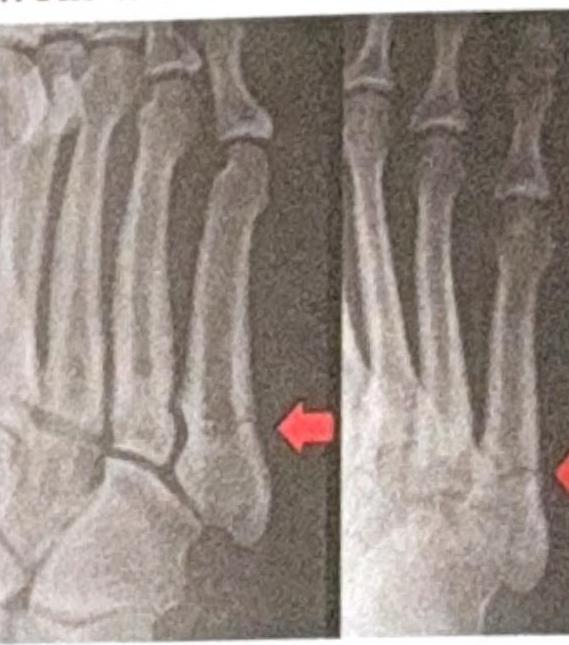
5 questionsA patient presents with a 5th metatarsal fracture. How many days would he/she need to wear a cast?

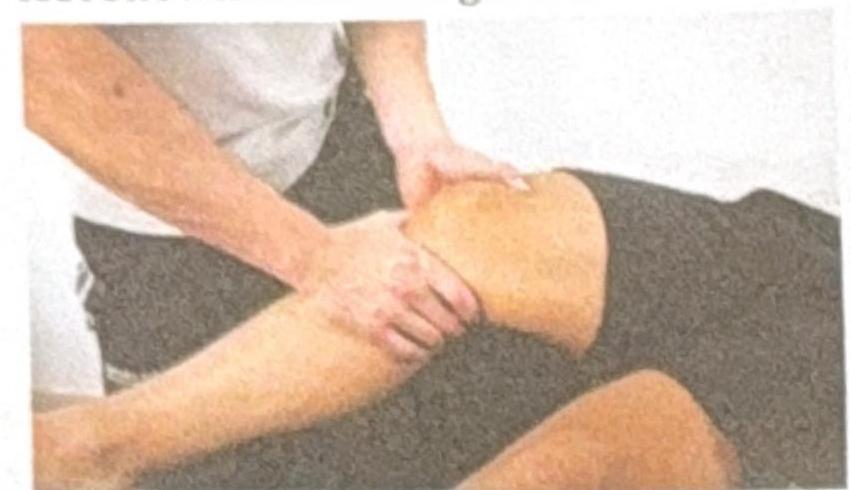
A football player experienced a twist in the ankle and knee. Clinically, no bone injury was appreciated. The examiner is performing the test shown in the image. Which test is this?

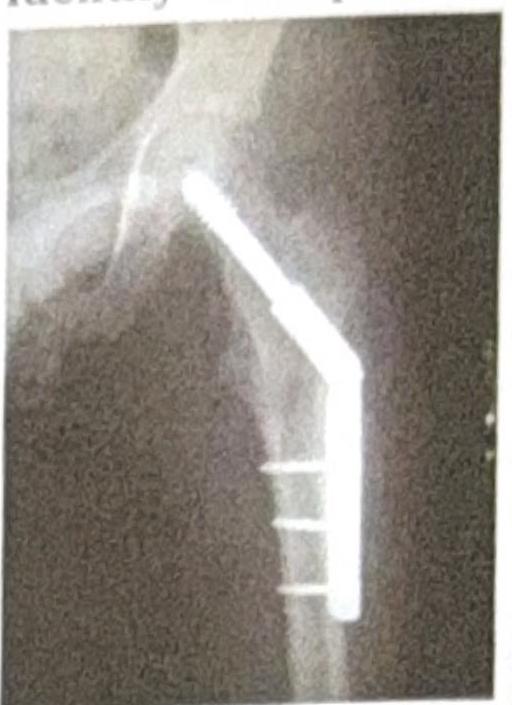
The X-ray shows plating done for a fracture. How does this fracture heal?

Identify the condition shown in the image:

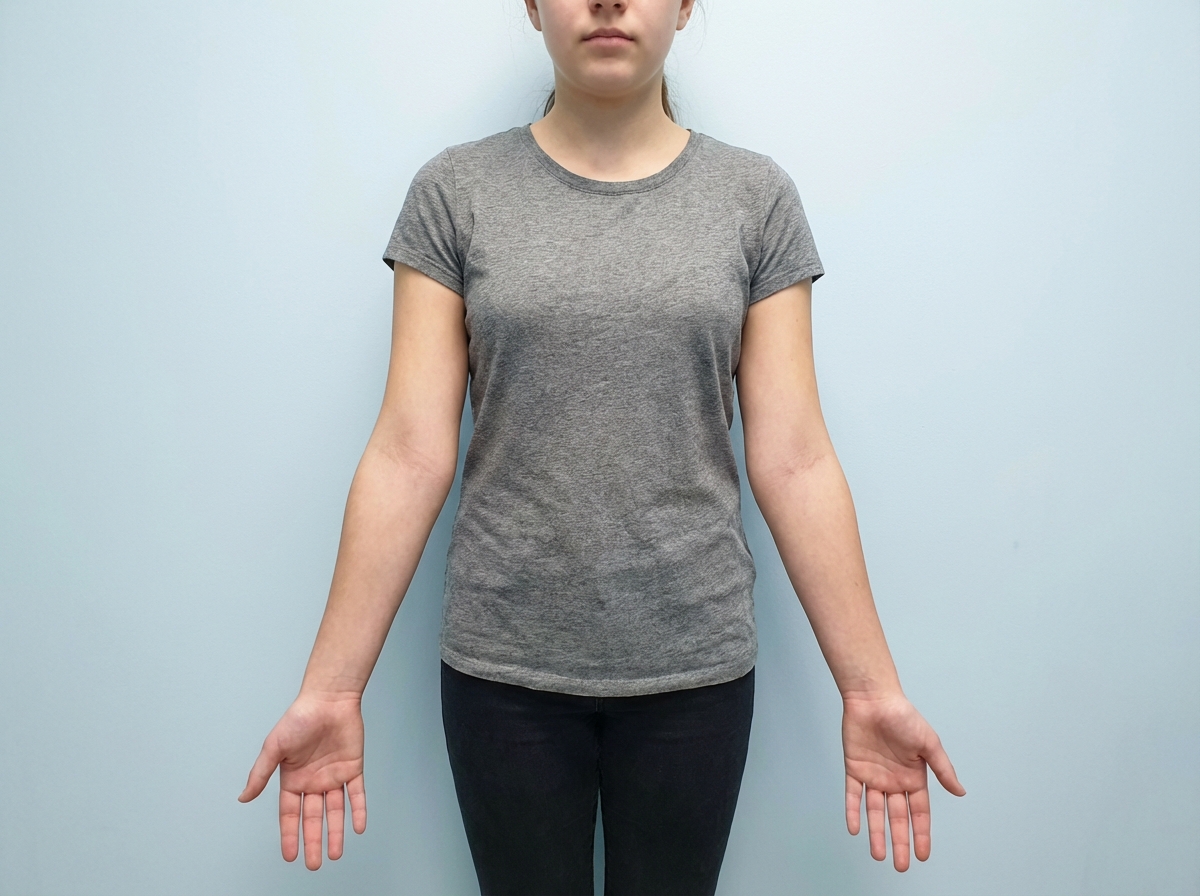
A 10-year-old boy presents with the physical findings shown in the image, characterized by inward angulation of the elbows. What is the most likely diagnosis?

NEET-PG 2024 - Orthopaedics NEET-PG Practice Questions and MCQs
Question 101: A patient presents with a 5th metatarsal fracture. How many days would he/she need to wear a cast?
- A. 6-8 weeks (Correct Answer)
- B. 2-3 weeks
- C. 16-20 weeks
- D. 3-5 weeks
Explanation: ***6-8 weeks*** - For most **5th metatarsal fractures**, especially **Jones fractures** or more significant avulsion fractures, **non-weight-bearing** immobilization in a cast, boot, or splint is typically required for **6 to 8 weeks** to allow for proper bone healing. - The **poor vascular supply** to the metaphyseal-diaphyseal junction of the 5th metatarsal (in Jones fractures) often necessitates a longer immobilization period. *2-3 weeks* - This duration is generally too short for the adequate healing of most 5th metatarsal fractures, especially those that are **displaced** or involve the **watershed zone**. - A shorter period might be considered for very minor, stable **avulsion fractures** with minimal pain, but even then, a slightly longer protection might be advised. *16-20 weeks* - This length of time is typically reserved for **severe, complex fractures**, open fractures with complications, or cases requiring **multiple surgical interventions** and prolonged rehabilitation, which is not the standard for an uncomplicated 5th metatarsal fracture. - Such an extended period of immobilization could also lead to **significant muscle atrophy** and joint stiffness. *3-5 weeks* - While sometimes considered for **stable avulsion fractures** of the 5th metatarsal base or mild stress fractures, this period is often insufficient for complete healing of the more common and problematic **Jones fracture**. - Rushing the return to weight-bearing can increase the risk of **non-union** or refracture.
Question 102: A football player experienced a twist in the ankle and knee. Clinically, no bone injury was appreciated. The examiner is performing the test shown in the image. Which test is this?
- A. Posterior drawer for PCL
- B. McMurray
- C. Lachman (Correct Answer)
- D. Anterior drawer for ACL
Explanation: ***Lachman*** - The image shows the examiner holding the distal thigh and proximal tibia, with the knee flexed at a **20-30 degree angle**, applying an **anterior translational force** to the tibia. This specific maneuver is characteristic of the Lachman test. - The Lachman test is highly sensitive for detecting **anterior cruciate ligament (ACL) tears**, particularly in acute injuries, due to the reduced hamstring spasm compared to the anterior drawer test. *Posterior drawer for PCL* - The posterior drawer test involves flexing the knee to **90 degrees** and applying a **posterior force** to the tibia to assess the integrity of the **posterior cruciate ligament (PCL)**. - The position of the knee in the image (flexed at a shallower angle) and the direction of the applied force (anteriorly towards the femur) do not match the technique for a posterior drawer test. *McMurray* - The McMurray test is performed to evaluate **meniscal tears** by flexing, extending, and rotating the knee while applying a varus or valgus stress. - The maneuver in the image, involving direct anterior translation of the tibia with the knee in slight flexion, is not consistent with the McMurray test. *Anterior drawer for ACL* - While also testing the **ACL**, the anterior drawer test typically involves flexing the knee to **90 degrees** and sitting on the foot, then pulling the tibia anteriorly. - The knee flexion angle in the image is much shallower than 90 degrees, making it inconsistent with the standard anterior drawer test.
Question 103: The X-ray shows plating done for a fracture. How does this fracture heal?
- A. Primary healing (Correct Answer)
- B. Secondary healing
- C. Tertiary healing
- D. Distraction histiogenesis
Explanation: **Primary healing** - **Plating of a fracture** aims to achieve **absolute stability** at the fracture site, which facilitates primary bone healing. - In primary healing, there is **direct bone formation** across the fracture gap without the formation of a significant callus. *Secondary healing* - Secondary healing involves the formation of a **callus** (fibrous tissue, cartilage, and immature bone) to bridge the fracture gap. - This type of healing occurs in situations with **relative stability** and some micromotion at the fracture site, such as with casting or intramedullary nailing. *Tertiary healing* - **Tertiary healing** is not a recognized term in the context of fracture healing. - Bone healing typically involves either primary or secondary mechanisms depending on the stability achieved. *Distraction histiogenesis* - **Distraction histiogenesis** is the process by which new bone is formed between bone surfaces that are gradually pulled apart using an external fixator (**distraction osteogenesis**). - This is used in procedures like **limb lengthening** and is distinct from the direct healing of a fracture fixed with a plate.
Question 104: Identify the condition shown in the image:
- A. Renal osteodystrophy
- B. Spondylolisthesis
- C. Tuberculosis (TB)
- D. Spondylolysis (Correct Answer)
Explanation: ***Spondylolysis*** * The image shows a **break in the pars interarticularis** of a vertebra, indicated by the arrow, which is characteristic of spondylolysis. * This condition is a **stress fracture** or defect in the pars interarticularis, a bony segment connecting the superior and inferior articular facets. *Renal osteodystrophy* * Renal osteodystrophy refers to a spectrum of **bone abnormalities** that occur in chronic kidney disease, not a specific vertebral fracture pattern. * It typically involves features such as **osteomalacia**, **osteitis fibrosa cystica**, or **osteoporosis**, which are not directly depicted as a fracture in this image. *Spondylolisthesis* * Spondylolisthesis is the **anterior slippage** of one vertebral body over another, which can be caused by bilateral spondylolysis but is not directly shown as a slip in this specific image. * The image distinctly highlights the **fracture line** itself, rather than the displacement of the vertebral body. *Tuberculosis (TB)* * Spinal tuberculosis (Pott's disease) typically presents with **destruction of vertebral bodies**, disc space narrowing, and often a **paravertebral abscess**. * The image does not show these features; instead, it demonstrates a clear **bony defect** in the pars interarticularis.
Question 105: A 10-year-old boy presents with the physical findings shown in the image, characterized by inward angulation of the elbows. What is the most likely diagnosis?
- A. Cubitus varus deformity (Correct Answer)
- B. Madelung deformity
- C. Nursemaid's elbow
- D. Klippel-Feil syndrome
Explanation: ***Cubitus varus deformity*** - The image clearly illustrates an **inward angulation of the elbow** (gunstock deformity), which is characteristic of **cubitus varus**. This often occurs after a supracondylar fracture of the humerus that heals with malunion. - This deformity typically results in a decreased or reversed carrying angle of the elbow. *Madelung deformity* - This is a rare congenital anomaly characterized by **dorsal and radial bowing of the distal radius** and premature fusion of the ulnar physis. - It primarily affects the wrist, leading to a visible prominence of the distal ulna and carpal bone subluxation, which is not depicted in the elbow region in the image. *Nursemaid's elbow* - This is a common injury in young children where the **radial head is subluxated** from the annular ligament, often due to a sudden pull on the forearm. - It presents as acute pain and refusal to use the arm, but does not involve a chronic structural deformity or angulation of the elbow joint as shown in the image. *Klippel-Feil syndrome* - This is a rare congenital disorder characterized by the **fusion of two or more cervical vertebrae**. - Its primary manifestations are a short neck, low posterior hairline, and restricted neck movement, with no direct involvement or deformity of the elbow joint itself.
Physiology
1 questionsAfter ovulation, the oocyte is:
NEET-PG 2024 - Physiology NEET-PG Practice Questions and MCQs
Question 101: After ovulation, the oocyte is:
- A. Primary oocyte arrested in prophase II
- B. Secondary oocyte arrested in prophase II
- C. Secondary oocyte arrested in metaphase II (Correct Answer)
- D. Primary oocyte arrested in prophase I
Explanation: ***Secondary oocyte arrested in metaphase II*** - After ovulation, the **oocyte** has completed **meiosis I** and extruded the **first polar body**, becoming a secondary oocyte. - It then arrests in **metaphase II** and will only complete meiosis II upon fertilization by a sperm. *Primary oocyte arrested in prophase II* - A **primary oocyte** is the stage before meiosis I is completed, and it is arrested in **prophase I** at birth, not prophase II. - Oocytes do not arrest in **prophase II** during normal meiotic development. *Secondary oocyte arrested in prophase II* - While it is a **secondary oocyte** that is ovulated, it is arrested in **metaphase II**, not prophase II. - **Prophase II** is a transient stage that occurs just before metaphase II, and arrest at this stage is not typical for the ovulated oocyte. *Primary oocyte arrested in prophase I* - This describes the state of the oocyte from **fetal development** until just before ovulation. - A **primary oocyte** completes meiosis I only in response to the **LH surge** before ovulation.
Radiology
2 questionsA man presents with back pain following a road traffic accident (RTA). There is no history of neurological deficit. An X-ray of the spine is done. What is the diagnosis based on the image?

Identify the condition shown in the given X-ray:

NEET-PG 2024 - Radiology NEET-PG Practice Questions and MCQs
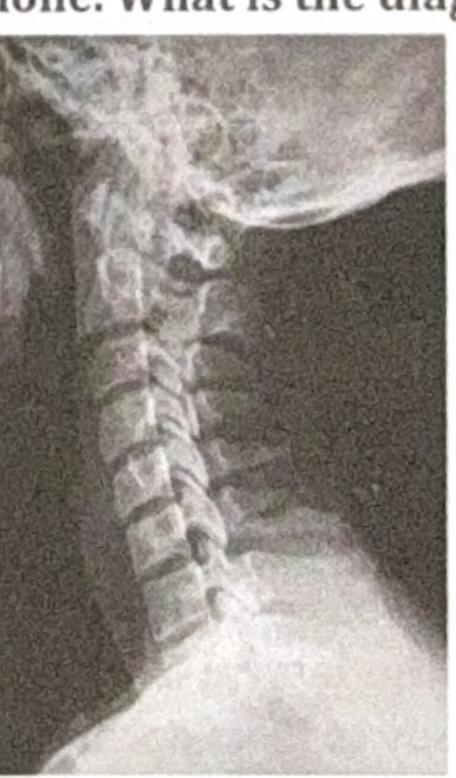
Question 101: A man presents with back pain following a road traffic accident (RTA). There is no history of neurological deficit. An X-ray of the spine is done. What is the diagnosis based on the image?
- A. Spinous process fracture (Correct Answer)
- B. Chance fracture
- C. Compression fracture
- D. Fracture of base of vertebrae
Explanation: ***Spinous process fracture*** - The X-ray image reveals a **fracture of the spinous process** of one of the cervical vertebrae, characterized by a visible discontinuity or separation of this posterior bony projection. - This type of fracture, often caused by direct trauma or forceful hyperextension/hyperflexion, typically presents with localized back pain but often **without neurological deficit** as the spinal canal generally remains intact. *Chance fracture* - A **Chance fracture** (or seatbelt fracture) is a horizontal fracture of a vertebral body, usually in the thoracolumbar region, often caused by distractional forces (e.g., flexion over a seatbelt). - It involves all three columns of the spine (anterior, middle, and posterior) and is not seen in the cervical spine X-ray provided. *Compression fracture* - A **compression fracture** is characterized by the collapse of the vertebral body, often resulting in a wedge shape. - This typically appears as reduced height of the anterior vertebral body on an X-ray, which is not the primary finding in the image. *Fracture of base of vertebrae* - A **fracture at the base of the vertebrae** is a non-specific term; specific vertebral fractures are categorized based on the part of the vertebra affected (e.g., vertebral body, pedicle, lamina, spinous process). - The image distinctly shows a fracture in the **spinous process**, not the main body or base of the vertebra.
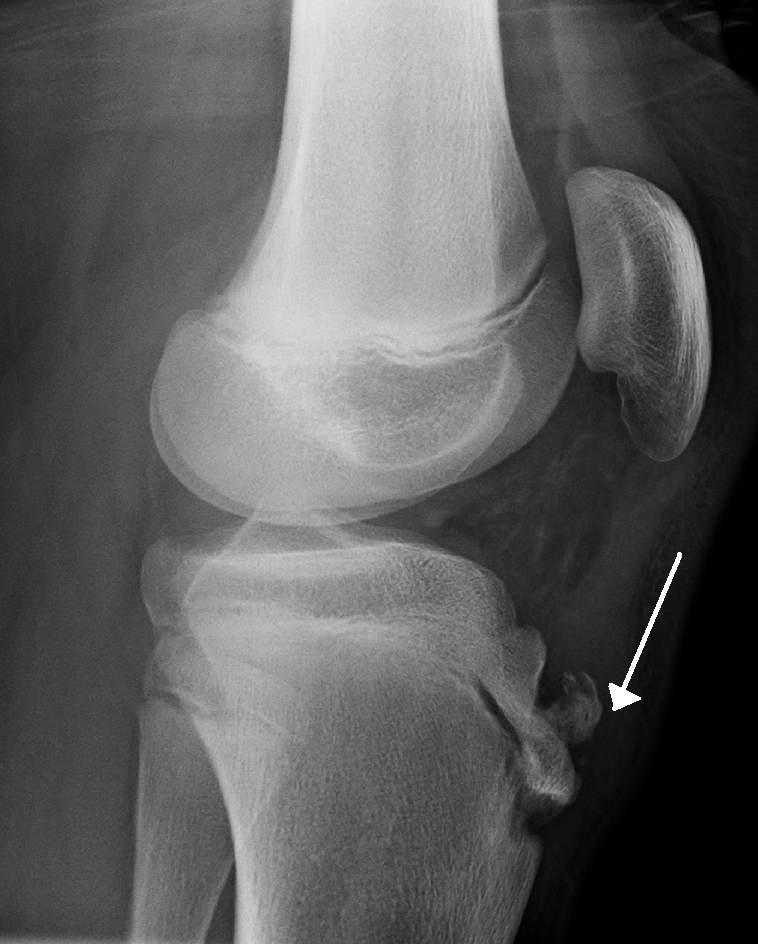
Question 102: Identify the condition shown in the given X-ray:
- A. Tibial tuberosity fracture
- B. Osgood-Schlatter disease (Correct Answer)
- C. Gerdy's tubercle fracture
- D. Lateral epicondyle of femur
Explanation: ***Correct Answer: Osgood-Schlatter disease*** - The X-ray shows characteristic **fragmentation** and **irregularity** of the **tibial tuberosity**, which is pathognomonic for Osgood-Schlatter disease. - This condition commonly affects **adolescents** during periods of rapid growth, causing **anterior knee pain** that worsens with activity. - The radiographic findings demonstrate chronic **traction apophysitis** at the insertion of the **patellar tendon**. *Incorrect: Tibial tuberosity fracture* - An acute tibial tuberosity fracture would show a **distinct fracture line** with possible displacement, rather than the chronic fragmentation pattern seen here. - This type of fracture typically results from **sudden forceful quadriceps contraction** and presents with acute onset of severe pain. *Incorrect: Gerdy's tubercle fracture* - Gerdy's tubercle is located on the **lateral aspect of the proximal tibia**, serving as the insertion point for the **iliotibial band**. - A fracture at this location would not explain the **anterior tibial tuberosity changes** visible in this X-ray image. *Incorrect: Lateral epicondyle of femur* - The lateral epicondyle of the femur is located at the **distal end of the femur**, not at the tibial tuberosity where the radiographic changes are visible. - Pathology at the lateral epicondyle would not cause the **tibial tuberosity fragmentation** seen in this X-ray.