A female presents with dysuria and vaginal discharge. Wet mount examination shows pear-shaped organisms. What is the most likely diagnosis?
Q12
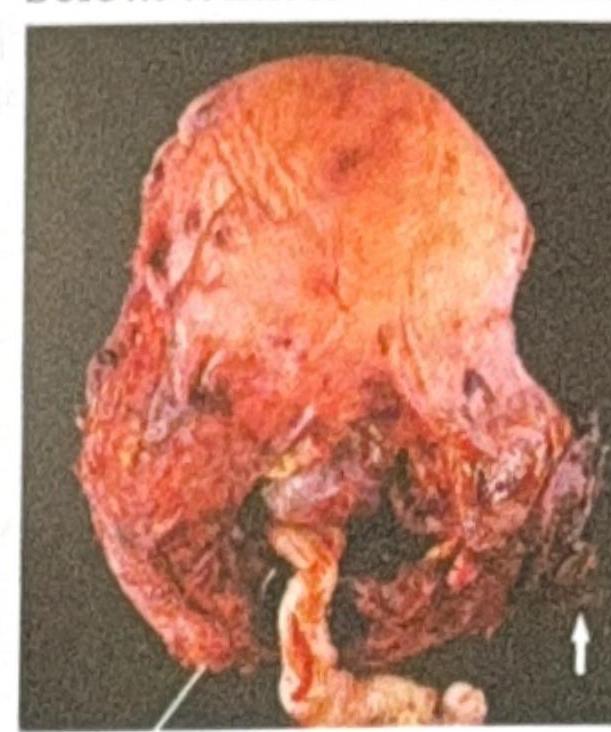
A G2P1L1 woman with a history of previous cesarean section presents with complications related to the placenta. The image below shows the gross appearance of the uterus. What is the most likely diagnosis?
Q13
Based on the educational diagram showing different degrees of perineal tears, which degree involves only the perineal skin and vaginal mucosa without affecting the underlying muscle?
Q14
Identify the maneuver shown in the image:
NEET-PG 2024 - Obstetrics and Gynecology NEET-PG Practice Questions and MCQs
Question 11: A female presents with dysuria and vaginal discharge. Wet mount examination shows pear-shaped organisms. What is the most likely diagnosis?
A. Candida
B. Chlamydia
C. Trichomonas (Correct Answer)
D. Bacterial vaginosis
Explanation: ***Trichomonas***
- The presence of **dysuria**, **vaginal discharge**, and **pear-shaped organisms** on wet mount examination is classic for **Trichomonas vaginalis** infection.
- **Microscopic identification of motile trichomonads** confirms the diagnosis.
*Candida*
- **Candida** infections typically present with **thick, white, curd-like vaginal discharge**, and a wet mount would show **yeast buds or pseudohyphae**, not pear-shaped organisms.
- While it can cause dysuria, the discharge characteristics and microscopy findings differentiate it.
*Chlamydia*
- **Chlamydia trachomatis** causes **mucopurulent cervicitis** with dysuria and vaginal discharge, but requires **specific diagnostic tests** such as **NAAT (nucleic acid amplification test)** or cell culture for diagnosis.
- Wet mount examination would **not show pear-shaped organisms**; instead, it may show increased white blood cells but no specific pathogen visualization.
*Bacterial vaginosis*
- **Bacterial vaginosis** is characterized by a **thin, gray discharge** and a **"fishy" odor**, which is especially noticeable after intercourse.
- Wet mount shows **clue cells** (vaginal epithelial cells studded with bacteria), not pear-shaped organisms, and **absent or few white blood cells**.
Question 12: A G2P1L1 woman with a history of previous cesarean section presents with complications related to the placenta. The image below shows the gross appearance of the uterus. What is the most likely diagnosis?
A. Placenta accreta (Correct Answer)
B. Uterine inversion
C. Placental abruption
D. Placenta previa
Explanation: ***Placenta accreta***
- A previous **cesarean section** is a strong risk factor for placenta accreta, as it can lead to scarring and defects in the uterine wall, allowing the placenta to implant too deeply.
- The image suggests a placenta that is **firmly adhered and possibly invasive** into the uterine wall, making separation difficult, which is characteristic of accreta due to the absence of a proper decidual layer.
*Uterine inversion*
- This condition involves the **fundus of the uterus collapsing inward** or turning inside out, which is a clinical event during postpartum and not a morphological feature visible in a resected specimen like this.
- The image shows an attached placenta within a uterine specimen, not an inverted uterus.
*Placental abruption*
- Placental abruption is the **premature separation of the placenta** from the uterine wall before delivery, often leading to retroplacental hemorrhage.
- While it's a serious complication, the image does not show evidence of a separated placenta or a large retroplacental clot; instead, it depicts an abnormally adherent placenta.
*Placenta previa*
- Placenta previa occurs when the **placenta implants over the cervical os**, which would be diagnosed prenatally based on its location in the uterus.
- The image does not provide information about the placental location relative to the cervix, but rather illustrates the manner of placental attachment.
Question 13: Based on the educational diagram showing different degrees of perineal tears, which degree involves only the perineal skin and vaginal mucosa without affecting the underlying muscle?
A. 2nd degree
B. 3rd degree
C. 4th degree
D. 1st degree (Correct Answer)
Explanation: ***1st degree***
- Involves only the **perineal skin** and **vaginal mucosa** without affecting underlying muscle tissue.
- The **pelvic floor muscles (PFM)** remain completely intact, making this the most superficial type of perineal tear.
*2nd degree*
- Extends deeper to involve the **perineal muscles** including the pelvic floor muscles, but spares the anal sphincter.
- Requires **muscle repair** in addition to skin closure, making it more complex than 1st degree tears.
*3rd degree*
- Involves the **anal sphincter complex** (external and/or internal anal sphincter) extending toward the anus.
- Requires specialized **sphincter reconstruction** to prevent future fecal incontinence complications.
*4th degree*
- The most severe tear extending through the **anal sphincter** and into the **rectal mucosa**.
- Requires **multilayer repair** including rectal mucosa, sphincter complex, and perineal tissues to restore anatomy.
Question 14: Identify the maneuver shown in the image:
A. Burn Marshall
B. Lovset
C. Mauriceau-Smellie-Veit (Correct Answer)
D. None of the options
Explanation: ***Mauriceau-Smellie-Veit***
- This maneuver is used for **head delivery in a breech presentation**, where the fetus's body is supported while pressure is applied to the maxilla or mandible to flex the head.
- The image typically shows the operator's hand supporting the fetus's body and fingers placed on the fetal jaw to facilitate head flexion and delivery.
*Burn Marshall*
- The Burn Marshall maneuver involves **delivering the fetal head by applying suprapubic pressure** to the maternal abdomen while the fetal body is gently swept upwards over the maternal abdomen.
- This maneuver is generally used for a **spontaneous breech delivery** if the head does not deliver easily after the body.
*Lovset*
- The Lovset maneuver is employed to **deliver the fetal shoulders** in a breech presentation by rotating the fetal trunk to bring the anterior shoulder under the pubic arch and then the posterior shoulder.
- This maneuver aims to extract the shoulders sequentially, which might be necessary if they are impacted.
*None of the options*
- The visual representation aligns with the steps of the Mauriceau-Smellie-Veit maneuver, making this option incorrect.
- This maneuver is clearly depicted by the hand placement and objective of aiding head delivery in breech.