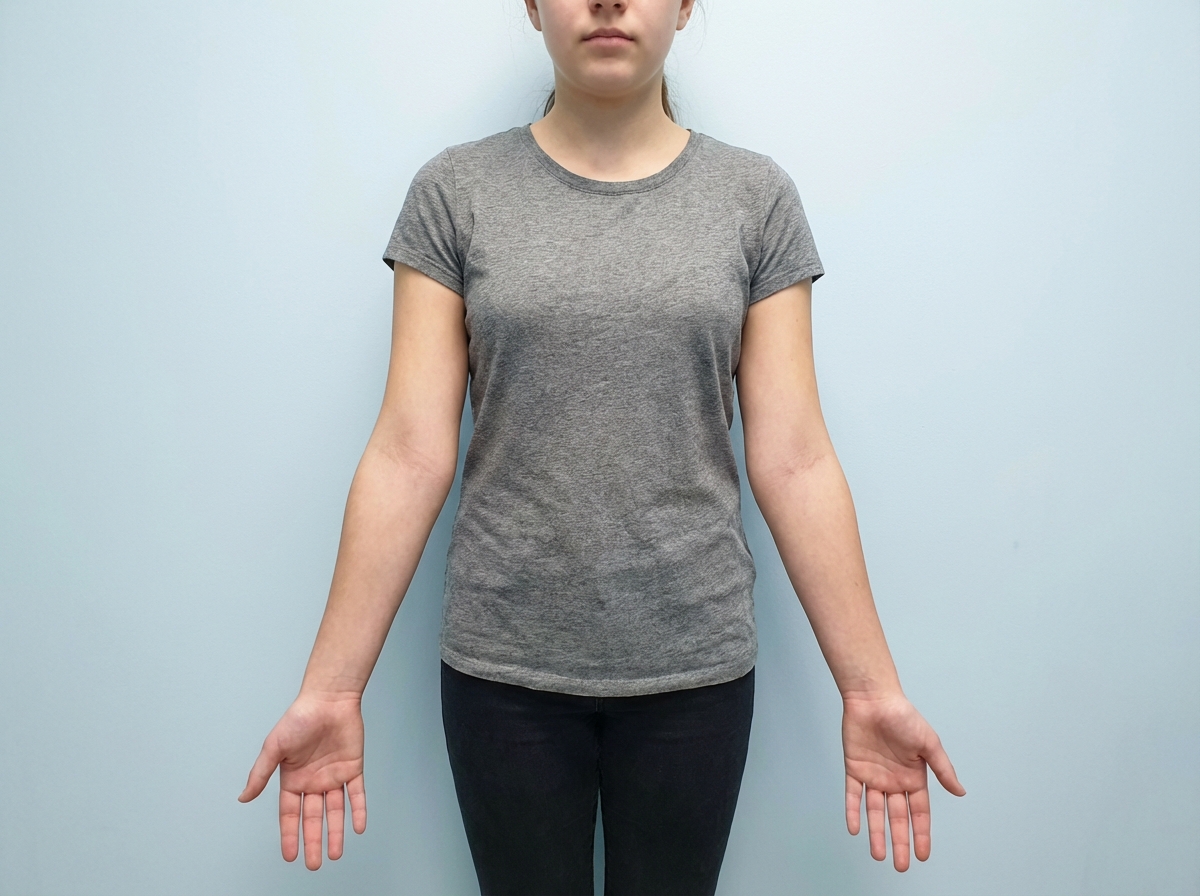
A teenage girl presents with a history of amenorrhea. Local examination is shown in the image. What karyotype analysis would you consider for further evaluation?
A female presents with postcoital bleeding. Which of the following is the most appropriate investigation?
A woman at 8 weeks of gestation is diagnosed with hyperthyroidism. Which of the following is the most appropriate treatment option?
A 32-year-old female in late pregnancy presents with seizures and high blood pressure. She is diagnosed with eclampsia and started on magnesium sulfate therapy. As part of her management, certain parameters require close monitoring to prevent magnesium toxicity. Which of the following is the MOST important parameter to monitor during magnesium sulfate therapy in this patient?
A 27 -week pregnant woman with a fetus diagnosed with congenital anomalies is considering a Medical Termination of Pregnancy (MTP). Whose presence is not required for the authorization of MTP in this case?
A USG (ultrasound) shows two babies, one of whom appears to be one month older than the other. What is the term for this condition?
NEET-PG 2024 - OB/GYN NEET-PG Practice Questions and MCQs
Question 11: A teenage girl presents with a history of amenorrhea. Local examination is shown in the image. What karyotype analysis would you consider for further evaluation?
- A. 46 XY
- B. 46 XX
- C. 45 XO (Correct Answer)
- D. 47 XXY
- E. 47 XXX
Explanation: ***45 XO*** - The image shows a **webbed neck** and **short stature** (suggested by the overall body proportions typically associated with Ullrich-Turner Syndrome), alongside primary amenorrhea, which are classic features of **Turner Syndrome**. - **Turner Syndrome** is a chromosomal disorder characterized by the absence of all or part of one X chromosome in females, resulting in a **45, XO karyotype**. *46 XY* - This karyotype indicates a **phenotypic male** with normal male chromosomal constitution. - Individuals with this karyotype would not typically present with **primary amenorrhea** as they do not have a uterus. *46 XX* - This is the **normal female karyotype**, and while a female with this karyotype could experience amenorrhea (e.g., due to Asherman's syndrome or PCOS), the physical features associated with the image (like webbed neck) are not consistent. - This option does not explain the **physical stigmata** often seen in genetic causes of primary amenorrhea, such as in Turner syndrome. *47 XXY* - This karyotype is characteristic of **Klinefelter Syndrome**, which affects males and is associated with hypogonadism and gynecomastia. - It would not be found in a female patient presenting with **amenorrhea** and the physical features shown in the image. *47 XXX* - This karyotype represents **Triple X Syndrome** (Trisomy X), which affects females and typically presents with **normal female appearance** and often normal fertility. - While some individuals may have menstrual irregularities, the **distinctive physical features** shown in the image (webbed neck, short stature) are not characteristic of Triple X syndrome, which usually lacks specific dysmorphic features.
Question 12: A female presents with postcoital bleeding. Which of the following is the most appropriate investigation?
- A. Pap smear, HCV DNA, electrophoresis
- B. Liquid-based cytology, cervical biopsy
- C. Cervical biopsy, HBV DNA
- D. Pap smear, HPV DNA testing (Correct Answer)
Explanation: **Pap smear, HPV DNA testing** - **Postcoital bleeding** is a classic symptom of **cervical cancer**, which can be identified by a **Pap smear** to detect abnormal cervical cells. - **HPV DNA testing** is essential as persistent infection with high-risk human papillomavirus (HPV) genotypes is the primary cause of cervical cancer. *Pap smear, HCV DNA, electrophoresis* - While a **Pap smear** is appropriate for cervical cytology, **HCV DNA testing** is for Hepatitis C virus infection and is not routinely indicated for postcoital bleeding. - **Electrophoresis** is used to analyze proteins (e.g., hemoglobinopathies) and has no direct role in evaluating postcoital bleeding or cervical pathology. *Liquid-based cytology, cervical biopsy* - **Liquid-based cytology** is a method of preparing a Pap smear, but it's not a standalone investigation. - A **cervical biopsy** is a more invasive procedure done *after* initial screening (like Pap smear with HPV testing) suggests abnormalities, not as a primary first-line investigation for postcoital bleeding unless there are visible lesions. *Cervical biopsy, HBV DNA* - A **cervical biopsy** is typically performed following an abnormal **Pap smear** or colposcopy findings, not as the initial diagnostic step for postcoital bleeding. - **HBV DNA testing** is for Hepatitis B virus infection and is irrelevant to the workup of postcoital bleeding.
Question 13: A woman at 8 weeks of gestation is diagnosed with hyperthyroidism. Which of the following is the most appropriate treatment option?
- A. Methimazole
- B. Carbimazole
- C. Propylthiouracil (Correct Answer)
- D. Radioactive iodine
Explanation: ***Propylthiouracil*** - **Propylthiouracil (PTU)** is the preferred treatment for hyperthyroidism in the **first trimester** of pregnancy due to a lower risk of teratogenic effects compared to methimazole. - While PTU carries a risk of **liver toxicity**, its use is generally favored in early pregnancy to avoid the more severe potential fetal abnormalities associated with other antithyroid drugs during this critical developmental period. *Methimazole* - **Methimazole** is associated with a specific pattern of birth defects, including **aplasia cutis congenita** (scalp defects) and **esophageal/choanal atresia**, when used during the first trimester. - It is generally preferred in the **second and third trimesters** due to a lower risk of maternal hepatotoxicity compared to PTU. *Carbimazole* - **Carbimazole** is a **prodrug** that is metabolized to methimazole; therefore, it carries the same teratogenic risks as methimazole in the first trimester. - Its use during early pregnancy is generally avoided for the same reasons as methimazole. *Radioactive iodine* - **Radioactive iodine (RAI)** is **contraindicated** in pregnancy because it crosses the placenta and can cause **fetal hypothyroidism** and irreversible destruction of the fetal thyroid gland. - It is an effective treatment for hyperthyroidism outside of pregnancy but is never used during gestation.
Question 14: A 32-year-old female in late pregnancy presents with seizures and high blood pressure. She is diagnosed with eclampsia and started on magnesium sulfate therapy. As part of her management, certain parameters require close monitoring to prevent magnesium toxicity. Which of the following is the MOST important parameter to monitor during magnesium sulfate therapy in this patient?
- A. Urine output
- B. Deep tendon reflexes
- C. Serum magnesium levels (Correct Answer)
- D. Respiratory rate
Explanation: ***Serum magnesium levels*** - While clinical signs are crucial, direct measurement of **serum magnesium levels** provides the most accurate and objective assessment of magnesium load and toxicity risk. - Therapeutic ranges are well-defined (4-7 mEq/L or 1.5-3.0 mmol/L), and levels above this indicate increasing toxicity risk, guiding prompt intervention. *Urine output* - **Adequate renal function** is essential for magnesium excretion, so decreased urine output can predispose to toxicity. - However, urine output is an indirect measure and does not precisely reflect the immediate magnesium concentration or neurological effects. *Deep tendon reflexes* - **Loss of deep tendon reflexes** (e.g., patellar reflex) is an early and important clinical sign of magnesium toxicity. - While crucial for clinical assessment, it's a subjective finding that may lag behind dangerously high serum levels. *Respiratory rate* - **Respiratory depression** is a severe and life-threatening manifestation of magnesium toxicity, indicating very high serum levels. - Monitoring respiratory rate is essential, but it's a late sign of toxicity, and waiting for it to decrease means the patient is already significantly over-magnesemic.
Question 15: A 27 -week pregnant woman with a fetus diagnosed with congenital anomalies is considering a Medical Termination of Pregnancy (MTP). Whose presence is not required for the authorization of MTP in this case?
- A. A. Obstetrician
- B. B. Lawyer (Correct Answer)
- C. C. Pediatrician
- D. D. Sonologist
Explanation: **B. Lawyer** - The **Medical Termination of Pregnancy Act (MTP Act)** in India specifies the medical professionals required for MTP authorization. A lawyer's presence is not mandated for this medical decision. - Legal authorization involves medical personnel and, in certain cases, a **Medical Board**, but not legal professionals directly in the authorization process. *A. Obstetrician* - An **obstetrician** or gynecologist is a medical expert specializing in pregnancy and childbirth, making their presence crucial for assessing the patient's and fetal condition. - The **MTP Act** requires the opinion of at least two registered medical practitioners, especially for pregnancies beyond 20 weeks, making an obstetrician essential. *C. Pediatrician* - In cases of **fetal anomalies**, a **pediatrician** (or a neonatologist) is highly likely to be part of the Medical Board formed to evaluate the anomaly and assess the prognosis for the child. - Their expertise helps in understanding the **severity and potential outcomes** of the congenital anomaly, informing the MTP decision. *D. Sonologist* - A **sonologist** (radiologist performing ultrasound) is critical for accurately diagnosing and detailing the **congenital anomalies** through imaging. - Their report provides essential **diagnostic information** that forms the basis for the MTP decision, especially in cases where anomalies are the primary concern.
Question 16: A USG (ultrasound) shows two babies, one of whom appears to be one month older than the other. What is the term for this condition?
- A. Superfetation
- B. Superfecundation
- C. Twin-to-twin transfusion syndrome (Correct Answer)
- D. Dichorionic diamniotic twins
Explanation: ***Twin-to-twin transfusion syndrome*** - The observation of one baby appearing a month older than the other on ultrasound, particularly in a twin pregnancy, is highly suggestive of **twin-to-twin transfusion syndrome (TTTS)**, where there is an unequal sharing of blood between the twins. - This imbalance leads to one twin (the recipient) becoming larger and plethoric, while the other (the donor) becomes smaller and anemic, creating a noticeable size discrepancy, inaccurately noted as an "older" twin. *Superfetation* - **Superfetation** is the rare phenomenon of a second, new pregnancy occurring during an existing pregnancy, resulting in two fetuses of different gestational ages. - While it results in fetuses of different ages, it specifically refers to conception at different times, which is distinct from the described unequal growth within a single multiple pregnancy. *Superfecundation* - **Superfecundation** refers to the fertilization of two or more ova from the same ovulatory cycle by sperm from different acts of coitus or from different fathers. - It results in twins (or multiples) conceived at roughly the same time, but by different sperm, and does not explain a significant age or size discrepancy between the fetuses. *Dichorionic diamniotic twins* - **Dichorionic diamniotic (DCDA) twins** are the most common type of twins, each having their own placenta and amniotic sac. - While they are two separate pregnancies, this term primarily describes the placental and amniotic sac arrangement and does not inherently explain a significant size discrepancy or "age" difference between the twins without an underlying complication like TTTS.