NEET-PG 2024 — Microbiology
15 Previous Year Questions with Answers & Explanations
A frequent traveler presented with 4 days of continuous fever, abdominal pain, and bradycardia. What is the best diagnostic test to confirm the pathogen?
An adult patient with a military background is admitted with a rash, fever, altered sensorium, and a deficiency of the membrane attack complex. What is the most likely etiological agent?
A patient was admitted with bloody diarrhea after consumption of oysters. The organism exhibits the Kanagawa phenomenon. What is the correct organism?
Desert rheumatism is caused by:
Broad-based budding yeasts are seen in:
A female patient presents with dysuria and frequency. A coagulase-negative, novobiocin-resistant Staphylococcus species (>10^4 CFU/mL) was grown in urine culture. What does this indicate?
A patient was diagnosed with Escherichia coli O157:H7 infection. In this designation, what does the "H" stand for?
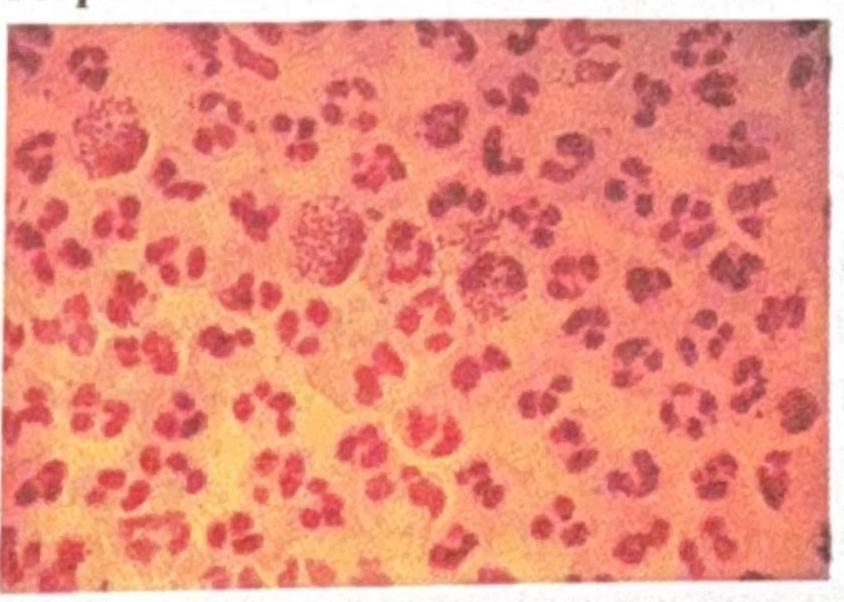
A man presents with dysuria and urethral discharge after a history of unprotected sex. The Gram stain of his discharge is shown. What is the best culture medium for isolating the organism responsible?
A young boy who used to wash his contact lenses in tap water or with unhygienic lens fluid developed keratitis. Microscopy revealed an organism with spiked or star-shaped structures. Identify the correct organism responsible.
A patient in the ICU with a central venous catheter (CVC) develops an infection. Microscopy reveals ovoid budding yeast cells. What is the most likely organism?
NEET-PG 2024 - Microbiology NEET-PG Practice Questions and MCQs
Question 1: A frequent traveler presented with 4 days of continuous fever, abdominal pain, and bradycardia. What is the best diagnostic test to confirm the pathogen?
- A. Widal test
- B. Blood culture (Correct Answer)
- C. Urine culture
- D. Stool culture
Explanation: ***Blood culture*** - **Blood culture** is the most sensitive and specific test for confirming **typhoid fever** in the first week of illness. - The presence of **continuous fever** (step-ladder pattern), **abdominal pain**, and **relative bradycardia** in a traveler strongly suggests typhoid fever caused by *Salmonella Typhi*. *Widal test* - The **Widal test** detects antibodies against *Salmonella Typhi* antigens and is often positive later in the disease course. - It has **limited sensitivity and specificity**, especially in endemic areas or with prior vaccination, leading to false positives and negatives. *Urine culture* - **Urine culture** has a low yield for *Salmonella Typhi*, as bacteria are intermittently shed in urine, usually later in the disease. - It's primarily useful for diagnosing **urinary tract infections** or in chronic carriers of typhoid. *Stool culture* - **Stool culture** yield is higher in the later stages of typhoid fever, as *Salmonella Typhi* is shed in feces. - Its sensitivity is lower than blood culture in the early acute phase when bacteremia is most prominent.
Question 2: An adult patient with a military background is admitted with a rash, fever, altered sensorium, and a deficiency of the membrane attack complex. What is the most likely etiological agent?
- A. Klebsiella pneumoniae
- B. Neisseria meningitidis (Correct Answer)
- C. Haemophilus influenzae
- D. CMV
Explanation: ***Neisseria meningitidis*** - A deficiency in the **membrane attack complex (MAC)**, particularly **C5-C9 components**, predisposes individuals to recurrent infections with encapsulated bacteria, especially *N. meningitidis*. - *N. meningitidis* is a common cause of **meningitis**, presenting with **fever, altered sensorium**, and often a **petechial rash** due to disseminated intravascular coagulation (DIC), which align with the patient's symptoms. *Klebsiella pneumoniae* - While *K. pneumoniae* can cause severe infections, including pneumonia and meningitis, it is not specifically associated with **MAC deficiency**. - Its infections more commonly manifest as **severe pneumonia** or **urinary tract infections** in immunocompromised patients. *Haemophilus influenzae* - *H. influenzae* can cause meningitis and other invasive infections, especially in children, but it is not typically linked to **MAC deficiency**. - The classic presentation involving **rash** and severe systemic symptoms as described is more characteristic of **meningococcal disease**. *CMV* - **Cytomegalovirus (CMV)** is a herpesvirus that causes a wide range of diseases, particularly in immunocompromised individuals. - However, CMV infections are primarily associated with **cellular immunity defects** rather than a deficiency in the **membrane attack complex** of the complement system.
Question 3: A patient was admitted with bloody diarrhea after consumption of oysters. The organism exhibits the Kanagawa phenomenon. What is the correct organism?
- A. Staphylococcus aureus
- B. Vibrio parahaemolyticus (Correct Answer)
- C. Campylobacter jejuni
- D. Salmonella typhi
Explanation: ***Vibrio parahaemolyticus*** - This organism is a common cause of **gastroenteritis** linked to consumption of **raw or undercooked seafood**, especially oysters, and is known for causing **bloody diarrhea**. - The **Kanagawa phenomenon** refers to the production of **thermostable direct hemolysin (TDH)** by *V. parahaemolyticus*, which is a key virulence factor causing hemolysis and is detectable by a specific agar assay. *Staphylococcus aureus* - While *S. aureus* can cause **food poisoning** through its toxins, it typically presents with **nausea, vomiting**, and **abdominal cramps**, not bloody diarrhea. - Food poisoning from *S. aureus* is usually rapid-onset (within hours) and is associated with **improperly handled foods**, particularly those requiring no cooking after preparation (e.g., salads, custards). *Campylobacter jejuni* - This bacterium is a common cause of **bacterial gastroenteritis** and can lead to **bloody diarrhea**, but it's typically acquired from **poultry** or contaminated water, not specifically oysters. - **Guillain-Barré syndrome** is a serious complication that can follow *C. jejuni* infection, which is not characteristic of *Vibrio* infections. *Salmonella typhi* - *Salmonella typhi* causes **typhoid fever**, a systemic illness characterized by **sustained fever, headache, malaise**, and can lead to a "rose spot" rash. - While it can cause gastrointestinal symptoms, **bloody diarrhea is not the predominant symptom**, and raw oyster consumption is not its typical mode of transmission; it's usually spread through contaminated food or water by asymptomatic carriers.
Question 4: Desert rheumatism is caused by:
- A. Paracoccidioides brasiliensis
- B. Candida albicans
- C. Cryptococcus neoformans
- D. Coccidioides immitis (Correct Answer)
Explanation: ***Coccidioides immitis*** - This fungus is the causative agent of **coccidioidomycosis**, also known as **Valley fever** or **desert rheumatism**, due to its prevalence in arid regions. - Infection most commonly occurs through inhalation of **arthroconidia** from disturbed soil in endemic areas. *Paracoccidioides brasiliensis* - This fungus causes **paracoccidioidomycosis** (South American blastomycosis), which is endemic to Latin America. - It typically manifests as chronic granulomatous disease affecting the lungs, skin, mucous membranes, lymph nodes, and internal organs. *Candida albicans* - This is a common opportunistic yeast responsible for various infections, from **superficial mucocutaneous candidiasis** (e.g., thrush, vaginal yeast infections) to severe invasive candidemia. - It is not associated with "desert rheumatism." *Cryptococcus neoformans* - This encapsulated yeast is a major cause of **cryptococcosis**, particularly in immunocompromised individuals. - It commonly causes **meningoencephalitis** and pulmonary disease, and is associated with bird droppings, but not "desert rheumatism."
Question 5: Broad-based budding yeasts are seen in:
- A. Histoplasmosis
- B. Blastomycosis (Correct Answer)
- C. Candidiasis
- D. Coccidioidomycosis
Explanation: ***Blastomycosis*** - This fungal infection is classically characterized by **broad-based budding yeasts** seen on microscopic examination. - The yeast cells are typically large and have a characteristic wide connection between the mother and daughter cells during budding. *Histoplasmosis* - Characterized by **small, intracellular yeasts** often seen within macrophages. - These yeasts do **not exhibit broad-based budding**. *Candidiasis* - Primarily presents as **pseudohyphae** (elongated yeast cells resembling hyphae) and budding yeasts (blastoconidia) with **narrow bases**. - **True hyphae** may also be present depending on the species and growth conditions. *Coccidioidomycosis* - In tissue, it is characterized by **spherules** containing **endospores**, not budding yeasts. - The mycelial form is found in culture or environmental samples.
Question 6: A female patient presents with dysuria and frequency. A coagulase-negative, novobiocin-resistant Staphylococcus species (>10^4 CFU/mL) was grown in urine culture. What does this indicate?
- A. UTI (Correct Answer)
- B. Commensal
- C. Contamination
- D. Repeat culture needed
Explanation: ***UTI*** - The isolation of a **coagulase-negative, novobiocin-resistant Staphylococcus** in a patient with UTI symptoms suggests **_Staphylococcus saprophyticus_**, a common cause of UTIs in young women. - A bacterial count of **>10^4 CFU/mL** is generally considered significant for diagnosing a UTI, indicating active infection rather than contamination. - _S. saprophyticus_ accounts for 10-20% of UTIs in sexually active young women and is the second most common cause after _E. coli_. *Commensal* - While some coagulase-negative staphylococci can be commensals, **_S. saprophyticus_** is an important pathogen, especially in UTIs. - The combination of **novobiocin resistance** and a significant bacterial count in a symptomatic patient strongly points away from a commensal role. *Contamination* - **Contamination** usually involves lower bacterial counts (<10^4 CFU/mL) or the isolation of multiple different organisms. - The presence of **>10^4 CFU/mL** of a pure culture of a known urinary pathogen (_S. saprophyticus_) in a symptomatic patient makes contamination unlikely. *Repeat culture needed* - Repeat cultures are indicated when initial results are equivocal (e.g., low counts, mixed flora, or asymptomatic bacteriuria). - For symptomatic UTI with **>10^4 CFU/mL** of a known pathogen, a single culture is sufficient for diagnosis and treatment initiation. - Multiple consecutive samples are primarily used for diagnosing **bacteremia** or **endocarditis**, not routine UTI.
Question 7: A patient was diagnosed with Escherichia coli O157:H7 infection. In this designation, what does the "H" stand for?
- A. Lipopolysaccharide (LPS)
- B. Capsule
- C. Flagella (Correct Answer)
- D. Fimbriae
Explanation: **Flagella** - The "H" in bacterial designations like *Escherichia coli* O157:H7 refers to the **H antigen**, which is associated with bacterial **flagella**. - Flagellar antigens are important for serotyping bacteria, identifying different strains based on their unique flagellar protein compositions. *Lipopolysaccharide (LPS)* - The "O" in bacterial designations like *E. coli* O157 refers to the **O antigen**, which is part of the **lipopolysaccharide (LPS)** layer on the outer membrane of Gram-negative bacteria. - LPS is a major component of the bacterial outer membrane and acts as an **endotoxin**. *Capsule* - The "K" in some bacterial serotypes (e.g., *Klebsiella pneumoniae* K1) refers to the **K antigen**, which is associated with the **capsule**. - The capsule is a protective layer surrounding some bacteria that helps them evade phagocytosis. *Fimbriae* - **Fimbriae** (also known as pili) are short, hair-like appendages on the surface of some bacteria that aid in **adhesion** to host cells. - While fimbriae have their own antigenic properties, they are not typically designated by the "H" prefix in standard serotyping, which specifically refers to flagellar antigens.
Question 8: A man presents with dysuria and urethral discharge after a history of unprotected sex. The Gram stain of his discharge is shown. What is the best culture medium for isolating the organism responsible?
- A. Thayer-Martin agar (Correct Answer)
- B. MacConkey agar
- C. Chocolate agar
- D. TCBS agar
Explanation: ***Thayer-Martin agar*** - The image shows numerous **polymorphonuclear leukocytes (neutrophils)** with intracellular, gram-negative diplococci, which is characteristic of **Neisseria gonorrhoeae**. - **Thayer-Martin agar** is a selective medium specifically formulated for the isolation of *Neisseria gonorrhoeae* from specimens containing flora. *MacConkey agar* - **MacConkey agar** is a selective and differential medium used primarily for the isolation of Gram-negative **enteric bacilli** and differentiation based on lactose fermentation. - It is not suitable for *Neisseria* species, which are fastidious organisms requiring enriched media. *Chocolate agar* - **Chocolate agar** is an enriched, non-selective medium that supports the growth of fastidious organisms like *Neisseria* species and *Haemophilus influenzae*. - While *Neisseria gonorrhoeae* grows on chocolate agar, **Thayer-Martin agar** is preferred for specimens from sites with normal flora as it inhibits contaminants. *TCBS agar* - **Thiosulfate Citrate Bile Salts Sucrose (TCBS) agar** is a selective medium used for the isolation of *Vibrio* species, particularly *Vibrio cholerae*. - This medium is completely unsuitable for the growth of *Neisseria gonorrhoeae*, which has entirely different nutritional and environmental requirements.
Question 9: A young boy who used to wash his contact lenses in tap water or with unhygienic lens fluid developed keratitis. Microscopy revealed an organism with spiked or star-shaped structures. Identify the correct organism responsible.
- A. Balantidium
- B. Pseudomonas
- C. Acanthamoeba (Correct Answer)
- D. Staphylococcus aureus
Explanation: ***Acanthamoeba*** - *Acanthamoeba* is a **free-living amoeba** found in water, soil, and inadequately disinfected contact lens solutions, specifically linked to **keratitis** in contact lens wearers. - Its characteristic morphology, often described as having **spiked or star-shaped structures**, refers to the **acanthopodia** (spine-like pseudopods) that are distinctive features visible microscopically. *Balantidium* - *Balantidium coli* is a **ciliated protozoan** and primarily causes **intestinal infections** (balantidiasis), not keratitis. - It would be distinguished microscopically by its **large size**, **kidney-shaped macronucleus**, and **cilia**, not spiked structures. *Pseudomonas* - *Pseudomonas aeruginosa* is a **bacterium** and a common cause of **bacterial keratitis**, especially in contact lens wearers, but it is not a protozoan. - Microscopically, it would appear as **rod-shaped bacteria**, not organisms with spiked or star-shaped structures. *Staphylococcus aureus* - *Staphylococcus aureus* is a **bacterium** and a frequent cause of various infections, including **bacterial keratitis**. - Under a microscope, it presents as **Gram-positive cocci in clusters**, not as an amoeba with spiked or star-shaped protrusions.
Question 10: A patient in the ICU with a central venous catheter (CVC) develops an infection. Microscopy reveals ovoid budding yeast cells. What is the most likely organism?
- A. Candida (Correct Answer)
- B. Staphylococcus epidermidis
- C. Escherichia coli
- D. Staphylococcus aureus
Explanation: ***Candida*** - **Gram-positive ovoid budding organisms** are characteristic findings for yeast, with **Candida** species being the most common cause of CVC-related fungal infections in ICU patients. - Patients with CVCs are at high risk for candidemia due to compromised skin barriers and often receiving broad-spectrum antibiotics, which can disrupt the normal flora. *Staphylococcus epidermidis* - This is a **Gram-positive coccus** that grows in clusters and is a common cause of CVC-related **bacterial infections**, developing **biofilms** on catheters. - It does not present as an ovoid budding organism on microscopy. *Escherichia coli* - This is a **Gram-negative rod**, typically associated with **urinary tract infections** and sepsis from an abdominal source. - It would not appear as a Gram-positive ovoid budding organism and is not a common cause of primary CVC-related bloodstream infections unless there's an associated abdominal source. *Staphylococcus aureus* - This is a **Gram-positive coccus** that grows in grape-like clusters and can cause severe CVC-related bloodstream infections, often leading to **endocarditis** or widespread dissemination. - Like *S. epidermidis*, it is a bacterium and does not exhibit ovoid budding.