NEET-PG 2024 — Community Medicine
19 Previous Year Questions with Answers & Explanations
A patient from Bihar is admitted with splenomegaly and clinical features suggestive of leishmaniasis. What is the vector responsible for transmitting this disease?
Which of the following diseases has the largest submerged portion in the iceberg model of disease?
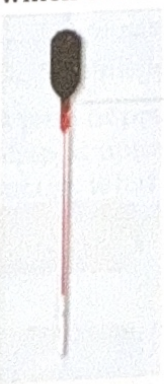
This instrument is used to measure which of the following?
Which of the following phases are directly involved in the recovery phase of the disaster cycle?
What does JSSK stand for?
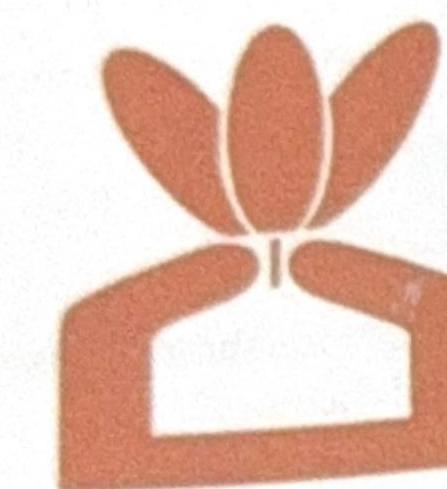
Identify the logo?
The formula with the numerator as maternal deaths and the denominator as women of reproductive age is used to calculate which of the following?
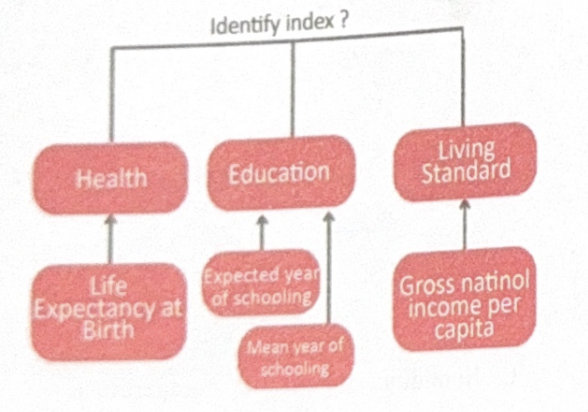
Identify the index?
Which of the following is not a component of Physical Quality of Life Index (PQLI)?
Given the following data: 500 live births and 9 deaths within the first 7 days, calculate the early neonatal mortality rate.
NEET-PG 2024 - Community Medicine NEET-PG Practice Questions and MCQs
Question 1: A patient from Bihar is admitted with splenomegaly and clinical features suggestive of leishmaniasis. What is the vector responsible for transmitting this disease?
- A. Phlebotomus (Correct Answer)
- B. Rat flea
- C. Black fly
- D. Chrysops fly
Explanation: ***Phlebotomus*** - **Phlebotomus** (sandfly), specifically ***Phlebotomus argentipes*** in India, is the principal vector for transmitting **Leishmania donovani** parasites causing **visceral leishmaniasis (kala-azar)**. - Bihar is a highly endemic region for kala-azar in India. - The sandfly transmits the parasite when it takes a blood meal from an infected host and then bites an uninfected individual. *Rat flea* - The **rat flea** (**Xenopsylla cheopis**) is the primary vector for diseases like **bubonic plague** and **murine typhus**, not leishmaniasis. - It transmits bacteria such as *Yersinia pestis* and *Rickettsia typhi*. *Black fly* - **Black flies** (**Simulium species**) are vectors for **onchocerciasis** (river blindness), caused by the parasitic worm *Onchocerca volvulus*. - They transmit the microfilariae when biting humans. *Chrysops fly* - The **Chrysops fly** (deer fly or mango fly) is the vector for **Loa loa filariasis** (African eye worm). - It transmits *Loa loa* eyeworm larvae when it bites humans.
Question 2: Which of the following diseases has the largest submerged portion in the iceberg model of disease?
- A. Influenza (Correct Answer)
- B. Chickenpox
- C. Tetanus
- D. Rabies
Explanation: **The Iceberg Model of Disease** represents the concept that for many diseases, only a small portion of cases (the "tip" above water) are clinically apparent and reported, while a much larger portion (the "submerged" part) consists of asymptomatic, subclinical, or undiagnosed cases. ***Influenza*** - Has the **largest submerged portion** among the given options, with **50-75% of infections being asymptomatic or mild** and going undiagnosed - High transmissibility and varied clinical presentation contribute to significant hidden burden - Only severe cases requiring hospitalization typically get reported, representing just the "tip of the iceberg" - Classic example of diseases with large subclinical-to-clinical ratio *Chickenpox* - Most cases are **clinically apparent** with characteristic vesicular rash - Asymptomatic infections are rare due to distinctive clinical features - High visibility of cases reduces the submerged portion significantly *Tetanus* - **Severe, acute neurological condition** with distinct clinical manifestations (trismus, risus sardonicus, opisthotonus) - Almost all cases are diagnosed due to dramatic presentation - Virtually no submerged portion - what exists clinically is recognized *Rabies* - **Nearly uniformly fatal** once symptoms appear, making all symptomatic cases clinically evident - No asymptomatic or mild phase after symptom onset - Minimal to no submerged portion in the iceberg model
Question 3: This instrument is used to measure which of the following?
- A. Cooling power of air
- B. Radiant heat (Correct Answer)
- C. Humidity
- D. Temperature
Explanation: ***Radiant heat*** - The instrument shown is a **globe thermometer** (also called a black globe thermometer), which is used to measure **radiant heat** in an environment. - It consists of a thermometer bulb encased in a matte black copper sphere (typically 6 inches in diameter), designed to absorb and re-emit radiation effectively. - It is a key component in calculating the **Wet Bulb Globe Temperature (WBGT) index**, which assesses heat stress in occupational and environmental health settings. *Cooling power of air* - The **cooling power of air** is measured by instruments like a **katathermometer**, which assesses the combination of air temperature and air movement. - This instrument does not have the features of a katathermometer, such as the large alcohol-filled bulb and specialized scale. *Humidity* - **Humidity** is measured using a **hygrometer** or **psychrometer**, which typically involves sensing changes in materials due to moisture or comparing wet-bulb and dry-bulb temperatures. - The globe thermometer's design is not suited for directly measuring water vapor content in the air. *Temperature* - While it contains a thermometer, a **globe thermometer** measures more than just the ambient air temperature; its primary purpose is to account for the combined effect of **radiant heat, air temperature, and air velocity**. - A standard **dry-bulb thermometer** would be used for simple ambient air temperature measurement alone.
Question 4: Which of the following phases are directly involved in the recovery phase of the disaster cycle?
- A. Response and Rehabilitation
- B. Mitigation and Rehabilitation
- C. Response and Preparedness
- D. Rehabilitation and Reconstruction (Correct Answer)
Explanation: ***Rehabilitation and Reconstruction*** - **Rehabilitation** is the short-term recovery phase focusing on restoring essential services, providing temporary shelter, medical care, and supporting affected populations to resume normal activities. - **Reconstruction** is the long-term recovery phase involving rebuilding damaged infrastructure, permanent housing, economic restoration, and development improvements. - These two phases together constitute the **recovery phase** of the disaster cycle according to standard disaster management frameworks (WHO, NDMA). *Mitigation and Rehabilitation* - While **rehabilitation** is correctly part of recovery, **mitigation** is traditionally considered a separate continuous phase or part of preparedness, focused on reducing future disaster risks. - **Mitigation** measures are implemented throughout the disaster cycle, not specifically as a direct component of the recovery phase. *Response and Rehabilitation* - **Response** refers to immediate life-saving actions during and immediately after a disaster (search and rescue, emergency medical care, evacuation). - **Response** precedes the recovery phase and is distinct from it, though **rehabilitation** is indeed part of recovery. *Response and Preparedness* - **Preparedness** involves planning, training, and resource allocation before a disaster occurs. - **Response** is the immediate action during/after the disaster. - Neither constitutes the recovery phase, which follows after the immediate response is complete.
Question 5: What does JSSK stand for?
- A. Janani Shishu Suraksha Karyakram (Correct Answer)
- B. Janani Shishu Swasthya Karyakram
- C. Janani Shishu Suraksha Kendra
- D. Janani Shishu Swasthya Kendra
Explanation: ***Janani Shishu Suraksha Karyakram*** - **JSSK** is a program initiated by the Indian government to provide **free healthcare services** to pregnant women and sick neonates. - The acronym stands for **Janani Shishu Suraksha Karyakram**, emphasizing "Karyakram" which means program. *Janani Shishu Swasthya Karyakram* - While "Swasthya" means **health**, it is not the correct word in the official acronym for this government initiative. - The official program focuses on "Suraksha" or **safety/protection** for mother and child during childbirth and infancy. *Janani Shishu Suraksha Kendra* - "Kendra" means **center** and indicates a facility, but the program itself is broader than just a center. - The initiative is a comprehensive "Karyakram" or **program** of services, not merely a physical location. *Janani Shishu Swasthya Kendra* - This option incorrectly combines "Swasthya" (health) and "Kendra" (center), neither of which accurately reflect the full acronym. - The correct acronym uses "Suraksha" (safety/protection) and "Karyakram" (program).
Question 6: Identify the logo?
- A. Leprosy (Correct Answer)
- B. TB
- C. Malaria
- D. HIV
Explanation: ***Leprosy*** - This logo, often featuring a stylized flower or protective shape, is widely recognized as a symbol associated with **leprosy awareness** and efforts to eradicate the disease. - Organizations dedicated to **leprosy elimination** and care frequently use similar designs to represent compassion, hope, and the journey towards healing for individuals affected by this condition. *TB* - The emblem for **tuberculosis (TB)** awareness predominantly features a **red ribbon**, which symbolizes solidarity in the fight against the disease. - While TB is a global health concern, its associated imagery differs significantly from the flower-like logo presented. *Malaria* - The international symbol for **malaria** often incorporates a stylized **mosquito** or images representing its lifecycle and geographic prevalence. - The logo displayed does not resemble any common imagery used in malaria prevention or awareness campaigns. *HIV* - The **red ribbon** is the most universally recognized symbol for **HIV/AIDS** awareness, representing solidarity with people living with HIV and those who have died from AIDS. - This specific logo does not align with the established iconography for HIV/AIDS.
Question 7: The formula with the numerator as maternal deaths and the denominator as women of reproductive age is used to calculate which of the following?
- A. Maternal mortality rate (Correct Answer)
- B. Maternal mortality ratio
- C. Perinatal mortality rate
- D. Perinatal mortality ratio
Explanation: ***Maternal mortality rate*** - This formula calculates the **maternal mortality rate**, which expresses the risk of dying from pregnancy-related causes among women of reproductive age in a population. - It uses the total number of maternal deaths in the numerator and the total number of **women of reproductive age** (usually 15-49 years) in the denominator, typically multiplied by a constant (e.g., 100,000) to get a per population figure. *Maternal mortality ratio* - The **maternal mortality ratio** uses the number of **live births** (or live births plus stillbirths) in the denominator, not women of reproductive age. - It measures the risk of maternal death per 100,000 live births, reflecting the obstetric risk associated with each pregnancy. *Perinatal mortality rate* - The **perinatal mortality rate** relates to deaths of fetuses and newborns (typically from 22 weeks gestation up to 7 days after birth), not maternal deaths. - Its numerator includes **fetal deaths** and **early neonatal deaths**, and the denominator is usually total births (live births + stillbirths). *Perinatal mortality ratio* - This term is less commonly used as a distinct epidemiological measure; typically, the term **perinatal mortality rate** encompasses both the frequency of perinatal deaths relative to total births. - It does not involve maternal deaths or women of reproductive age in its calculation.
Question 8: Identify the index?
- A. Human developmental index (Correct Answer)
- B. POLI
- C. Human poverty index
- D. Multidimensional poverty index
Explanation: ***Human developmental index*** - The **Human Development Index (HDI)** is the correct answer as the diagram exactly represents its three core dimensions - HDI measures overall achievement in: **Health** (life expectancy at birth), **Education** (mean years of schooling and expected years of schooling), and **Living standards** (GNI per capita) - These are the standard components published by UNDP for calculating HDI - HDI is a summary measure of average achievement in key dimensions of human development *Human poverty index* - The Human Poverty Index (HPI) was an older measure that has been discontinued - HPI focused on deprivations rather than overall development achievements - The diagram shows development indicators (positive achievements), not deprivation indicators - HPI has been replaced by the Multidimensional Poverty Index (MPI) *POLI* - **POLI** (Physical Quality of Life Index) is a different index that uses infant mortality, life expectancy at age one, and literacy rate - The components shown in the diagram (mean years of schooling, expected years of schooling, GNI per capita) are not part of POLI - This is not a recognized standard index in current use *Multidimensional poverty index* - The **Multidimensional Poverty Index (MPI)** measures acute multidimensional poverty across health, education, and living standards - However, MPI uses **different specific indicators**: nutrition, child mortality, years of schooling, school attendance, cooking fuel, sanitation, drinking water, electricity, housing, and assets - The diagram shows HDI components (life expectancy, mean/expected years of schooling, GNI per capita), which are NOT the MPI indicators - MPI focuses on deprivations at the household level, while the diagram shows aggregate development measures
Question 9: Which of the following is not a component of Physical Quality of Life Index (PQLI)?
- A. Life expectancy at 1 year
- B. Literacy rate
- C. Infant mortality rate
- D. Gross National Product (Correct Answer)
Explanation: ***Correct: Gross National Product*** - **Gross National Product (GNP)** is an economic indicator and is not included in the PQLI. - The PQLI specifically aims to measure well-being using social, not economic, indicators. *Incorrect: Life expectancy at 1 year* - **Life expectancy at 1 year of age** is a core component of the PQLI, reflecting health and living conditions. - It assesses the average number of years a child is expected to live past their first birthday. *Incorrect: Literacy rate* - The **adult literacy rate** is a key component of the PQLI, indicating the level of education and human development. - It measures the percentage of people aged 15 and above who can read and write. *Incorrect: Infant mortality rate* - **Infant mortality rate (IMR)** is another essential component of the PQLI, mirroring the health status of a population. - It represents the number of deaths of infants under one year old per 1,000 live births.
Question 10: Given the following data: 500 live births and 9 deaths within the first 7 days, calculate the early neonatal mortality rate.
- A. 18 per 1,000 live births (Correct Answer)
- B. 36 per 1,000 live births
- C. 24 per 1,000 live births
- D. 50 per 1,000 live births
Explanation: ***18 per 1,000 live births*** - The **early neonatal mortality rate** is calculated as (number of deaths within the first 7 days / total live births) × 1,000. - In this case, (9 deaths / 500 live births) × 1,000 = **18 per 1,000 live births**. *36 per 1,000 live births* - This value would be obtained by incorrectly doubling the correct calculation. - This represents a common calculation error where the result is multiplied by 2 instead of the standard multiplier of 1,000. *24 per 1,000 live births* - This value would be obtained if there were 12 deaths within the first 7 days, which is not the case here. - This option does not reflect the given data of 9 deaths within 500 live births. *50 per 1,000 live births* - This value would be obtained if there were 25 deaths within the first 7 days. - This option significantly overestimates the early neonatal mortality based on the provided data.