A patient came to the emergency room with severe abdominal pain. The serum triglyceride level was $1500 \mathrm{mg} / \mathrm{dL}$. What is the most likely defect?
A patient's relatives sent a message on social media to the consulting doctor, mentioning that the patient's urinary coproporphyrin test is positive. What is the probable cause?
A neonate was brought to the hospital with chief complaints of poor feeding, vomiting, acidosis, and cataract. Benedict's test on urine was positive, but urinary glucose was negative. What is the defective enzyme in the above-mentioned disorder?
A 45-year-old patient presents with joint pain and weakness and is known to have homocystinuria. Which vitamin is required in the treatment?
A patient came to the hospital with severe abdominal pain, and lipase levels were elevated. On imaging, a stone is found in the common bile duct (CBD). Which enzyme is most likely elevated in this condition?
What is the primary function of IL-8?
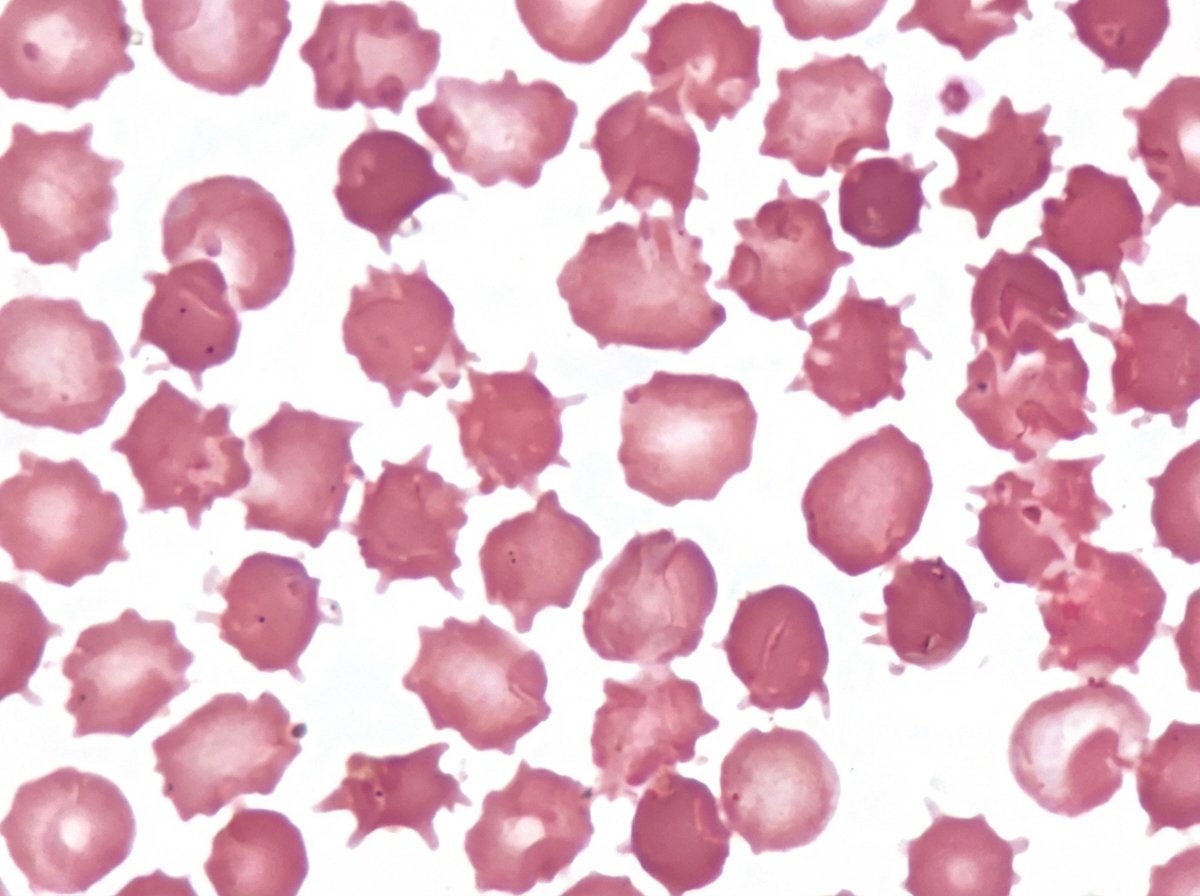
An adult male presented with a protruding abdomen, diarrhea, visual symptoms, and neurological manifestations. His LDL is low. Based on the peripheral smear finding shown in the image, what is the likely diagnosis?
An adult tall male presents with a long arm span, pectus excavatum, and cardiac abnormalities. What is the most likely defective protein?
A patient with homocystinuria presents with ectopia lentis (dislocation of the lens). Which vitamin should be supplemented?
Which of the following foods should be consumed to prevent thiamine deficiency?
NEET-PG 2024 - Biochemistry NEET-PG Practice Questions and MCQs
Question 11: A patient came to the emergency room with severe abdominal pain. The serum triglyceride level was $1500 \mathrm{mg} / \mathrm{dL}$. What is the most likely defect?
- A. Apo B-48
- B. Apo B-100
- C. Apo C-II (Correct Answer)
- D. LDL receptor
- E. Lipoprotein lipase
Explanation: ***Apo C-II*** - **Apo C-II** is an essential cofactor for **lipoprotein lipase (LPL)**, which is responsible for hydrolyzing triglycerides from chylomicrons and VLDL. - A defect in Apo C-II leads to severely impaired triglyceride clearance, resulting in **chylomicronemia** and extremely high serum triglyceride levels (e.g., 1500 mg/dL), which can cause acute pancreatitis. - Both Apo C-II deficiency and LPL deficiency present similarly, but Apo C-II deficiency is the more specific answer when considering the **"defect"** terminology, as it represents the regulatory cofactor rather than the enzyme itself. *Apo B-48* - **Apo B-48** is a structural protein uniquely found on **chylomicrons**, synthesized in the intestine, and is essential for their formation and secretion. - A defect in Apo B-48 (e.g., in abetalipoproteinemia) would lead to the **absence of chylomicrons**, resulting in very low or undetectable triglyceride levels after a fat-containing meal, not high levels. *Apo B-100* - **Apo B-100** is the primary apolipoprotein of **VLDL, IDL, and LDL**, and it is crucial for VLDL assembly in the liver and for LDL receptor binding. - Defects in Apo B-100 leading to hyperlipidemia typically cause elevated LDL cholesterol (e.g., familial defective Apo B-100), rather than severe hypertriglyceridemia associated with chylomicronemia. *LDL receptor* - The **LDL receptor** is responsible for the uptake of **LDL particles** from the bloodstream, primarily in the liver. - A defect in the LDL receptor (e.g., in familial hypercholesterolemia) primarily causes **elevated LDL cholesterol** levels, but typically does not lead to the extreme hypertriglyceridemia seen in this patient. *Lipoprotein lipase* - **Lipoprotein lipase (LPL)** is the enzyme that hydrolyzes triglycerides in chylomicrons and VLDL particles. - A primary deficiency of LPL itself (Type I familial chylomicronemia) would also cause severe hypertriglyceridemia similar to Apo C-II deficiency. - However, Apo C-II deficiency is the more specific answer as it represents the **cofactor defect** that impairs LPL function, while direct LPL deficiency is a separate genetic entity.
Question 12: A patient's relatives sent a message on social media to the consulting doctor, mentioning that the patient's urinary coproporphyrin test is positive. What is the probable cause?
- A. Lead poisoning (Correct Answer)
- B. Asbestosis
- C. Silicosis
- D. Mercury poisoning
- E. Arsenic poisoning
Explanation: ***Lead poisoning*** - **Lead poisoning** is associated with an increase in **urinary coproporphyrin III**, as lead inhibits the enzyme **coproporphyrinogen oxidase** in the heme synthesis pathway. - This leads to the accumulation and excretion of **coproporphyrin III** in the urine, making it a valuable biomarker for lead exposure. *Asbestosis* - **Asbestosis** is a chronic lung disease caused by inhaling **asbestos fibers**, leading to diffuse interstitial fibrosis. - It does not directly affect the **heme synthesis pathway** or cause an increase in urinary coproporphyrins. *Silicosis* - **Silicosis** is a chronic occupational lung disease caused by inhaling **crystalline silica dust**, resulting in pulmonary fibrosis. - It is not associated with alterations in **porphyrin metabolism** or increased urinary coproporphyrin levels. *Mercury poisoning* - While **mercury poisoning** can affect various organ systems, including renal and neurological, it is not primarily associated with disturbances in the **heme synthesis pathway** or elevated urinary coproporphyrins. - **Mercury poisoning** often manifests with symptoms like **tremors**, **neurological deficits**, and **kidney damage**. *Arsenic poisoning* - **Arsenic poisoning** causes a variety of systemic effects including gastrointestinal symptoms, peripheral neuropathy, and skin changes (hyperpigmentation, hyperkeratosis). - Unlike lead poisoning, **arsenic does not significantly elevate urinary coproporphyrin III** levels, making it distinguishable from lead toxicity through this biomarker.
Question 13: A neonate was brought to the hospital with chief complaints of poor feeding, vomiting, acidosis, and cataract. Benedict's test on urine was positive, but urinary glucose was negative. What is the defective enzyme in the above-mentioned disorder?
- A. Galactose 1-phosphate uridyl transferase (Correct Answer)
- B. Fructokinase
- C. Lactase
- D. Sucrase
- E. Aldolase B
Explanation: ***Galactose 1-phosphate uridyl transferase*** - This enzyme deficiency leads to **classic galactosemia**, characterized by the accumulation of **galactose-1-phosphate**, which is toxic. - Clinical features like **poor feeding, vomiting, acidosis, and cataracts** are typical, and a positive **Benedict's test** (detecting reducing sugars like galactose) with negative urinary glucose confirms the presence of another reducing sugar. *Fructokinase* - Deficiency of fructokinase causes **essential fructosuria**, a benign condition where **fructose** accumulates in the urine. - Unlike classic galactosemia, it does not present with severe symptoms like **acidosis** or **cataracts**. *Aldolase B* - **Aldolase B deficiency** causes hereditary fructose intolerance, presenting with **vomiting, hypoglycemia, and hepatomegaly** after fructose ingestion. - It does not cause **cataracts**, and Benedict's test would detect fructose, but the clinical context (symptoms with fructose/sucrose intake) differs from galactosemia. *Lactase* - **Lactase deficiency** (lactose intolerance) results in gastrointestinal symptoms such as **bloating, diarrhea, and abdominal pain** upon lactose consumption. - It does not typically cause **acidosis, cataracts**, or a positive Benedict's test in urine unless secondary bacterial fermentation leads to other reducing substances. *Sucrase* - **Sucrase-isomaltase deficiency** leads to the malabsorption of sucrose, causing symptoms similar to lactose intolerance like **diarrhea and abdominal cramping**. - It does not result in the systemic, severe metabolic derangements or signs like **cataracts** seen in classic galactosemia.
Question 14: A 45-year-old patient presents with joint pain and weakness and is known to have homocystinuria. Which vitamin is required in the treatment?
- A. Vitamin B6 (Correct Answer)
- B. Vitamin B12
- C. Vitamin B7
- D. Vitamin B1
- E. Vitamin B9
Explanation: ***Vitamin B6*** - **Homocystinuria** is often caused by a deficiency in the enzyme **cystathionine beta-synthase**, which requires **pyridoxal phosphate (active form of B6)** as a cofactor. - Supplementation with high-dose **vitamin B6** can help some patients by increasing the residual activity of the enzyme, thereby reducing **homocysteine levels**. - This is the **primary treatment** for **B6-responsive homocystinuria** (approximately 50% of cases respond to B6 therapy). *Vitamin B12* - Vitamin B12 is a cofactor for the enzyme **methionine synthase**, which converts homocysteine back to methionine. - While it plays a role in homocysteine metabolism, **vitamin B6** is typically the primary treatment for homocystinuria caused by **cystathionine beta-synthase deficiency**. *Vitamin B9* - Vitamin B9 (folic acid) works together with **vitamin B12** as a cofactor in the **remethylation pathway** via methionine synthase. - While folate supplementation may help lower homocysteine levels, it is **not the primary treatment** for classical homocystinuria due to cystathionine beta-synthase deficiency. - **Vitamin B6** remains the first-line vitamin therapy for enzyme deficiency-related homocystinuria. *Vitamin B7* - Vitamin B7, or **biotin**, is a cofactor for carboxylase enzymes and is involved in fatty acid synthesis and gluconeogenesis. - It has no direct role in the metabolism of **homocysteine** or the treatment of homocystinuria. *Vitamin B1* - Vitamin B1, or **thiamine**, is essential for carbohydrate metabolism and nerve function. - It is not involved in the metabolic pathways that regulate **homocysteine levels** or the treatment of homocystinuria.
Question 15: A patient came to the hospital with severe abdominal pain, and lipase levels were elevated. On imaging, a stone is found in the common bile duct (CBD). Which enzyme is most likely elevated in this condition?
- A. ALT
- B. GGT
- C. LDH
- D. AST
- E. ALP (Correct Answer)
Explanation: ***ALP (Alkaline Phosphatase)*** - **ALP** is the **most characteristic enzyme elevation** in **biliary obstruction** from a CBD stone. - ALP is found in high concentrations in the **bile duct epithelium** and hepatocytes adjacent to bile ducts, and rises dramatically with **cholestasis** and **obstructive jaundice**. - In CBD stone obstruction, ALP typically rises **3-10 times normal**, making it the hallmark biochemical marker of this condition. - While lipase is elevated due to associated pancreatitis, **ALP elevation specifically indicates the biliary obstruction**. *GGT (Gamma-Glutamyl Transferase)* - **GGT** is also elevated in **cholestasis** and **bile duct obstruction**. - GGT often rises in parallel with ALP and helps confirm the hepatobiliary origin of ALP elevation (vs. bone source). - However, **ALP is more specific** and typically shows greater magnitude of elevation in acute CBD obstruction, making it the **most likely** elevated enzyme in this clinical context. *ALT (Alanine Aminotransferase)* - **ALT** may be **mildly to moderately elevated** if there is secondary hepatocellular injury from biliary obstruction. - However, ALT primarily indicates **hepatocyte damage** rather than cholestasis, and its elevation is typically **less pronounced** than ALP in obstructive biliary disease. - The pattern in CBD obstruction is **cholestatic** (high ALP) rather than **hepatocellular** (high ALT). *AST (Aspartate Aminotransferase)* - **AST** can be elevated in various conditions including liver, heart, and muscle damage. - Like ALT, it may show mild elevation in biliary obstruction but is **not the primary marker**. - AST is less specific than ALP for diagnosing CBD stone obstruction. *LDH (Lactate Dehydrogenase)* - **LDH** is a **non-specific marker** of tissue damage found in multiple organs. - While it may be elevated, it provides little diagnostic value when specific markers like **ALP and lipase** are available. - LDH does not help differentiate biliary obstruction from other causes of abdominal pain.
Question 16: What is the primary function of IL-8?
- A. Chemotaxis (Correct Answer)
- B. Lymphocyte proliferation
- C. TH1 activation
- D. Fever
- E. B cell activation
Explanation: ***Chemotaxis*** - **IL-8** (also known as **CXCL8**) is a potent **chemokine** that primarily functions to recruit and activate **neutrophils** to sites of inflammation. - It guides these immune cells by forming a chemical gradient, allowing them to extravasate from blood vessels and migrate to the infected or injured tissue. *Lymphocyte proliferation* - Lymphocyte proliferation is primarily stimulated by **IL-2**, which acts as a growth factor for T cells. - While IL-8 contributes to the inflammatory environment, its direct role in inducing lymphocyte cell division is minor compared to its chemotactic function. *TH1 activation* - **TH1 cell activation** is mainly driven by **IL-12** and **IFN-γ**, which promote the differentiation and function of T helper 1 cells, crucial for fighting intracellular pathogens. - IL-8's role is unrelated to guiding TH1 cell differentiation. *Fever* - Fever is primarily induced by **pyrogenic cytokines** such as **IL-1**, **IL-6**, and **TNF-α**, which act on the hypothalamus to raise body temperature. - While IL-8 is part of the inflammatory response that can sometimes coincide with fever, it does not directly act as a pyrogen. *B cell activation* - **B cell activation** and differentiation are primarily regulated by interleukins such as **IL-4**, **IL-5**, **IL-6**, and **IL-21**, which promote antibody production and class switching. - IL-8 does not play a significant role in B cell function; its action is focused on innate immunity, particularly neutrophil recruitment.
Question 17: An adult male presented with a protruding abdomen, diarrhea, visual symptoms, and neurological manifestations. His LDL is low. Based on the peripheral smear finding shown in the image, what is the likely diagnosis?
- A. Abetalipoproteinemia (Correct Answer)
- B. EDTA changes
- C. Uremia
- D. Burns
- E. Liver disease
Explanation: ***Abetalipoproteinemia*** - The image shows **acanthocytes (spur cells)**, characterized by irregularly spaced, blunt projections, which are a hallmark of **abetalipoproteinemia** due to abnormal lipid metabolism and membrane defects. - The clinical presentation of a **protruding abdomen (steatorrhea/malabsorption)**, **diarrhea**, **visual symptoms (retinopathy)**, **neurological manifestations (ataxia, peripheral neuropathy)**, and **low LDL** all strongly point to abetalipoproteinemia, a disorder affecting the synthesis of B-apolipoprotein and chylomicrons. *EDTA changes* - **EDTA changes** typically manifest as **rouleaux formation**, platelet satellite formation, or cell shrinkage, with red blood cell morphology generally remaining normal in terms of spur cell formation. - These changes are **artifactual** and are not associated with the patient's systemic symptoms like malabsorption, neurological issues, or specific lipid profile findings. *Uremia* - While **uremia** can cause various red blood cell abnormalities, including **burr cells (echinocytes)** with regularly spaced, pointed projections, it generally does not cause the irregularly shaped **acanthocytes** seen in the image. - The systemic symptoms of uremia would primarily involve **renal dysfunction (e.g., elevated BUN, creatinine)**, which are not mentioned, and not specifically the **visual or malabsorption symptoms** seen here. *Burns* - Severe **burns** can lead to red blood cell fragmentation, causing **schistocytes** or **microspherocytes** due to heat-induced damage. - Burns are not typically associated with the formation of **acanthocytes** or the constellation of symptoms (malabsorption, neurological, visual) and lipid profile (low LDL) described in this patient. *Liver disease* - Advanced **liver disease (cirrhosis)** can cause **spur cell anemia** with acanthocytes due to altered cholesterol-to-phospholipid ratio in RBC membranes. - However, the key distinguishing feature is the **low LDL** in this patient, which is characteristic of abetalipoproteinemia, whereas liver disease typically does not present with specifically **low LDL** as a prominent feature. - Additionally, the constellation of **visual symptoms (retinopathy)** and **neurological manifestations** with malabsorption are more consistent with the fat-soluble vitamin deficiency (A, E, K) seen in abetalipoproteinemia rather than isolated liver pathology.
Question 18: An adult tall male presents with a long arm span, pectus excavatum, and cardiac abnormalities. What is the most likely defective protein?
- A. Fibrillin (Correct Answer)
- B. Elastin
- C. Collagen
- D. Myosin
- E. Laminin
Explanation: ***Fibrillin*** - The constellation of **tall stature**, **long arm span**, **pectus excavatum**, and **cardiac abnormalities** (e.g., aortic dissection or mitral valve prolapse) is classic for **Marfan syndrome**. - Marfan syndrome is caused by a defect in the *FBN1* gene, which codes for **fibrillin-1**, a glycoprotein essential for the formation of elastic fibers in connective tissue. *Elastin* - Defects in **elastin** are associated with conditions like **supravalvular aortic stenosis** (due to **Williams syndrome**) or cutis laxa, which have different phenotypic presentations. - While both elastin and fibrillin are components of elastic fibers, the specific features of Marfan syndrome point to fibrillin as the primary defect. *Collagen* - Defects in **collagen** (especially type I, III, or V) are associated with conditions such as **osteogenesis imperfecta** (brittle bones) or **Ehlers-Danlos syndrome** (hypermobility, skin hyperextensibility). - These conditions typically present with different clinical manifestations, lacking the specific combination of features seen in this patient. *Myosin* - **Myosin** is a fibrous protein primarily involved in **muscle contraction** and is not directly implicated in widespread connective tissue disorders affecting skeletal and cardiovascular systems in this manner. - Defects in myosin are more commonly associated with various forms of **cardiomyopathy** or skeletal muscle myopathies, not Marfan-like features. *Laminin* - **Laminin** is a major component of the **basement membrane** and plays a role in cell adhesion, migration, and tissue architecture. - Laminin defects are associated with certain forms of **muscular dystrophy** (e.g., congenital muscular dystrophy) and **epidermolysis bullosa**, not the specific skeletal and cardiovascular features of Marfan syndrome.
Question 19: A patient with homocystinuria presents with ectopia lentis (dislocation of the lens). Which vitamin should be supplemented?
- A. Vitamin B12
- B. Vitamin B6 (Correct Answer)
- C. Thiamine
- D. Vitamin B9 (Folate)
- E. Vitamin C
Explanation: ***Vitamin B6*** - Many cases of **homocystinuria** are due to a deficiency in **cystathionine beta-synthase (CBS)**, an enzyme that requires **pyridoxal phosphate (active B6)** as a cofactor. - Supplementing with **high doses of vitamin B6** can significantly improve outcomes in patients with **B6-responsive homocystinuria** by increasing residual CBS enzyme activity. *Vitamin B12* - While vitamin B12 (cobalamin) is a cofactor for **methionine synthase**, an enzyme involved in homocysteine metabolism, it is not the primary treatment for **homocystinuria due to CBS deficiency**. - B12 deficiency can lead to increased homocysteine levels, but B12 supplementation alone will not address the underlying enzyme defect in most cases of homocystinuria. *Thiamine* - **Thiamine (Vitamin B1)** is essential for carbohydrate metabolism and nerve function, but it has no direct role in the metabolic pathway involved in homocystinuria. - Thiamine deficiency causes **beriberi** and **Wernicke-Korsakoff syndrome**, symptoms distinctly different from homocystinuria. *Vitamin B9 (Folate)* - **Folate** is a cofactor for **methionine synthase**, working alongside vitamin B12 to convert homocysteine back to methionine. - While folate deficiency can contribute to hyperhomocysteinemia, it is not the primary therapeutic intervention for homocystinuria caused by **CBS deficiency**. *Vitamin C* - **Vitamin C (ascorbic acid)** is important for collagen synthesis and acts as an antioxidant, but it has no role in homocysteine metabolism or the treatment of homocystinuria. - Vitamin C deficiency causes **scurvy**, which presents with bleeding gums, petechiae, and poor wound healing—completely unrelated to homocystinuria.
Question 20: Which of the following foods should be consumed to prevent thiamine deficiency?
- A. Whole grain cereals and legumes (Correct Answer)
- B. Dairy products and eggs
- C. Fresh fruits and vegetables
- D. Polished white rice
- E. Red meat and poultry
Explanation: ***Whole grain cereals and legumes*** - **Whole grain cereals** (brown rice, oats, wheat germ, fortified cereals) and **legumes** (beans, lentils, peas) are **excellent natural sources of thiamine (vitamin B1)** - They retain the **bran and germ** layers where thiamine is concentrated - Regular consumption effectively prevents **thiamine deficiency** and associated conditions like beriberi and Wernicke-Korsakoff syndrome - This is the **primary dietary recommendation** for thiamine adequacy *Polished white rice* - Polished white rice has the **bran and germ removed** during processing, eliminating most of the thiamine content - Consuming polished white rice as a staple **causes thiamine deficiency**, leading to **beriberi** (common in populations with rice-based diets) - Unless fortified with thiamine, polished white rice contributes to deficiency rather than preventing it *Dairy products and eggs* - While nutritious, dairy products and eggs contain **relatively low amounts of thiamine** - Not reliable sources for meeting daily thiamine requirements - Contribute to overall nutrition but insufficient alone to prevent thiamine deficiency *Fresh fruits and vegetables* - Most fruits and vegetables contain **modest amounts of thiamine** compared to whole grains - Some exceptions include peas, asparagus, and Brussels sprouts, but typical servings provide limited thiamine - Important for overall health but not primary thiamine sources *Red meat and poultry* - Pork is actually a **good source of thiamine**, particularly organ meats - However, **whole grains and legumes** remain the most reliable and accessible plant-based sources - Red meat and poultry provide moderate thiamine but are not the best answer for preventing deficiency in general populations