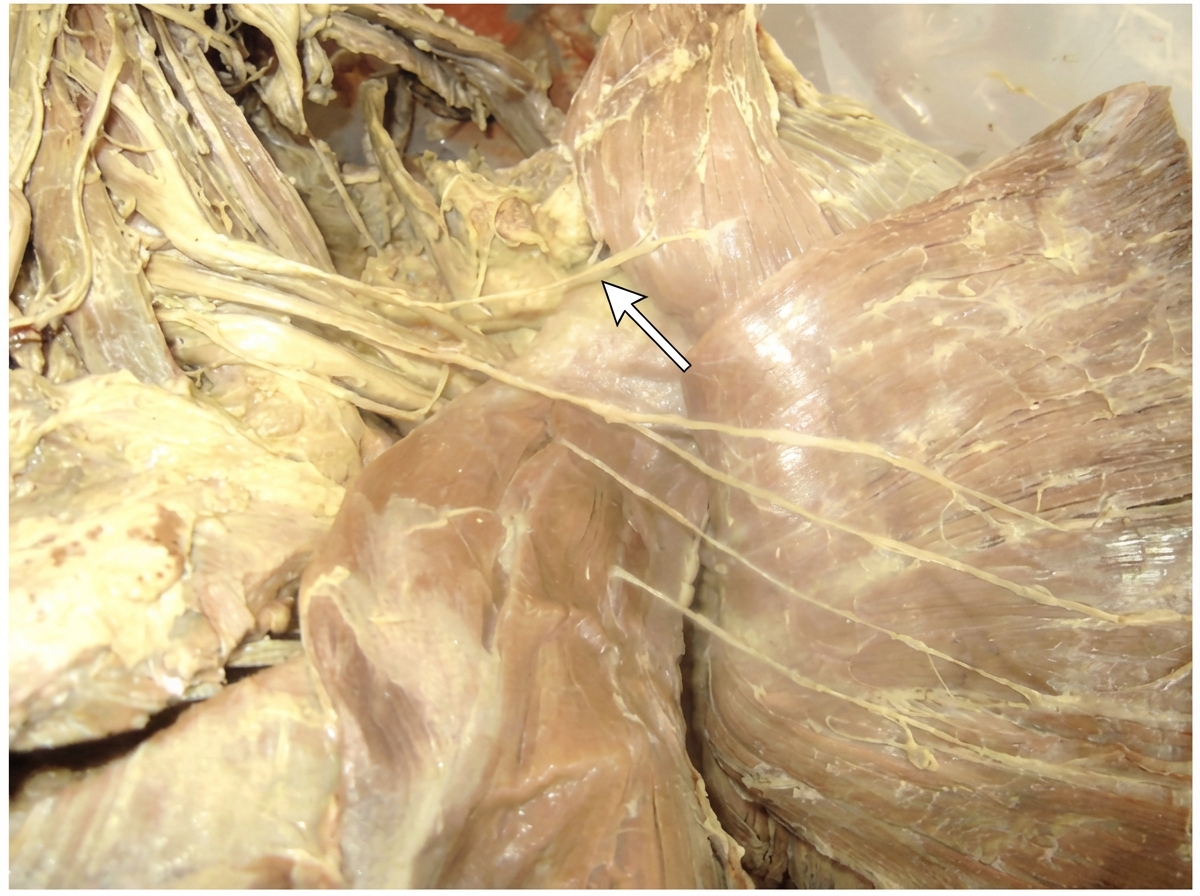
A patient presents with pain in the back of the thigh and leg after lifting heavy weights. Which spinal segment is most likely involved?
Which artery is palpated behind the medial malleolus and in front of the Achilles tendon?
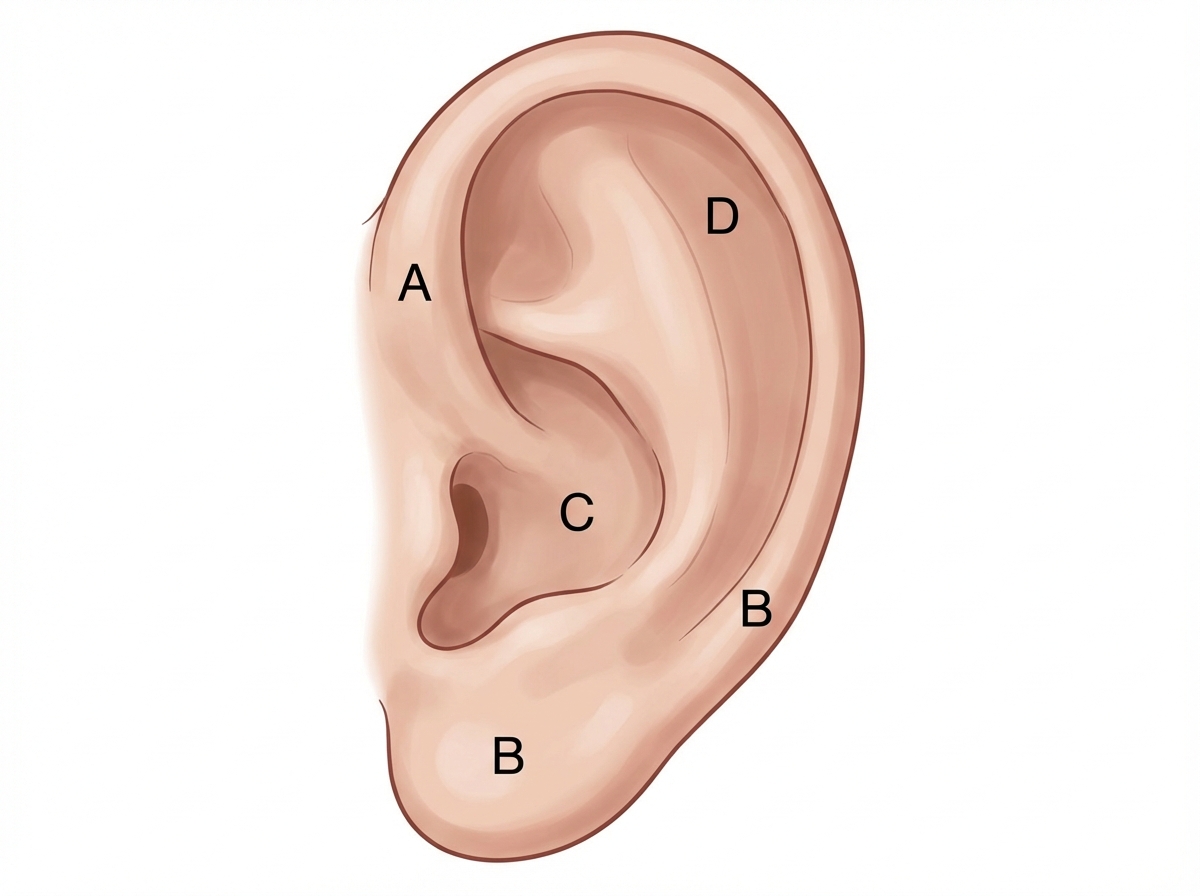
Match the following nerves to their respective areas of supply to the auricle
A patient diagnosed with sciatica has tender hamstrings. Which of the following nerves supplies a hybrid muscle that is partially spared in this patient?
What is the most common site of congenital diaphragmatic hernia?
A patient with a nerve injury was asked to form an "O" with their index finger and thumb but was unable to do so. Which muscle is most likely affected?
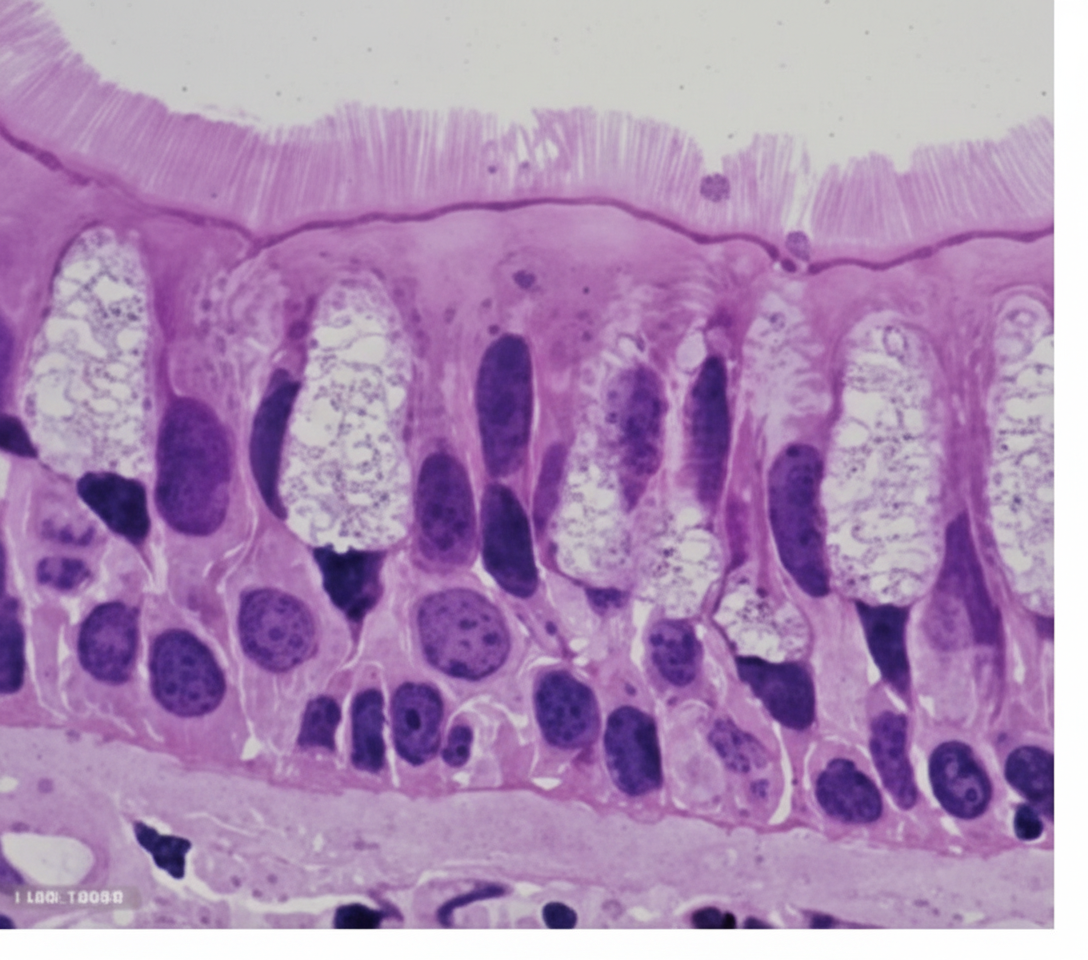
This type of epithelium is most commonly seen in which of the following organs?
Which tongue papillae do not have taste buds?
Impaired gag reflex is seen due to a lesion in which cranial nerves?
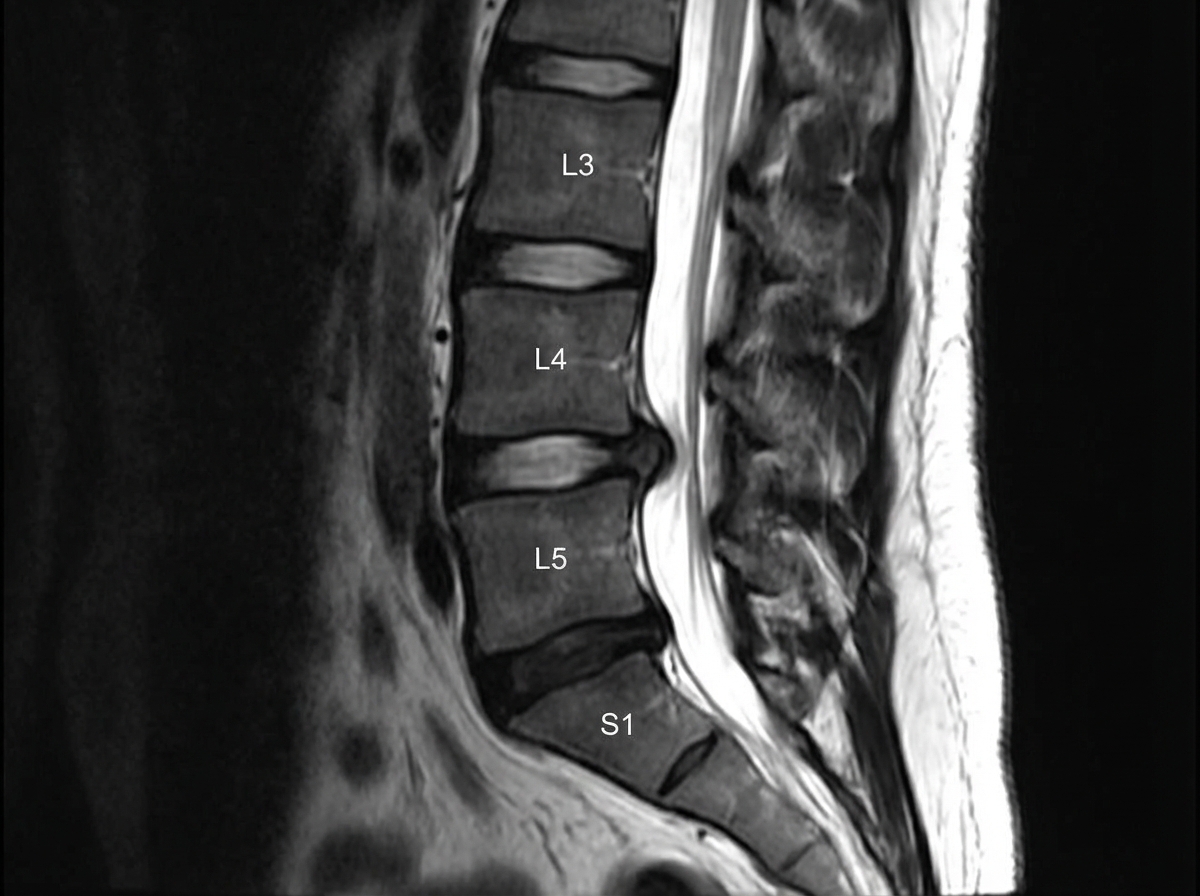
A slipped disc at the level shown in the image would most likely involve which nerve root?
NEET-PG 2024 - Anatomy NEET-PG Practice Questions and MCQs
Question 11: A patient presents with pain in the back of the thigh and leg after lifting heavy weights. Which spinal segment is most likely involved?
- A. L4
- B. L5
- C. S1 (Correct Answer)
- D. S2
- E. L3
Explanation: ***S1*** - Pain radiating to the **back of the thigh and leg** after lifting heavy weights is the classic presentation of **S1 radiculopathy**, typically from L5-S1 disc herniation. - The S1 nerve root innervates the **posterior thigh via the sciatic nerve**, continues down the **posterior leg**, and extends to the **lateral foot and little toe**. - Clinical findings include diminished or absent **Achilles reflex**, weakness of **plantar flexion** (gastrocnemius/soleus), and sensory changes along the posterior leg and lateral foot. - This is the **most common** presentation of sciatica from heavy lifting. *L3* - L3 nerve root involvement typically causes pain in the **anterior and medial thigh** with weakness of **hip flexion and knee extension** (quadriceps). - The pain pattern does not match the posterior distribution described in this clinical scenario. *L4* - L4 radiculopathy presents with pain and numbness in the **medial leg and foot**, weakness of **ankle dorsiflexion** (tibialis anterior), and diminished **patellar reflex**. - The pain distribution is anteromedial, not posterior as described in this case. *L5* - L5 nerve root impingement causes pain radiating to the **lateral calf and dorsum of the foot**, weakness of **great toe extension** (extensor hallucis longus), and **foot drop**. - While L5 can cause posterior thigh pain, the classic distribution extends laterally down the leg, not primarily posterior. *S2* - S2 radiculopathy is uncommon and typically presents with **perineal/perianal pain** and **saddle anesthesia** rather than isolated posterior leg pain. - S2 contributes to bladder and bowel function; isolated S2 involvement would not present with the classic sciatica pattern described.
Question 12: Which artery is palpated behind the medial malleolus and in front of the Achilles tendon?
- A. Peroneal artery
- B. Anterior tibial artery
- C. Dorsalis pedis artery
- D. Posterior tibial artery (Correct Answer)
- E. Popliteal artery
Explanation: ***Posterior tibial artery*** - This artery is directly accessible for palpation in the **retromalleolar groove**, situated between the medial malleolus and the Achilles tendon. - It is a common site for assessing **peripheral circulation** in the foot. *Peroneal artery* - The peroneal artery is located **deep within the posterior compartment** of the leg, making it difficult to palpate at the ankle. - It primarily supplies the lateral compartment and is not typically palpable at the described location. *Anterior tibial artery* - The anterior tibial artery runs along the **anterior compartment** of the lower leg and, at the ankle, becomes the dorsalis pedis artery. - It is best palpated on the **dorsum of the foot** as the dorsalis pedis artery, not behind the medial malleolus. *Dorsalis pedis artery* - This artery is a continuation of the anterior tibial artery and is found on the **dorsum of the foot**, typically lateral to the extensor hallucis longus tendon. - While an important pulse point, it is not located behind the medial malleolus. *Popliteal artery* - The popliteal artery is located in the **popliteal fossa** behind the knee, where it can be palpated with deep pressure. - It is proximal to the ankle and divides into the anterior and posterior tibial arteries, making it anatomically distant from the medial malleolus.
Question 13: Match the following nerves to their respective areas of supply to the auricle
- A. A - Auriculotemporal, B - Greater auricular, C - Vagus, D - Lesser occipital (Correct Answer)
- B. A - Greater auricular, B - Auriculotemporal, C - Lesser occipital, D - Vagus
- C. A - Auriculotemporal, B - Lesser occipital, C - Greater auricular, D - Vagus
- D. A - Auriculotemporal, B - Lesser occipital, C - Vagus, D - Greater auricular
- E. A - Vagus, B - Greater auricular, C - Auriculotemporal, D - Lesser occipital
Explanation: ***A - Auriculotemporal, B - Greater auricular, C - Vagus, D - Lesser occipital*** - **A points to the anterior-superior part of the auricle**, which is supplied by the **auriculotemporal nerve**, a branch of the trigeminal nerve (CN V3). - **B points to the posterolateral surface of the auricle and the lobule**, primarily supplied by the **greater auricular nerve**, a branch of the cervical plexus (C2-C3). - **C (the concha)** is innervated by the **vagus nerve** (CN X). - **D, the superior posterior part of the auricle**, is supplied by the **lesser occipital nerve** (C2-C3). *A - Auriculotemporal, B - Lesser occipital, C - Vagus, D - Greater auricular* - This option incorrectly swaps the **lesser occipital** and **greater auricular** nerve distributions. - The **greater auricular nerve** supplies the prominent posterolateral auricle (area B), not area D. *A - Vagus, B - Greater auricular, C - Auriculotemporal, D - Lesser occipital* - This option incorrectly assigns the **vagus nerve** to area A (anterosuperior auricle), which is innervated by the **auriculotemporal nerve**. - The **auriculotemporal nerve** is incorrectly placed at C; the vagus nerve primarily innervates the concha (area C). *A - Greater auricular, B - Auriculotemporal, C - Lesser occipital, D - Vagus* - This option reverses the **greater auricular** and **auriculotemporal** distributions and misplaces the vagus and lesser occipital nerves. - The **auriculotemporal nerve** supplies the anterosuperior region (A), not the posterolateral region (B). *A - Auriculotemporal, B - Lesser occipital, C - Greater auricular, D - Vagus* - This option incorrectly places the **lesser occipital nerve** at B and misidentifies the concha's innervation. - The **greater auricular nerve** supplies area B (posterolateral auricle and lobule), not the concha (C).
Question 14: A patient diagnosed with sciatica has tender hamstrings. Which of the following nerves supplies a hybrid muscle that is partially spared in this patient?
- A. Femoral
- B. Common peroneal nerve (Correct Answer)
- C. Obturator
- D. Tibial
- E. Superior gluteal
Explanation: ***Common peroneal nerve*** - The **short head of the biceps femoris** is a unique "hybrid" muscle, supplied by the **common peroneal nerve**, while the **long head** is supplied by the **tibial nerve**. - If the hamstrings are tender and sciatica is present, but this specific muscle's function is spared, it points towards the common peroneal nerve being the relevant nerve for the spared portion. *Femoral* - The **femoral nerve** primarily innervates the **anterior compartment of the thigh**, including the quadriceps femoris. - It does not supply any part of the hamstring muscles. *Obturator* - The **obturator nerve** primarily innervates the **medial compartment of the thigh**, which consists of adductor muscles. - It does not contribute to the innervation of the hamstring muscles. *Superior gluteal* - The **superior gluteal nerve** innervates the **gluteus medius**, **gluteus minimus**, and **tensor fasciae latae** muscles. - It does not supply any hamstring muscles. *Tibial* - The **tibial nerve** innervates most of the hamstring muscles (semitendinosus, semimembranosus, and the long head of the biceps femoris). - If the hamstrings are tender, involvement of the tibial nerve would likely lead to more widespread hamstring weakness rather than a partially spared scenario involving the short head of the biceps femoris.
Question 15: What is the most common site of congenital diaphragmatic hernia?
- A. Central tendon
- B. Posterolateral (Correct Answer)
- C. Crural
- D. Anterolateral
- E. Esophageal hiatus
Explanation: ***Posterolateral*** - The **posterolateral** region, specifically the foramen of Bochdalek, is the most common site for congenital diaphragmatic hernia (CDH). - This type of hernia accounts for approximately 80-90% of all CDH cases and usually occurs on the **left side**. *Central tendon* - Hernias through the **central tendon** are extremely rare and are distinct from the more common forms of CDH. - Defects in the central tendon are often associated with **pericardial defects** rather than typical diaphragmatic hernias which allow abdominal contents into the thoracic cavity. *Crural* - Hernias involving the **crura** of the diaphragm are typically **hiatal hernias** (e.g., sliding or paraesophageal), which are different in origin and presentation from CDH. - These are usually acquired and involve the stomach moving into the mediastinum, rather than a congenital defect leading to abdominal viscera migrating into the chest. *Anterolateral* - While congenital diaphragmatic hernias can occur **anterolaterally** through the foramen of Morgagni, these are much less common than posterolateral hernias. - Morgagni hernias account for a small percentage of CDH cases (around 2-5%) and are typically located on the right side, often containing omentum or colon. *Esophageal hiatus* - The **esophageal hiatus** is the normal opening in the diaphragm through which the esophagus passes. - While hiatal hernias can occur at this site, these are typically **acquired hernias** in adults, not congenital diaphragmatic hernias. - Congenital CDH refers to developmental defects in the diaphragm itself, not enlargement of normal openings.
Question 16: A patient with a nerve injury was asked to form an "O" with their index finger and thumb but was unable to do so. Which muscle is most likely affected?
- A. Opponens pollicis (Correct Answer)
- B. Abductor pollicis brevis
- C. Flexor pollicis brevis
- D. Palmar interossei
- E. Adductor pollicis
Explanation: ***Opponens pollicis*** - The **opponens pollicis** muscle is responsible for **opposition of the thumb**, a complex movement involving flexion, abduction, and medial rotation of the thumb at the carpometacarpal joint. - Inability to form an "O" sign with the index finger and thumb is a classic clinical test for impaired opposition, often indicating a problem with the **median nerve** or the opponens pollicis muscle it innervates. *Abductor pollicis brevis* - The **abductor pollicis brevis** primarily abducts the thumb, moving it away from the palm. - While necessary for thumb function, its primary role is not the opposition motion required to touch the fingertips in an "O" shape. *Flexor pollicis brevis* - The **flexor pollicis brevis** primarily flexes the thumb at the metacarpophalangeal joint. - While it contributes to thumb movements, it is not the primary muscle responsible for the complex motion of opposition. *Adductor pollicis* - The **adductor pollicis** adducts the thumb, bringing it towards the palm and index finger. - Innervated by the **ulnar nerve**, this muscle is important for pinch grip but is not the primary muscle for opposition movement. *Palmar interossei* - The **palmar interossei** muscles adduct the fingers, pulling them towards the middle finger. - These muscles are involved in finger adduction, not direct thumb opposition, and are typically innervated by the ulnar nerve.
Question 17: This type of epithelium is most commonly seen in which of the following organs?
- A. Ureter
- B. Trachea (Correct Answer)
- C. Duodenum
- D. Gall bladder
- E. Esophagus
Explanation: ***Trachea*** - The image displays **pseudostratified columnar epithelium with cilia and goblet cells**, which is characteristic of the respiratory tract, including the trachea. - This specialized epithelium functions to trap and expel foreign particles from the airways, ensuring respiratory health. *Ureter* - The ureter is lined by **transitional epithelium** (urothelium), which is characterized by its ability to stretch. - This epithelium would show a cuboidal to columnar appearance when relaxed and a flattened appearance when stretched, and the cells on the surface are typically dome-shaped, unlike the image. *Duodenum* - The duodenum is lined by **simple columnar epithelium** with a brush border and numerous goblet cells for absorption and mucus secretion. - It also features **villi and crypts of Lieberkühn**, which are not seen in the provided image. *Gall bladder* - The gallbladder is lined by **simple columnar epithelium** with microvilli, specialized for water absorption. - It lacks the cilia and pseudostratified arrangement evident in the given histopathology slide. *Esophagus* - The esophagus is lined by **non-keratinized stratified squamous epithelium**, designed to protect against abrasion from food passage. - This epithelium appears as multiple layers of flattened cells, completely different from the tall, columnar, ciliated cells shown in the image.
Question 18: Which tongue papillae do not have taste buds?
- A. Fungiform
- B. Filiform (Correct Answer)
- C. Circumvallate
- D. Foliate
- E. Conical
Explanation: ***Filiform*** - **Filiform papillae** are the most abundant type of papillae on the tongue and are responsible for the **mechanical action of gripping food**, due to their cone-shaped, abrasive structure of keratinized epithelium. - Unlike other papillae, they **lack taste buds** and thus do not play a role in taste sensation. *Fungiform* - **Fungiform papillae** are mushroom-shaped and are scattered among the filiform papillae, primarily on the tip and sides of the tongue. - These papillae **contain taste buds** on their superior surface and are involved in sensing taste stimuli. *Circumvallate* - **Circumvallate papillae** are large, dome-shaped structures arranged in a V-shape at the back of the tongue. - They are surrounded by a trench into which salivary glands empty, and their walls contain a **large number of taste buds**. *Foliate* - **Foliate papillae** are leaf-like folds located on the lateral margins of the posterior tongue. - They are **well-developed in young children** and contain taste buds, though they tend to degenerate with age. *Conical* - **Conical** is not a recognized classification of tongue papillae. While filiform papillae have a conical (cone-shaped) structure, "conical papillae" is not an anatomical term used to describe a distinct type of papilla.
Question 19: Impaired gag reflex is seen due to a lesion in which cranial nerves?
- A. CN V&VI
- B. CN X & XI
- C. CN IX & X (Correct Answer)
- D. CN VII & VIII
- E. CN XI & XII
Explanation: ***Correct: CN IX & X*** The **gag reflex (pharyngeal reflex)** is a protective reflex involving two cranial nerves: - **Afferent limb**: **CN IX (Glossopharyngeal nerve)** provides sensory innervation to the posterior third of the tongue, oropharynx, and pharyngeal walls - **Efferent limb**: **CN X (Vagus nerve)** provides motor innervation to the pharyngeal muscles (via the pharyngeal plexus) that contract during the reflex **Clinical correlation**: Testing the gag reflex helps assess brainstem function and the integrity of CN IX and X. Impairment suggests lesions affecting these nerves or their nuclei in the medulla. *Incorrect: CN V & VI* - CN V (Trigeminal) provides facial sensation and motor to muscles of mastication, not involved in gag reflex - CN VI (Abducens) controls lateral rectus muscle for eye abduction *Incorrect: CN X & XI* - While CN X is involved, CN XI (Accessory nerve) innervates sternocleidomastoid and trapezius muscles, not pharyngeal muscles *Incorrect: CN VII & VIII* - CN VII (Facial) controls facial expression and taste from anterior 2/3 of tongue - CN VIII (Vestibulocochlear) is involved in hearing and balance, not the gag reflex *Incorrect: CN XI & XII* - CN XI (Accessory) innervates SCM and trapezius - CN XII (Hypoglossal) provides motor to intrinsic and extrinsic tongue muscles, not pharyngeal muscles involved in gag reflex
Question 20: A slipped disc at the level shown in the image would most likely involve which nerve root?
- A. L4
- B. L5 (Correct Answer)
- C. S1
- D. L3
- E. L2
Explanation: ***L5*** - The image shows a **disc herniation** at the L4-L5 level. In cases of disc herniation, it is the **nerve root exiting below the level of the disc** that is typically compressed. - For an L4-L5 disc herniation, the **L5 nerve root** is the one most commonly affected because it passes directly behind the L4 vertebral body and the L4-L5 disc before exiting the neural foramen at the L5-S1 level. *L4* - An L4 nerve root compression would typically occur with a disc herniation at the **L3-L4 level**. The L4 nerve root usually exits above the L4-L5 disc. - While sometimes L4 nerve root can be involved in a massive central L4-L5 herniation, it is less common than L5 involvement for a typical posterolateral herniation at this level. *S1* - The S1 nerve root would be involved in a **disc herniation at the L5-S1 level**, as it exits below the L5-S1 disc. - The disc herniation visible in the image is clearly above the L5-S1 intervertebral space. *L3* - Compression of the L3 nerve root usually results from a disc herniation at the **L2-L3 level**, which is higher than the level depicted in the image. - The L3 nerve root is anatomically shielded from an L4-L5 disc herniation. *L2* - The L2 nerve root would be affected by a disc herniation at the **L1-L2 level**, which is significantly higher than the level shown in the image. - L2 nerve root involvement would present with different clinical features (primarily hip flexion weakness and sensory changes in the anterior thigh).