NEET-PG 2022 — Physiology
4 Previous Year Questions with Answers & Explanations
Some cells secrete chemicals into the extracellular fluid that act on cells in the same tissue. Which of the following refers to this type of regulation?
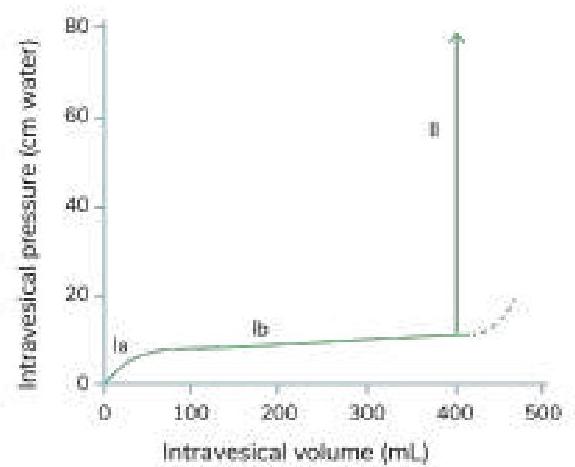
Which of the following statements is true regarding the given cystometrogram?
Which of the following statements about the O2-Hb dissociation curve is correct?
Magnesium is not involved in ?
NEET-PG 2022 - Physiology NEET-PG Practice Questions and MCQs
Question 1: Some cells secrete chemicals into the extracellular fluid that act on cells in the same tissue. Which of the following refers to this type of regulation?
- A. Neural
- B. Endocrine
- C. Neuroendocrine
- D. Paracrine (Correct Answer)
Explanation: ***Paracrine*** - **Paracrine signaling** involves chemical messengers, or **paracrine factors**, that act on **neighboring cells** within the **same tissue** without entering the bloodstream. - This type of regulation is crucial for local communication and coordination, such as in wound healing or immune responses. *Neural* - **Neural regulation** involves communication via **neurons** that transmit **electrical signals** (action potentials) and release **neurotransmitters** at synapses. - Neurotransmitters act on target cells, which can be distant from the neuron, for rapid and precise responses throughout the body. *Endocrine* - **Endocrine regulation** involves glands that secrete **hormones** directly into the **bloodstream**, which then travel to distant target cells in other tissues or organs. - This form of signaling leads to widespread and long-lasting effects, such as growth regulation or metabolic control. *Neuroendocrine* - **Neuroendocrine regulation** is a hybrid system where specialized **neurons** (neurosecretory cells) release **hormones** into the **bloodstream**, rather than releasing neurotransmitters into a synapse. - An example is the hypothalamus secreting ADH and oxytocin, which act on distant target organs.
Question 2: Which of the following statements is true regarding the given cystometrogram?
- A. Segment Ib reflects the bladder's ability to accommodate increasing volume without a significant rise in pressure. (Correct Answer)
- B. Micturition occurs in segment II; failure to micturate is not characteristic of this segment.
- C. Segment Ia represents the initial phase of bladder filling, not residual urine.
- D. The dotted line represents a reference point, not the occurrence of micturition.
Explanation: ***Segment Ib reflects the bladder's ability to accommodate increasing volume without a significant rise in pressure.*** - Segment Ib typically represents the **storage phase** of the bladder, where the detrusor muscle relaxes allowing for significant increases in volume with only a small increase in intravesical pressure. - This property is known as **compliance** and is crucial for normal bladder function, preventing premature urgency and high-pressure storage. - This is the **most clinically significant characteristic** that defines normal bladder function. *Micturition occurs in segment II; failure to micturate is not characteristic of this segment.* - While this statement is technically true, segment II represents the **micturition phase** with rapid rise in intravesical pressure as the detrusor contracts. - The statement is correct but less specific about the key functional property being tested in a cystometrogram. *Segment Ia represents the initial phase of bladder filling, not residual urine.* - This statement is also technically true; segment Ia represents the **initial filling phase** where the bladder begins to distend from baseline. - However, this is a basic anatomical description rather than a functionally significant characteristic. *The dotted line represents a reference point, not the occurrence of micturition.* - The dotted line typically shows a further increase in intravesical pressure, indicating **maximal pressure** the bladder can withstand or continued voiding attempt against resistance. - Segment II (solid line with rapid pressure increase) is where micturition actively occurs, making this a true but less significant observation.
Question 3: Which of the following statements about the O2-Hb dissociation curve is correct?
- A. It demonstrates cooperative binding. (Correct Answer)
- B. The curve is a straight line.
- C. It is 100% saturated at a PO2 of 100 mmHg.
- D. A hemoglobin molecule can carry 4 molecules of O2.
Explanation: ***It demonstrates cooperative binding.*** - **Cooperative binding** describes how the binding of one oxygen molecule to hemoglobin increases the affinity of the remaining binding sites for oxygen. - This property gives the O2-Hb dissociation curve its characteristic **sigmoid (S-shaped)** appearance, allowing for efficient oxygen loading in the lungs and unloading in the tissues. *The curve is a straight line.* - The O2-Hb dissociation curve is **sigmoid or S-shaped**, not a straight line, due to the phenomenon of cooperative binding. - A straight line would imply a constant affinity of hemoglobin for oxygen, which is not the case. *It is 100% saturated at a PO2 of 100 mmHg.* - Hemoglobin is typically around **97-98% saturated** at a PO2 of 100 mmHg (arterial blood). - Complete 100% saturation is rarely achieved under physiological conditions. *A hemoglobin molecule can carry 4 molecules of O2.* - While this statement is factually true (one hemoglobin molecule has **four heme groups** and can bind up to **four molecules of oxygen**), it describes the structure and oxygen-carrying capacity of hemoglobin rather than a characteristic of the dissociation **curve itself**. - The question asks about features of the O2-Hb dissociation curve, and cooperative binding is the key property that defines the curve's behavior and sigmoid shape.
Question 4: Magnesium is not involved in ?
- A. Cellular oxidation
- B. Hemoglobin synthesis (Correct Answer)
- C. Membrane transport
- D. Glucose tolerance
Explanation: ***Hemoglobin synthesis*** - **Magnesium** is not directly involved in the synthesis of **hemoglobin**; **iron** is the crucial mineral for this process. - While magnesium is vital for many enzymatic reactions, it does not play a direct role in forming the heme structure or globin chains. *Cellular oxidation* - **Magnesium** acts as a **cofactor** for numerous enzymes involved in **cellular respiration** and **oxidative phosphorylation**, which are key processes in cellular oxidation. - These enzymatic reactions are critical for energy production within the cell. *Membrane transport* - **Magnesium** ions are essential for the proper functioning of various **ion channels** and **pumps**, such as the **Na+/K+ ATPase**, which are fundamental for maintaining **membrane potential** and **active transport**. - It influences the permeability of cell membranes and the movement of substances across them. *Glucose tolerance* - **Magnesium** plays a significant role in **glucose metabolism** and **insulin signaling**, affecting **glucose uptake** and utilization by cells, thereby influencing **glucose tolerance**. - Deficiency in magnesium has been linked to **insulin resistance** and an increased risk of **type 2 diabetes**.