Anatomy
1 questionsA 70-year-old male patient presents with high-frequency hearing loss. It was noted that the basilar membrane was affected. Which of the following structures lies near the affected structure?
NEET-PG 2022 - Anatomy NEET-PG Practice Questions and MCQs
Question 71: A 70-year-old male patient presents with high-frequency hearing loss. It was noted that the basilar membrane was affected. Which of the following structures lies near the affected structure?
- A. Stria vascularis (Correct Answer)
- B. Modiolus
- C. Helicotrema
- D. Oval window
Explanation: ***Stria vascularis*** - The **stria vascularis** is a highly vascularized epithelial layer located on the lateral wall of the **scala media**, directly adjacent to the **basilar membrane**. - It is crucial for maintaining the high potassium concentration in the **endolymph** which is essential for the function of hair cells in the **organ of Corti** and thus hearing [2]. *Modiolus* - The **modiolus** is the central, conical bony pillar of the cochlea, around which the cochlear duct spirals. - While it houses the **spiral ganglion** and auditory nerve fibers, it is structurally distinct from and not immediately adjacent to the basilar membrane. *Helicotrema* - The **helicotrema** is the small opening at the apex of the cochlea where the **scala vestibuli** and **scala tympani** communicate [1]. - It is located at the very end of the cochlea, far from the main vibratory portion of the basilar membrane responsible for high-frequency sounds. *Oval window* - The **oval window** is the opening in the bony labyrinth into which the **stapes** footplate fits, transmitting vibrations from the middle ear to the inner ear [2]. - While critical for hearing, it is located at the base of the cochlea and is not an immediate neighbor of the basilar membrane in the context of its function in sound transduction within the cochlear duct.
Biochemistry
1 questionsA young patient started to take a weight loss medication that acts by inhibiting fat absorption from food. After a few weeks, she developed easy bruising and increased menstrual bleeding. Deficiency of which of the following vitamins is responsible for her condition?
NEET-PG 2022 - Biochemistry NEET-PG Practice Questions and MCQs
Question 71: A young patient started to take a weight loss medication that acts by inhibiting fat absorption from food. After a few weeks, she developed easy bruising and increased menstrual bleeding. Deficiency of which of the following vitamins is responsible for her condition?
- A. Vitamin E
- B. Vitamin K (Correct Answer)
- C. Vitamin B6
- D. Vitamin D
Explanation: ***Vitamin K*** - The patient is taking a **weight-loss medication** that **inhibits fat absorption**, leading to a deficiency in **fat-soluble vitamins**, including vitamin K. - **Vitamin K** is crucial for the synthesis of **coagulation factors** (II, VII, IX, X), and its deficiency leads to impaired clotting, manifesting as **easy bruising** and **increased menstrual bleeding**. *Vitamin E* - While vitamin E is a fat-soluble vitamin, its deficiency typically causes **neurological dysfunction** and **hemolytic anemia**, not bleeding diathesis. - Although malabsorption of vitamin E can occur with fat malabsorption, it does not directly explain the bleeding symptoms observed. *Vitamin B6* - Vitamin B6 is a **water-soluble vitamin**, so its absorption would not be directly affected by a medication inhibiting fat absorption. - Its deficiency can cause **neuropathy**, **dermatitis**, and **anemia**, but not increased bleeding. *Vitamin D* - Vitamin D is a **fat-soluble vitamin** whose deficiency is associated with **bone disorders** like **osteomalacia** and **rickets**, not bleeding. - While its absorption would be impacted by the medication, its deficiency would not cause easy bruising or increased menstrual bleeding.
Internal Medicine
2 questionsA male patient diagnosed with tuberculosis took complete treatment. Sputum examination was done after the completion of the intensive and the continuation phases. It was found to be negative. What is the status of the patient?
A woman presents to you with fever, arthralgia, ulcers, fatigue for the past six months, and new-onset hematuria. Urine examination reveals RBC casts and proteinuria. What is the likely diagnosis?
NEET-PG 2022 - Internal Medicine NEET-PG Practice Questions and MCQs
Question 71: A male patient diagnosed with tuberculosis took complete treatment. Sputum examination was done after the completion of the intensive and the continuation phases. It was found to be negative. What is the status of the patient?
- A. Cured (Correct Answer)
- B. Treatment completed
- C. Lost to follow up
- D. Treatment failed
Explanation: ***Cured*** - A patient is declared **cured** if they have completed the full course of treatment and have achieved **two negative sputum smear results**, with one at the end of the intensive phase and another at the completion of the treatment [1]. - This indicates that the **infection has been eradicated**, and the patient is no longer infectious. *Treatment completed* - This status applies when a patient has **completed the full treatment course** but does not have documented sputum smear results that meet the criteria for "cured." - While treatment was completed, the **bacteriological status is not confirmed** in the same way as for a cured patient. *Lost to follow up* - This term describes a patient who was **enrolled in treatment but was interrupted** for a specific period (e.g., two consecutive months or more) and their outcome cannot be determined. - They **ceased to attend follow-up appointments** and their treatment completion or success is unknown. *Treatment failed* - This status is assigned when a patient remains **sputum smear-positive at the end of the intensive phase** or at the end of the treatment, or if they initially converted to negative but later became positive again [1]. - It signifies that the **treatment regimen was ineffective** in eradicating the infection.
Question 72: A woman presents to you with fever, arthralgia, ulcers, fatigue for the past six months, and new-onset hematuria. Urine examination reveals RBC casts and proteinuria. What is the likely diagnosis?
- A. Acute interstitial nephritis
- B. Poststreptococcal glomerulonephritis
- C. Lupus nephritis (Correct Answer)
- D. IgA nephropathy
Explanation: ***Lupus nephritis*** - The combination of **fever, arthralgia, oral ulcers, and fatigue** lasting for six months is highly suggestive of **systemic lupus erythematosus (SLE)** [1]. - The new-onset **hematuria, proteinuria, and RBC casts** indicate **glomerulonephritis**, which is a common and serious renal manifestation of SLE, known as lupus nephritis [2]. *Acute interstitial nephritis* - Characterized by acute kidney injury, often following exposure to **medications** (e.g., NSAIDs, antibiotics) or infections. - Typically presents with sterile pyuria, eosinophilia, and white cell casts, not hemorrhagic urine and RBC casts. *Poststreptococcal glomerulonephritis* - Occurs **1-3 weeks after a streptococcal infection** (e.g., pharyngitis, impetigo) and presents with acute nephritic syndrome. - While it causes hematuria and proteinuria, the prolonged systemic symptoms (arthralgia, ulcers, fatigue) and the absence of a recent streptococcal infection make it less likely. *IgA nephropathy* - Often presents with **recurrent episodes of gross hematuria**, usually developing within days of an upper respiratory tract infection. - It does not typically present with the broad array of systemic symptoms like chronic fever, arthralgia, and oral ulcers seen in this patient.
Microbiology
1 questionsA militant presents with rashes all over his body sparing the palms and soles. On examination, he was febrile and lice were noted. Which of the following is responsible for his condition?
NEET-PG 2022 - Microbiology NEET-PG Practice Questions and MCQs
Question 71: A militant presents with rashes all over his body sparing the palms and soles. On examination, he was febrile and lice were noted. Which of the following is responsible for his condition?
- A. Rickettsia typhi
- B. Rickettsia prowazekii (Correct Answer)
- C. Rickettsia akari
- D. Rickettsia conorii
Explanation: ***Rickettsia prowazekii*** - This bacterium is the causative agent of **epidemic typhus**, which is transmitted by the **body louse** (Pediculus humanus corporis), consistent with the presence of lice. - The characteristic rash of epidemic typhus **spares the palms and soles** and often begins on the trunk, spreading centrifugally. *Rickettsia typhi* - This organism causes **murine typhus**, which is transmitted by **fleas**, particularly those found on rodents. - While it can cause a rash that typically spares the palms and soles, the transmission vector and typical setting (exposure to rodents) do not fit the clinical scenario as well as **body lice**. *Rickettsia akari* - This bacterium causes **rickettsialpox**, transmitted by **mites**. - The rash of rickettsialpox is typically papulovesicular, and a characteristic **eschar** (or black scab) is usually present at the site of the mite bite, which is not mentioned in the case. *Rickettsia conorii* - This organism causes **Mediterranean spotted fever** (also known as Boutonneuse fever), transmitted by **ticks**. - A distinguishing feature of this infection is the presence of a **tache noire** (eschar) at the site of the tick bite, which is absent in the patient's presentation.
Obstetrics and Gynecology
1 questionsA female patient presents to you with six weeks of amenorrhea, associated with abdominal pain and vaginal bleeding with normal blood pressure. Investigations revealed beta-hCG to be 1400 mIU/mL. An ultrasound scan was done which showed a trilaminar endometrium with normal adnexa. What is the next best step in the management of this patient?
NEET-PG 2022 - Obstetrics and Gynecology NEET-PG Practice Questions and MCQs
Question 71: A female patient presents to you with six weeks of amenorrhea, associated with abdominal pain and vaginal bleeding with normal blood pressure. Investigations revealed beta-hCG to be 1400 mIU/mL. An ultrasound scan was done which showed a trilaminar endometrium with normal adnexa. What is the next best step in the management of this patient?
- A. Repeat beta – hCG after 48 hours (Correct Answer)
- B. Laparoscopy
- C. Repeat ultrasound after 5 days
- D. Measurement of serum progesterone
Explanation: ***Repeat beta – hCG after 48 hours*** - With a beta-hCG of 1400 mIU/mL and no intrauterine pregnancy visible on ultrasound, repeating **beta-hCG after 48 hours** is crucial to assess its doubling time, which helps differentiate between a normal intrauterine pregnancy, ectopic pregnancy, or miscarriage. - An hCG level of 1400 mIU/mL is below the discriminatory zone (typically 1500-2000 mIU/mL) where an intrauterine gestational sac should be visible, making serial measurements essential. *Repeat ultrasound after 5 days* - While a repeat ultrasound may eventually be necessary, waiting 5 days without an interim hCG measurement could delay diagnosis and management, especially if the hCG levels are rising rapidly or are in a concerning range. - The current beta-hCG level is below the **discriminatory zone**, meaning a gestational sac would likely still not be visible even after 5 days, making hCG follow-up a more immediate and informative step. *Measurement of serum progesterone* - **Serum progesterone** levels can indicate overall pregnancy viability, but they do not specifically localize the pregnancy or differentiate between an intrauterine pregnancy and an ectopic pregnancy as effectively as serial hCG levels. - A single low progesterone level could indicate a non-viable pregnancy (either intrauterine or ectopic), but it does not guide immediate management for distinguishing between locations. *Laparoscopy* - **Laparoscopy** is an invasive surgical procedure and is not the first diagnostic step unless there are signs of ruptured ectopic pregnancy or hemodynamic instability, which are not present in this patient (normal blood pressure, mild symptoms). - It would be premature to proceed with laparoscopy without further biochemical or sonographic evidence of an ectopic pregnancy or clear signs of clinical deterioration.
Pediatrics
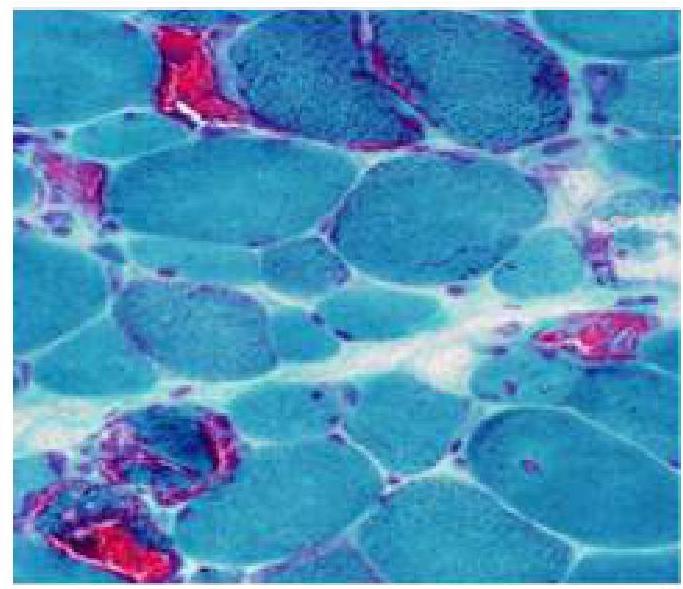
2 questionsAn 8-year old child has difficulty walking and getting up from a squatting position. A muscle biopsy was done and is as shown in the image. Which of the following is true about this condition?
A 6-year-old boy came with a history of recurrent urinary tract infections. Imaging was done and showed retrograde flow of urine from the bladder into the ureters. What is the most likely diagnosis based on the imaging findings?

NEET-PG 2022 - Pediatrics NEET-PG Practice Questions and MCQs
Question 71: An 8-year old child has difficulty walking and getting up from a squatting position. A muscle biopsy was done and is as shown in the image. Which of the following is true about this condition?
- A. Previous history of viral prodrome
- B. It is a mitochondrial storage disorder
- C. Early treatment has excellent prognosis
- D. Death occurs in the 3rd decade for certain types of muscular dystrophy. (Correct Answer)
Explanation: ***Death occurs in the 3rd decade for certain types of muscular dystrophy.*** - The image shows muscle fibers with varying sizes and **necrosis**, along with areas of **regeneration** and **fibrosis**, which are characteristic findings in **muscular dystrophies**, particularly Duchenne muscular dystrophy. - In **Duchenne muscular dystrophy**, patients often succumb to **respiratory or cardiac complications** by their **late teens or early twenties (3rd decade)**, making this statement true for this condition. *Previous history of viral prodrome* - A **viral prodrome** is typically associated with **acute viral myositis** or **polymyositis**, which are inflammatory conditions, not primarily genetic muscular dystrophies. - While viral infections can sometimes trigger symptoms or exacerbate underlying conditions, a direct causal link as a defining feature of muscular dystrophy is incorrect. *It is a mitochondrial storage disorder* - **Mitochondrial storage disorders** involve dysfunction of the mitochondria and can manifest as myopathies, but the histological features (ragged red fibers) and clinical presentation often differ from the classic presentation of muscular dystrophy. - The image and clinical context point towards a **dystrophinopathy**, not a primary mitochondrial disorder. *Early treatment has excellent prognosis* - Despite advances in care, **muscular dystrophies**, especially Duchenne, remain **progressive and incurable**, with treatments aimed at slowing progression and managing symptoms rather than achieving a cure or excellent prognosis. - **Early diagnosis and intervention** can improve quality of life and prolong survival but do not lead to an "excellent prognosis" in terms of disease reversal or complete functional recovery.
Question 72: A 6-year-old boy came with a history of recurrent urinary tract infections. Imaging was done and showed retrograde flow of urine from the bladder into the ureters. What is the most likely diagnosis based on the imaging findings?
- A. Vesicoureteric reflux (VUR) (Correct Answer)
- B. Urinary bladder diverticulum (UBD)
- C. Vesicocolic fistula (VCF)
- D. Urinary bladder hernia (UBH)
Explanation: ***Vesicoureteric reflux (VUR)*** - VUR is defined by the **retrograde flow of urine from the bladder into the ureters**, which directly matches the imaging finding described - This is the **most common cause of recurrent UTIs in children**, as reflux allows bacteria to ascend from the bladder to the kidneys - Diagnosed by **voiding cystourethrogram (VCUG)**, which shows contrast refluxing into ureters during micturition - Graded from I to V based on severity; can lead to **reflux nephropathy** and renal scarring if untreated *Urinary bladder diverticulum* - An **outpouching of the bladder wall** through weakened muscle layers - May predispose to UTIs due to urinary stasis within the diverticulum, but does **not cause retrograde flow into ureters** - Imaging would show a **saccular projection** from the bladder, not ureteral filling *Vesicocolic fistula* - An **abnormal communication between bladder and colon**, typically from inflammatory bowel disease, malignancy, or trauma in adults (rare in children) - Presents with **pneumaturia (air in urine)**, fecaluria, and recurrent UTIs - Would not demonstrate **retrograde ureteral flow** on imaging *Urinary bladder hernia* - Protrusion of bladder through a **hernial defect** (inguinal, femoral, or abdominal wall) - Presents as a **reducible mass** that may increase with Valsalva - Does not cause **ureteral reflux** and has a distinct clinical and radiological presentation
Pharmacology
1 questionsA middle-aged male patient presents with protrusion of the chin, excessive sweating, impaired glucose tolerance, and enlargement of hands and feet. Which of the following is a growth hormone receptor antagonist used to treat this condition?
NEET-PG 2022 - Pharmacology NEET-PG Practice Questions and MCQs
Question 71: A middle-aged male patient presents with protrusion of the chin, excessive sweating, impaired glucose tolerance, and enlargement of hands and feet. Which of the following is a growth hormone receptor antagonist used to treat this condition?
- A. Pegvisomant (Correct Answer)
- B. Olcegepant
- C. Cabergoline
- D. Octreotide
Explanation: ***Pegvisomant*** - **Pegvisomant** is a **growth hormone receptor antagonist** that binds to growth hormone receptors, preventing endogenous growth hormone from signaling and reducing IGF-1 levels. - It is specifically used in the treatment of **acromegaly**, a condition characterized by excessive growth hormone secretion, which aligns with the patient's symptoms of chin protrusion, excessive sweating, impaired glucose tolerance, and enlarged hands and feet. *Octreotide* - **Octreotide** is a **somatostatin analog** that works by inhibiting growth hormone secretion from the pituitary gland. - While used in acromegaly, it is not a growth hormone receptor antagonist, but rather reduces the production of growth hormone itself. *Cabergoline* - **Cabergoline** is a **dopamine agonist** primarily used to treat hyperprolactinemia by inhibiting prolactin secretion. - It can sometimes be used in acromegaly for patients with co-secretion of prolactin or those who are sensitive to its effects on growth hormone, but it is not a direct growth hormone receptor antagonist. *Olcegepant* - **Olcegepant** is a **calcitonin gene-related peptide (CGRP) receptor antagonist** developed for the treatment of migraine. - It has no known therapeutic role in the management of acromegaly or growth hormone-related disorders.
Physiology
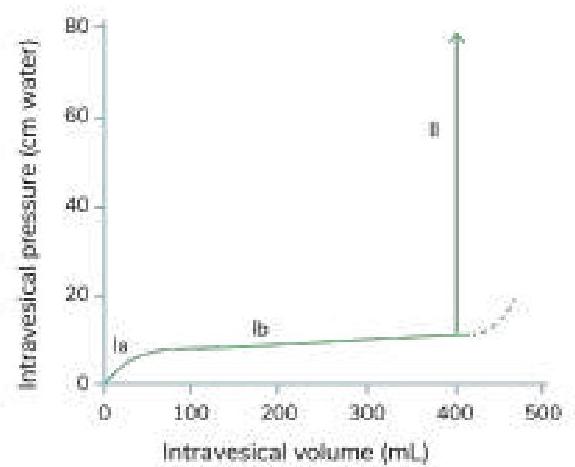
1 questionsWhich of the following statements is true regarding the given cystometrogram?

NEET-PG 2022 - Physiology NEET-PG Practice Questions and MCQs
Question 71: Which of the following statements is true regarding the given cystometrogram?
- A. Segment Ib reflects the bladder's ability to accommodate increasing volume without a significant rise in pressure. (Correct Answer)
- B. Micturition occurs in segment II; failure to micturate is not characteristic of this segment.
- C. Segment Ia represents the initial phase of bladder filling, not residual urine.
- D. The dotted line represents a reference point, not the occurrence of micturition.
Explanation: ***Segment Ib reflects the bladder's ability to accommodate increasing volume without a significant rise in pressure.*** - Segment Ib typically represents the **storage phase** of the bladder, where the detrusor muscle relaxes allowing for significant increases in volume with only a small increase in intravesical pressure. - This property is known as **compliance** and is crucial for normal bladder function, preventing premature urgency and high-pressure storage. - This is the **most clinically significant characteristic** that defines normal bladder function. *Micturition occurs in segment II; failure to micturate is not characteristic of this segment.* - While this statement is technically true, segment II represents the **micturition phase** with rapid rise in intravesical pressure as the detrusor contracts. - The statement is correct but less specific about the key functional property being tested in a cystometrogram. *Segment Ia represents the initial phase of bladder filling, not residual urine.* - This statement is also technically true; segment Ia represents the **initial filling phase** where the bladder begins to distend from baseline. - However, this is a basic anatomical description rather than a functionally significant characteristic. *The dotted line represents a reference point, not the occurrence of micturition.* - The dotted line typically shows a further increase in intravesical pressure, indicating **maximal pressure** the bladder can withstand or continued voiding attempt against resistance. - Segment II (solid line with rapid pressure increase) is where micturition actively occurs, making this a true but less significant observation.