Anatomy
1 questionsIdentify the type of cartilage shown in the image.
NEET-PG 2022 - Anatomy NEET-PG Practice Questions and MCQs
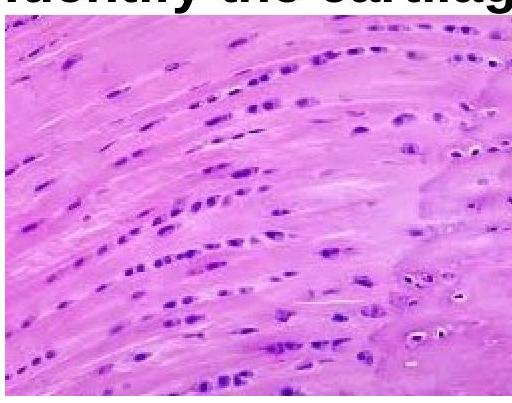
Question 31: Identify the type of cartilage shown in the image.
- A. Hyaline cartilage
- B. Elastic cartilage
- C. Dense connective tissue
- D. Fibrocartilage (Correct Answer)
Explanation: ***Fibrocartilage*** - The image displays **chondrocytes** arranged in rows between bundles of **collagen fibers**, characteristic of fibrocartilage. This structure provides high tensile strength and shock absorption. - Unlike other cartilage types, fibrocartilage lacks a distinct perichondrium and is found in structures requiring extreme strength, such as intervertebral discs and menisci. *Hyaline cartilage* - Hyaline cartilage has an amorphous, **glassy matrix** with chondrocytes typically arranged in small groups (isogenous groups) within lacunae, without prominent collagen bundles. - It is found in articular surfaces, tracheal rings, and the costal cartilages, providing smooth, low-friction surfaces. *Elastic cartilage* - Elastic cartilage is characterized by a high concentration of **elastic fibers** within its matrix, giving it flexibility and resilience. - Chondrocytes are typically scattered and the matrix stains darker due to the elastic fibers, which are not apparent in the image. *Dense connective tissue* - While dense connective tissue contains abundant **collagen fibers**, it lacks chondrocytes in lacunae, instead containing fibroblasts. - The presence of chondrocytes in the image confirms this is cartilage, not dense connective tissue.
Anesthesiology
1 questionsIdentify the mask used for patients requiring high concentrations of oxygen.

NEET-PG 2022 - Anesthesiology NEET-PG Practice Questions and MCQs
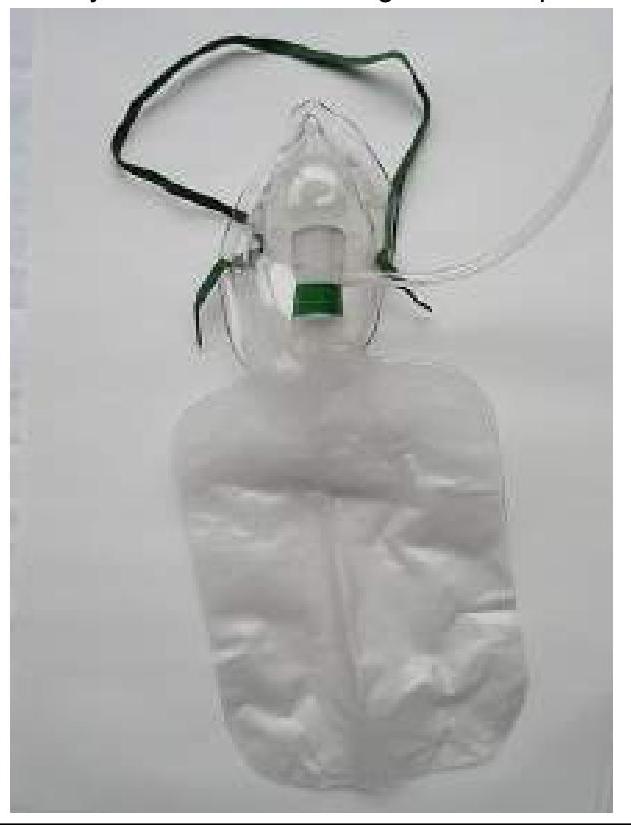
Question 31: Identify the mask used for patients requiring high concentrations of oxygen.
- A. Hudson mask
- B. Nebulizer
- C. Non-rebreathing mask (Correct Answer)
- D. Venturi mask
Explanation: ***Non-rebreathing mask*** - The **non-rebreathing mask** delivers the **highest concentration of oxygen** (FiO2 60-90%) among standard oxygen masks due to a one-way valve that prevents exhaled air from returning to the reservoir bag and ensures only pure oxygen is inhaled. - It is identifiable by the **reservoir bag** which fills with oxygen and one-way valves. *Hudson mask* - The **Hudson mask**, also known as a simple face mask, delivers a **moderate concentration of oxygen (FiO2 35-50%)** and does not have the reservoir bag or one-way valves seen in the image. - It is used for patients requiring a higher oxygen concentration than nasal cannulae, but less than a non-rebreather. *Nebulizer* - A **nebulizer** is a device used to administer medication in the form of a **mist**, typically for respiratory conditions, not primarily for administering high concentrations of oxygen. - While it can be oxygen-driven, its primary function is drug delivery, not oxygen concentration. *Venturi mask* - The **Venturi mask** delivers **precise and consistent concentrations of oxygen (FiO2 24-60%)** through interchangeable jets, which are not visible in the depicted mask. - It is used when precise control over oxygen delivery is crucial, such as in patients with **COPD**.
Biochemistry
2 questionsWhich of the following helps in the transport of fatty acids across the inner mitochondrial membrane?
An adolescent male patient presents to you with exercise intolerance. He gives a history of developing cramps on exertion. Which of the following enzyme deficiencies could be the cause?
NEET-PG 2022 - Biochemistry NEET-PG Practice Questions and MCQs
Question 31: Which of the following helps in the transport of fatty acids across the inner mitochondrial membrane?
- A. Acyl carrier protein
- B. Carnitine (Correct Answer)
- C. Lecithin-cholesterol acyltransferase
- D. Carnitine and albumin
Explanation: ***Carnitine*** - **Carnitine** plays a crucial role in transporting long-chain fatty acids from the **cytosol** into the **mitochondrial matrix** for beta-oxidation. - It acts as a shuttling molecule, forming **acylcarnitine** which can cross the inner mitochondrial membrane via the **carnitine-acylcarnitine translocase**. *Acyl carrier protein* - **Acyl carrier protein (ACP)** is primarily involved in **fatty acid synthesis** in the cytoplasm, not in the transport of fatty acids into mitochondria for degradation. - It carries acyl groups during the elongation reactions of fatty acid synthesis. *Lecithin-cholesterol acyltransferase* - **Lecithin-cholesterol acyltransferase (LCAT)** is an enzyme found in plasma that catalyzes the formation of **cholesterol esters**, which are then transported by lipoproteins. - It is involved in **cholesterol metabolism** and reverse cholesterol transport, not in the mitochondrial transport of fatty acids. *Carnitine and albumin* - While **carnitine** is essential for mitochondrial fatty acid transport, **albumin** transports fatty acids in the blood plasma, from adipose tissue to other tissues. - Albumin does not transport fatty acids across the inner mitochondrial membrane; its role is extra-mitochondrial and related to systemic transport.
Question 32: An adolescent male patient presents to you with exercise intolerance. He gives a history of developing cramps on exertion. Which of the following enzyme deficiencies could be the cause?
- A. Myophosphorylase (Correct Answer)
- B. Hexokinase
- C. Glucose-6-phosphatase
- D. Hepatic glycogen phosphorylase
Explanation: ***Myophosphorylase*** - A deficiency in **myophosphorylase** (McArdle's disease, Glycogen Storage Disease Type V) impairs muscle glycogen breakdown, leading to **exercise intolerance** and **muscle cramps** due to insufficient ATP production during exertion. - Patients often experience a "second wind" phenomenon where symptoms improve after resting, as free fatty acids become an alternative fuel source. *Hexokinase* - A deficiency in **hexokinase** would affect the first step of glycolysis, impacting glucose phosphorylation in all tissues, not specifically causing exercise-induced muscle cramps. - This deficiency is rare and typically presents with **hemolytic anemia** due to impaired erythrocyte metabolism. *Glucose-6-phosphatase* - A deficiency in **glucose-6-phosphatase** (Von Gierke's disease, Glycogen Storage Disease Type Ia) primarily affects the liver and kidneys, leading to **fasting hypoglycemia**, lactic acidosis, and hepatomegaly, not exercise intolerance. - Muscle glycogen metabolism is unaffected in this condition. *Hepatic glycogen phosphorylase* - A deficiency in **hepatic glycogen phosphorylase** (Hers' disease, Glycogen Storage Disease Type VI) mainly causes **hepatomegaly** and **mild hypoglycemia** because the liver cannot effectively mobilize its glycogen stores. - **Muscle glycogen metabolism** remains normal, so exercise intolerance and cramps are not characteristic symptoms.
Internal Medicine
3 questionsA patient with a history of chronic liver disease presents with abdominal distension, jaundice, and pruritis. Ascitic fluid analysis revealed a neutrophil count >650 per cubic mm. What is the most likely diagnosis?

Which of the following is not seen in MEN 2B syndrome?
A patient presents to you with fever, night sweats, ptosis, and bilateral facial nerve palsy. Investigations showed leukocytosis and bilateral hilar lymphadenopathy. Which of the following is the most likely diagnosis?
NEET-PG 2022 - Internal Medicine NEET-PG Practice Questions and MCQs
Question 31: A patient with a history of chronic liver disease presents with abdominal distension, jaundice, and pruritis. Ascitic fluid analysis revealed a neutrophil count >650 per cubic mm. What is the most likely diagnosis?
- A. Spontaneous bacterial peritonitis (Correct Answer)
- B. Malignant ascites
- C. Tubercular ascites
- D. Intestinal obstruction
Explanation: ***Spontaneous bacterial peritonitis*** - The combination of **chronic liver disease**, **ascites**, and a significantly elevated ascitic fluid **neutrophil count (>250 cells/mm³ is diagnostic)**, in this case, >650 cells/mm³, is highly indicative of spontaneous bacterial peritonitis (SBP). - SBP is a common and serious complication in patients with **cirrhosis** and ascites, characterized by bacterial infection of ascitic fluid without an obvious source. *Malignant ascites* - While malignant ascites can occur in chronic liver disease (e.g., from hepatocellular carcinoma), the ascitic fluid analysis would typically show **cytology positive for malignant cells** and often a **low neutrophil count** unless secondarily infected. - The primary differentiator here is the very high neutrophil count suggesting an acute inflammatory/infectious process. *Tubercular ascites* - Tubercular ascites might present with ascites and abdominal distension, but the ascitic fluid analysis usually shows a **lymphocytic predominance** (high lymphocyte count) rather than a high neutrophil count. - Diagnosis typically involves **adenosine deaminase (ADA) levels**, acid-fast bacilli smear, or culture of ascitic fluid. *Intestinal obstruction* - Intestinal obstruction primarily causes **abdominal pain, distension, nausea, vomiting**, and constipation, with a clinical picture distinct from SBP. - While it can lead to ascites in rare cases (e.g., from bowel ischemia or perforation), the ascitic fluid would not characteristically show such a high neutrophil count unless there was associated perforation and peritonitis.
Question 32: Which of the following is not seen in MEN 2B syndrome?
- A. Mucosal neuroma
- B. Marfanoid habitus
- C. Parathyroid adenoma (Correct Answer)
- D. Megacolon
Explanation: ***Parathyroid adenoma*** - **Parathyroid adenomas**, leading to hyperparathyroidism, are characteristic of **MEN 2A syndrome**, not MEN 2B [1]. - While both MEN 2A and 2B involve mutations in the **RET proto-oncogene**, the specific clinical manifestations differ significantly. *Megacolon* - **Megacolon** (due to intestinal ganglioneuromatosis) is a recognized feature of **MEN 2B syndrome**. - This condition involves abnormal nerve ganglion cells in the intestine, leading to motility issues. *Mucosal neuroma* - **Mucosal neuromas** on the tongue, lips, and eyelids are a hallmark clinical sign of **MEN 2B syndrome**. - These benign growths are often one of the earliest and most recognizable features. *Marfanoid habitus* - **Marfanoid habitus**, characterized by a tall, slender build with long limbs and arachnodactyly, is a common physical finding in **MEN 2B syndrome**. - This connective tissue abnormality helps distinguish MEN 2B from other MEN syndromes.
Question 33: A patient presents to you with fever, night sweats, ptosis, and bilateral facial nerve palsy. Investigations showed leukocytosis and bilateral hilar lymphadenopathy. Which of the following is the most likely diagnosis?
- A. Sarcoidosis (Correct Answer)
- B. Tuberculosis
- C. Lymphoma
- D. Hypersensitive pneumonitis
Explanation: ***Sarcoidosis*** - The combination of **fever**, **night sweats**, **bilateral facial nerve palsy**, **ptosis**, and **bilateral hilar lymphadenopathy** is highly suggestive of **neurosarcoidosis** manifesting as Heerfordt's syndrome (uveoparotid fever) [1]. - **Leukocytosis** is a non-specific finding but can be present due to inflammatory processes in sarcoidosis. *Tuberculosis* - While tuberculosis can cause **fever**, **night sweats**, and **hilar lymphadenopathy** [2] [3], it is less likely to present with **bilateral facial nerve palsy** and **ptosis** simultaneously. - Pulmonary tuberculosis often shows specific patterns like **apical infiltrates** or cavitations, rather than solely bilateral hilar lymphadenopathy, especially without other classic symptoms like productive cough. *Lymphoma* - Lymphoma can cause **fever**, **night sweats**, and **lymphadenopathy** (including hilar) [4]. - However, **bilateral facial nerve palsy** and **ptosis** are not typical primary manifestations of lymphoma and would require other evidence of direct mass effect or widespread infiltration. *Hypersensitive pneumonitis* - This condition is characterized by **inflammation of the lung alveoli** and small airways due to repeated exposure to inhaled antigens, leading to symptoms like cough, dyspnea, and fever. - It typically does **not cause neurological symptoms** such as facial nerve palsy or ptosis, nor is it prominently associated with hilar lymphadenopathy.
Pediatrics
1 questionsAn 11-year-old child with a history of streptococcal pharyngitis presents you with fever and arthralgia. There is no past history of rheumatic heart disease or features of carditis or valvular disease. How often is 600,000 IU of benzathine penicillin recommended for prophylaxis of rheumatic heart disease?
NEET-PG 2022 - Pediatrics NEET-PG Practice Questions and MCQs
Question 31: An 11-year-old child with a history of streptococcal pharyngitis presents you with fever and arthralgia. There is no past history of rheumatic heart disease or features of carditis or valvular disease. How often is 600,000 IU of benzathine penicillin recommended for prophylaxis of rheumatic heart disease?
- A. Immediately
- B. Thrice weekly lifelong
- C. Once in three weeks for 10 years or till the age of 25, whichever is longer
- D. Once in three weeks for 5 years or till the age of 18, whichever is longer (Correct Answer)
Explanation: ***Once in three weeks for 5 years or till the age of 18, whichever is longer*** - For patients with a history of **rheumatic fever** but **no carditis**, secondary prophylaxis with benzathine penicillin G is recommended for **5 years** or until **age 18**, whichever is longer. - The usual dose of benzathine penicillin G for children (under 27 kg) is **600,000 IU** intramuscularly every 3-4 weeks. *Immediately* - This option refers to the timing of initial treatment for **streptococcal pharyngitis**, not the duration or frequency of secondary prophylaxis. - Initiating antibiotic treatment immediately for acute strep throat prevents **acute rheumatic fever**, but long-term prophylaxis follows guidelines. *Thrice weekly lifelong* - This frequency is incorrect; secondary prophylaxis is typically given every **3-4 weeks**, not three times a week. - Lifelong prophylaxis is generally reserved for patients with severe **rheumatic heart disease** or those undergoing valve replacement, which is not the case here. *Once in three weeks for 10 years or till the age of 25, whichever is longer* - This duration is recommended for patients with **rheumatic fever with carditis but no residual heart disease**. - For patients with **carditis** and **residual heart disease**, prophylaxis is often extended for **10 years** or until **age 40**, or even lifelong in severe cases.
Pharmacology
2 questionsA patient presents to the emergency department with a history of ingestion of ten tablets of paracetamol. He has developed oliguria and liver function tests show deranged values. In the context of paracetamol overdose, which of the following can be used in the management of this condition?
A female patient presents to you with a unilateral headache. It is associated with nausea, photophobia, and phonophobia. What is the drug of choice for acute management?
NEET-PG 2022 - Pharmacology NEET-PG Practice Questions and MCQs
Question 31: A patient presents to the emergency department with a history of ingestion of ten tablets of paracetamol. He has developed oliguria and liver function tests show deranged values. In the context of paracetamol overdose, which of the following can be used in the management of this condition?
- A. N-acetylcysteine (Correct Answer)
- B. Dopamine
- C. Ursodeoxycholic acid
- D. Furosemide
Explanation: **Correct: N-acetylcysteine** - **N-acetylcysteine (NAC)** is the specific antidote for **paracetamol overdose**, working by replenishing **glutathione** stores in the liver. - Replenishing **glutathione** helps detoxify the toxic metabolite **N-acetyl-p-benzoquinone imine (NAPQI)**, preventing further **hepatic damage** and facilitating recovery in cases of **liver failure** and potential **renal damage** (oliguria). - Most effective when given within **8 hours** of ingestion, but remains beneficial even with **established hepatotoxicity** (as in this case with deranged LFTs). *Incorrect: Dopamine* - **Dopamine** is a **vasopressor** primarily used to increase **blood pressure** and **cardiac output** in conditions like **shock**. - While it might be used to support circulation in severe overdose complications, it does not directly treat the **paracetamol toxicity** itself. *Incorrect: Ursodeoxycholic acid* - **Ursodeoxycholic acid (UDCA)** is a **cholagogue** used in the management of **cholestatic liver diseases** (e.g., primary biliary cholangitis) by improving bile flow. - It has no role in the direct management of **acute liver failure** due to **paracetamol overdose**. *Incorrect: Furosemide* - **Furosemide** is a **loop diuretic** used to increase **urine output** in conditions like **fluid overload** or **heart failure**. - While **oliguria** is present, it is often a sign of **acute kidney injury** requiring supportive care, and furosemide would not address the underlying **toxic mechanism** of paracetamol.
Question 32: A female patient presents to you with a unilateral headache. It is associated with nausea, photophobia, and phonophobia. What is the drug of choice for acute management?
- A. Flunarizine
- B. Sumatriptan (Correct Answer)
- C. Propranolol
- D. Topiramate
Explanation: ***Sumatriptan*** - **Sumatriptan**, a **triptan**, is an effective abortive therapy for **acute migraine attacks** due to its selective serotonin 5-HT1B/1D receptor agonist action, leading to vasoconstriction and inhibition of neurogenic inflammation. - The symptoms described—**unilateral headache**, nausea, **photophobia**, and **phonophobia**—are classic features of migraine. *Flunarizine* - **Flunarizine** is a **calcium channel blocker** used for migraine **prophylaxis**, not for acute treatment. - It is typically prescribed for patients experiencing frequent or severe migraine attacks to reduce their incidence. *Propranolol* - **Propranolol** is a **beta-blocker** primarily used for migraine **prophylaxis**. - It helps prevent migraine attacks by modulating cerebral blood flow and neuronal excitability, but it is not effective for acute pain relief during an attack. *Topiramate* - **Topiramate** is an **antiepileptic drug** often used for migraine **prophylaxis**. - It works by various mechanisms, including altering neurotransmitter activity, but it does not provide acute symptomatic relief for an ongoing migraine attack.