Internal Medicine
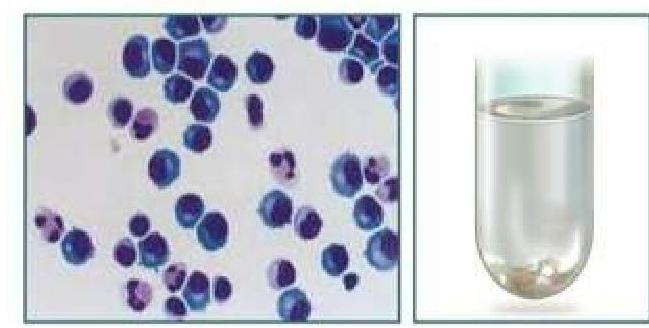
1 questionsWhich of the following is typically seen in cerebrospinal fluid (CSF) in tubercular meningitis?

NEET-PG 2022 - Internal Medicine NEET-PG Practice Questions and MCQs
Question 11: Which of the following is typically seen in cerebrospinal fluid (CSF) in tubercular meningitis?
- A. Low sugar
- B. High protein
- C. Low opening pressure (Correct Answer)
- D. Lymphocytic Pleocytosis
Explanation: ***Low opening pressure*** - While **elevated opening pressure** is common in tubercular meningitis due to inflammation and impaired CSF absorption, **low opening pressure** is not a typical finding. - Low opening pressure can occur with conditions like **CSF leak** or **spinal tap headache**, which are not directly characteristic of tubercular meningitis. *Low sugar* - **Low CSF glucose** (hypoglycorrhachia) is highly characteristic of bacterial and tubercular meningitis, as the bacteria or mycobacteria consume glucose. - The **CSF-to-blood glucose ratio** is typically less than 0.4 in tubercular meningitis. *High protein* - **Elevated CSF protein** is a consistent finding in tubercular meningitis, resulting from inflammation, increased vascular permeability, and breakdown of the blood-brain barrier. - Protein levels often range from **100-500 mg/dL** or even higher. *Lymphocytic Pleocytosis* - **Lymphocytic pleocytosis** (increased lymphocytes in CSF) is a hallmark of tubercular meningitis, although early stages might show a mixed cellular response. - The cell count typically ranges from **100-500 cells/µL**, predominantly lymphocytes.
Obstetrics and Gynecology
2 questionsWhen in labor, a diagnosis of occipito-posterior presentation is made. The most appropriate management would be:
After 3rd stage of labour and expulsion of placenta, the patient is bleeding heavily. Ideal management would include all except:
NEET-PG 2022 - Obstetrics and Gynecology NEET-PG Practice Questions and MCQs
Question 11: When in labor, a diagnosis of occipito-posterior presentation is made. The most appropriate management would be:
- A. Emergency CS
- B. Wait and watch for progress of labor (Correct Answer)
- C. Early rupture of membranes
- D. Start oxytocin drip
Explanation: ***Wait and watch for progress of labor*** - Many **occipito-posterior (OP) presentations** will spontaneously rotate to an occipito-anterior (OA) position with ongoing contractions, especially in multiparous women. - Close monitoring of fetal well-being and labor progress is essential, but immediate intervention is not always required. *Emergency CS* - An emergency cesarean section is typically reserved for cases where there is **fetal distress**, **failure to progress** after a reasonable period of observation, or other clear obstetric indications. - An OP presentation alone, without complications, does not warrant an immediate CS. *Early rupture of membranes* - While sometimes used to evaluate cervical dilation or apply a fetal scalp electrode, **early artificial rupture of membranes (AROM)** in OP presentation is not a definitive management strategy. - It may even increase the risk of cord prolapse or ascending infection without necessarily expediting rotation. *Start oxytocin drip* - **Oxytocin augmentation** may be considered if contractions are inadequate and labor is prolonged, but it's not the first-line management for OP presentation itself. - It should only be initiated after assessing the power, passage, and passenger, and ensuring there are no contraindications to augmentation.
Question 12: After 3rd stage of labour and expulsion of placenta, the patient is bleeding heavily. Ideal management would include all except:
- A. Check for laceration of labia
- B. Uterine massage and I/V oxytocin
- C. APGAR scoring (Correct Answer)
- D. Check for placenta in uterus
Explanation: ***APGAR scoring*** - **APGAR scoring** assesses the newborn's health immediately after birth and is not a management step for **postpartum hemorrhage**. - This intervention would divert critical attention from the mother's life-threatening bleeding. *Check for placenta in uterus* - **Retained placental fragments** are a common cause of **postpartum hemorrhage**, obstructing uterine contraction. - Checking for and removing any retained placenta is a crucial and immediate management step to control bleeding. *Check for laceration of labia* - **Lacerations of the birth canal**, including the labia, vagina, or cervix, can cause significant bleeding after delivery, even with a well-contracted uterus. - Identifying and repairing these lacerations is an essential part of managing **postpartum hemorrhage not due to atony**. *Uterine massage and I/V oxytocin* - **Uterine atony** (failure of the uterus to contract) is the most common cause of **postpartum hemorrhage**. - **Uterine massage** helps stimulate contraction, and **intravenous oxytocin** is a uterotonic agent used to promote uterine contraction and reduce bleeding.
Orthopaedics
1 questionsWhich type of supracondylar fracture of the femur is classified as extra-articular?
NEET-PG 2022 - Orthopaedics NEET-PG Practice Questions and MCQs
Question 11: Which type of supracondylar fracture of the femur is classified as extra-articular?
- A. Type B
- B. Type C
- C. Type A (Correct Answer)
- D. Type D
Explanation: ***Type A*** - **Type A supracondylar fractures** are defined as those that do not involve the joint surface, making them **extra-articular**. - These fractures typically occur proximal to the condyles without extending into the knee articulation. *Type B* - **Type B supracondylar fractures** are considered **partial articular**, meaning they involve only a portion of the articular surface. - While they affect the joint, they are not completely intra-articular in nature. *Type C* - **Type C supracondylar fractures** are classified as **complete articular** fractures. - This type implies that the fracture line extends through the entire joint surface and separates the articular segment from the metaphysis. *Type D* - The classification of supracondylar femoral fractures generally uses A, B, and C types to denote extra-articular, partial articular, and complete articular involvement, respectively. - **Type D** is not a standard classification used to define an extra-articular supracondylar femoral fracture in common orthopedic systems like the Orthopaedic Trauma Association (OTA) classification.
Pathology
1 questionsWhat is the cell of origin of B-cell Acute Lymphoblastic Leukemia (B-ALL)?
NEET-PG 2022 - Pathology NEET-PG Practice Questions and MCQs
Question 11: What is the cell of origin of B-cell Acute Lymphoblastic Leukemia (B-ALL)?
- A. T cells
- B. Immature B cells (Correct Answer)
- C. Immature T cells
- D. Both T & B cells
Explanation: ***Immature B cells*** - B acute lymphoblastic leukemia (B ALL) is primarily derived from the **malignant transformation of precursor B lymphocytes** [1]. - The disease is characterized by the presence of **immature B cell blasts** in the bone marrow and peripheral blood [1]. *T cells* - T cells are involved in a different lineage of leukemia known as T-ALL, not B ALL [1]. - The pathophysiology of B ALL specifically relates to **B cell precursors**, not T cell involvement. *Both T & B cells* - This option is incorrect as B ALL specifically originates from **B cell lineage**, and T cells are unrelated to its pathogenesis [1]. - The presence of both T and B cells together characterizes mixed lineage leukemias, which is not the case here. *Immature T cells* - Immature T cells are precursors for **T acute lymphoblastic leukemia (T-ALL)**, not for B ALL [1]. - B ALL does not involve T cell precursors; the focus is solely on **immature B cells** [1]. **References:** [1] Kumar V, Abbas AK, et al.. Robbins and Cotran Pathologic Basis of Disease. 9th ed. Diseases of White Blood Cells, Lymph Nodes, Spleen, and Thymus, pp. 596-600.
Pharmacology
1 questionsWhich of the following is NOT a mechanism of action of theophylline in bronchial asthma?
NEET-PG 2022 - Pharmacology NEET-PG Practice Questions and MCQs
Question 11: Which of the following is NOT a mechanism of action of theophylline in bronchial asthma?
- A. Adenosine receptor antagonism
- B. Increased histone deacetylation
- C. Phosphodiesterase inhibition
- D. Beta-2 receptor stimulation (Correct Answer)
Explanation: ***Beta-2 receptor stimulation*** - Theophylline is a **non-selective phosphodiesterase inhibitor** and an **adenosine receptor antagonist**, but it does not directly stimulate beta-2 receptors. - **Beta-2 receptor agonists** like salbutamol or formoterol are the medications that work by stimulating these receptors to cause bronchodilation. *Phosphodiesterase inhibition* - Theophylline inhibits **phosphodiesterase enzymes**, leading to an increase in intracellular **cAMP** levels. - This increase in **cAMP** promotes bronchodilation by relaxing airway smooth muscle. *Adenosine receptor antagonism* - Theophylline acts as an antagonist at **adenosine receptors**, particularly A1 and A2B. - Antagonism of adenosine receptors can reduce bronchoconstriction and inflammatory mediator release, contributing to its anti-asthmatic effects. *Increased histone deacetylation* - Theophylline, particularly at lower concentrations, increases the activity of **histone deacetylase (HDAC)**. - This action helps to **repress inflammatory gene expression**, which is a unique anti-inflammatory mechanism separate from its bronchodilatory effects.
Physiology
1 questionsSome cells secrete chemicals into the extracellular fluid that act on cells in the same tissue. Which of the following refers to this type of regulation?
NEET-PG 2022 - Physiology NEET-PG Practice Questions and MCQs
Question 11: Some cells secrete chemicals into the extracellular fluid that act on cells in the same tissue. Which of the following refers to this type of regulation?
- A. Neural
- B. Endocrine
- C. Neuroendocrine
- D. Paracrine (Correct Answer)
Explanation: ***Paracrine*** - **Paracrine signaling** involves chemical messengers, or **paracrine factors**, that act on **neighboring cells** within the **same tissue** without entering the bloodstream. - This type of regulation is crucial for local communication and coordination, such as in wound healing or immune responses. *Neural* - **Neural regulation** involves communication via **neurons** that transmit **electrical signals** (action potentials) and release **neurotransmitters** at synapses. - Neurotransmitters act on target cells, which can be distant from the neuron, for rapid and precise responses throughout the body. *Endocrine* - **Endocrine regulation** involves glands that secrete **hormones** directly into the **bloodstream**, which then travel to distant target cells in other tissues or organs. - This form of signaling leads to widespread and long-lasting effects, such as growth regulation or metabolic control. *Neuroendocrine* - **Neuroendocrine regulation** is a hybrid system where specialized **neurons** (neurosecretory cells) release **hormones** into the **bloodstream**, rather than releasing neurotransmitters into a synapse. - An example is the hypothalamus secreting ADH and oxytocin, which act on distant target organs.
Surgery
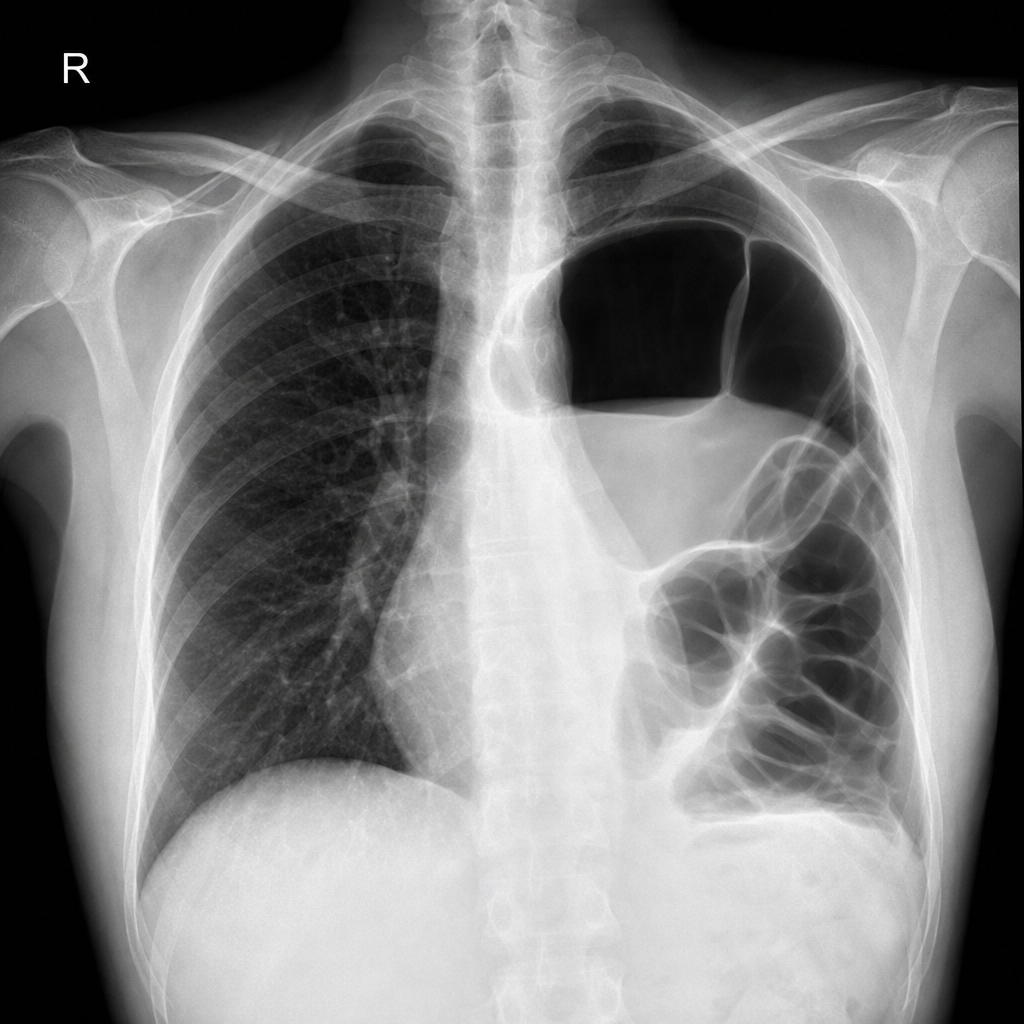
3 questionsWhich of the following is a primary aim of damage control laparotomy?
What type of wound is characterized by the scraping away of the skin?
What is the preferred method for removing a foreign body from the lung in children?
NEET-PG 2022 - Surgery NEET-PG Practice Questions and MCQs
Question 11: Which of the following is a primary aim of damage control laparotomy?
- A. Arrest hemorrhage and control contamination. (Correct Answer)
- B. Control contamination
- C. Prevent coagulopathy
- D. Arrest hemorrhage
Explanation: ***Arrest hemorrhage and control contamination.*** * The overarching goal of a **damage control laparotomy** is to rapidly address immediate life threats, primarily **hemorrhage** and **bowel contamination**, in severely injured, unstable patients. * This approach prioritizes patient survival by performing essential steps quickly, deferring definitive repairs until the patient is physiologically stable. *Control contamination* * While **controlling contamination** is a critical component of damage control laparotomy, it is not the sole primary aim. * Uncontrolled bleeding, even without contamination, can rapidly lead to death in a trauma patient. *Prevent coagulopathy* * Preventing **coagulopathy** is an important consideration during damage control, but it is a consequence of uncontrolled hemorrhage and hypothermia, rather than a primary surgical aim in the initial damage control phase. * The surgical steps in damage control directly address the sources of bleeding and contamination. *Arrest hemorrhage* * **Arresting hemorrhage** is indeed a primary aim, but it is often accompanied by the need to control contamination from injured hollow organs. * Many abdominal trauma cases involve both significant bleeding and potential contamination.
Question 12: What type of wound is characterized by the scraping away of the skin?
- A. Superficial wound
- B. Tear in the skin
- C. Abrasion (Correct Answer)
- D. Deep tissue injury
Explanation: ***Abrasion*** - An **abrasion** is a wound caused by the **scraping or rubbing away of the superficial layers of the skin** (epidermis and sometimes superficial dermis). - It typically results from a fall or friction against a rough surface, common in children's scraped knees or elbows. *Superficial wound* - This is a **general term** and does not specifically describe the mechanism of injury as scraping. - A superficial wound could be a **minor cut or scratch** that doesn't involve scraping. *Tear in the skin* - A **tear in the skin** refers to a **laceration**, which is a wound caused by tearing of soft body tissue, often resulting in irregular edges. - This is distinct from the scraping action characteristic of an abrasion, where tissue is rubbed away rather than torn. *Deep tissue injury* - A **deep tissue injury (DTI)** is a **pressure-related injury** characterized by intact skin with **discoloration** (e.g., maroon or purple) or a blood-filled blister due to damage of underlying soft tissue. - It is not caused by external scraping and involves deeper tissue layers affected by prolonged pressure.
Question 13: What is the preferred method for removing a foreign body from the lung in children?
- A. Rigid bronchoscopy (Correct Answer)
- B. Chest x-ray
- C. Flexible endoscopy
- D. Direct laryngoscopy
Explanation: ***Rigid bronchoscopy*** - **Rigid bronchoscopy** is the preferred method for removing foreign bodies from the lung in children due to its ability to provide better air control, magnified viewing, and larger working channels for robust grasping tools. - It allows for complete ventilation control and isolation of the airway, which is crucial in children where airway obstruction can rapidly lead to respiratory compromise. *Chest x-ray* - A **chest x-ray** is a diagnostic tool used to identify the presence and location of a foreign body, but it is not a method for removal. - Many foreign bodies, especially non-radiopaque ones like food, may not be visible on an x-ray, making it unreliable for definitive diagnosis of presence or absence. *Flexible endoscopy* - While **flexible bronchoscopy** can be used for foreign body removal in some adults or specific situations, it is generally less effective and carries higher risks in children, especially for larger or lodged objects. - Its smaller working channels and less stable airway control make it less suitable for urgent and complete removal in the pediatric population. *Direct laryngoscopy* - **Direct laryngoscopy** is used to visualize the larynx and vocal cords, primarily to remove foreign bodies from the upper airway or intubate, but not typically for removal of foreign bodies lodged deep within the main bronchi or lungs. - It does not offer direct access or visualization of the lower bronchial tree where most aspirated foreign bodies in children tend to lodge.