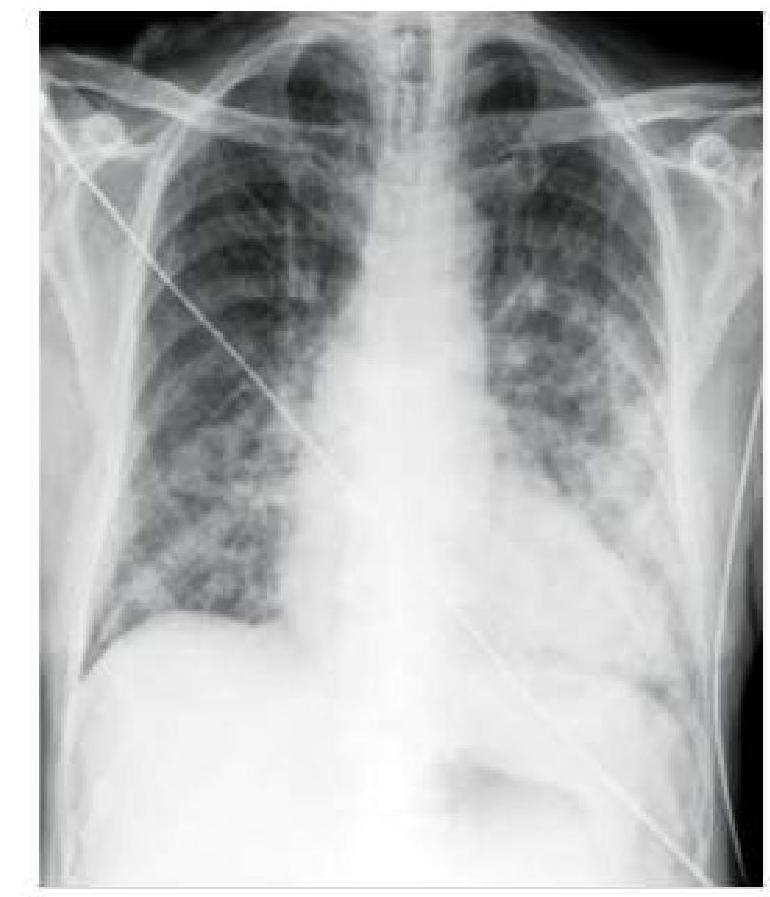
A male patient presents to the emergency department. The arterial blood gas report is as follows: pH, 7.2; pCO2, 81 mmHg; and HCO3, 40 meq/L. Which of the following is the most likely diagnosis?
A patient diagnosed to be HIV-positive was started on highly active antiretroviral therapy (HAART). Which of the following can be used to monitor treatment efficacy?
Which of the following is most likely to be seen due to the rupture of a saccular aneurysm?
A male patient diagnosed with tuberculosis took complete treatment. Sputum examination was done after the completion of the intensive and the continuation phases. It was found to be negative. What is the status of the patient?
A woman presents to you with fever, arthralgia, ulcers, fatigue for the past six months, and new-onset hematuria. Urine examination reveals RBC casts and proteinuria. What is the likely diagnosis?
A patient with diabetes mellitus for the past 5 years presents with vomiting and abdominal pain. She is non-compliant with medication and appears dehydrated. Investigations revealed a blood sugar value of 500 mg/dl and the presence of ketone bodies. What is the next best step in management of this patient?
A woman with recurrent diarrhea is prescribed a broad-spectrum antibiotic. Which of the following statements is not true regarding Clostridium difficile infection?
A female patient presented with fatigue and a history of piles. Routine complete blood count analysis showed hemoglobin of 9 g/dL, MCV 60fL, and RBC count of 5.2 million. A peripheral smear is provided. Which of the following is the next best investigation after the smear for this patient?

Which of the following is the MOST common complication of untreated hypertension?
What is the initial treatment for most patients with growth hormone-secreting pituitary adenoma?
NEET-PG 2022 - Internal Medicine NEET-PG Practice Questions and MCQs
Question 11: A male patient presents to the emergency department. The arterial blood gas report is as follows: pH, 7.2; pCO2, 81 mmHg; and HCO3, 40 meq/L. Which of the following is the most likely diagnosis?
- A. Respiratory alkalosis
- B. Metabolic acidosis
- C. Respiratory acidosis (Correct Answer)
- D. Metabolic alkalosis
Explanation: ***Respiratory acidosis*** - The **pH of 7.2** indicates **acidemia**, while the **elevated pCO2 (81 mmHg)** points to a primary respiratory problem [2]. - The elevated **HCO3 (40 meq/L)** suggests **renal compensation** attempting to buffer the increased carbonic acid [1]. *Respiratory alkalosis* - This condition presents with an **elevated pH (alkalemia)** and a **decreased pCO2**, which is opposite to the given ABG values [2]. - While there might be metabolic compensation with a decreased HCO3, the primary disturbance is an increase in respiratory rate leading to excessive CO2 exhalation. *Metabolic acidosis* - Metabolic acidosis is characterized by a **low pH** and a **low HCO3**, with a compensatory decrease in pCO2 [1]. - The given ABG shows a high HCO3, which rules out primary metabolic acidosis. *Metabolic alkalosis* - This condition would typically show an **elevated pH** and an **elevated HCO3**, with a compensatory increase in pCO2. - While both HCO3 and pCO2 are high in the given ABG, the low pH points to a primary acidosis, not alkalosis.
Question 12: A patient diagnosed to be HIV-positive was started on highly active antiretroviral therapy (HAART). Which of the following can be used to monitor treatment efficacy?
- A. CD4+ T cell count
- B. Viral load (Correct Answer)
- C. p24 antigen
- D. Viral serotype
Explanation: ***Viral load*** - **Viral load** (HIV RNA copies per milliliter of plasma) is the most direct and sensitive measure of HAART efficacy, as it indicates the amount of actively replicating virus [1]. - A successful HAART regimen aims to reduce the **viral load** to undetectable levels, signaling effective suppression of viral replication [1]. *CD4+ T cell count* - While important for monitoring immune status and disease progression, **CD4+ T cell count** changes more slowly than viral load [1]. - An increase in **CD4+ T cell count** is a positive sign of immune reconstitution but is a lagging indicator of immediate treatment efficacy [1]. *p24 antigen* - **p24 antigen** is a core structural protein of HIV, primarily detectable early in acute infection and in advanced stages when viral replication is very high. - It is generally not used for routine monitoring of HAART efficacy in chronic HIV infection because its levels fluctuate and become undetectable as the immune system produces antibodies. *Viral serotype* - **Viral serotype** refers to the specific strain or subtype of HIV (e.g., HIV-1 vs. HIV-2, or different clades within HIV-1). - It is determined at diagnosis to understand the specific virus but does not change significantly during the course of treatment and is not used to monitor HAART efficacy.
Question 13: Which of the following is most likely to be seen due to the rupture of a saccular aneurysm?
- A. Subdural hemorrhage
- B. Subarachnoid hemorrhage (Correct Answer)
- C. Intracerebral hemorrhage
- D. Hydrocephalus
Explanation: ***Subarachnoid hemorrhage*** - A **saccular aneurysm** (often a **berry aneurysm**) commonly ruptures into the **subarachnoid space**, causing bleeding around the brain [2]. - This leads to a sudden onset of a "thunderclap headache," **meningeal irritation**, and neurological deficits [1]. *Subdural hemorrhage* - A **subdural hemorrhage** is typically caused by the tearing of **bridging veins** between the dura and arachnoid mater, often due to **trauma** [3]. - While it can occur, it is a less common direct consequence of saccular aneurysm rupture compared to subarachnoid hemorrhage. *Intracerebral hemorrhage* - An **intracerebral hemorrhage** involves bleeding directly into the brain parenchyma, most often due to **hypertension** or **amyloid angiopathy**. - Although a ruptured aneurysm can rarely extend into the brain tissue, the primary initial bleeding is usually into the subarachnspace [4]. *Hydrocephalus* - **Hydrocephalus** can be a *complication* of a subarachnoid hemorrhage, resulting from impaired CSF reabsorption or obstruction of CSF flow due to blood clots. - However, it is not the *initial event* caused directly by the rupture of a saccular aneurysm [4].
Question 14: A male patient diagnosed with tuberculosis took complete treatment. Sputum examination was done after the completion of the intensive and the continuation phases. It was found to be negative. What is the status of the patient?
- A. Cured (Correct Answer)
- B. Treatment completed
- C. Lost to follow up
- D. Treatment failed
Explanation: ***Cured*** - A patient is declared **cured** if they have completed the full course of treatment and have achieved **two negative sputum smear results**, with one at the end of the intensive phase and another at the completion of the treatment [1]. - This indicates that the **infection has been eradicated**, and the patient is no longer infectious. *Treatment completed* - This status applies when a patient has **completed the full treatment course** but does not have documented sputum smear results that meet the criteria for "cured." - While treatment was completed, the **bacteriological status is not confirmed** in the same way as for a cured patient. *Lost to follow up* - This term describes a patient who was **enrolled in treatment but was interrupted** for a specific period (e.g., two consecutive months or more) and their outcome cannot be determined. - They **ceased to attend follow-up appointments** and their treatment completion or success is unknown. *Treatment failed* - This status is assigned when a patient remains **sputum smear-positive at the end of the intensive phase** or at the end of the treatment, or if they initially converted to negative but later became positive again [1]. - It signifies that the **treatment regimen was ineffective** in eradicating the infection.
Question 15: A woman presents to you with fever, arthralgia, ulcers, fatigue for the past six months, and new-onset hematuria. Urine examination reveals RBC casts and proteinuria. What is the likely diagnosis?
- A. Acute interstitial nephritis
- B. Poststreptococcal glomerulonephritis
- C. Lupus nephritis (Correct Answer)
- D. IgA nephropathy
Explanation: ***Lupus nephritis*** - The combination of **fever, arthralgia, oral ulcers, and fatigue** lasting for six months is highly suggestive of **systemic lupus erythematosus (SLE)** [1]. - The new-onset **hematuria, proteinuria, and RBC casts** indicate **glomerulonephritis**, which is a common and serious renal manifestation of SLE, known as lupus nephritis [2]. *Acute interstitial nephritis* - Characterized by acute kidney injury, often following exposure to **medications** (e.g., NSAIDs, antibiotics) or infections. - Typically presents with sterile pyuria, eosinophilia, and white cell casts, not hemorrhagic urine and RBC casts. *Poststreptococcal glomerulonephritis* - Occurs **1-3 weeks after a streptococcal infection** (e.g., pharyngitis, impetigo) and presents with acute nephritic syndrome. - While it causes hematuria and proteinuria, the prolonged systemic symptoms (arthralgia, ulcers, fatigue) and the absence of a recent streptococcal infection make it less likely. *IgA nephropathy* - Often presents with **recurrent episodes of gross hematuria**, usually developing within days of an upper respiratory tract infection. - It does not typically present with the broad array of systemic symptoms like chronic fever, arthralgia, and oral ulcers seen in this patient.
Question 16: A patient with diabetes mellitus for the past 5 years presents with vomiting and abdominal pain. She is non-compliant with medication and appears dehydrated. Investigations revealed a blood sugar value of 500 mg/dl and the presence of ketone bodies. What is the next best step in management of this patient?
- A. Intravenous fluids
- B. Intravenous insulin
- C. Intravenous fluids with regular insulin (Correct Answer)
- D. Intravenous fluids with long-acting insulin
Explanation: Detailed management of diabetic ketoacidosis (DKA) requires both fluid resuscitation and insulin therapy. ***Intravenous fluids with regular insulin*** - The patient presents with classic signs of **diabetic ketoacidosis (DKA)**: hyperglycemia (blood sugar 500 mg/dl), ketone bodies, dehydration, and a history of diabetes non-compliance [1]. - Initial management for DKA involves aggressive **intravenous fluid resuscitation** to correct dehydration and then **intravenous regular insulin** to lower blood glucose and resolve ketosis [2]. *Intravenous fluids with long-acting insulin* - While fluids are essential, **long-acting insulin** is not appropriate for the acute management of DKA because its slow onset of action makes it inefficient for rapidly correcting hyperglycemia and ketosis. - **Regular insulin** is preferred as it has a quicker onset and shorter duration, allowing for more precise titration in an acute setting [2]. *Intravenous fluids* - Although crucial for correcting **dehydration** and improving renal perfusion, fluids alone will not address the underlying **insulin deficiency** and **ketosis** that define DKA. - Without insulin, the body will continue to produce ketones, exacerbating acidosis [3]. *Intravenous insulin* - Giving intravenous insulin without prior or concomitant **fluid resuscitation** can be dangerous, as it can worsen **hypovolemia** and potentially lead to circulatory collapse by shifting glucose and potassium into cells. - It is critical to first restore **circulating volume** before initiating insulin therapy [2].
Question 17: A woman with recurrent diarrhea is prescribed a broad-spectrum antibiotic. Which of the following statements is not true regarding Clostridium difficile infection?
- A. Pseudomembrane is a layer of inflammatory debris
- B. Oral fidaxomicin is used for treatment
- C. It is toxin mediated
- D. IgM assay is used to confirm the diagnosis of Clostridium difficile infection. (Correct Answer)
Explanation: ***IgM assay is used to confirm the diagnosis of Clostridium difficile infection*** - An **IgM assay** is **not** the standard or recommended method for diagnosing *Clostridium difficile* infection (CDI). - Diagnosis typically relies on detecting **toxins (A and B)** in stool samples through antigen-based tests, PCR, or enzyme immunoassays [1]. *Oral fidaxomicin is used for treatment* - **Fidaxomicin** is an **oral macrolide antibiotic** specifically approved and highly effective for treating *C. difficile* infection, especially recurrent cases. - It works by inhibiting bacterial RNA polymerase, leading to bactericidal activity against *C. difficile* with minimal systemic absorption. *It is toxin mediated* - The pathogenicity of *C. difficile* is primarily mediated by its **exotoxins, Toxin A (enterotoxin)** and **Toxin B (cytotoxin)** [1]. - These toxins cause mucosal inflammation, increased permeability, and cell death in the colon, leading to the characteristic symptoms of CDI. *Pseudomembrane is a layer of inflammatory debris* - **Pseudomembranes** are a hallmark pathological feature of severe *C. difficile* colitis, visible during colonoscopy [1]. - They consist of an inflammatory exudate composed of **necrotic epithelial cells, fibrin, neutrophils, and mucus**, forming raised yellow-white plaques on the colonic mucosa.
Question 18: A female patient presented with fatigue and a history of piles. Routine complete blood count analysis showed hemoglobin of 9 g/dL, MCV 60fL, and RBC count of 5.2 million. A peripheral smear is provided. Which of the following is the next best investigation after the smear for this patient?
- A. HbA2 levels
- B. Serum ferritin levels (Correct Answer)
- C. Serum folate levels
- D. Serum homocysteine levels
Explanation: ***Serum ferritin levels*** - The **low hemoglobin** and **low MCV (microcytic anemia)** indicate a likely iron deficiency, commonly assessed by serum ferritin levels [1]. - The patient's **history of piles** suggests possible gastrointestinal bleeding, further pointing to the need for iron studies. *Serum folate levels* - Typically evaluated in cases of **macrocytic anemia**, which is not indicated here due to a **low MCV**. - Folate deficiency leads to larger, immature red cells, contrasting the findings of microcytic anemia in this patient. *Serum homocysteine levels* - While elevated levels can indicate **vitamin B12 or folate deficiency**, they are not specific for iron deficiency anemia. - The current presentation does not suggest deficiencies of B12 or folate, making this test less relevant. *HbA2 levels* - Useful in diagnosing **beta-thalassemia**, but not indicated in the context of evident **microcytic anemia** and fatigue without hemolysis or family history [1]. - The patient's profile does not align with thalassemia, thus making this investigation unnecessary. **References:** [1] Cross SS. Underwood's Pathology: A Clinical Approach. 6th ed. Common Clinical Problems From Blood And Bone Marrow Disease, pp. 590-591.
Question 19: Which of the following is the MOST common complication of untreated hypertension?
- A. Stroke (Correct Answer)
- B. Kidney damage
- C. Heart failure
- D. Vision loss
Explanation: ***Stroke*** - **Untreated hypertension** is a major risk factor for both **ischemic** and **hemorrhagic strokes**, damaging blood vessels in the brain [1]. - Sustained high blood pressure can lead to **atherosclerosis** and weakened blood vessel walls, increasing the likelihood of a stroke [1]. *Heart failure* - While hypertension is a leading cause of **heart failure**, it typically develops over a longer period as the heart works harder against elevated pressure, leading to remodeling and dysfunction [2]. - In terms of acute, severe complications, a stroke is often considered more immediately catastrophic. *Kidney damage* - **Hypertensive nephropathy** is a significant long-term complication where high blood pressure damages the small blood vessels in the kidneys, impairing their function. - This process is gradual and contributes to **chronic kidney disease**, but stroke often emerges as a more common and acute serious event. *Vision loss* - **Hypertensive retinopathy** involves damage to the blood vessels in the retina, which can lead to vision problems including **vision loss** or **blindness**. - This is a serious complication, but **stroke** generally has a higher prevalence and more immediate impact in terms of overall morbidity and mortality associated with untreated hypertension.
Question 20: What is the initial treatment for most patients with growth hormone-secreting pituitary adenoma?
- A. Transphenoidal surgical resection (Correct Answer)
- B. Somatostatin analogs
- C. Dopamine agonists
- D. GH receptor antagonists
Explanation: ***Transphenoidal surgical resection*** - This is the **preferred initial treatment** for most growth hormone (GH)-secreting pituitary adenomas, as it offers the best chance for **cure** and rapid reduction in GH levels [1]. - Success rates are high, especially for **smaller tumors** (microadenomas), and it can quickly relieve mass effect symptoms [1]. *Somatostatin analogs* - These are typically used as **second-line therapy** if surgery is unsuccessful or contraindicated, or in patients not surgical candidates. - They work by **inhibiting GH secretion** but do not usually achieve a complete cure like surgery. *GH receptor antagonists* - These medications, such as pegvisomant, **block the action of GH** at its receptor, normalizing IGF-1 levels. - They are primarily used when other treatments, including surgery and somatostatin analogs, have failed to control GH excess. *Dopamine agonists* - While dopamine agonists (e.g., cabergoline) can **sometimes reduce GH secretion** in a minority of patients, they are significantly less effective for GH-secreting tumors compared to prolactinomas [1]. - They are occasionally used as **adjunctive therapy** or in specific cases where the GH-secreting tumor also co-secretes prolactin [1].