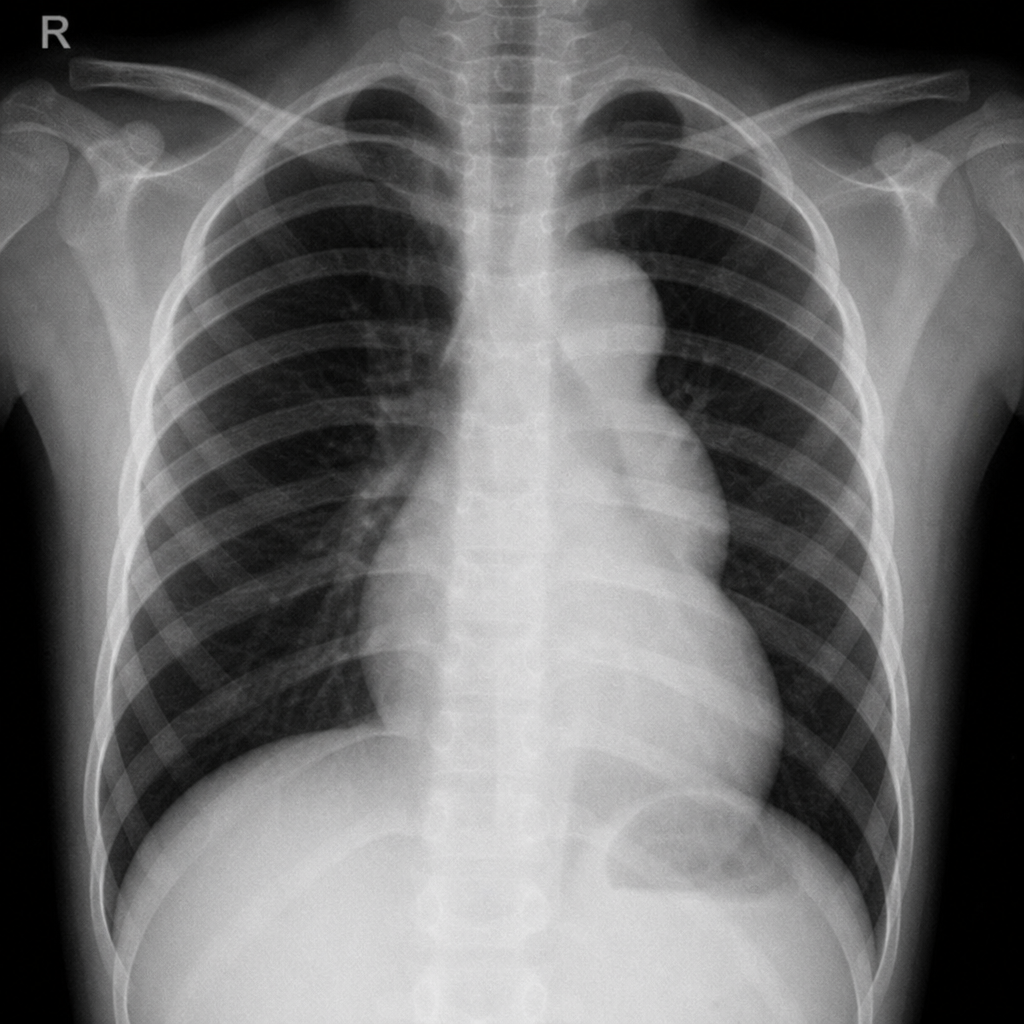
Which of the following is a FALSE statement regarding radiation?
A patient of Scleroderma presents with acute respiratory distress. Chest X-ray shows B/L reticular basilar shadows. What is the next line of investigation in this patient?
Which radiotherapy technique involves the use of remote afterloading to deliver radiation directly to the tumor?
A female patient with clinical symptoms of systemic sclerosis presents with shortness of breath and bilateral basal rales. Her chest X-ray showed reticular opacities in bilateral basal fields. What is the next best step?
A 55 year old woman diagnosed with ca cervix stage IIb is advised for chemoradiation. Which of the following is the true statement regarding radiation use?
Cancer patient undergoes radiotherapy, pick the true statement for radiosensitivity of tissues?
NEET-PG 2020 - Radiology NEET-PG Practice Questions and MCQs
Question 11: Which of the following is a FALSE statement regarding radiation?
- A. GI mucosa is one of the most radiosensitive tissues in the body
- B. Rapidly dividing cells are highly sensitive to Radiation
- C. Small blood vessels are relatively resistant to radiation compared to other tissues (Correct Answer)
- D. The intensity of Radiation is inversely proportional to the square of distance from the source
Explanation: ***Small blood vessels are relatively resistant to radiation compared to other tissues*** - This statement is **false**. Endothelial cells of **small blood vessels** are highly sensitive to radiation, and their damage contributes significantly to late radiation effects like **fibrosis** and **tissue necrosis**. - **Vascular damage** is a critical factor in the pathogenesis of radiation injury to normal tissues, making this statement incorrect. *GI mucosa is one of the most radiosensitive tissues in the body* - This statement is **true**. The **gastrointestinal mucosa** consists of rapidly dividing cells (e.g., crypt cells), which makes it highly vulnerable to radiation-induced damage. - This high sensitivity explains common side effects like **nausea, vomiting**, and **diarrhea** in patients undergoing abdominal or pelvic radiation. *Rapidly dividing cells are highly sensitive to Radiation* - This statement is **true**. Tissues with a high proliferative rate, such as **bone marrow, germinal cells**, and **GI epithelium**, are particularly susceptible to radiation damage. - This principle, known as the **Law of Bergonié and Tribondeau**, states that cells are more radiosensitive if they are undifferentiated, have a long mitotic future, and divide rapidly. *The intensity of Radiation is inversely proportional to the square of distance from the source* - This statement is **true**. This is the **inverse square law**, which applies to electromagnetic radiation and dictates that the intensity (and thus dose rate) of radiation decreases rapidly as the distance from the source increases. - This principle is fundamental in **radiation protection** and **dosimetry**, as it explains why maintaining distance is an effective shielding strategy.
Question 12: A patient of Scleroderma presents with acute respiratory distress. Chest X-ray shows B/L reticular basilar shadows. What is the next line of investigation in this patient?
- A. High resolution CT to characterize the lung parenchyma. (Correct Answer)
- B. Pulmonary function tests to assess lung function.
- C. Contrast-enhanced CT scan for vascular assessment.
- D. Echocardiography to evaluate cardiac complications.
Explanation: ***High resolution CT*** - A **high-resolution CT (HRCT) scan** is the gold standard for evaluating **interstitial lung disease (ILD)**, which is commonly seen in **scleroderma** and presents with basilar reticular shadows on chest X-ray. - HRCT provides detailed images of the lung parenchyma, allowing for accurate characterization of the **fibrotic changes** and extent of ILD. *Pulmonary function tests to assess lung function.* - **Pulmonary function tests (PFTs)** provide functional information about lung capacity and gas exchange but do not offer detailed anatomical imaging of the lung parenchyma. - While essential for monitoring disease progression and severity, PFTs are not the primary diagnostic tool to further characterize the **reticular basilar shadows** seen on X-ray in an acute setting. *Contrast-enhanced CT scan for vascular assessment.* - A **contrast-enhanced CT scan** is primarily used to assess **vascular structures** or rule out conditions like **pulmonary embolism**, which is not directly indicated by the description of bilateral reticular basilar shadows. - The primary concern here is **interstitial lung disease**, which is best evaluated by **HRCT** without contrast. *Echocardiography to evaluate cardiac complications.* - **Echocardiography** is used to assess cardiac function and look for complications like **pulmonary hypertension** or **myocardial fibrosis**, which can occur in scleroderma. - However, it does not directly evaluate the **lung parenchyma** or the cause of the reticular basilar shadows.
Question 13: Which radiotherapy technique involves the use of remote afterloading to deliver radiation directly to the tumor?
- A. Brachytherapy (Correct Answer)
- B. External Beam Radiotherapy
- C. Stereotactic Radiotherapy
- D. Proton Beam Radiotherapy
Explanation: ***Correct: Brachytherapy*** - **Remote afterloading** is a hallmark of modern brachytherapy, where radioactive sources are automatically advanced into catheters placed within or near the tumor. - This technique allows for the delivery of a **high dose of radiation directly to the tumor** while sparing surrounding healthy tissues. - Examples include **intracavitary** (cervical cancer), **interstitial** (prostate cancer), and **intraluminal** (esophageal cancer) brachytherapy. *Incorrect: External Beam Radiotherapy* - This technique involves delivering radiation from a machine **outside the body** to target a tumor. - It does not involve the direct placement of radioactive sources within the patient or the use of **remote afterloading**. *Incorrect: Stereotactic Radiotherapy* - While a precise form of external beam radiotherapy using focused beams, it still involves an **external source** of radiation. - It does not utilize internal radioactive sources or **afterloading techniques**. *Incorrect: Proton Beam Radiotherapy* - This is an advanced form of external beam radiotherapy that uses **protons instead of photons** to deliver radiation with high precision. - It does not involve the placement of radioactive sources within the patient or the use of **remote afterloading**.
Question 14: A female patient with clinical symptoms of systemic sclerosis presents with shortness of breath and bilateral basal rales. Her chest X-ray showed reticular opacities in bilateral basal fields. What is the next best step?
- A. Do 2D echocardiography
- B. Do Pulmonary Function Test
- C. Do CECT
- D. Do HRCT (Correct Answer)
Explanation: ***Do HRCT*** - **High-resolution computed tomography (HRCT)** is the gold standard for evaluating **interstitial lung disease (ILD)**, a common and serious complication of systemic sclerosis, characterized by **reticular opacities** seen on chest X-ray. - HRCT provides detailed images of the lung parenchyma, allowing for accurate characterization of ILD patterns (e.g., usual interstitial pneumonia and non-specific interstitial pneumonia) and assessment of disease extent and severity, which is crucial for determining prognosis and guiding treatment. *2D echocardiography* - This test is primarily used to assess **cardiac function** and evaluate for conditions like **pulmonary hypertension** or **congestive heart failure**, which can cause shortness of breath. - While pulmonary hypertension can be associated with systemic sclerosis, the **reticular opacities** and **basal rales** on chest X-ray strongly point towards a primary lung parenchymal pathology, making HRCT a more direct and immediate diagnostic step for the observed lung findings. *Do Pulmonary Function Test* - **Pulmonary function tests (PFTs)** measure lung volumes, airflow, and gas exchange and are essential for quantifying the extent of lung impairment in conditions like ILD. - While PFTs are crucial for monitoring disease progression and response to therapy, they do not provide the detailed anatomical information needed for the initial diagnosis and characterization of the **interstitial lung changes** suggested by the chest X-ray, which is better served by HRCT. *Do CECT* - **Contrast-enhanced computed tomography (CECT)** is primarily used to evaluate for **vascular abnormalities**, **masses**, or **lymphadenopathy** within the chest. - While it can provide some information about lung parenchyma, **contrast** is not typically necessary or beneficial for the initial assessment of **interstitial lung disease (ILD)** and may even pose risks if the patient has renal impairment, making HRCT a more appropriate choice for this specific clinical presentation.
Question 15: A 55 year old woman diagnosed with ca cervix stage IIb is advised for chemoradiation. Which of the following is the true statement regarding radiation use?
- A. Rapidly proliferating cells are less affected by radiation
- B. The small bowel is not significantly affected by radiation
- C. Dose/Intensity of radiation is inversely proportional to the square of distance of source (Correct Answer)
- D. Small blood vessels are unaffected by radiation
Explanation: ***Dose/Intensity of radiation is inversely proportional to the square of distance of source*** - This statement accurately describes the **inverse square law** which governs radiation intensity. As the distance from the radiation source increases, the dose or intensity of radiation decreases proportionally to the square of that distance. - This principle is crucial in **radiation safety** and treatment planning to ensure appropriate dose delivery and minimize exposure to non-target tissues. *Rapidly proliferating cells are less affected by radiation* - This is incorrect; **rapidly proliferating cells** are generally **more sensitive to radiation** because radiation primarily targets cells undergoing division, causing DNA damage. - Tissues with high cellular turnover, like bone marrow and gastrointestinal lining, are highly susceptible to radiation-induced damage. *The small bowel is not significantly affected by radiation* - This is incorrect; the **small bowel** is one of the most **radiosensitive organs** due to its rapidly proliferating epithelial cells. - Radiation to the abdomen and pelvis, common in cervical cancer treatment, frequently causes symptoms such as **nausea, vomiting, diarrhea**, and long-term complications like enteritis and strictures. *Small blood vessels are unaffected by radiation* - This is incorrect; **small blood vessels**, particularly the **endothelium**, are quite susceptible to radiation damage. - Radiation can cause **endothelial cell swelling**, damage, and sclerosis, leading to vascular insufficiency, fibrosis, and impaired tissue healing.
Question 16: Cancer patient undergoes radiotherapy, pick the true statement for radiosensitivity of tissues?
- A. GI mucosa is one of the most radioresistant tissues in the body
- B. Rapidly dividing cells are resistant to radiation
- C. Small blood vessels are radiosensitive tissues (Correct Answer)
- D. The intensity of radiation is inversely proportional to the square of distance from the source
Explanation: ***Small blood vessels are radiosensitive tissues*** - **Endothelial cells** lining small blood vessels are actively dividing and have a relatively short lifespan, making them susceptible to radiation-induced damage. - Damage to these vessels can lead to **fibrosis** and **tissue hypoxia**, contributing to late radiation effects. *GI mucosa is one of the most radioresistant tissues in the body* - The **GI mucosa** is one of the **most radiosensitive** tissues due to its rapid cell turnover and high proliferative capacity, leading to symptoms like mucositis and diarrhea after radiation. - The constant renewal of epithelial cells makes them highly vulnerable to the **cytotoxic effects** of radiation. *Rapidly dividing cells are resistant to radiation* - **Rapidly dividing cells**, such as those in the bone marrow, GI crypts, and hair follicles, are generally **most sensitive** to radiation. - This forms the basis of radiation therapy, as cancer cells often have a higher proliferative rate than many normal tissues, making them a target. *The intensity of radiation is inversely proportional to the square of distance from the source* - This statement describes the **inverse square law** for radiation intensity, which is true, but it is a principle of radiation physics, not a statement about the radiosensitivity of tissues. - The inverse square law dictates how radiation dose **attenuates with distance**, which is critical for dose calculation but not directly about biological radiosensitivity.