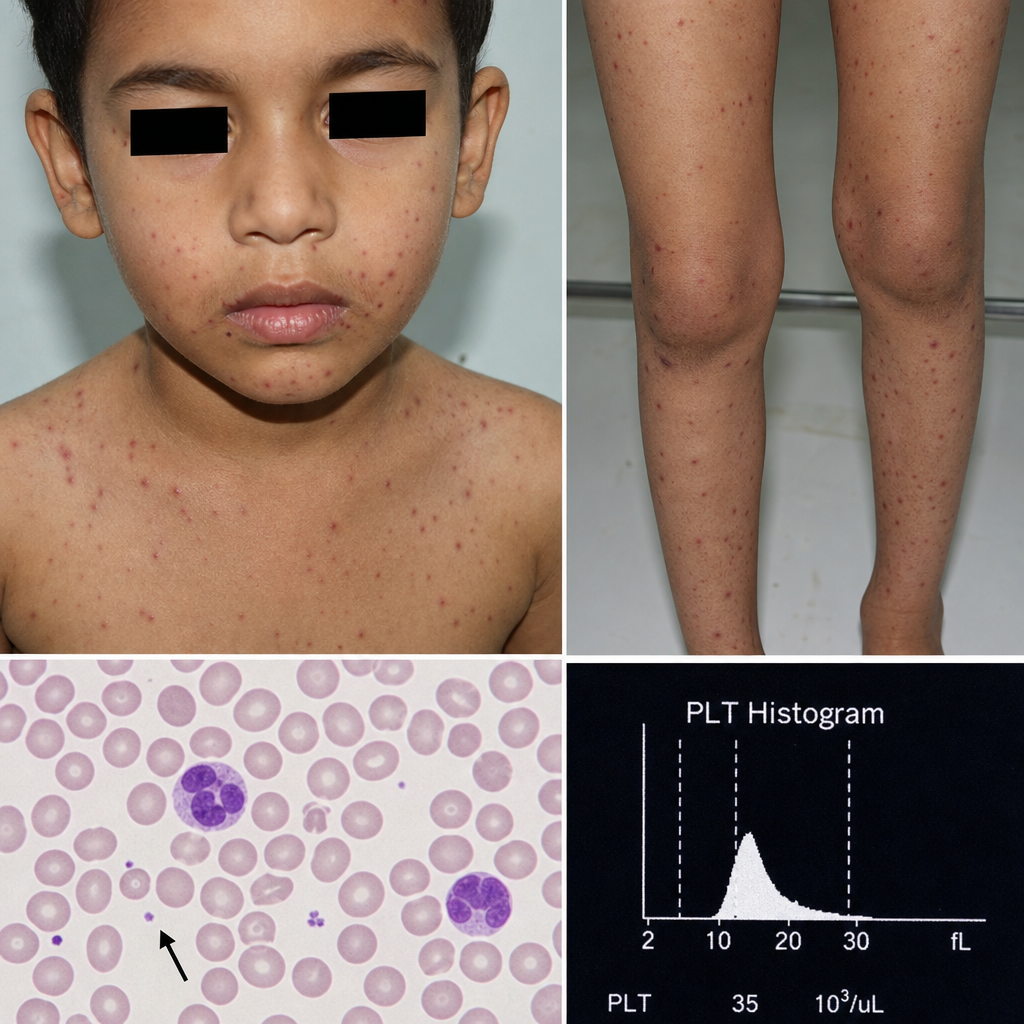
A 5-year-old unvaccinated child presents to the OPD with fever, red eyes, and a maculopapular rash. What is the most likely complication associated with this condition?
A 3-year-old boy presents with fever, throat pain, and difficulty swallowing. On examination, there is unilateral tonsillar swelling with deviation of the uvula. What is the most likely diagnosis?
A 24 month child, with a weight of 11 kg, has RR of 38 / min, chest indrawing, cough and fever. Management according to IMNCI?
A 5-year-old child is having acute liver failure. Which one of the following criteria is not included in the King's College criteria?
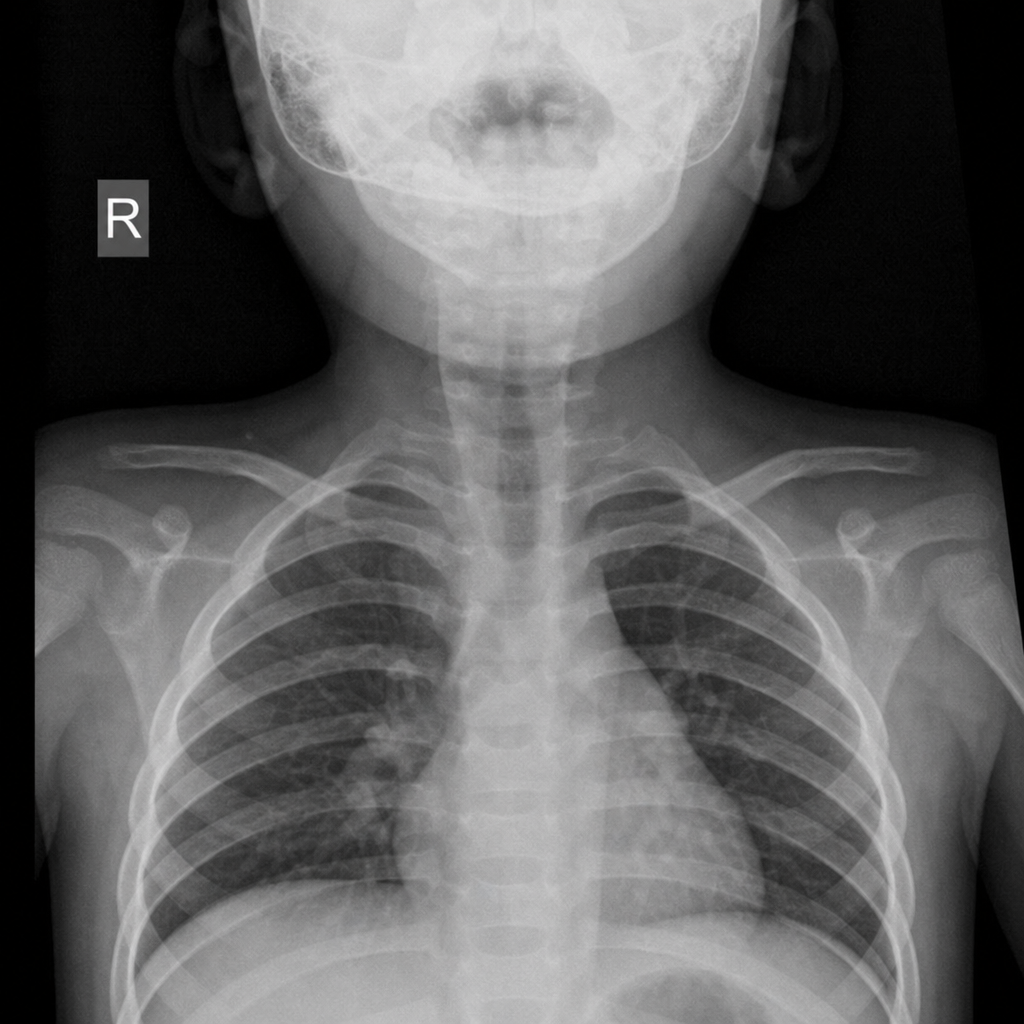
Pulmonary plethora in a child presenting with cyanosis, is seen in?
A newborn baby presented with a failure to pass meconium in the immediate postnatal period. The pediatrician also notices visible yet ineffective peristalsis, and abdominal distention. A radiological contrast enema demonstrated a narrow conical segment and a dilated proximal bowel. A diagnosis of Hirschsprung disease was made. Which of the following is a cause of the condition in the patient?
NEET-PG 2020 - Pediatrics NEET-PG Practice Questions and MCQs
Question 11: A 5-year-old unvaccinated child presents to the OPD with fever, red eyes, and a maculopapular rash. What is the most likely complication associated with this condition?
- A. Acute myocarditis
- B. Acute nephritis
- C. Acute orchitis
- D. Pneumonia (Correct Answer)
Explanation: ***Pneumonia*** - **Pneumonia** is the **most common and most likely complication of measles**, occurring in approximately **1-6% of measles cases** - The clinical presentation of **fever, red eyes (conjunctivitis), and maculopapular rash** in an **unvaccinated child** is classic for **measles (rubeola)** - Pneumonia may be due to **direct viral pneumonitis** from measles virus or **secondary bacterial infection** (most commonly *Streptococcus pneumoniae*, *Staphylococcus aureus*, or *Haemophilus influenzae*) - It is a major cause of **measles-related mortality**, particularly in young children and immunocompromised individuals *Acute myocarditis* - **Acute myocarditis** is an extremely rare complication of measles - While myocardial involvement can theoretically occur with severe viral infections, it is **not a recognized characteristic or common complication** of measles - This is not the most likely complication when compared to pneumonia, otitis media, or diarrhea *Acute nephritis* - **Acute nephritis** is not a characteristic complication of measles - It is more commonly associated with **post-streptococcal glomerulonephritis** following Group A Streptococcus infection - Kidney involvement in measles is not a well-documented or common complication *Acute orchitis* - **Acute orchitis** is a recognized complication of **mumps** virus infection, particularly in post-pubertal males (occurring in 20-30% of infected males) - It is **not associated with measles infection** - This is a classic distractor testing knowledge of viral exanthems and their specific complications
Question 12: A 3-year-old boy presents with fever, throat pain, and difficulty swallowing. On examination, there is unilateral tonsillar swelling with deviation of the uvula. What is the most likely diagnosis?
- A. Parapharyngeal abscess
- B. Ludwig's angina
- C. Peritonsillar abscess (Correct Answer)
- D. Retropharyngeal abscess
Explanation: ***Peritonsillar abscess*** - This is the most common deep neck infection and typically presents with **unilateral tonsillar swelling**, **uvular deviation**, fever, and severe sore throat with difficulty swallowing (dysphagia) or speaking (muffled voice). - It usually develops as a complication of **acute tonsillitis**, where infection spreads from the tonsil into the peritonsillar space. *Parapharyngeal abscess* - While it can cause fever and severe throat pain, it typically presents with **trismus**, neck swelling below the angle of the mandible, and medial displacement of the lateral pharyngeal wall, rather than direct uvula deviation. - This type of abscess is located in the **parapharyngeal space**, which is lateral to the pharynx, and causes more diffuse swelling. *Ludwig's angina* - This is a rapidly spreading cellulitis of the **submandibular** and **sublingual spaces** and does not primarily involve the tonsils or cause uvular deviation. - Patients typically present with **symmetrical submental swelling**, painful swallowing, and tongue elevation, which can lead to airway obstruction. *Retropharyngeal abscess* - This abscess forms in the space behind the posterior pharyngeal wall and is more common in young children. - It often causes **neck stiffness**, muffled voice, stridor, and difficulty breathing, but less commonly presents with unilateral tonsillar swelling and uvular deviation.
Question 13: A 24 month child, with a weight of 11 kg, has RR of 38 / min, chest indrawing, cough and fever. Management according to IMNCI?
- A. Refer to a higher-level health facility for further management.
- B. Monitor at home without medical treatment.
- C. Give antibiotics (Correct Answer)
- D. Provide symptomatic treatment with antipyretics only.
Explanation: ***Give antibiotics*** - The child presents with **chest indrawing** along with cough and fever, which according to **IMNCI guidelines** classifies as **pneumonia**. - Note: RR of 38/min is **within normal limits** for a 24-month-old child (fast breathing threshold is ≥40/min for 12-59 months age group). - The diagnosis of pneumonia is based on the presence of **chest indrawing**, not fast breathing in this case. - According to **IMNCI**, pneumonia (without danger signs) should be treated with **oral antibiotics** (amoxicillin 250 mg twice daily for 5 days) at the primary care level. - The child should be followed up in 2 days and the mother advised on when to return immediately. *Refer to a higher-level health facility for further management.* - Referral is indicated for **severe pneumonia**, which requires presence of any **general danger sign** (inability to drink/breastfeed, persistent vomiting, convulsions, lethargy/unconsciousness, or stridor in calm child). - This child has **pneumonia** (not severe), so outpatient treatment with oral antibiotics is appropriate. *Monitor at home without medical treatment.* - This would be inappropriate as the child has **pneumonia** requiring antibiotic treatment. - Untreated pneumonia can rapidly progress to severe disease and is a **leading cause of child mortality** in developing countries. *Provide symptomatic treatment with antipyretics only.* - While antipyretics (paracetamol) can be given for fever, they do not treat the underlying **bacterial infection**. - Antibiotics are essential to treat pneumonia and prevent complications and mortality.
Question 14: A 5-year-old child is having acute liver failure. Which one of the following criteria is not included in the King's College criteria?
- A. Age < 11 years (Correct Answer)
- B. INR > 6.5
- C. Jaundice < 7 days before development of encephalopathy
- D. Bilirubin > 300 mmol/L
Explanation: ***Age < 11 years*** - Age is **NOT included** in the original King's College criteria for acute liver failure - King's College criteria are based on **biochemical parameters** (INR, bilirubin, pH, creatinine) and **clinical factors** (encephalopathy grade, jaundice-to-encephalopathy interval), not patient age - While **younger age may be a prognostic factor** in pediatric liver failure, it is not part of the formal King's College criteria used to predict poor prognosis or need for transplantation *INR > 6.5* - An **elevated INR > 6.5** (or PT > 100 seconds) is a **key criterion** in King's College criteria for non-paracetamol acute liver failure - Indicates severe **coagulopathy** and hepatic synthetic dysfunction - One of the most important predictors of poor outcome *Jaundice < 7 days before development of encephalopathy* - The **interval from jaundice to encephalopathy** is explicitly included in King's College criteria for non-paracetamol ALF - Jaundice to encephalopathy < 7 days = hyperacute (relatively better prognosis) - Jaundice to encephalopathy > 7 days = subacute (worse prognosis, indicates need for transplant) - This temporal relationship is a **critical prognostic indicator** *Bilirubin > 300 mmol/L* - **Serum bilirubin > 300 μmol/L** (17.5 mg/dL) is explicitly included in King's College criteria for non-paracetamol ALF - Indicates severe **cholestasis** and hepatocellular dysfunction - Part of the multi-parameter assessment for transplant listing
Question 15: Pulmonary plethora in a child presenting with cyanosis, is seen in?
- A. Coarctation of the aorta
- B. Total Anomalous Pulmonary Venous Connection (TAPVC) (Correct Answer)
- C. Tetralogy of Fallot (TOF)
- D. Tricuspid Atresia (TA)
Explanation: ***Total Anomalous Pulmonary Venous Connection (TAPVC)*** - In **non-obstructed TAPVC**, all pulmonary veins drain anomalously into the right atrium (or its tributaries) instead of the left atrium. - This causes **complete mixing of oxygenated pulmonary venous blood with deoxygenated systemic venous blood** in the right atrium → **cyanosis**. - Since an obligatory **atrial septal defect (ASD)** allows blood to reach the left heart, and there is **increased volume load on the right heart**, there is **increased pulmonary blood flow → pulmonary plethora** on chest X-ray. - Key point: **Obstructed TAPVC** causes pulmonary venous congestion and oligemia, NOT plethora. *Coarctation of the aorta* - **Coarctation of the aorta** is an **acyanotic** congenital heart disease involving systemic outflow obstruction. - It does **not cause cyanosis** unless there is differential cyanosis (lower body only) with a PDA and pulmonary hypertension causing right-to-left shunt. - Does not cause pulmonary plethora. *Tetralogy of Fallot (TOF)* - **Tetralogy of Fallot** presents with **cyanosis** due to right-to-left shunting through a VSD. - However, it has **pulmonary oligemia (decreased pulmonary blood flow)** due to right ventricular outflow tract obstruction and pulmonary stenosis. - Chest X-ray shows **boot-shaped heart** with decreased pulmonary vascular markings, NOT plethora. *Tricuspid Atresia (TA)* - **Tricuspid atresia** causes **cyanosis** due to obligatory right-to-left shunting at the atrial level. - Pulmonary blood flow is typically **decreased or normal** (depending on presence of VSD/PDA), NOT increased. - Does not typically cause pulmonary plethora.
Question 16: A newborn baby presented with a failure to pass meconium in the immediate postnatal period. The pediatrician also notices visible yet ineffective peristalsis, and abdominal distention. A radiological contrast enema demonstrated a narrow conical segment and a dilated proximal bowel. A diagnosis of Hirschsprung disease was made. Which of the following is a cause of the condition in the patient?
- A. Persistence of embryonic structures in the bowel wall
- B. Congenital obstruction due to external factors
- C. Failure of migration of neural crest cells (Correct Answer)
- D. Abnormal peristalsis due to neural dysfunction
Explanation: ***Failure of migration of neural crest cells*** - Hirschsprung disease is characterized by the **absence of ganglion cells** (specifically **Auerbach's and Meissner's plexuses**) in the distal bowel. - This aganglionosis results from the **failure of neural crest cells to migrate** completely into the intestinal wall during embryonic development. *Persistence of embryonic structures in the bowel wall* - This mechanism is associated with conditions like **Meckel's diverticulum**, where a remnant of the **vitelline duct** persists. - It does not explain the absence of ganglion cells or the functional obstruction seen in Hirschsprung disease. *Congenital obstruction due to external factors* - This would involve conditions such as an **annular pancreas**, **bands**, or **malrotation with volvulus**, creating a physical barrier. - Hirschsprung disease is a **functional obstruction** due to neuromuscular dysfunction, not an external compression or blockage. *Abnormal peristalsis due to neural dysfunction* - While there is abnormal peristalsis, the underlying cause is not just **"neural dysfunction"** in a general sense, but specifically the **absence of entire ganglion cell plexuses** within the bowel wall. - This option is too broad and doesn't pinpoint the precise developmental defect.