Dermatology
1 questionsElderly man with a long-standing mole on his face that is increasing in size and showing an irregular border. Diagnosis:
NEET-PG 2020 - Dermatology NEET-PG Practice Questions and MCQs
Question 51: Elderly man with a long-standing mole on his face that is increasing in size and showing an irregular border. Diagnosis:
- A. Superficial spreading melanoma
- B. Nodular melanoma
- C. Acral melanoma
- D. Lentigo maligna (Correct Answer)
Explanation: ***Lentigo maligna*** - This type of melanoma commonly affects **elderly individuals** and presents as a **slowly enlarging, irregularly bordered, flat or slightly raised pigmented lesion** on sun-exposed areas like the face. - It often has a **long radial growth phase** before progressing to invasive lentigo maligna melanoma. *Superficial spreading melanoma* - While common, it typically presents on the **trunk or extremities** and has a faster growth rate compared to lentigo maligna. - It often appears as a **flat, asymmetrical lesion with varied colors and irregular borders**, but the age and location details point away from this. *Nodular melanoma* - This is an **aggressive form** that grows vertically from the start, presenting as a **dark, raised, often ulcerated nodule** and typically has a shorter history of rapid growth. - It lacks the characteristic long-standing, flat growth pattern described in the elderly patient's face. *Acral melanoma* - This rare type occurs on the **palms, soles, or under the nails (subungual)**, not typically on the face. - It often appears as a **pigmented streak or patch** in these acral locations.
Internal Medicine
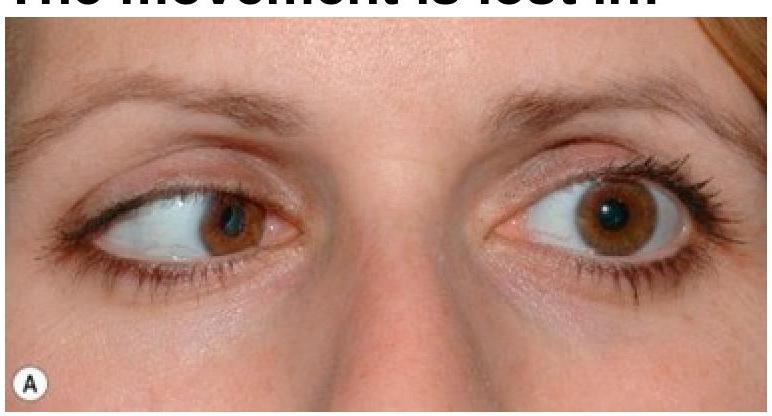
2 questionsIn trochlear palsy, which specific eye movement is lost?
Esophageal manometry was performed - it revealed panesophageal pressurization with distal contractile integrity as >450mm Hg pressure in the body. What will be the diagnosis?
NEET-PG 2020 - Internal Medicine NEET-PG Practice Questions and MCQs
Question 51: In trochlear palsy, which specific eye movement is lost?
- A. Upward gaze
- B. Lateral movement of the eye
- C. Downward gaze and inward rotation of the eye (Correct Answer)
- D. Facial expressions
Explanation: ***Downward gaze and inward rotation of the eye*** - Trochlear palsy affects the **superior oblique muscle**, which is primarily responsible for **downward gaze** and **intorsion** (inward rotation) of the eye, particularly when the eye is adducted. - Patients often present with **vertical diplopia** and a **head tilt** away from the affected side to compensate for the eye misalignment. *Upward gaze* - Upward gaze is primarily mediated by the **superior rectus muscle** (innervated by the oculomotor nerve) and the **inferior oblique muscle** (also oculomotor nerve). - Trochlear nerve palsy does not directly impair the muscles responsible for moving the eye upwards. *Lateral movement of the eye* - **Lateral movement** (abduction) of the eye is controlled by the **lateral rectus muscle**, which is innervated by the **abducens nerve (CN VI)**. - A loss of lateral movement would indicate an abducens nerve palsy, not a trochlear nerve palsy. *Facial expressions* - **Facial expressions** are controlled by the muscles of facial expression, which are innervated by the **facial nerve (CN VII)**. - This is unrelated to the cranial nerves involved in eye movement.
Question 52: Esophageal manometry was performed - it revealed panesophageal pressurization with distal contractile integrity as >450mm Hg pressure in the body. What will be the diagnosis?
- A. Type 2 achalasia
- B. Type 3 achalasia (Correct Answer)
- C. Jackhammer esophagus
- D. Type 1 achalasia (classic achalasia)
Explanation: The diagnosis is Type 3 achalasia. This condition is characterized by panesophageal pressurization, indicating diffuse, simultaneous contractions throughout the esophagus. The high distal contractile integrity (>450 mmHg pressure) further supports Type 3 achalasia, which involves significant spastic contractions. In contrast, while high-resolution manometry allows for the accurate classification of these motility abnormalities [1], other types present differently. Type 1 achalasia (classic achalasia) is marked by failed esophageal peristalsis and absent or minimal esophageal pressurization [1]. The primary characteristic is incomplete or absent lower esophageal sphincter (LES) relaxation, not hypercontractility [1]. Type 2 achalasia is identified by esophageal panesophageal pressurization (simultaneous contractions), but with normal to high contractile pressures, not the extremely high values seen here. Jackhammer esophagus involves hypercontractility (distal contractile integral >8000 mmHg·cm·s) and is characterized by rapid, repetitive, and fragmented contractions, rather than the diffuse panesophageal pressurization and spasticity typical of Type 3 achalasia [2].
Microbiology
1 questionsThe image of an immunoglobulin is shown below. Which type of immunoglobulin is it?

NEET-PG 2020 - Microbiology NEET-PG Practice Questions and MCQs
Question 51: The image of an immunoglobulin is shown below. Which type of immunoglobulin is it?
- A. Immunoglobulin A (IgA) (Correct Answer)
- B. Immunoglobulin G (IgG)
- C. Immunoglobulin M (IgM)
- D. Immunoglobulin E (IgE)
Explanation: ***Immunoglobulin A (IgA)*** - The image depicts two Y-shaped immunoglobulin monomers linked by a central purple component, which represents the **J-chain**, and enveloped by a yellow structure, which represents the **secretory component**. This **dimeric** structure with a secretory component is characteristic of secretory IgA. - **Secretory IgA** is primarily found in mucosal secretions such as saliva, tears, breast milk, and gastrointestinal fluids, where it plays a crucial role in **mucosal immunity** by preventing pathogen adhesion. *Immunoglobulin G (IgG)* - IgG exists as a **monomer** (single Y-shaped unit) in its functional form. - It is the most abundant immunoglobulin in serum and plays a major role in **secondary immune responses** and can cross the placenta. *Immunoglobulin M (IgM)* - In serum, IgM typically exists as a **pentamer**, meaning five Y-shaped units are joined together by a J-chain, forming a star-like structure. - It is the first antibody produced in a **primary immune response** and is effective in complement activation. *Immunoglobulin E (IgE)* - IgE exists as a **monomer** and is primarily associated with **allergic reactions** and defense against parasites. - It binds to receptors on mast cells and basophils, triggering immune responses upon allergen exposure.
Pediatrics
2 questionsWhat is the most serious complication of measles?
Which antibody is not transmitted from mother to baby?
NEET-PG 2020 - Pediatrics NEET-PG Practice Questions and MCQs
Question 51: What is the most serious complication of measles?
- A. Croup
- B. Otitis media
- C. Meningo-encephalitis
- D. Pneumonia (Correct Answer)
Explanation: ***Pneumonia*** - **Pneumonia**, particularly **giant cell pneumonia**, is the most common cause of **measles-related deaths** in young children. - It results from the **direct viral infection** of the lungs or a **secondary bacterial superinfection**. *Croup* - **Croup (laryngotracheobronchitis)** can be a complication of measles, but it is typically **less severe** and **less life-threatening** than pneumonia. - It primarily affects the **upper airways**, causing a barking cough and stridor. *Meningo-encephalitis* - **Meningo-encephalitis** is a serious, albeit **less common**, complication of measles, occurring in approximately 1 in 1,000 cases. - While potentially fatal or leading to neurological sequelae, it is **outranked by pneumonia** in terms of overall mortality attributed to measles. *Otitis media* - **Otitis media** (middle ear infection) is a common complication of measles, but it is generally **not life-threatening**. - It usually responds well to **antibiotic treatment** and rarely leads to severe outcomes.
Question 52: Which antibody is not transmitted from mother to baby?
- A. Tetanus IgG antibodies
- B. IgA antibodies (Correct Answer)
- C. Diphtheria IgG antibodies
- D. Measles IgG antibodies
Explanation: ***IgA antibodies*** - While IgA is found in breast milk and provides **passive immunity** to the infant's gastrointestinal tract, it is **not transferred across the placenta** to the fetus. - This antibody has a larger molecular structure and is primarily involved in **mucosal immunity**, making it unsuitable for transplacental transfer. *Diphtheria IgG antibodies* - **IgG antibodies**, including those for diphtheria, are actively transported across the **placenta** from mother to fetus during the third trimester. - This transfer provides the newborn with **passive immunity** against diphtheria during the first few months of life. *Tetanus IgG antibodies* - Similar to diphtheria IgG, **tetanus IgG antibodies** are efficiently transported across the **placenta** from mother to baby. - This offers crucial **passive protection** against tetanus, particularly important after birth. *Measles IgG antibodies* - **Measles IgG antibodies** from a vaccinated or previously infected mother cross the **placenta** to the fetus. - This maternal transfer provides temporary **passive immunity** to the newborn against measles.
Pharmacology
2 questionsWhich of the following drugs can be given in patients of primary pulmonary hypertension?
A patient diagnosed with Rheumatoid arthritis was on medications. After 2 years, he developed a blurring vision and was found to have corneal opacity. Which drug is most likely to cause this?
NEET-PG 2020 - Pharmacology NEET-PG Practice Questions and MCQs
Question 51: Which of the following drugs can be given in patients of primary pulmonary hypertension?
- A. Icatibant
- B. Bosentan (Correct Answer)
- C. Sodium nitroprusside
- D. Labetalol
Explanation: ***Bosentan*** - **Bosentan** is an **endothelin receptor antagonist** that blocks the vasoconstrictive and proliferative effects of endothelin-1, a key mediator in the pathogenesis of **pulmonary hypertension**. - It is an FDA-approved medication specifically used for the treatment of **pulmonary arterial hypertension (PAH)**, improving exercise capacity and delaying clinical worsening. *Icatibant* - **Icatibant** is a **bradykinin B2 receptor antagonist** used in the treatment of **hereditary angioedema**. - It has no known role or efficacy in the management of **primary pulmonary hypertension**. *Labetalol* - **Labetalol** is a **beta-blocker** with **alpha-1 adrenergic blocking activity** used primarily for systemic **hypertension** and **hypertensive emergencies**. - Beta-blockers are generally **contraindicated** in pulmonary hypertension as they can worsen right heart function and lead to clinical deterioration. *Sodium nitroprusside* - **Sodium nitroprusside** is a **direct arterial and venous vasodilator** used in hypertensive crises and severe heart failure by reducing both preload and afterload. - While it can lower systemic blood pressure, its use in pulmonary hypertension is **limited** due to the risk of **systemic hypotension** and the lack of selective pulmonary vasodilation compared to other agents.
Question 52: A patient diagnosed with Rheumatoid arthritis was on medications. After 2 years, he developed a blurring vision and was found to have corneal opacity. Which drug is most likely to cause this?
- A. Sulfasalazine
- B. Leflunomide
- C. Chloroquine (Correct Answer)
- D. Methotrexate
Explanation: ***Chloroquine*** - **Chloroquine (and hydroxychloroquine)** can accumulate in the **cornea**, leading to **corneal opacity** (vortex keratopathy or cornea verticillata) and **retinopathy**, manifesting as blurring vision. - While corneal changes are usually reversible upon discontinuation, the retinal toxicity, particularly **maculopathy** (bull's eye maculopathy), can be permanent and severe. *Sulfasalazine* - Common side effects include **gastrointestinal upset**, headache, skin rash, and **bone marrow suppression**. - It is not typically associated with **corneal opacity** or significant ocular toxicity. *Leflunomide* - Known for side effects such as **hepatotoxicity**, gastrointestinal issues (diarrhea), **alopecia**, and **hypertension**. - **Ocular side effects** like corneal opacity are not characteristic of leflunomide use. *Methotrexate* - Primary side effects include **bone marrow suppression**, **hepatotoxicity**, **mucositis**, and **pulmonary fibrosis**. - Although it can cause ocular side effects like **conjunctivitis**, it is not a common cause of **corneal opacity**.
Physiology
1 questionsA 35-year-old female experiences a tingling sensation in her arm after watching TV for long hours with her hands under her head. Which type of nerve fibers is most likely to be affected due to this position?
NEET-PG 2020 - Physiology NEET-PG Practice Questions and MCQs
Question 51: A 35-year-old female experiences a tingling sensation in her arm after watching TV for long hours with her hands under her head. Which type of nerve fibers is most likely to be affected due to this position?
- A. B - fibers (autonomic)
- B. C - fibers (pain and temperature)
- C. Sympathetic nerve fibers
- D. A-beta (Aβ) sensory nerve fibers (Correct Answer)
Explanation: ***A-beta (Aβ) sensory nerve fibers*** - The tingling sensation (paresthesia) described is a classic symptom of **A-beta fiber compression**. - **A-beta fibers** are large, myelinated sensory fibers that transmit light touch, pressure, vibration, and proprioception. - These fibers are **most susceptible to mechanical compression** due to their position and structure. - Positioning the hands under the head for extended periods compresses superficial nerves, causing temporary A-beta fiber dysfunction, which manifests as the characteristic "pins and needles" sensation. *B-fibers (autonomic)* - **B-fibers** are preganglionic autonomic fibers that mediate visceral functions, such as organ control and glandular secretions. - Compression of these fibers would lead to symptoms related to autonomic dysfunction (e.g., changes in sweating, blood pressure), not a tingling sensation in the arm. *C-fibers (pain and temperature)* - **C-fibers** are unmyelinated fibers that transmit slow, dull, aching pain and contribute to temperature sensation. - They are **less susceptible to compression** than larger myelinated fibers. - The primary sensation described (tingling/paresthesia) is characteristic of large myelinated fiber (A-beta) dysfunction, not C-fiber involvement. *Sympathetic nerve fibers* - **Sympathetic nerve fibers** regulate involuntary functions like heart rate, blood pressure, and sweating. - Their compression would cause symptoms such as changes in skin temperature, altered sweating, or blood vessel constriction (Horner's syndrome if severe), not a tingling sensation.
Radiology
1 questionsIdentify the condition in the X-ray given below:

NEET-PG 2020 - Radiology NEET-PG Practice Questions and MCQs
Question 51: Identify the condition in the X-ray given below:
- A. TGA
- B. TAPVC
- C. TOF (Correct Answer)
- D. Ebstein's anomaly
Explanation: ***TOF*** - The chest X-ray shows a **boot-shaped heart (coeur en sabot)**, which is highly characteristic of **Tetralogy of Fallot** due to right ventricular hypertrophy and pulmonary artery hypoplasia. - There is also **reduced pulmonary vascular markings** (oligemia), indicating decreased blood flow to the lungs, a typical finding in TOF. *TGA* - Transposition of the Great Arteries (TGA) typically presents with a **"egg-on-a-string" appearance** on chest X-ray, characterized by a narrow mediastinum and cardiomegaly, which is not seen here. - Pulmonary vascularity can be increased or normal in TGA, unlike the decreased vascularity observed in the image. *TAPVC* - Total Anomalous Pulmonary Venous Connection (TAPVC) usually shows a **"snowman" or "figure-of-8" heart** shadow on chest X-ray, due to enlarged SVC and innominate vein. - This condition is also associated with **increased pulmonary vascular markings** and often cardiomegaly, which are absent in the provided image. *Ebstein's anomaly* - Ebstein's anomaly is characterized by a **massively enlarged heart** on chest X-ray due to right atrial enlargement and tricuspid regurgitation. - It often shows **reduced pulmonary vascular markings** due to functional pulmonary stenosis, but the characteristic "boot shape" is not typically present.