Anatomy
2 questionsTumour of the uncinate process of the pancreas will compress which artery
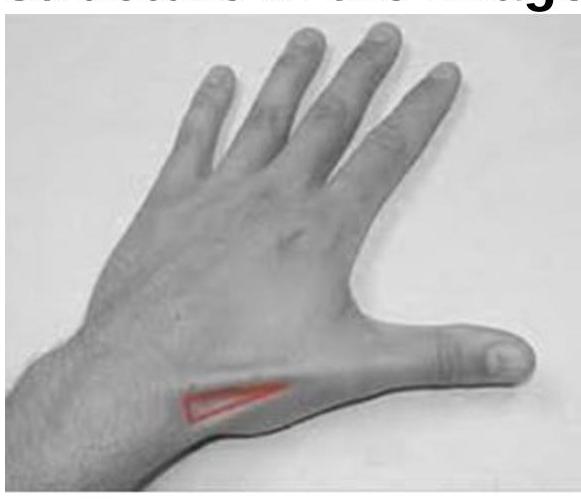
The image shows a highlighted region on the dorsal aspect of the hand (anatomical snuffbox). Which of the following anatomical structures form the boundaries or floor of this region?

NEET-PG 2020 - Anatomy NEET-PG Practice Questions and MCQs
Question 41: Tumour of the uncinate process of the pancreas will compress which artery
- A. Superior mesenteric artery (Correct Answer)
- B. Inferior mesenteric artery
- C. Common hepatic artery
- D. Splenic artery
Explanation: ***Superior mesenteric artery*** - The **uncinate process** forms the lower and medial part of the head of the pancreas, hooking around and behind the **superior mesenteric vessels**. - A tumor in this region would therefore almost immediately compress the **superior mesenteric artery** and vein due to its close anatomical relationship. *Splenic artery* - The **splenic artery** runs along the superior border of the pancreas, primarily associated with the body and tail. - A tumor in the **uncinate process** (part of the head) would be anatomically distant from the splenic artery, making compression unlikely. *Inferior mesenteric artery* - The **inferior mesenteric artery** arises from the aorta much lower than the pancreas, typically at the L3 vertebral level. - Its anatomical position makes it spatially separated from the uncinate process of the pancreas, so compression is not expected. *Common hepatic artery* - The **common hepatic artery** runs anterior to the portal vein and to the left of the bile duct, supplying the liver. - It is located superior to the head of the pancreas and away from the uncinate process, hence not typically affected by tumors in that specific pancreatic region.
Question 42: The image shows a highlighted region on the dorsal aspect of the hand (anatomical snuffbox). Which of the following anatomical structures form the boundaries or floor of this region?
- A. Abductor pollicis longus muscle.
- B. Styloid process of the radius.
- C. Extensor pollicis longus muscle.
- D. All of the above anatomical structures. (Correct Answer)
Explanation: ***All of the above anatomical structures.*** - The image highlights the **anatomical snuffbox**, a triangular depression on the radial dorsal aspect of the hand. Its boundaries are formed by the tendons of the **extensor pollicis longus muscle** (ulnar side), and the **abductor pollicis longus** and **extensor pollicis brevis muscles** (radial side). - The **styloid process of the radius** forms the floor of the anatomical snuffbox along with the scaphoid and trapezium bones. All the options listed are key anatomical features associated with this region. *Extensor pollicis longus muscle.* - This muscle forms the **ulnar (medial) border** of the anatomical snuffbox. - Its tendon can be palpated during **thumb extension** and contributes to the overall structure of the highlighted area. *Abductor pollicis longus muscle.* - This muscle, along with the extensor pollicis brevis, forms the **radial (lateral) border** of the anatomical snuffbox. - Its tendon is visible and palpable on the radial side of the highlighted region when the thumb is abducted. *Styloid process of the radius.* - This bony prominence is located at the **distal end of the radius** on the radial side of the wrist. - It forms part of the **proximal floor** of the anatomical snuffbox, contributing to its definition.
Internal Medicine
4 questionsA young man met with a motorbike accident and had injuries to ileum and jejunum. Therefore the entire ileum and partial jejunum were resected. Which of the following would the patient suffer from
Which of the following is commonly seen in Pituitary apoplexy?
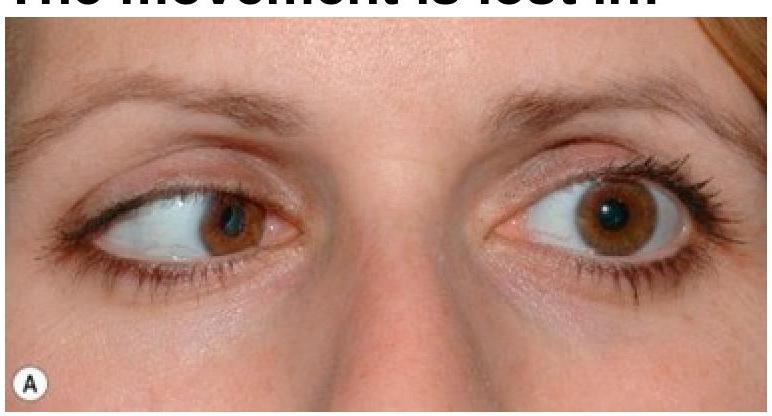
In trochlear palsy, which specific eye movement is lost?
A 42-year-old patient with obstructive jaundice. Alp, Ggt, haptoglobin all increased. The most likely cause is:
NEET-PG 2020 - Internal Medicine NEET-PG Practice Questions and MCQs
Question 41: A young man met with a motorbike accident and had injuries to ileum and jejunum. Therefore the entire ileum and partial jejunum were resected. Which of the following would the patient suffer from
- A. Vitamin B12 malabsorption due to ileal resection (Correct Answer)
- B. Atrophic gastritis unrelated to resection
- C. Constipation due to dietary changes
- D. No significant symptoms
Explanation: **Vitamin B12 malabsorption due to ileal resection** - The **terminal ileum** is the primary site for the absorption of **vitamin B12** (cobalamin) complexed with intrinsic factor [3]. - Its resection would directly lead to the inability to absorb this vitamin, resulting in **B12 deficiency** and associated symptoms like macrocytic anemia [3]. *Atrophic gastritis unrelated to resection* - **Atrophic gastritis** is a chronic inflammatory condition of the stomach lining leading to loss of glandular tissue and often impaired production of **intrinsic factor**. - While it can cause B12 malabsorption, it is an independent condition and not a direct consequence of ileum and jejunum resection. *Constipation due to dietary changes* - Resection of the ileum and jejunum primarily impacts **nutrient absorption** and can lead to diarrhea due or **short bowel syndrome** [1], rather than constipation. - While diet changes can affect bowel habits, prolonged **severe gastrointestinal resection** is more likely to cause malabsorption-related diarrhea [1], [2]. *No significant symptoms* - The **ileum** and **jejunum** are crucial for the absorption of most nutrients, including vitamins, minerals, fats, and carbohydrates [4]. - Resection of these segments, especially a significant portion, would lead to **malabsorption syndromes** with various severe symptoms, potentially including weight loss, diarrhea, and nutritional deficiencies [1], [4].
Question 42: Which of the following is commonly seen in Pituitary apoplexy?
- A. Headache (Correct Answer)
- B. Hypertension
- C. Hypotension
- D. Vomiting
Explanation: ***Headache*** - **Severe headache** is the most common symptom of pituitary apoplexy, resulting from the sudden expansion of a pituitary mass due to hemorrhage or infarction [1]. - The rapid increase in pressure within the sella turcica, especially on the **dura mater**, causes intense pain. *Hypertension* - While stress can elevate blood pressure, **hypertension** is not a characteristic or direct symptom of acute pituitary apoplexy itself. - Instead, the condition often leads to **adrenal insufficiency**, which is associated with hypotension [1]. *Hypotension* - **Hypotension** is a common and serious manifestation of pituitary apoplexy, often due to acute **adrenal insufficiency** caused by the destruction of ACTH-producing cells [1]. - Reduced ACTH leads to decreased cortisol production, impairing vascular tone and fluid balance. *Vomiting* - **Vomiting** is a common symptom in pituitary apoplexy, often accompanying the severe headache. - It results from the increased **intracranial pressure** and irritation of pathways in the brainstem.
Question 43: In trochlear palsy, which specific eye movement is lost?
- A. Upward gaze
- B. Lateral movement of the eye
- C. Downward gaze and inward rotation of the eye (Correct Answer)
- D. Facial expressions
Explanation: ***Downward gaze and inward rotation of the eye*** - Trochlear palsy affects the **superior oblique muscle**, which is primarily responsible for **downward gaze** and **intorsion** (inward rotation) of the eye, particularly when the eye is adducted. - Patients often present with **vertical diplopia** and a **head tilt** away from the affected side to compensate for the eye misalignment. *Upward gaze* - Upward gaze is primarily mediated by the **superior rectus muscle** (innervated by the oculomotor nerve) and the **inferior oblique muscle** (also oculomotor nerve). - Trochlear nerve palsy does not directly impair the muscles responsible for moving the eye upwards. *Lateral movement of the eye* - **Lateral movement** (abduction) of the eye is controlled by the **lateral rectus muscle**, which is innervated by the **abducens nerve (CN VI)**. - A loss of lateral movement would indicate an abducens nerve palsy, not a trochlear nerve palsy. *Facial expressions* - **Facial expressions** are controlled by the muscles of facial expression, which are innervated by the **facial nerve (CN VII)**. - This is unrelated to the cranial nerves involved in eye movement.
Question 44: A 42-year-old patient with obstructive jaundice. Alp, Ggt, haptoglobin all increased. The most likely cause is:
- A. Alcohol
- B. Lead
- C. Biliary obstruction (Correct Answer)
- D. None of the options
Explanation: ***Alcohol*** - Chronic **alcohol consumption** leads to hepatic injury, causing cholestasis and increased levels of **Alkaline Phosphatase (ALP)** and **Gamma-glutamyl transferase (GGT)** [1, 2]. - Increased **haptoglobin** indicates hemolysis or hepatic dysfunction, commonly seen in alcohol-related liver disease [1]. *Lead* - Lead poisoning typically causes **anemia** and affects **erythropoiesis**, but does not generally increase ALP and GGT levels significantly. - The classic presentation involves **neurological** deficits and **peripheral neuropathy**, rather than obstructive jaundice. *Chronic rf* - Chronic renal failure primarily affects **uremia** and renal function tests, with minimal impact on liver function tests like ALP and GGT. - It is not directly associated with **increased haptoglobin**, which is usually elevated in liver disease. *None of the above* - This option implies that none of the listed causes could lead to the observed lab changes, which is incorrect as **alcohol** is a known cause [1, 2]. - Enhancing liver damage from substances other than alcohol is not applicable based on the information given.
Obstetrics and Gynecology
1 questionsWhich distension medium is used for hysteroscopy with bipolar cautery?
NEET-PG 2020 - Obstetrics and Gynecology NEET-PG Practice Questions and MCQs
Question 41: Which distension medium is used for hysteroscopy with bipolar cautery?
- A. NS (Correct Answer)
- B. Glycine
- C. Carbon Dioxide
- D. Dextran 70
Explanation: ***NS*** - **Normal Saline (NS)** is an **electrolyte-containing solution** (0.9% NaCl) and is thus safe to use with **bipolar electrosurgery** because it does not conduct current across the tissue but only between the two poles of the instrument. - Its isotonicity minimizes fluid shifts and its clear nature allows for good visualization. *Glycine* - **Glycine** is a **non-electrolyte solution** that is used with **monopolar electrosurgery**, as it does not conduct electrical current to the patient but only through the active electrode. - Using it with bipolar devices is unnecessary and can lead to complications such as **dilutional hyponatremia** and **hyperammonemia** if significant intravascular absorption occurs. *Carbon Dioxide* - **Carbon dioxide** is used as a distension medium for **diagnostic hysteroscopy** because of its lack of risk for fluid overload and clear visualization. - It is **contraindicated with electrosurgery** because of the risk of **gas embolism** and its potential for impaired visualization with significant bleeding. *Dextran 70* - **Dextran 70** is a **high-viscosity, non-electrolyte solution** primarily used for diagnostic hysteroscopy when blood or mucus obscures the view. - It is **contraindicated for electrosurgery** due to its non-conductive nature and the risk of **anaphylactic reactions** and **pulmonary edema** from volume expansion.
Pathology
1 questionsHBsAg is based on which principle
NEET-PG 2020 - Pathology NEET-PG Practice Questions and MCQs
Question 41: HBsAg is based on which principle
- A. Chemiluminescence
- B. Immunofluorescence
- C. Immunochromatography assays
- D. ELISA (Correct Answer)
Explanation: ***ELISA*** - **Enzyme-linked immunosorbent assay (ELISA)** is a widely used laboratory test to detect and quantify antigens (like HBsAg) or antibodies in a sample. - It involves an enzyme-linked antibody that reacts with a substrate to produce a detectable signal, making it highly sensitive and specific for **HBsAg detection**. *Immunochromatography assays* - These are typically **rapid diagnostic tests (RDTs)** that provide quick qualitative results, often used for point-of-care testing. - While they can detect HBsAg, they generally have lower sensitivity and specificity compared to ELISA. *Chemiluminescence* - This is a detection method used in some immunoassays where a chemical reaction emits light, often providing higher sensitivity than colorimetric detection. - While it can be incorporated into HBsAg testing platforms, it is a *detection principle* rather than the primary assay principle like ELISA itself. *Immunofluorescence* - This technique uses **fluorescently labeled antibodies** to visualize antigens in cells or tissues under a fluorescence microscope [1]. - It is used for localization and identification of antigens, but not typically the primary method for routine quantitative HBsAg serology [1]. **References:** [1] Cross SS. Underwood's Pathology: A Clinical Approach. 6th ed. (Basic Pathology) introduces the student to key general principles of pathology, both as a medical science and as a clinical activity with a vital role in patient care. Part 2 (Disease Mechanisms) provides fundamental knowledge about the cellular and molecular processes involved in diseases, providing the rationale for their treatment. Part 3 (Systematic Pathology) deals in detail with specific diseases, with emphasis on the clinically important aspects., pp. 259-260.
Pharmacology
1 questionsA patient diagnosed with Rheumatoid arthritis was on medications. After 2 years, he developed a blurring vision and was found to have corneal opacity. Which drug is most likely to cause this?
NEET-PG 2020 - Pharmacology NEET-PG Practice Questions and MCQs
Question 41: A patient diagnosed with Rheumatoid arthritis was on medications. After 2 years, he developed a blurring vision and was found to have corneal opacity. Which drug is most likely to cause this?
- A. Sulfasalazine
- B. Leflunomide
- C. Chloroquine (Correct Answer)
- D. Methotrexate
Explanation: ***Chloroquine*** - **Chloroquine (and hydroxychloroquine)** can accumulate in the **cornea**, leading to **corneal opacity** (vortex keratopathy or cornea verticillata) and **retinopathy**, manifesting as blurring vision. - While corneal changes are usually reversible upon discontinuation, the retinal toxicity, particularly **maculopathy** (bull's eye maculopathy), can be permanent and severe. *Sulfasalazine* - Common side effects include **gastrointestinal upset**, headache, skin rash, and **bone marrow suppression**. - It is not typically associated with **corneal opacity** or significant ocular toxicity. *Leflunomide* - Known for side effects such as **hepatotoxicity**, gastrointestinal issues (diarrhea), **alopecia**, and **hypertension**. - **Ocular side effects** like corneal opacity are not characteristic of leflunomide use. *Methotrexate* - Primary side effects include **bone marrow suppression**, **hepatotoxicity**, **mucositis**, and **pulmonary fibrosis**. - Although it can cause ocular side effects like **conjunctivitis**, it is not a common cause of **corneal opacity**.
Radiology
1 questionsIdentify the condition in the X-ray given below:

NEET-PG 2020 - Radiology NEET-PG Practice Questions and MCQs
Question 41: Identify the condition in the X-ray given below:
- A. TGA
- B. TAPVC
- C. TOF (Correct Answer)
- D. Ebstein's anomaly
Explanation: ***TOF*** - The chest X-ray shows a **boot-shaped heart (coeur en sabot)**, which is highly characteristic of **Tetralogy of Fallot** due to right ventricular hypertrophy and pulmonary artery hypoplasia. - There is also **reduced pulmonary vascular markings** (oligemia), indicating decreased blood flow to the lungs, a typical finding in TOF. *TGA* - Transposition of the Great Arteries (TGA) typically presents with a **"egg-on-a-string" appearance** on chest X-ray, characterized by a narrow mediastinum and cardiomegaly, which is not seen here. - Pulmonary vascularity can be increased or normal in TGA, unlike the decreased vascularity observed in the image. *TAPVC* - Total Anomalous Pulmonary Venous Connection (TAPVC) usually shows a **"snowman" or "figure-of-8" heart** shadow on chest X-ray, due to enlarged SVC and innominate vein. - This condition is also associated with **increased pulmonary vascular markings** and often cardiomegaly, which are absent in the provided image. *Ebstein's anomaly* - Ebstein's anomaly is characterized by a **massively enlarged heart** on chest X-ray due to right atrial enlargement and tricuspid regurgitation. - It often shows **reduced pulmonary vascular markings** due to functional pulmonary stenosis, but the characteristic "boot shape" is not typically present.