Anatomy
1 questionsIdentify the type of cartilage shown in the image.

NEET-PG 2020 - Anatomy NEET-PG Practice Questions and MCQs
Question 31: Identify the type of cartilage shown in the image.
- A. Hyaline cartilage
- B. Elastic cartilage
- C. Dense connective tissue
- D. Fibrocartilage (Correct Answer)
Explanation: ***Fibrocartilage*** - The image displays **chondrocytes** arranged in rows between bundles of **collagen fibers**, characteristic of fibrocartilage. This structure provides high tensile strength and shock absorption. - Unlike other cartilage types, fibrocartilage lacks a distinct perichondrium and is found in structures requiring extreme strength, such as intervertebral discs and menisci. *Hyaline cartilage* - Hyaline cartilage has an amorphous, **glassy matrix** with chondrocytes typically arranged in small groups (isogenous groups) within lacunae, without prominent collagen bundles. - It is found in articular surfaces, tracheal rings, and the costal cartilages, providing smooth, low-friction surfaces. *Elastic cartilage* - Elastic cartilage is characterized by a high concentration of **elastic fibers** within its matrix, giving it flexibility and resilience. - Chondrocytes are typically scattered and the matrix stains darker due to the elastic fibers, which are not apparent in the image. *Dense connective tissue* - While dense connective tissue contains abundant **collagen fibers**, it lacks chondrocytes in lacunae, instead containing fibroblasts. - The presence of chondrocytes in the image confirms this is cartilage, not dense connective tissue.
Community Medicine
1 questionsAs per the Sustainable Development Goals, what is the target for Maternal Mortality Ratio (MMR)?
NEET-PG 2020 - Community Medicine NEET-PG Practice Questions and MCQs
Question 31: As per the Sustainable Development Goals, what is the target for Maternal Mortality Ratio (MMR)?
- A. < 70 per 100,000 live births (Correct Answer)
- B. < 100 per 100,000 live births
- C. < 7 per 1,000 live births
- D. < 10 per 1,000 live births
Explanation: ***< 70 per 100,000 live births*** - **Sustainable Development Goal (SDG) 3.1** specifically targets reducing the global maternal mortality ratio to less than **70 per 100,000 live births** by 2030. - This target aims to address the significant disparities in maternal mortality rates observed across different regions and countries. *< 100 per 100,000 live births* - While this represents an improvement over current global averages, it is **not the specific target set by SDG 3.1** for maternal mortality. - The SDGs establish a more ambitious threshold to ensure greater progress in maternal health outcomes. *< 7 per 1,000 live births* - This value is equivalent to **700 per 100,000 live births**, which is significantly higher than the SDG target and represents a **much higher maternal mortality rate**. - This option reflects a misunderstanding of the scale and denominator used for maternal mortality ratios in the SDGs. *< 10 per 1,000 live births* - This value is equivalent to **1,000 per 100,000 live births**, which is also **significantly higher than the SDG target**. - This option shows a similar misconception regarding the magnitude and proper reporting of maternal mortality ratios.
Internal Medicine
2 questionsEsophageal manometry was performed - it revealed panesophageal pressurization with distal contractile integrity as >450mm Hg pressure in the body. What will be the diagnosis?
A young man met with a motorbike accident and had injuries to ileum and jejunum. Therefore the entire ileum and partial jejunum were resected. Which of the following would the patient suffer from
NEET-PG 2020 - Internal Medicine NEET-PG Practice Questions and MCQs
Question 31: Esophageal manometry was performed - it revealed panesophageal pressurization with distal contractile integrity as >450mm Hg pressure in the body. What will be the diagnosis?
- A. Type 2 achalasia
- B. Type 3 achalasia (Correct Answer)
- C. Jackhammer esophagus
- D. Type 1 achalasia (classic achalasia)
Explanation: The diagnosis is Type 3 achalasia. This condition is characterized by panesophageal pressurization, indicating diffuse, simultaneous contractions throughout the esophagus. The high distal contractile integrity (>450 mmHg pressure) further supports Type 3 achalasia, which involves significant spastic contractions. In contrast, while high-resolution manometry allows for the accurate classification of these motility abnormalities [1], other types present differently. Type 1 achalasia (classic achalasia) is marked by failed esophageal peristalsis and absent or minimal esophageal pressurization [1]. The primary characteristic is incomplete or absent lower esophageal sphincter (LES) relaxation, not hypercontractility [1]. Type 2 achalasia is identified by esophageal panesophageal pressurization (simultaneous contractions), but with normal to high contractile pressures, not the extremely high values seen here. Jackhammer esophagus involves hypercontractility (distal contractile integral >8000 mmHg·cm·s) and is characterized by rapid, repetitive, and fragmented contractions, rather than the diffuse panesophageal pressurization and spasticity typical of Type 3 achalasia [2].
Question 32: A young man met with a motorbike accident and had injuries to ileum and jejunum. Therefore the entire ileum and partial jejunum were resected. Which of the following would the patient suffer from
- A. Vitamin B12 malabsorption due to ileal resection (Correct Answer)
- B. Atrophic gastritis unrelated to resection
- C. Constipation due to dietary changes
- D. No significant symptoms
Explanation: **Vitamin B12 malabsorption due to ileal resection** - The **terminal ileum** is the primary site for the absorption of **vitamin B12** (cobalamin) complexed with intrinsic factor [3]. - Its resection would directly lead to the inability to absorb this vitamin, resulting in **B12 deficiency** and associated symptoms like macrocytic anemia [3]. *Atrophic gastritis unrelated to resection* - **Atrophic gastritis** is a chronic inflammatory condition of the stomach lining leading to loss of glandular tissue and often impaired production of **intrinsic factor**. - While it can cause B12 malabsorption, it is an independent condition and not a direct consequence of ileum and jejunum resection. *Constipation due to dietary changes* - Resection of the ileum and jejunum primarily impacts **nutrient absorption** and can lead to diarrhea due or **short bowel syndrome** [1], rather than constipation. - While diet changes can affect bowel habits, prolonged **severe gastrointestinal resection** is more likely to cause malabsorption-related diarrhea [1], [2]. *No significant symptoms* - The **ileum** and **jejunum** are crucial for the absorption of most nutrients, including vitamins, minerals, fats, and carbohydrates [4]. - Resection of these segments, especially a significant portion, would lead to **malabsorption syndromes** with various severe symptoms, potentially including weight loss, diarrhea, and nutritional deficiencies [1], [4].
Microbiology
1 questionsThe image of an immunoglobulin is shown below. Which type of immunoglobulin is it?

NEET-PG 2020 - Microbiology NEET-PG Practice Questions and MCQs
Question 31: The image of an immunoglobulin is shown below. Which type of immunoglobulin is it?
- A. Immunoglobulin A (IgA) (Correct Answer)
- B. Immunoglobulin G (IgG)
- C. Immunoglobulin M (IgM)
- D. Immunoglobulin E (IgE)
Explanation: ***Immunoglobulin A (IgA)*** - The image depicts two Y-shaped immunoglobulin monomers linked by a central purple component, which represents the **J-chain**, and enveloped by a yellow structure, which represents the **secretory component**. This **dimeric** structure with a secretory component is characteristic of secretory IgA. - **Secretory IgA** is primarily found in mucosal secretions such as saliva, tears, breast milk, and gastrointestinal fluids, where it plays a crucial role in **mucosal immunity** by preventing pathogen adhesion. *Immunoglobulin G (IgG)* - IgG exists as a **monomer** (single Y-shaped unit) in its functional form. - It is the most abundant immunoglobulin in serum and plays a major role in **secondary immune responses** and can cross the placenta. *Immunoglobulin M (IgM)* - In serum, IgM typically exists as a **pentamer**, meaning five Y-shaped units are joined together by a J-chain, forming a star-like structure. - It is the first antibody produced in a **primary immune response** and is effective in complement activation. *Immunoglobulin E (IgE)* - IgE exists as a **monomer** and is primarily associated with **allergic reactions** and defense against parasites. - It binds to receptors on mast cells and basophils, triggering immune responses upon allergen exposure.
Ophthalmology
1 questionsEsotropia is common in
NEET-PG 2020 - Ophthalmology NEET-PG Practice Questions and MCQs
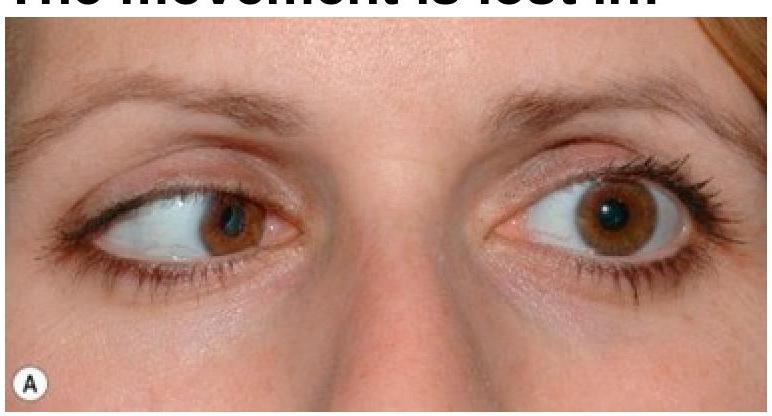
Question 31: Esotropia is common in
- A. Myopia
- B. Hypermetropia (Correct Answer)
- C. Emmetropia
- D. Astigmatism
Explanation: ***Hypermetropia*** - **Esotropia**, or inward turning of the eye, is common in **hypermetropia** (farsightedness) due to the accommodative effort required to focus. - In hypermetropia, **excessive accommodation** is needed to see clearly at all distances, especially for **near vision**. - This constant **accommodative effort** stimulates convergence through the **accommodation-convergence reflex**, predisposing to **accommodative esotropia**, particularly in children. *Myopia* - **Myopia** (nearsightedness) is typically associated with **exotropia** (outward turning of the eye). - This is because myopic individuals exert less accommodative effort for near vision, reducing the stimulus for convergence and potentially leading to divergence of the eyes. *Emmetropia* - **Emmetropia** describes an eye with **no refractive error**, where light focuses perfectly on the retina without accommodation for distance. - Individuals with emmetropia generally have **orthophoria** (proper alignment of the eyes) and are less prone to strabismus like esotropia unless an underlying muscle imbalance is present. *Astigmatism* - **Astigmatism** is an optical defect in which the eye does not focus light evenly onto the retina, causing blurred vision at any distance. - While it can be associated with other refractive errors, **astigmatism itself is not directly or commonly associated with esotropia**.
Pediatrics
1 questionsWhich antibody is not transmitted from mother to baby?
NEET-PG 2020 - Pediatrics NEET-PG Practice Questions and MCQs
Question 31: Which antibody is not transmitted from mother to baby?
- A. Tetanus IgG antibodies
- B. IgA antibodies (Correct Answer)
- C. Diphtheria IgG antibodies
- D. Measles IgG antibodies
Explanation: ***IgA antibodies*** - While IgA is found in breast milk and provides **passive immunity** to the infant's gastrointestinal tract, it is **not transferred across the placenta** to the fetus. - This antibody has a larger molecular structure and is primarily involved in **mucosal immunity**, making it unsuitable for transplacental transfer. *Diphtheria IgG antibodies* - **IgG antibodies**, including those for diphtheria, are actively transported across the **placenta** from mother to fetus during the third trimester. - This transfer provides the newborn with **passive immunity** against diphtheria during the first few months of life. *Tetanus IgG antibodies* - Similar to diphtheria IgG, **tetanus IgG antibodies** are efficiently transported across the **placenta** from mother to baby. - This offers crucial **passive protection** against tetanus, particularly important after birth. *Measles IgG antibodies* - **Measles IgG antibodies** from a vaccinated or previously infected mother cross the **placenta** to the fetus. - This maternal transfer provides temporary **passive immunity** to the newborn against measles.
Pharmacology
1 questionsPatient with pulmonary fibrosis. Which antiarrhythmic drug is contraindicated?
NEET-PG 2020 - Pharmacology NEET-PG Practice Questions and MCQs
Question 31: Patient with pulmonary fibrosis. Which antiarrhythmic drug is contraindicated?
- A. Amiodarone (Correct Answer)
- B. Flecainide
- C. Lidocaine
- D. IV ibutilide
Explanation: Amiodarone - **Amiodarone** is contraindicated in patients with pulmonary fibrosis due to its well-known and potentially severe pulmonary toxicity, which can exacerbate existing lung conditions or induce new ones like **interstitial lung disease**. Dose-related pulmonary toxicity is the most important adverse effect, and potentially fatal pulmonary fibrosis can be observed even at low doses [1]. - Its long half-life means that its toxic effects, including **pulmonary toxicity**, can persist for an extended period even after discontinuation [1], [2]. *Flecainide* - **Flecainide** is a Class IC antiarrhythmic drug primarily associated with cardiac side effects and is generally not contraindicated in patients with pulmonary fibrosis. - Its main risks include **proarrhythmia**, especially in patients with structural heart disease, but not pulmonary issues [3]. *IV ibutilide* - **IV ibutilide** is a Class III antiarrhythmic agent used for rapid conversion of atrial fibrillation/flutter and is not specifically contraindicated in pulmonary fibrosis. - Its primary concern is the risk of **QT prolongation** and **Torsades de Pointes**, rather than pulmonary complications. *Lidocaine* - **Lidocaine** is a Class IB antiarrhythmic typically used for ventricular arrhythmias, especially in the setting of acute myocardial infarction. It is not contraindicated in pulmonary fibrosis. - Its main side effects are **neurological (e.g., seizures, paresthesias)** at higher doses, not pulmonary complications.
Psychiatry
1 questionsA patient with depression was given Imipramine for 2 weeks. Relatives noticed increased excitement, colorful clothes, and increased talking. What is the next step in management?
NEET-PG 2020 - Psychiatry NEET-PG Practice Questions and MCQs
Question 31: A patient with depression was given Imipramine for 2 weeks. Relatives noticed increased excitement, colorful clothes, and increased talking. What is the next step in management?
- A. Continue Imipramine alone
- B. Manage with Valproate alone
- C. Discontinue Imipramine and start Valproate (Correct Answer)
- D. Antipsychotic with Imipramine continued
Explanation: ***Discontinue Imipramine and start Valproate*** - The patient's symptoms (increased excitement, colorful clothes, increased talking) after starting an antidepressant like **Imipramine** suggest a **manic switch**, indicating undiagnosed **bipolar disorder**. - **Imipramine** should be discontinued as it can exacerbate mania, and a mood stabilizer like **Valproate** is necessary to treat the manic episode. *Continue Imipramine alone* - Continuing Imipramine would likely worsen the manic symptoms, leading to increased agitation and potential harm. - Antidepressants can trigger or worsen manic episodes in individuals with underlying bipolar disorder. *Manage with Valproate alone* - While Valproate is an appropriate treatment for acute mania, simply managing with Valproate alone without discontinuing the offending antidepressant would be suboptimal. - The continued presence of Imipramine would counteract the mood-stabilizing effects of Valproate. *Antipsychotic with Imipramine continued* - Adding an antipsychotic might manage some acute manic symptoms, but continuing Imipramine would maintain the driving force behind the manic switch. - The primary action should be to remove the causative agent (Imipramine) and replace it with a mood stabilizer.
Radiology
1 questionsIdentify the condition in the X-ray given below:

NEET-PG 2020 - Radiology NEET-PG Practice Questions and MCQs
Question 31: Identify the condition in the X-ray given below:
- A. TGA
- B. TAPVC
- C. TOF (Correct Answer)
- D. Ebstein's anomaly
Explanation: ***TOF*** - The chest X-ray shows a **boot-shaped heart (coeur en sabot)**, which is highly characteristic of **Tetralogy of Fallot** due to right ventricular hypertrophy and pulmonary artery hypoplasia. - There is also **reduced pulmonary vascular markings** (oligemia), indicating decreased blood flow to the lungs, a typical finding in TOF. *TGA* - Transposition of the Great Arteries (TGA) typically presents with a **"egg-on-a-string" appearance** on chest X-ray, characterized by a narrow mediastinum and cardiomegaly, which is not seen here. - Pulmonary vascularity can be increased or normal in TGA, unlike the decreased vascularity observed in the image. *TAPVC* - Total Anomalous Pulmonary Venous Connection (TAPVC) usually shows a **"snowman" or "figure-of-8" heart** shadow on chest X-ray, due to enlarged SVC and innominate vein. - This condition is also associated with **increased pulmonary vascular markings** and often cardiomegaly, which are absent in the provided image. *Ebstein's anomaly* - Ebstein's anomaly is characterized by a **massively enlarged heart** on chest X-ray due to right atrial enlargement and tricuspid regurgitation. - It often shows **reduced pulmonary vascular markings** due to functional pulmonary stenosis, but the characteristic "boot shape" is not typically present.