Biochemistry
1 questionsWhich pigment is responsible for the greenish-black color of neonatal stool?
NEET-PG 2020 - Biochemistry NEET-PG Practice Questions and MCQs
Question 151: Which pigment is responsible for the greenish-black color of neonatal stool?
- A. Biliverdin (Correct Answer)
- B. Urochrome
- C. Stercobilin
- D. Bilirubin (yellow pigment)
Explanation: ***Biliverdin*** - **Biliverdin** is a green pigment formed from the breakdown of heme before it is converted to bilirubin, and it is responsible for the greenish-black color of **meconium**. - The presence of this pigment in the stool indicates the passage of **meconium**, the first stool of a newborn. *Urochrome* - **Urochrome** is responsible for the yellow color of **urine**, not stool. - It is a pigment derived from **bilirubin** that is excreted by the kidneys. *Stercobilin* - **Stercobilin** is responsible for the characteristic **brown color of adult feces**. - It is formed when **bilirubin** is metabolized by bacteria in the intestine. *Bilirubin (yellow pigment)* - **Bilirubin** is typically a **yellow-orange pigment**, not greenish-black. - While bilirubin is the precursor to stercobilin, its yellow form is more associated with **jaundice** when present in high concentrations.
Community Medicine
3 questionsWhich of the following is a technique/method based on behavioral sciences
Admission rate bias is?
What is the target population for a Secondary Service Center as per the Vision 2020 initiative in India?
NEET-PG 2020 - Community Medicine NEET-PG Practice Questions and MCQs
Question 151: Which of the following is a technique/method based on behavioral sciences
- A. Management by objectives (Correct Answer)
- B. Network analysis
- C. Systems analysis
- D. Decision making
Explanation: ***Management by objectives (MBO)*** - MBO is a **strategic management model** that aims to improve organizational performance by clearly defining objectives that are agreed to by both management and employees. - This approach is deeply rooted in **behavioral sciences** as it relies on principles of motivation, goal setting, feedback, and participation to influence employee behavior and performance. *Network analysis* - **Network analysis** is a quantitative method used to understand the structure and dynamics of relationships among entities in a system. - While it can be applied to human interactions, its primary focus is on **mathematical and computational modeling** rather than direct behavioral principles. *Systems analysis* - **Systems analysis** is a problem-solving technique that involves breaking down a system into its component parts to study how they interact and contribute to the overall system's function. - It is primarily an **engineering and information technology methodology** focused on optimizing processes and structures, not inherently on human behavior. *Decision making* - **Decision-making** is a cognitive process involving selecting a course of action from several alternatives. - While behavioral sciences study decision-making processes, decision-making itself is a **fundamental human activity** and a subject of various fields (economics, psychology) rather than a single technique primarily "based on behavioral sciences" in the same way MBO is.
Question 152: Admission rate bias is?
- A. Reporting bias
- B. Response bias
- C. Berksonian bias (Correct Answer)
- D. None of the options
Explanation: ***Berksonian bias*** - **Berksonian bias** is a form of selection bias, also known as **admission rate bias**, that occurs when different rates of admission to a hospital or clinical setting distort the association between diseases or between a disease and a risk factor. - This bias arises because the hospitalized population may not be representative of the general population, leading to spurious associations or masking real ones. *Reporting bias* - **Reporting bias** is a type of information bias where the outcome or exposure information is reported inaccurately, often due to social desirability or recall issues. - It does not specifically refer to distortions stemming from hospital admission rates. *Response bias* - **Response bias** occurs when participants in a study alter their answers or behavior from what is true due to factors like leading questions, social desirability, or acquiescence. - This is an issue related to data collection, not an unrepresentative study population due to hospital admission protocols. *None of the options* - Berksonian bias directly corresponds to the definition of admission rate bias, making this option incorrect.
Question 153: What is the target population for a Secondary Service Center as per the Vision 2020 initiative in India?
- A. 10000
- B. 50000
- C. 1 lac
- D. 5 lac (Correct Answer)
Explanation: ***5 lac*** - As per the **Vision 2020 initiative** (National Programme for Control of Blindness) in India, Secondary Service Centers are designed to cater to a target population of **500,000 (5 lac) individuals**. - This population size allows for efficient resource allocation and ensures comprehensive secondary-level eye care services, including cataract surgery and other specialist ophthalmological procedures, are accessible to a significant segment of the population. - Secondary Centers serve as referral units between Primary Centers and tertiary-level District Centers. *10000* - A target population of 10,000 is typically served by **Primary Vision Centers** or sub-centers, which provide basic eye screening and first-contact eye care. - Secondary Service Centers offer a broader range of specialized services that require a larger catchment area to be economically viable and effectively utilized. *50000* - A population of 50,000 is too small for a Secondary Service Center under the Vision 2020 framework. - This population size might be appropriate for enhanced Primary Care facilities, but Secondary Centers require a much larger demographic base to justify the specialized infrastructure and trained ophthalmologists necessary for comprehensive secondary eye care. *1 lac* - While 100,000 (1 lac) represents a substantial population, it is still **smaller than the intended target** for a Secondary Service Center under Vision 2020. - The centers are designed to serve **5 times this population** (5 lac), acting as major hubs for secondary eye care with surgical facilities and specialist services for multiple primary centers.
Dental
1 questionsA 30-year-old male presents with a one-week history of severe toothache, swelling in the floor of the mouth, and difficulty swallowing. What is the most likely diagnosis?
NEET-PG 2020 - Dental NEET-PG Practice Questions and MCQs
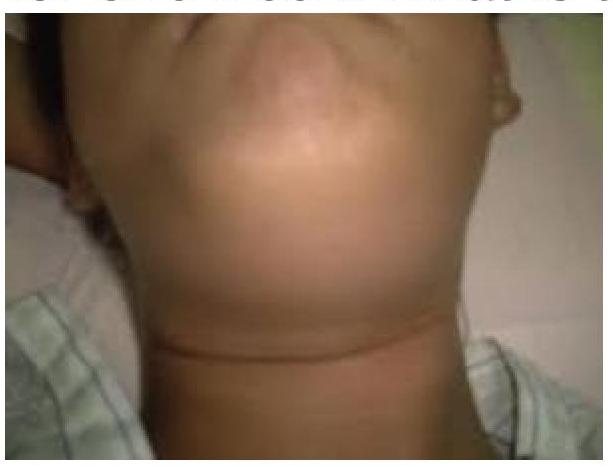
Question 151: A 30-year-old male presents with a one-week history of severe toothache, swelling in the floor of the mouth, and difficulty swallowing. What is the most likely diagnosis?
- A. Acute parotitis
- B. Angioneurotic edema
- C. Ludwig's angina (Correct Answer)
- D. Parapharyngeal abscess
Explanation: ***Ludwig's angina*** - The combination of a recent **severe toothache** (suggesting odontogenic infection), **swelling in the floor of the mouth**, and **difficulty swallowing (dysphagia)** are classic signs of Ludwig's angina, a rapidly spreading cellulitis of the submandibular, sublingual, and submental spaces. - This condition is particularly dangerous due to its potential to cause **airway obstruction** if the swelling progresses posteriorly. *Acute parotitis* - Acute parotitis typically presents with swelling and pain primarily in the **parotid gland region**, often located anterior to the ear and extending to the angle of the jaw. - While it can cause pain and difficulty swallowing, swelling is not typically described as being predominantly in the **floor of the mouth**. *Angioneurotic edema* - Angioneurotic edema (or angioedema) is characterized by **rapid, localized swelling of subcutaneous or submucosal tissues**, often affecting the face, lips, tongue, and pharynx. - It usually lacks a preceding infectious etiology like a toothache and is typically attributed to allergic reactions or hereditary/acquired deficiencies in C1-esterase inhibitor. *Parapharyngeal abscess* - A parapharyngeal abscess is a deep neck infection located in the **parapharyngeal space** lateral to the pharynx, often presenting with fever, severe sore throat, and trismus (difficulty opening the mouth). - While it can cause dysphagia and neck swelling, the primary swelling location described in the **floor of the mouth** points away from a parapharyngeal abscess as the most likely diagnosis.
Forensic Medicine
1 questionsIn the context of civil negligence against a doctor, who bears the burden of proof?
NEET-PG 2020 - Forensic Medicine NEET-PG Practice Questions and MCQs
Question 151: In the context of civil negligence against a doctor, who bears the burden of proof?
- A. Judicial first-degree magistrate
- B. Police not below the level of sub-inspector
- C. Doctor
- D. Patient (Correct Answer)
Explanation: ***Patient*** - In civil negligence cases, the **plaintiff** (the patient) always bears the **burden of proof** to demonstrate that the doctor was negligent. - The patient must establish the **four elements of negligence**: duty of care, breach of duty, causation, and damages. - This follows the fundamental legal principle: **"He who asserts must prove"** (*onus probandi*). *Judicial first-degree magistrate* - A **Judicial First-Class Magistrate (JFCM)** is a **criminal court** officer who handles criminal cases, not civil negligence suits. - Civil negligence cases against doctors are filed in **Civil Courts**, not before magistrates. - Magistrates do not bear the burden of proof; they adjudicate based on evidence presented by parties. *Police not below the level of sub-inspector* - This refers to **criminal negligence** cases under **Section 304A IPC** (causing death by rash or negligent act), not civil negligence. - In criminal cases, police (Sub-Inspector or above) investigate and the **State bears the burden of proof**, not the individual parties. - Civil negligence is a **tort**, handled separately from criminal proceedings. *Doctor* - The **doctor** (defendant) is the party against whom the negligence claim is made. - While the doctor must present evidence to **rebut** the patient's claims, they do not bear the **initial burden of proof** in civil cases. - The burden only shifts to the doctor if the doctrine of **res ipsa loquitur** applies (rare circumstances where negligence is self-evident).
Ophthalmology
1 questionsIn the context of retinal conditions, what is the primary cause of shifting fluid beneath the retina?
NEET-PG 2020 - Ophthalmology NEET-PG Practice Questions and MCQs
Question 151: In the context of retinal conditions, what is the primary cause of shifting fluid beneath the retina?
- A. Exudative Retinal detachment (Correct Answer)
- B. Tractional Retinal Detachment
- C. Rhegmatogenous retinal detachment
- D. Retinodialysis
Explanation: ***Exudative Retinal detachment*** - This condition is characterized by the accumulation of **serous fluid** beneath the retina without a retinal break, causing the retina to detach. The fluid can shift with changes in head position due to gravity, leading to a **"shifting fluid" phenomenon**. - It results from conditions that compromise the **retinal pigment epithelium (RPE)** or choroidal vasculature, such as **choroidal tumors**, **inflammatory diseases**, or **severe hypertension**, leading to leakage of fluid. *Tractional Retinal Detachment* - This type of detachment occurs when **fibrovascular membranes** on the retinal surface contract and pull the neurosensory retina away from the RPE. - The detachment is usually **immobile** or minimally mobile because it is held in place by fibrous adhesions, and therefore, does not typically exhibit shifting fluid. *Rhegmatogenous retinal detachment* - This is the most common type of retinal detachment and occurs due to a **full-thickness break or tear** in the retina, allowing vitreous fluid to pass into the subretinal space. - While fluid is present, the key feature is a retinal break, and the detached retina is typically more fixed by the flow through the break rather than gravitationally shifting. *Retinodialysis* - Retinodialysis is a specific type of **rhegmatogenous retinal detachment** characterized by a **disinsertion of the retina from its ora serrata attachment**, often due to trauma. - Similar to other rhegmatogenous detachments, fluid accumulates in the subretinal space, but the primary cause is the tear/disinsertion, and it doesn't primarily manifest as a shifting fluid characteristic, which is more indicative of exudative causes.
Pharmacology
1 questionsWhat is the first-line drug for osteoporosis in postmenopausal women?
NEET-PG 2020 - Pharmacology NEET-PG Practice Questions and MCQs
Question 151: What is the first-line drug for osteoporosis in postmenopausal women?
- A. OCP
- B. Bisphosphonates (Correct Answer)
- C. Raloxifene
- D. Strontium
Explanation: ***Bisphosphonates*** - **Bisphosphonates** are the **first-line treatment** for osteoporosis due to their proven efficacy in reducing fracture risk by inhibiting osteoclast activity. - They bind to bone mineral and are internalized by osteoclasts, leading to their **apoptosis** and decreased bone resorption. *OCP* - **Oral contraceptives (OCP)** are not used for treating established osteoporosis; they may have a minor protective effect against bone loss in premenopausal women but are not a primary therapeutic agent postmenopause. - OCPs primarily contain **estrogen and/or progestin** and are used for contraception and managing menstrual irregularities. *Raloxifene* - **Raloxifene** is a **selective estrogen receptor modulator (SERM)** that can be used for osteoporosis prevention and treatment, especially if there's a concern for breast cancer, but it is typically a second-line option. - Although it mimics estrogen's beneficial effects on bone, it does not have the same overall fracture reduction efficacy as bisphosphonates and can increase the risk of **venous thromboembolism**. *Strontium* - **Strontium ranelate** is an anti-osteoporotic agent that both inhibits bone resorption and promotes bone formation. - Its use has been limited due to concerns about serious side effects, including an increased risk of **cardiovascular events** and **venous thromboembolism**, making it a less favored option compared to bisphosphonates.
Radiology
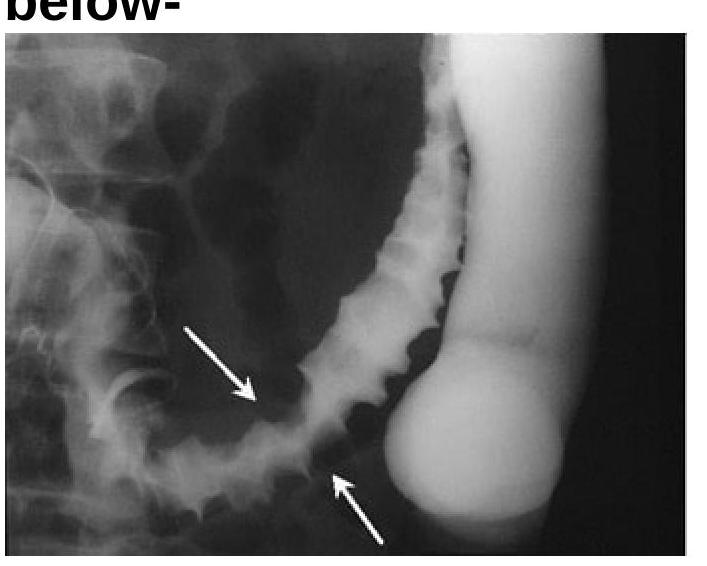
1 questionsIdentify the radiological sign of Ischemic colitis from the image provided.

NEET-PG 2020 - Radiology NEET-PG Practice Questions and MCQs
Question 151: Identify the radiological sign of Ischemic colitis from the image provided.
- A. Diverticulitis
- B. Appendicitis
- C. Thumbprinting sign of Ischemic colitis (Correct Answer)
- D. None of the options
Explanation: ***Thumbprinting sign of Ischemic colitis*** - The image displays prominent **indentations (thumbprinting)** along the bowel wall, especially in the descending colon (indicated by arrows). These indentations are caused by **edema** and **hemorrhage** in the submucosal layer due to ischemia. - This characteristic appearance on a barium enema or CT scan is a classic radiological sign highly suggestive of **ischemic colitis**. *Diverticulitis* - Diverticulitis typically presents with **saccular outpouchings** (diverticula) that become inflamed, potentially showing wall thickening or **pericolonic fat stranding**. - This image does not show typical diverticula or signs of severe inflammation associated with diverticulitis, but rather diffuse mucosal changes. *Appendicitis* - Appendicitis is characterized by inflammation of the **vermiform appendix**, typically seen as a **dilated**, non-compressible appendix with surrounding fat stranding in the right lower quadrant. - The radiological findings in the image are of the colon, not the appendix, and are inconsistent with acute appendicitis. *None of the options* - The image presents a clear and characteristic radiological sign that points to a specific diagnosis, making this option incorrect. - The presence of **thumbprinting** is a well-established indicator for ischemic colitis.
Surgery
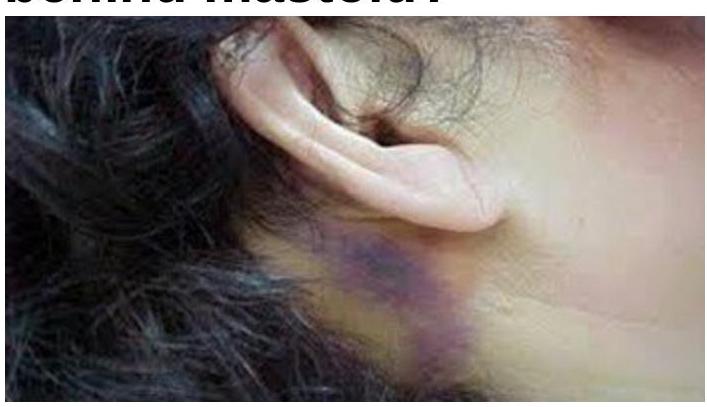
1 questionsWhat does a bluish-purple discoloration behind the mastoid indicate?

NEET-PG 2020 - Surgery NEET-PG Practice Questions and MCQs
Question 151: What does a bluish-purple discoloration behind the mastoid indicate?
- A. Battle sign (Correct Answer)
- B. Bezold abscess
- C. Both A and B
- D. None of the options
Explanation: ***Battle sign*** - A **bluish-purple discoloration behind the mastoid** (postauricular ecchymosis) is a classic sign of a **basilar skull fracture**, particularly involving the middle cranial fossa. - This bruising is caused by the extravasation of blood from the fracture site into the soft tissues over the mastoid process. *Bezold abscess* - A Bezold abscess is a rare complication of **mastoiditis**, where infection erodes through the mastoid tip and spreads to the soft tissues of the neck. - It presents as a **painful swelling in the neck** and is typically not associated with a bluish-purple discoloration *behind* the mastoid unless there is significant necrotic tissue or a secondary hematoma, which is not the primary feature. *Both A and B* - These conditions represent distinct pathologies, one related to **trauma (Battle sign)** and the other to **infection (Bezold abscess)**. - While both involve the mastoid region, their underlying causes and typical presentations are different. *None of the options* - The image directly displays the characteristic bruising of a Battle sign, making this option incorrect. - The appearance is highly indicative of a specific medical condition.