NEET-PG 2020 — Forensic Medicine
11 Previous Year Questions with Answers & Explanations
Which of the following is the law on child sexual abuse in India?
Which of the following statements about the hymen in the context of child sexual abuse is correct?
What poison will you detect in the skeleton even after decomposition
In the context of civil negligence against a doctor, who bears the burden of proof?
Relatives of a patient told during postmortem examination that the person had a tattoo - which was now invisible. How to identify?
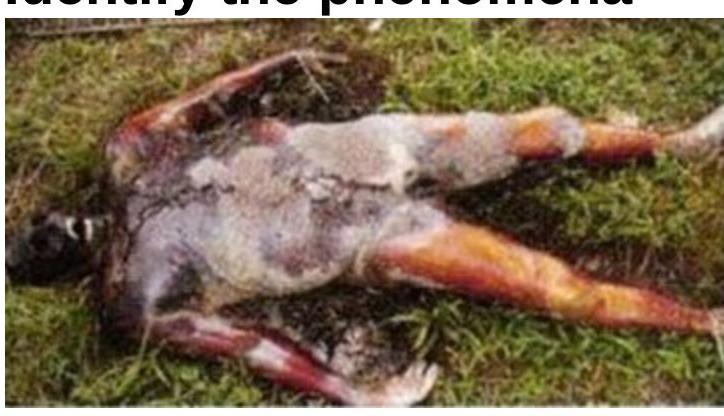
A body is discovered with burn marks as shown in the image, resembling a 'crocodile skin' pattern. What is the most likely cause?
In the court of law, the act of a witness giving false evidence after taking an oath is punishable under:
The poison commonly detected in exhumed bodies is:
The onus of proof in civil negligence case against a doctor lies with:
Which of the following test shows yellow needle shaped crystals of spermine picrate?
NEET-PG 2020 - Forensic Medicine NEET-PG Practice Questions and MCQs
Question 1: Which of the following is the law on child sexual abuse in India?
- A. Protection Of Children from Sexual Offences Act (POCSO) (Correct Answer)
- B. Juvenile Justice (Care and Protection of Children) Act
- C. Indian Penal Code (IPC) Section 375
- D. Prohibition of Child Marriage Act
Explanation: ***Protection Of Children from Sexual Offences Act (POCSO)*** - The **POCSO Act** was specifically enacted in India to address and prevent child sexual abuse, providing a comprehensive legal framework for protection, prosecution, and rehabilitation. - It defines various forms of sexual offenses against children and ensures a child-friendly process for reporting and trial. *Juvenile Justice (Care and Protection of Children) Act* - This act primarily deals with the **care, protection, rehabilitation, and social reintegration of children** in conflict with law and children in need of care and protection. - While it ensures the overall well-being of children, it is not specifically focused on defining and prosecuting child sexual abuse. *Indian Penal Code (IPC) Section 375* - **IPC Section 375 defines rape** in India, but it primarily addresses sexual assault against women and does not specifically cater to children as a vulnerable group with distinct legal protections against sexual exploitation. - The POCSO Act was introduced to provide more stringent and child-specific provisions beyond the general framework of the IPC. *Prohibition of Child Marriage Act* - This act aims to **prohibit child marriages** and makes it an offense to solemnize or facilitate such marriages. - While child marriage can sometimes involve sexual exploitation, this act is not the primary legislation for addressing child sexual abuse in general.
Question 2: Which of the following statements about the hymen in the context of child sexual abuse is correct?
- A. The hymen's location makes it less likely to tear during trauma.
- B. The hymen is a thin membrane that can tear easily. (Correct Answer)
- C. The hymen's position does not affect its likelihood of tearing.
- D. The hymen is elastic and can stretch without tearing.
Explanation: ***The hymen is a thin membrane that can tear easily.*** - While the **hymen** is a **variable structure** that is generally thin and delicate in most cases, it is susceptible to tearing from penetrative trauma. - In the context of **child sexual abuse forensic assessment**, the hymen's relative fragility compared to surrounding tissues is an important consideration, though the **absence of tears does not exclude abuse**. - It is important to note that the hymen also possesses **elasticity**, and many cases of penetration occur **without hymenal injury**. *The hymen's position does not affect its likelihood of tearing.* - The **position** and **configuration** of the hymen significantly influence its vulnerability to injury. - A **posteriorly located** or **less protected hymen** may be at higher risk of tearing during trauma. - Hymenal anatomy varies considerably, affecting injury patterns. *The hymen is elastic and can stretch without tearing.* - This statement is **partially correct** but incomplete: the hymen does possess significant **elasticity**, especially in **prepubertal children**. - Modern forensic research shows that **penetration can occur without hymenal tearing** due to elasticity. - However, the statement "without tearing" is too absolute—the hymen **can stretch** in many cases, but **can also tear** depending on multiple factors (force, configuration, estrogen status). - The key forensic principle: **normal or non-specific hymenal findings do not exclude sexual abuse**. *The hymen's location makes it less likely to tear during trauma.* - The hymen is located at the **vaginal introitus**, making it exposed and in the direct pathway of penetrative trauma. - Its **location** increases (not decreases) vulnerability to injury during sexual contact. - However, the **posterior rim** (between 4 and 8 o'clock positions) is most commonly injured in abuse cases.
Question 3: What poison will you detect in the skeleton even after decomposition
- A. Lead
- B. Arsenic (Correct Answer)
- C. Mercury
- D. Cadmium
Explanation: ***Arsenic*** - **Arsenic** has a high affinity for **keratin-rich tissues** like hair, nails, and skin, and also gets incorporated into bones. - Its presence in the skeleton and other tissues can be detected long after death, even in cases of **emaciation** or advanced decomposition. *Lead* - **Lead** primarily accumulates in **bones** due to its chemical similarity to calcium, where it can reside for decades. - While detectable in the skeleton, arsenic is often considered in forensic toxicology when looking for poisons in highly decayed remains due to its long-term persistence in various tissues. *Mercury* - **Organic mercury** forms, like **methylmercury**, primarily accumulate in the **brain and kidneys**, and to a lesser extent in hair and nails. - While some inorganic forms can be found in bone, its persistence and detectability in the skeleton after significant decomposition are generally less prominent than arsenic. *Cadmium* - **Cadmium** preferentially accumulates in the **kidneys and liver**, with a smaller proportion stored in bones. - While it can be detected in bone, its persistence in decayed remains and diagnostic significance as a poison in the skeleton is not as universal as arsenic.
Question 4: In the context of civil negligence against a doctor, who bears the burden of proof?
- A. Judicial first-degree magistrate
- B. Police not below the level of sub-inspector
- C. Doctor
- D. Patient (Correct Answer)
Explanation: ***Patient*** - In civil negligence cases, the **plaintiff** (the patient) always bears the **burden of proof** to demonstrate that the doctor was negligent. - The patient must establish the **four elements of negligence**: duty of care, breach of duty, causation, and damages. - This follows the fundamental legal principle: **"He who asserts must prove"** (*onus probandi*). *Judicial first-degree magistrate* - A **Judicial First-Class Magistrate (JFCM)** is a **criminal court** officer who handles criminal cases, not civil negligence suits. - Civil negligence cases against doctors are filed in **Civil Courts**, not before magistrates. - Magistrates do not bear the burden of proof; they adjudicate based on evidence presented by parties. *Police not below the level of sub-inspector* - This refers to **criminal negligence** cases under **Section 304A IPC** (causing death by rash or negligent act), not civil negligence. - In criminal cases, police (Sub-Inspector or above) investigate and the **State bears the burden of proof**, not the individual parties. - Civil negligence is a **tort**, handled separately from criminal proceedings. *Doctor* - The **doctor** (defendant) is the party against whom the negligence claim is made. - While the doctor must present evidence to **rebut** the patient's claims, they do not bear the **initial burden of proof** in civil cases. - The burden only shifts to the doctor if the doctrine of **res ipsa loquitur** applies (rare circumstances where negligence is self-evident).
Question 5: Relatives of a patient told during postmortem examination that the person had a tattoo - which was now invisible. How to identify?
- A. Examine the Lymph node (Correct Answer)
- B. Spectrophotometer
- C. Ordinary light
- D. X-ray
Explanation: ***Examine the Lymph node*** - Tattoo ink particles are **phagocytosed** by macrophages and subsequently transported to and deposited in the regional **lymph nodes**. - Even if a tattoo is no longer visible on the skin due to decomposition or other factors, the pigment can often still be found in the associated **lymph nodes upon histological examination**. *Spectrophotometer* - A spectrophotometer is used to **measure the absorption or transmission of light** by a sample, which could identify pigments in a *prepared tissue sample*. - However, it would not be the **primary method for initial detection of an invisible tattoo** within a body as it requires a specific tissue sample containing the pigment to work, and would not help in locating the tattoo's original site or the presence of pigment in regional lymph nodes. *Ordinary light* - Ordinary light is suitable for examining **visible surface features** or visible tattoos. - If a tattoo is already described as **invisible**, ordinary light will not reveal its presence, as the pigments are either degraded, covered, or too deep to be seen. *X-ray* - X-rays are primarily used to visualize **bone or dense structures** and can detect foreign bodies that are radiopaque (like some metals). - Tattoo pigments are generally **not sufficiently radiopaque** to be visible on X-ray, making this method ineffective for detecting tattoos.
Question 6: A body is discovered with burn marks as shown in the image, resembling a 'crocodile skin' pattern. What is the most likely cause?
- A. Chemical burns
- B. High voltage electrical burns (Correct Answer)
- C. Scald burns
- D. Radiation burns
Explanation: ***High voltage electrical burns*** - **High voltage electrical burns** can cause severe damage, including charring and deep tissue necrosis, which can result in a contracted, leathery skin appearance often described as **"crocodile skin"** or **alligator hide**. - The alternating current (AC) associated with high voltage can lead to muscle tetany, causing the victim to clench onto the source, prolonging exposure and increasing the severity of damage and the characteristic burn pattern. *Chemical burns* - Chemical burns result from exposure to corrosive substances and typically manifest as **discoloration**, **blistering**, or **deep tissue damage** depending on the agent and duration of contact. - While severe, chemical burns usually do not produce the specific "crocodile skin" pattern of extensive charring and contraction seen with high voltage electricity. *Scald burns* - Scald burns are caused by hot liquids or steam and commonly result in **blistering**, **redness**, and superficial to partial-thickness skin damage without the deep tissue charring. - The pattern of injury would typically be distinct from the described "crocodile skin," often showing flowing or splash patterns. *Radiation burns* - Radiation burns occur due to exposure to high doses of radiation and can lead to **erythema**, **blistering**, and **skin breakdown** over time. - These burns develop progressively and often have a characteristic delayed presentation and pattern related to the radiation field, not the immediate charring seen with electrical injuries.
Question 7: In the court of law, the act of a witness giving false evidence after taking an oath is punishable under:
- A. 191 IPC
- B. 192 IPC
- C. 193 IPC (Correct Answer)
- D. 197 IPC
Explanation: ***193 IPC*** - **Section 193 of the Indian Penal Code (IPC)** specifically deals with the punishment for giving **false evidence** in a judicial proceeding. - This section outlines that any person who intentionally gives false evidence in any stage of a judicial proceeding, or fabricates false evidence for the purpose of being used in any stage of a judicial proceeding, shall be punished. *192 IPC* - **Section 192 IPC** defines what constitutes **"fabricating false evidence."** - While fabricating false evidence is a prerequisite for some offenses related to false evidence, Section 192 itself defines the act, but does not prescribe the punishment for giving false evidence after taking an oath in court. *191 IPC* - **Section 191 IPC** defines what constitutes **"giving false evidence."** - It explains that consciously making a statement which is false, and which a person either knows or believes to be false, or does not believe to be true, while legally bound by oath or by any express provision of law to state the truth, is considered giving false evidence, but does not prescribe the punishment. *197 IPC* - **Section 197 IPC** deals with **issuing or signing a false certificate**, not the act of a witness giving false evidence under oath in court. - This section punishes someone who issues or signs any certificate required by law, knowing or believing it to be false, in any material point.
Question 8: The poison commonly detected in exhumed bodies is:
- A. Lead
- B. Mercury
- C. Arsenic (Correct Answer)
- D. Cadmium
Explanation: ***Arsenic*** - **Arsenic** is the most common poison detected in exhumed bodies due to its exceptional **stability** and **resistance to degradation** in decomposing tissues. - It readily binds to **keratin-rich tissues** like hair and nails, making it detectable even after long periods (years to decades). - Known as a "**persistent poison**" in forensic medicine due to its ability to resist putrefaction and remain in tissues indefinitely. *Cadmium* - While **cadmium** is a toxic heavy metal, it is not as frequently detected in exhumed bodies as arsenic due to differing toxicokinetics and post-mortem stability. - Cadmium poisoning often involves **renal and pulmonary toxicity**, and its detection post-mortem might be more challenging after significant decomposition. *Mercury* - **Mercury** can be toxic and persist in some tissues, but its detection in exhumed bodies is less common than arsenic due to its different **metabolic pathways** and **degradation patterns**. - **Elemental mercury** is poorly absorbed, and other forms like **methylmercury** can be found, but their post-mortem stability does not match arsenic's. *Lead* - **Lead** is a heavy metal that causes chronic toxicity and can be detected in bones for extended periods. However, its overall detection rate in exhumed bodies for acute poisoning is typically lower than arsenic. - Lead's clinical presentation often includes **neurological, gastrointestinal, and hematological symptoms**, but its presence in various tissues diminishes over time compared to arsenic's unique persistence.
Question 9: The onus of proof in civil negligence case against a doctor lies with:
- A. Hospital administration
- B. Patient (Correct Answer)
- C. Doctor
- D. Medical board
Explanation: ***Patient*** - In civil negligence cases, the **plaintiff** (the patient, in this context) bears the **onus of proof**, meaning they must demonstrate that the doctor was negligent. - The patient must establish **duty of care**, **breach of that duty**, **causation** of injury due to the breach, and actual **damages**. *Hospital administration* - The hospital administration might be named as a co-defendant, but the primary burden of proving negligence against the doctor still rests with the patient. - Their liability would usually be **vicarious** (for the actions of employees) or for institutional failures, not for proving individual doctor negligence. *Doctor* - The doctor is the **defendant** in a civil negligence case and is presumed innocent until proven otherwise. - The doctor's role is to **defend** against the allegations, not to prove their own innocence of negligence. *Medical board* - A medical board is a **regulatory body** responsible for licensing and discipline, not for adjudicating civil negligence claims. - They conduct investigations into professional misconduct, but this is separate from the **burden of proof** in a civil lawsuit.
Question 10: Which of the following test shows yellow needle shaped crystals of spermine picrate?
- A. Florence test
- B. Teichmann test
- C. Takayama's test
- D. Barberio's test (Correct Answer)
Explanation: ***Barberio's test*** - Barberio's test is a **presumptive test for semen**, which detects the presence of **spermine**. - It yields characteristic **yellow, needle-shaped crystals** of **spermine picrate** upon the addition of picric acid reagent to semen. - This is the **classic finding** that distinguishes this test. *Florence test* - The Florence test is a **presumptive test for seminal fluid**, identifying the presence of **choline** and **spermine**. - It produces characteristic **dark-brown, rhombic or needle-shaped crystals** of **choline periodide** (not spermine picrate) when seminal fluid is tested with Florence's reagent (potassium iodide and iodine). *Teichmann test* - The Teichmann test is a **presumptive test for blood**, specifically detecting the presence of **hemoglobin**. - It forms characteristic **rhombic crystals of hemin (hematin hydrochloride)** when blood is heated with glacial acetic acid and a halide salt. *Takayama's test* - Takayama's test is also a **presumptive test for blood**, identifying **hemoglobin**. - It produces **pink, pyridine hemochromogen crystals** after adding a solution containing pyridine, glucose, and dilute sodium hydroxide to a bloodstain.