NEET-PG 2020 — ENT
5 Previous Year Questions with Answers & Explanations
What is the surgical procedure for widening of the cartilaginous part of the external auditory canal?
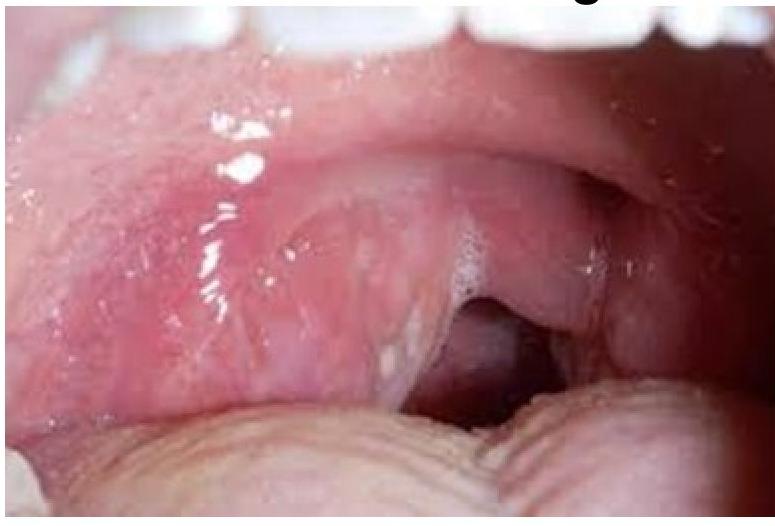
A patient presents with fever and dysphagia. An image shows a tonsil that is pushed medially. What is the most likely diagnosis?
Partial closure of the nose is performed in which condition?
Tuberculous otitis media of the middle ear has all of the following except:-
Partial and full closure of nasal passages is characteristically seen in:
NEET-PG 2020 - ENT NEET-PG Practice Questions and MCQs
Question 1: What is the surgical procedure for widening of the cartilaginous part of the external auditory canal?
- A. otoplasty
- B. myringoplasty
- C. tympanoplasty
- D. meatoplasty (Correct Answer)
Explanation: ***Meatoplasty*** - **Meatoplasty** is a surgical procedure specifically designed to **widen the external auditory canal**, often performed to improve drainage or aid in fitting hearing aids. - This procedure usually involves modifying the **cartilaginous part** of the canal to prevent stenosis or collapse, which can cause conductive hearing loss. *Otoplasty* - **Otoplasty** is a cosmetic surgical procedure primarily focused on reshaping the **external ear (pinna)**, often to correct prominent ears or deformities. - It does not involve widening the external auditory canal. *Myringoplasty* - **Myringoplasty** is a surgical repair of a **perforated tympanic membrane (eardrum)**. - The goal is to close the hole in the eardrum to improve hearing and prevent recurrent infections, without altering the external auditory canal's width. *Tympanoplasty* - **Tympanoplasty** is a broader surgical term that involves the repair of the **tympanic membrane (eardrum)** and/or the **ossicular chain** within the middle ear. - While it addresses middle ear issues and hearing improvement, it typically does not involve widening the external auditory canal as its primary goal.
Question 2: A patient presents with fever and dysphagia. An image shows a tonsil that is pushed medially. What is the most likely diagnosis?
- A. Parapharyngeal abscess
- B. Retropharyngeal abscess
- C. Peritonsillar abscess (Correct Answer)
- D. Ludwig's angina
Explanation: ***Peritonsillar abscess*** - The image clearly shows **unilateral bulging** of the soft palate and displacement of the tonsil medially, consistent with a peritonsillar abscess. - Patients typically present with **fever**, **dysphagia**, severe sore throat, and a "hot potato" voice. *Parapharyngeal abscess* - A parapharyngeal abscess involves the **deep neck spaces** lateral to the pharynx, often presenting with neck swelling, trismus, and systemic symptoms. - While it can cause pharyngeal bulging, the classic **medial displacement of the tonsil** is more indicative of a peritonsillar abscess. *Retropharyngeal abscess* - This involves the space behind the posterior pharyngeal wall, usually presenting with **dysphagia**, **neck stiffness**, and fever. - Imaging would reveal a **prevertebral soft tissue swelling**, not primarily a medially displaced tonsil. *Ludwig's angina* - Ludwig's angina is a **rapidly spreading cellulitis** of the submandibular and sublingual spaces, typically arising from an odontogenic infection. - It presents with **woody induration** of the neck and floor of the mouth, elevation of the tongue, and potential airway compromise, but not primarily a medially displaced tonsil.
Question 3: Partial closure of the nose is performed in which condition?
- A. Vasomotor rhinitis
- B. Atrophic rhinitis (Correct Answer)
- C. Allergic rhinitis
- D. Occupational rhinitis
Explanation: ***Atrophic rhinitis*** - **Partial closure of the nose** (Young's operation or naris plasty) is a surgical procedure used to reduce the size of the nasal passages and improve airflow in patients with atrophic rhinitis. - This condition involves progressive **atrophy of the nasal mucosa** and turbinates, leading to dryness, crusting, paradoxical obstruction, and often a foul odor. *Vasomotor rhinitis* - This condition involves **non-allergic rhinitis** triggered by environmental changes, temperature shifts, or irritants, causing symptoms like sneezing, rhinorrhea, and nasal congestion. - Management typically involves **avoidance of triggers**, nasal corticosteroids, or anticholinergic sprays, not surgical closure of the nose. *Allergic rhinitis* - Caused by an ** IgE-mediated immune response** to airborne allergens, leading to inflammation of the nasal mucosa, sneezing, itching, rhinorrhea, and congestion. - Treatment focuses on **allergen avoidance**, antihistamines, and nasal corticosteroids; surgical modification of nasal passages is not indicated. *Occupational rhinitis* - This form of rhinitis is caused by exposure to **irritants or allergens in the workplace**, leading to nasal symptoms similar to allergic or non-allergic rhinitis. - Management involves **identifying and avoiding the offending agent** at work, and medical treatments like nasal sprays, but not surgical narrowing of the nostrils.
Question 4: Tuberculous otitis media of the middle ear has all of the following except:-
- A. Multiple perforations are seen
- B. Pale granulomas are seen
- C. Painful otorrhea is seen (Correct Answer)
- D. ATT should be started
Explanation: ***Painful otorrhea is seen*** - **Tuberculous otitis media** is often characterized by **painless otorrhea**, making painful otorrhea an unlikely finding. - The absence of pain is attributed to the **insidious** and slow-growing nature of the infection, which often delays diagnosis. *Multiple perforations are seen* - **Multiple tympanic membrane perforations** are a classic sign of tuberculous otitis media, differentiating it from other chronic otitis media forms. - These perforations are often **small and non-healing**, contributing to persistent discharge. *Pale granulomas are seen* - The presence of **pale granulomas** in the middle ear is a histological hallmark of tuberculosis, reflecting the characteristic **caseating granulomatous inflammation**. - These granulomas can lead to **ossicular erosion** and subsequent conductive hearing loss. *ATT should be started* - **Anti-tubercular treatment (ATT)** is the definitive therapy for tuberculous otitis media, targeting the underlying Mycobacterium tuberculosis infection. - Early initiation of ATT is crucial to prevent further **destruction** of middle ear structures and hearing loss.
Question 5: Partial and full closure of nasal passages is characteristically seen in:
- A. Allergic rhinitis
- B. Atrophic rhinitis
- C. Occupational rhinitis
- D. Vasomotor rhinitis (Correct Answer)
Explanation: ***Vasomotor rhinitis*** - This condition is characterized by **vascular dysregulation** in the nasal mucosa, leading to episodic **swelling** and **congestion** that can result in partial or full nasal closure without an identifiable allergic or infectious cause. - Symptoms are often triggered by **non-specific irritants** like temperature changes, strong odors, or emotional stress, causing the nasal blood vessels to dilate excessively. *Allergic rhinitis* - While it causes nasal congestion and obstruction, the primary mechanism is an **IgE-mediated inflammatory response** to specific allergens, leading to mucosal edema and increased mucus production. - The closure is typically accompanied by other allergic symptoms such as **sneezing**, **itching**, and **rhinorrhea**, which differentiates it from vasomotor rhinitis. *Atrophic rhinitis* - This condition involves **progressive atrophy** of the nasal mucosa, turbinates, and underlying bone, resulting in an abnormally wide nasal passage rather than obstruction. - Patients typically experience **paradoxical nasal obstruction** due to altered airflow dynamics and crusting, alongside a characteristic foul odor. *Occupational rhinitis* - This type of rhinitis is caused by **exposure to specific agents** in the workplace, leading to inflammation and nasal obstruction, often accompanied by sneezing and rhinorrhea. - Symptom onset is directly linked to **workplace exposure** and improves away from the occupational environment, which is not suggested by the general term "partial and full closure."