NEET-PG 2020 — Community Medicine
34 Previous Year Questions with Answers & Explanations
Targeted screening for communicable diseases is most commonly implemented in which population?
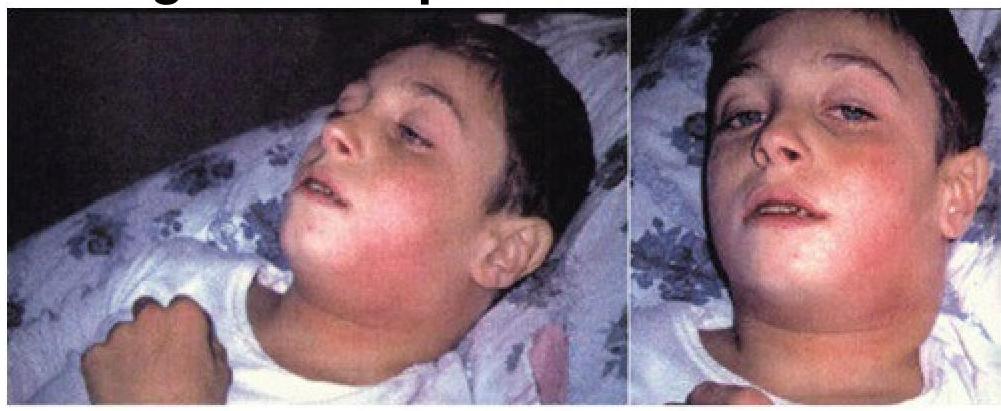
A patient with the following feature shown in the image. The patient reports having another 3-year-old sibling at home, who is fully immunized as per the immunization schedule. What is the best measure to prevent diphtheria in the sibling of the child with diphtheria?
Maximum work hours for a person including overtime under the Factories Act:
Blood bags are disposed of in
Identify the image below:

As per the Sustainable Development Goals, what is the target for Maternal Mortality Ratio (MMR)?
Extended sickness benefit for tuberculosis under the ESI Act is:
In which of the following methods of management is the benefit measured in natural units?
Which of the following diseases is primarily water-related?
A researcher wanted to prove the relation between COPD and smoking. He collected patients records from government hospitals and records of cigarette sales from the finance and taxation department. This is an example of which study design:
NEET-PG 2020 - Community Medicine NEET-PG Practice Questions and MCQs
Question 1: Targeted screening for communicable diseases is most commonly implemented in which population?
- A. Newborns for thyroid disease
- B. Immigrant screening (Correct Answer)
- C. Diabetes mellitus
- D. Cervical cancer screening with Pap smear
Explanation: ***Immigrant screening*** - Targeted screening for communicable diseases such as **tuberculosis**, **hepatitis B**, and **HIV** is commonly implemented in immigrants due to varied disease prevalence in their countries of origin and potential for public health impact. - This screening aims to **prevent the spread** of these diseases within the host country and ensure appropriate medical attention for new arrivals. *Newborns for thyroid disease* - This is an example of **universal newborn screening** for a **non-communicable disease** (congenital hypothyroidism), not targeted screening for communicable diseases. - The purpose is early detection of conditions that can cause **developmental delays** if untreated, not preventing infection spread. *Diabetes mellitus* - Screening for **diabetes** focuses on a **non-communicable metabolic disorder**. - Screening typically targets individuals with risk factors like obesity, family history, or certain ethnic backgrounds, but it's not for communicable diseases. *Cervical cancer screening with Pap smear* - This screens for **cancer** (a non-communicable disease) caused by the **human papillomavirus (HPV)**, but the screening itself is not primarily for a communicable disease. - The Pap smear primarily detects **precancerous and cancerous changes** in cervical cells, rather than active HPV infection or other communicable diseases.
Question 2: A patient with the following feature shown in the image. The patient reports having another 3-year-old sibling at home, who is fully immunized as per the immunization schedule. What is the best measure to prevent diphtheria in the sibling of the child with diphtheria?
- A. Give diphtheria toxoid booster
- B. Give a full course of DPT vaccine
- C. Give prophylactic erythromycin (Correct Answer)
- D. Nothing is required to be done
Explanation: ***Correct: Give prophylactic erythromycin*** - Erythromycin is the **recommended antimicrobial prophylaxis** for close contacts of diphtheria patients to eradicate *Corynebacterium diphtheriae* carriage. - This prevents asymptomatic carriers from transmitting the bacteria, even if vaccinated, as vaccination provides immunity against the toxin, not necessarily against carriage. *Incorrect: Give diphtheria toxoid booster* - While immunization reduces the risk of symptomatic diphtheria disease by inducing **antitoxin immunity**, it does not reliably prevent nasal or pharyngeal carriage of the bacteria. - A booster might be considered if the last dose was more than 5 years ago, but it is not the primary immediate measure to prevent transmission from a known contact. *Incorrect: Give a full course of DPT vaccine* - The patient's sibling is already reported to be **fully immunized**, implying they have received the appropriate doses of the DPT vaccine according to the immunization schedule. - Giving a full course when already immunized would be redundant and ineffective to prevent immediate exposure and potential carriage. *Incorrect: Nothing is required to be done* - Close contacts of diphtheria cases are at **high risk of acquiring and transmitting the infection**, even if they are fully immunized, as immunization protects against the toxin but not necessarily carriage. - Failure to intervene would allow potential colonization and transmission, posing a risk to the community and the contact themselves.
Question 3: Maximum work hours for a person including overtime under the Factories Act:
- A. 48 hours
- B. 50 hours
- C. 60 hours (Correct Answer)
- D. 100 hours
Explanation: ***60 hours*** - Under the **Factories Act**, the total number of hours worked by an adult in any week, including **overtime**, shall not exceed **sixty hours**. - This limit is crucial for ensuring workers' health and safety, preventing **over-fatigue**, and promoting a reasonable work-life balance. *48 hours* - The **Factories Act** stipulates that no adult worker shall be required or allowed to work in a factory for more than **forty-eight hours in any week**. - However, this limit refers to the standard work week and **does not include overtime**, which is allowed within an additional limit. *50 hours* - This option is incorrect as it does not align with the maximum weekly work hours, including overtime, stipulated by the **Factories Act**. - There is no specific provision in the **Factories Act** that sets a combined standard and overtime work limit at exactly 50 hours per week. *100 hours* - This option is significantly higher than the maximum work hours allowed by the **Factories Act**, including overtime. - Working 100 hours per week would be a serious violation of labor laws, as it would expose workers to **severe health risks** and **occupational hazards**.
Question 4: Blood bags are disposed of in
- A. Yellow bag (Correct Answer)
- B. Black bag
- C. Red bag
- D. White bag
Explanation: ***Yellow bag*** - **Yellow bags** are designated for **infectious waste** including items contaminated with **blood and body fluids** according to **Bio-Medical Waste Management Rules, 2016**. - **Blood bags** (both used and expired) are specifically categorized under **soiled waste** requiring disposal in **yellow bags**. - This waste is either incinerated or subjected to plasma pyrolysis to eliminate **bloodborne pathogens**. *Red bag* - **Red bags** are used for **contaminated recyclable waste** such as tubing, catheters, IV sets (without needles), and gloves. - While red bags handle contaminated items, they are meant for waste that can potentially be recycled after appropriate treatment, **not for blood bags**. *Black bag* - **Black bags** are designated for **general non-infectious waste** (municipal solid waste) such as paper, packaging materials, and food waste. - Disposing blood bags in black bags would violate **biomedical waste management regulations** and pose serious **infection control risks**. *White bag* - **White bags/containers** are puncture-proof containers used for **sharp waste** including needles, scalpels, and broken glass. - Blood bags are not classified as sharps and require different disposal methods due to their **infectious liquid content**.
Question 5: Identify the image below:
- A. Female condom (Correct Answer)
- B. Male condom
- C. Chaaya
- D. Today
Explanation: ***Female condom*** - The image displays a **sheath with two rings**, one at each end, which is characteristic of a female condom. The inner ring aids in insertion and secures it inside the vagina, while the outer ring remains outside. - Female condoms are made of **nitrile** or **polyurethane**, making them suitable for individuals with latex allergies, and they can be inserted several hours before intercourse. *Male condom* - A male condom is a **sheath with a rolled rim** at one end and a reservoir tip at the other, designed to be placed over an erect penis. - It does not feature the prominent double-ring structure seen in the image. *Chaaya* - "Chaaya" is not a recognized term for a contraceptive device or a medical instrument. - This option is irrelevant in the context of identifying a personal barrier contraceptive. *Today* - "Today Sponge" is a brand of **contraceptive sponge**, which is a soft, disposable, polyurethane sponge containing spermicide. - The image clearly depicts a sheath-like device with rings, not a sponge.
Question 6: As per the Sustainable Development Goals, what is the target for Maternal Mortality Ratio (MMR)?
- A. < 70 per 100,000 live births (Correct Answer)
- B. < 100 per 100,000 live births
- C. < 7 per 1,000 live births
- D. < 10 per 1,000 live births
Explanation: ***< 70 per 100,000 live births*** - **Sustainable Development Goal (SDG) 3.1** specifically targets reducing the global maternal mortality ratio to less than **70 per 100,000 live births** by 2030. - This target aims to address the significant disparities in maternal mortality rates observed across different regions and countries. *< 100 per 100,000 live births* - While this represents an improvement over current global averages, it is **not the specific target set by SDG 3.1** for maternal mortality. - The SDGs establish a more ambitious threshold to ensure greater progress in maternal health outcomes. *< 7 per 1,000 live births* - This value is equivalent to **700 per 100,000 live births**, which is significantly higher than the SDG target and represents a **much higher maternal mortality rate**. - This option reflects a misunderstanding of the scale and denominator used for maternal mortality ratios in the SDGs. *< 10 per 1,000 live births* - This value is equivalent to **1,000 per 100,000 live births**, which is also **significantly higher than the SDG target**. - This option shows a similar misconception regarding the magnitude and proper reporting of maternal mortality ratios.
Question 7: Extended sickness benefit for tuberculosis under the ESI Act is:
- A. 91 days
- B. 2 years (Correct Answer)
- C. 4 years
- D. 1 year
Explanation: ***2 years*** - Under the **ESI Act 1948**, individuals suffering from **tuberculosis** are eligible for an **extended sickness benefit** period of up to **2 years (730 days)**. - This extended period recognizes the prolonged nature of tuberculosis treatment and recovery, providing financial support beyond the standard sickness benefit. - Other conditions eligible for extended sickness benefit include **leprosy, mental illness, and malignant diseases**. *91 days* - This refers to the **standard sickness benefit** period under the ESI Act, which applies to general illnesses. - **Tuberculosis** is a chronic disease requiring longer treatment duration, thus qualifying for extended benefits, not the standard 91-day period. *1 year* - While longer than the standard sickness benefit, **1 year** is not the specified duration for **extended sickness benefit** for tuberculosis under the ESI Act. - The ESI Act provides a more prolonged period of **2 years** for specific chronic diseases like tuberculosis. *4 years* - **4 years** is an incorrect duration for the **extended sickness benefit** for **tuberculosis** under the ESI Act. - The maximum extended sickness benefit period specified for tuberculosis is **2 years**, not 4 years.
Question 8: In which of the following methods of management is the benefit measured in natural units?
- A. Network analysis
- B. Cost-benefit analysis
- C. Program budgeting system
- D. Cost-effectiveness analysis (Correct Answer)
Explanation: ***Cost-effectiveness analysis*** - In **cost-effectiveness analysis**, the benefits of a healthcare intervention are measured in **natural units** (e.g., lives saved, years of life gained, cases cured, reduction in symptoms). - This method compares the costs of different interventions to achieve a specific health outcome, expressed in a non-monetary unit. *Network analysis* - **Network analysis** is a project management technique used to plan and control complex projects, often for scheduling tasks and identifying critical paths. - Its primary focus is on task dependencies and timelines, not on measuring benefits of management interventions in natural units. *Cost-benefit analysis* - In **cost-benefit analysis**, both the costs and the benefits of an intervention are converted into **monetary units**. - This allows for a comparison where a project is deemed beneficial if its monetary benefits outweigh its monetary costs. *Program budgeting system* - A **program budgeting system** is a financial planning and management tool that links expenditures to the achievement of specific program objectives. - While it focuses on resource allocation and outcomes, it does not primarily measure benefits in natural health units.
Question 9: Which of the following diseases is primarily water-related?
- A. Scabies
- B. Yellow fever
- C. Cholera (Correct Answer)
- D. Dysentery
Explanation: ***Cholera*** - Cholera is caused by the bacterium **Vibrio cholerae**, which is typically transmitted through the consumption of **contaminated water or food**. - This disease is a classic example of a **waterborne illness**, with outbreaks often linked to inadequate sanitation and unsafe drinking water. *Yellow fever* - Yellow fever is a **viral hemorrhagic disease** transmitted by infected **mosquitoes**, primarily Aedes aegypti. - While mosquitoes may breed in water, the disease itself is not directly transmitted through water consumption. *Scabies* - Scabies is a **skin infestation** caused by the mite **Sarcoptes scabiei**, which burrows into the outer layer of the skin. - Transmission occurs through **direct, prolonged skin-to-skin contact**, not through water. *Dysentery* - Dysentery is an **intestinal inflammation** causing bloody diarrhea, which can be caused by bacteria (e.g., Shigella) or amoebas (e.g., Entamoeba histolytica). - Although it can be transmitted through contaminated water or food, it is a broader term for a symptom, and **cholera is more exclusively and primarily focused on water-borne transmission mechanisms**.
Question 10: A researcher wanted to prove the relation between COPD and smoking. He collected patients records from government hospitals and records of cigarette sales from the finance and taxation department. This is an example of which study design:
- A. Cross-sectional
- B. Posological study
- C. Ecological study (Correct Answer)
- D. Operations research
Explanation: ***Ecological study*** - This study design involves analyzing data at a **population level**, rather than individual patient data. The researcher used aggregated data from hospital records (COPD prevalence) and cigarette sales (smoking rates) for populations or groups, not individual patients. - It examines the relationship between an exposure (smoking) and an outcome (COPD) by comparing disease frequencies in different populations with varying levels of exposure. *Cross-sectional* - A cross-sectional study measures the **prevalence** of a disease and exposure at a **single point in time** in individuals. - It does not involve comparing population-level aggregates or using secondary data from different sources to establish associations between population groups. *Posological study* - A posological study focuses on the **dosage** and administration of drugs, often to determine optimal therapeutic regimens. - This term is irrelevant to the described research design, which is concerned with the relationship between smoking and COPD. *Operations research* - Operations research is a discipline that applies analytical methods to improve **decision-making and efficiency** within organizations or systems. - This field is primarily concerned with optimizing processes and resource allocation, not establishing epidemiological associations between risk factors and diseases.