Community Medicine
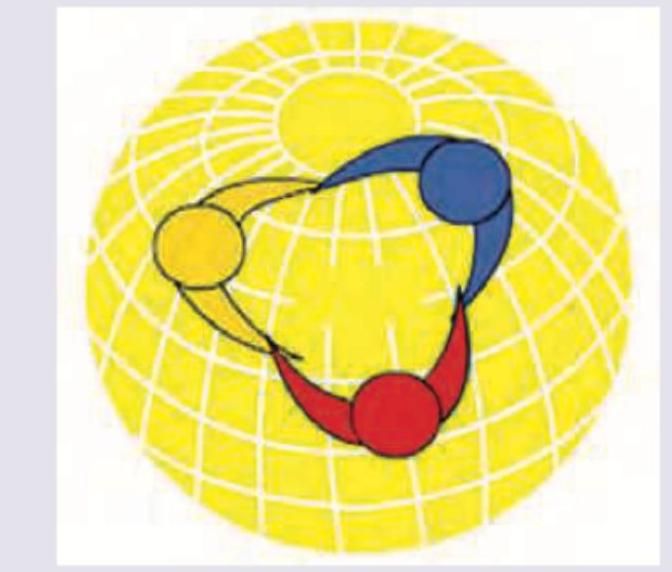
6 questionsIdentify the programme symbol as given in the image:
Identify the programme depicted by symbol as given in the image:

Act pertaining to symbol shown in the image given below was enacted in: (Recent NEET Pattern 2016-17)

Identify the organization depicted by the symbol in the image given below:

Identify the organization depicted by the symbol in the image given below:

Identify the organization depicted in the image given below:

NEET-PG 2017 - Community Medicine NEET-PG Practice Questions and MCQs
Question 261: Identify the programme symbol as given in the image:
- A. NUHM
- B. ICDS (Correct Answer)
- C. NRHM
- D. IDSP
Explanation: ***Correct: ICDS (Integrated Child Development Services)*** - The image depicts the official logo of the **Integrated Child Development Services (ICDS)** program - The three interlocking figures symbolize the comprehensive, integrated approach towards the welfare of **children, mothers, and the community** - The ICDS logo emphasizes the **holistic development** of children, covering aspects like health, nutrition, and early childhood education *Incorrect: NUHM (National Urban Health Mission)* - NUHM focuses on providing **primary health care** to the urban poor - Its logo and visual identity are distinct and do not match the image provided *Incorrect: NRHM (National Rural Health Mission)* - NRHM aims to provide accessible, affordable, and quality health care to the **rural population** - This program's logo is different, typically featuring elements related to rural health and community engagement *Incorrect: IDSP (Integrated Disease Surveillance Programme)* - IDSP focuses on **early warning signals** of outbreaks and rapid response to contain them - Its logo is generally designed to convey concepts of surveillance, monitoring, and disease control, not represented by the interlocking figures in the image
Question 262: Identify the programme depicted by symbol as given in the image:
- A. National Programme for Control of Blindness
- B. Rashtriya Bal Swasthya Karyakram
- C. National Health Mission
- D. Vision 2020: The Right to Sight (Correct Answer)
Explanation: ***Vision 2020: The Right to Sight*** - The symbol is the **eye logo** of Vision 2020, representing the global initiative to eliminate avoidable blindness. - The **red cross** background highlights the medical and humanitarian focus on eye health.
Question 263: Act pertaining to symbol shown in the image given below was enacted in: (Recent NEET Pattern 2016-17)
- A. 2006 (Correct Answer)
- B. 2003
- C. 2011
- D. 1954
Explanation: ***2006*** - The image displays the logo for **FSSAI (Food Safety and Standards Authority of India)**. - The **Food Safety and Standards Act (FSSA)** was enacted in **2006** to consolidate various acts and orders that had hitherto handled food-related issues in various Ministries and Departments. - This Act replaced the earlier Prevention of Food Adulteration Act, 1954. *2003* - This is not the year of enactment of the Food Safety and Standards Act. *2011* - While FSSAI became fully operational in 2011, the **Food Safety and Standards Act was enacted in 2006**. *1954* - This was the year the **Prevention of Food Adulteration Act** was enacted, which was subsequently replaced by the FSSA, 2006.
Question 264: Identify the organization depicted by the symbol in the image given below:
- A. WHO
- B. UNICEF (Correct Answer)
- C. UNDP
- D. FAO
Explanation: ***UNICEF*** - The image displays the official logo of **UNICEF (United Nations Children's Fund)**, characterized by the silhouette of an adult and a child within a globe encircled by olive branches. - This emblem symbolizes UNICEF's dedication to **children's rights and well-being** globally. *WHO* - The **World Health Organization (WHO)** logo typically features the staff of Asclepius (a snake twined around a rod) superimposed on a map of the world. - Its primary focus is on **international public health** rather than specifically children's welfare. *UNDP* - The **United Nations Development Programme (UNDP)** logo usually consists of a stylized globe or a combination of its acronym and the UN emblem. - UNDP's mission is centered on **poverty eradication** and sustainable development, not primarily children's aid. *FAO* - The **Food and Agriculture Organization of the United Nations (FAO)** logo features a stylized image of wheat ears and the organization's acronym. - Its main objective is to **achieve food security** for all, ensuring people have regular access to enough high-quality food.
Question 265: Identify the organization depicted by the symbol in the image given below:
- A. WHO (Correct Answer)
- B. FAO
- C. UNDP
- D. NATO
Explanation: ***WHO*** - The symbol is the official emblem of the **World Health Organization (WHO)**, featuring the **Rod of Asclepius** (a snake entwined around a staff), which is a traditional symbol of medicine and healthcare. - This emblem is set against a **world map** surrounded by an olive wreath, signifying global health and peace. *FAO* - The **Food and Agriculture Organization (FAO)** emblem typically depicts an ear of wheat and the motto "Fiat Panis" (Let There Be Bread), symbolizing global efforts to defeat hunger. - It does not feature the Rod of Asclepius or a globe in the same manner as the WHO emblem. *UNDP* - The **United Nations Development Programme (UNDP)** uses a globe with lines of latitude and longitude, often surrounded by olive branches, but it does not incorporate the medical symbol of the Rod of Asclepius. - Its logo represents global initiatives focused on poverty reduction and sustainable development. *NATO* - The **North Atlantic Treaty Organization (NATO)** emblem is a four-pointed star with a compass rose symbol, enclosed in a circle, representing the alliance's transatlantic links and collective defense. - It has no medical symbolism and is distinctly different from the image provided.
Question 266: Identify the organization depicted in the image given below:
- A. WHO
- B. World Bank (Correct Answer)
- C. UNDP
- D. UNAIDS
Explanation: ***World Bank*** - The image displays the **official logo of the World Bank**, which is a stylized globe with latitude and longitude lines on a blue background. - This logo is widely recognized as representing the **World Bank Group**, an international financial institution providing financial and technical assistance to developing countries. *WHO* - The **WHO (World Health Organization)** logo features the **Rod of Asclepius** (a snake coiling around a staff) superimposed on a map of the world. - The provided image does **not contain the Rod of Asclepius**, which is a distinct symbol of the WHO. *UNDP* - The **UNDP (United Nations Development Programme)** logo typically features the **UN emblem** (a map of the world projected from the North Pole, encircled by olive branches) in green. - The image shown does **not resemble the UN emblem** or its characteristic green color scheme for the UNDP. *UNAIDS* - The **UNAIDS (Joint United Nations Programme on HIV/AIDS)** logo incorporates the **UN emblem** along with the organization's name, often with a red ribbon or text emphasizing its focus on HIV/AIDS. - The image provided does **not include the UN emblem or any elements related to HIV/AIDS awareness**, which are central to the UNAIDS branding.
General Medicine
2 questionsWhich of the following is correct about the image shown?

A diplomat from Peru was posted to India last week. Today he has brought his 10-year-old daughter to your clinic since the child has developed this swelling in the eye and feels feverish. Comment on the clinical sign and the insect bite responsible for the same:

NEET-PG 2017 - General Medicine NEET-PG Practice Questions and MCQs
Question 261: Which of the following is correct about the image shown?
- A. Cutaneous Larva migrans
- B. Visceral larva migrans
- C. Tenia solium
- D. Dracunculus (Correct Answer)
Explanation: ***Dracunculus*** - The image shows a procedure for extracting a **guinea worm (Dracunculus medinensis)** by gradually winding it around a stick. - This characteristic method of removal is pathognomonic for **dracunculiasis**. *Cutaneous Larva migrans* - This condition presents as **serpiginous, erythematous, pruritic tracks** on the skin, caused by hookworm larvae. - It does not involve a visible worm being extracted with a stick. *Visceral larva migrans* - This is caused by the migration of nematode larvae (typically *Toxocara canis* or *cati*) through internal organs, with systemic symptoms. - It does not manifest as a worm emerging from a skin lesion. *Tenia solium* - *Taenia solium* (pork tapeworm) infection can manifest as taeniasis (intestinal infection) or **cysticercosis** (larval cysts in tissues). - Neither of these presentations involves a worm being manually extracted from a skin lesion in this manner.
Question 262: A diplomat from Peru was posted to India last week. Today he has brought his 10-year-old daughter to your clinic since the child has developed this swelling in the eye and feels feverish. Comment on the clinical sign and the insect bite responsible for the same:
- A. Faget sign, Reduvid bug
- B. Chigger allergy, Trombiculid mites
- C. Romana sign, Triatomine bug (Correct Answer)
- D. Eschar, Cimex Lectularis
Explanation: ***Romana sign, Triatomine bug*** - The image depicts **Romana sign**, characterized by **unilateral periorbital edema**, which is a classic early clinical manifestation of **Chagas disease** (American trypanosomiasis). - This sign is caused by the bite of a **Triatomine bug** (also known as a **kissing bug**) near the eye or by rubbing its feces containing *Trypanosoma cruzi* into the eye. The diplomat's origin from Peru suggests a potential exposure in an endemic region. *Faget sign, Reduvid bug* - **Faget's sign** is a clinical finding where the **pulse rate remains normal or decreases** despite a fever, which is typically found in diseases like **typhoid fever** or **yellow fever**, not associated with a specific insect bite causing periorbital edema. - While Triatomine bugs belong to the **Reduviidae family**, "Reduvid bug" is a broad term, and Faget's sign is unrelated to the described swelling. *Chigger allergy, Trombiculid mites* - **Chigger bites** (from Trombiculid mites) typically cause intensely **itchy, reddish welts or papules**, often in clusters, commonly on ankles, wrists, or waistbands. - They do not typically present as a significant unilateral periorbital edema like Romana sign and are not a cause of Chagas disease. *Eschar, Cimex Lectularis* - An **eschar** is a dark, scab-like lesion that occurs due to necrosis of skin tissue, often seen in conditions like **rickettsial diseases** (e.g., scrub typhus) following a tick or mite bite. - **Cimex Lectularis** refers to **bed bugs**, which cause itchy, erythematous wheals or papules, often in a linear pattern, but do not produce an eschar or Romana sign.
Obstetrics and Gynecology
1 questionsWhich is not correct regarding the contraceptive method being used?

NEET-PG 2017 - Obstetrics and Gynecology NEET-PG Practice Questions and MCQs
Question 261: Which is not correct regarding the contraceptive method being used?
- A. Inner ring can irritate penis
- B. Made of polyurethane
- C. Has lower failure rate than male condom (Correct Answer)
- D. Pregnancy can occur if penis enters between the device and vagina
Explanation: ***Has lower failure rate than male condom*** - The **female condom** (as depicted in the image) generally has a **higher typical use failure rate** than the male condom based on most effectiveness studies. - While male condoms have an 18% typical use failure rate, female condoms have a typical use failure rate of about 21%. *Inner ring can irritate penis* - The flexible, **inner ring** of the female condom, which helps secure it in place against the cervix, can potentially cause **irritation to the penis** during intercourse due to friction. - This is a known concern for some users and their partners. *Made of polyurethane* - Female condoms are traditionally made of **polyurethane**, which is a synthetic rubber suitable for individuals with **latex allergies**, allowing for use with oil-based lubricants. - Newer versions may also be made of **nitrile** or other synthetic materials. *Pregnancy can occur if penis enters between the device and vagina* - If the **penis slips between the outer ring** of the female condom and the vaginal wall, sperm can be deposited directly into the vagina, leading to potential **pregnancy**. - Proper insertion and positioning are crucial to prevent this type of user error.
Pediatrics
1 questionsA child presents with the ocular findings shown in the image below. Identify the most likely underlying illness:

NEET-PG 2017 - Pediatrics NEET-PG Practice Questions and MCQs
Question 261: A child presents with the ocular findings shown in the image below. Identify the most likely underlying illness:
- A. Tetanus
- B. Measles
- C. Trachoma
- D. Pertussis (Correct Answer)
Explanation: ***Pertussis (Whooping Cough)*** - The image shows **subconjunctival hemorrhage**, which is a **classic complication** of pertussis in children - Pertussis causes severe **paroxysmal coughing fits** that dramatically increase intrathoracic and intravascular pressure - This elevated pressure leads to rupture of conjunctival blood vessels, resulting in subconjunctival hemorrhages and facial petechiae - These hemorrhages are well-recognized **diagnostic clues** for pertussis, especially when accompanied by the characteristic whooping cough - This is a **primary manifestation** of the disease process, not merely an incidental finding *Trachoma* - Trachoma, caused by *Chlamydia trachomatis*, presents with **chronic follicular conjunctivitis** and progressive scarring - Classic features include follicles on upper tarsal conjunctiva, conjunctival scarring, trichiasis, and pannus formation - While it causes conjunctival inflammation, **acute subconjunctival hemorrhage is NOT a typical feature** of trachoma - Trachoma is a chronic, scarring disease rather than an acute hemorrhagic condition *Tetanus* - Tetanus is a neurological disorder characterized by **muscle rigidity** and **spasms**, beginning with trismus (lockjaw) - Ocular manifestations are limited to **risus sardonicus** (facial muscle spasm) and potential ophthalmoplegia - Does NOT cause subconjunctival hemorrhage as a direct manifestation *Measles* - Measles presents with **maculopapular rash**, fever, the three C's (cough, coryza, conjunctivitis), and **Koplik spots** - The conjunctivitis in measles is typically a **bilateral, non-hemorrhagic inflammation** with watery discharge - Does NOT typically cause prominent subconjunctival hemorrhage as shown in the image