Anatomy
2 questionsThe image shows:

The image shows:

NEET-PG 2017 - Anatomy NEET-PG Practice Questions and MCQs
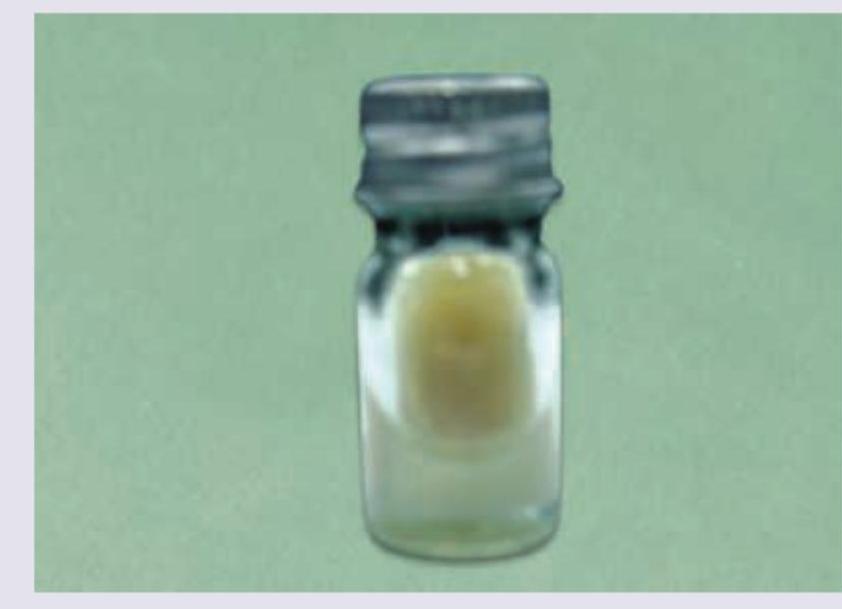
Question 251: The image shows:
- A. Lowenstein Jensen media
- B. Wilson-Blair medium
- C. Loeffler serum slope (Correct Answer)
- D. Selenite F broth
Explanation: ***Loeffler serum slope*** - This image shows a **Loeffler serum slope**, characterized by its **pale yellow, solidified appearance** in a test tube, often used for culturing *Corynebacterium diphtheriae*. - The medium provides various nutrients and typically encourages the rapid growth of diphtheria bacilli, producing **characteristic morphology**. *Lowenstein Jensen media* - **Lowenstein Jensen media** is typically **greenish** due to the presence of **malachite green**, which inhibits the growth of most contaminants. - It is primarily used for the cultivation of **mycobacteria**, particularly *Mycobacterium tuberculosis*. *Wilson-Blair medium* - **Wilson-Blair medium** is a classic selective medium used for the isolation of *Salmonella typhi* and other *Salmonella* species, appearing as **black colonies**. - This medium contains **bismuth sulfite**, which imparts a distinctive black color to the colonies due to hydrogen sulfide production. *Selenite F broth* - **Selenite F broth** is a **clear enrichment broth** used for the isolation of *Salmonella* and *Shigella* species from fecal samples. - It works by **inhibiting the growth of coliforms** while allowing *Salmonella* and *Shigella* to multiply.
Question 252: The image shows:
- A. Lowenstein Jensen media
- B. Wilson-Blair medium
- C. Loeffler serum slope
- D. Selenite F broth (Correct Answer)
Explanation: ***Selenite F broth*** - This image displays **Selenite F broth**, a **selective enrichment medium** typically used for the isolation of *Salmonella* and *Shigella* species. - The characteristic **pale blue-green color** is due to the oxidation of the selenite salt. *Lowenstein Jensen media* - **Lowenstein Jensen media** is a solid, egg-based medium that usually appears **green** and is used for the cultivation of **Mycobacterium tuberculosis**. - It would typically be a solid slant rather than a liquid broth, and the color is distinctly different. *Wilson-Blair medium* - **Wilson-Blair medium** (Bismuth Sulfite Agar) is a solid, opaque medium, generally appearing **black** due to the presence of bismuth sulfite, used for isolating *Salmonella typhi*. - It is a solid agar medium, not a liquid broth as shown in the image. *Loeffler serum slope* - **Loeffler serum slope** is a solid, yellowish-white medium containing inspissated serum, primarily used for the isolation and cultivation of **Corynebacterium diphtheriae**. - It would be a solid slanted surface, not a blue-green liquid broth.
Community Medicine
4 questionsThe following statistical diagram is known as

The following symbol is used to depict awareness for which disease?

The logo of which national health programme is shown below? (Recent NEET Pattern 2016-17)

Identify the programme depicted by symbol as given in the image: (Recent NEET Pattern 2016-17)

NEET-PG 2017 - Community Medicine NEET-PG Practice Questions and MCQs
Question 251: The following statistical diagram is known as
- A. Kaplan Meier plot
- B. Spaghetti plot
- C. Funnel plot
- D. Forest plot (Correct Answer)
Explanation: ***Forest plot*** - This diagram, featuring a series of horizontal lines (representing **confidence intervals**) for different studies or outcomes, centered around a point estimate (often a **hazard ratio** or odds ratio), is characteristic of a forest plot. - Forest plots are commonly used in **meta-analyses** to graphically present the results of individual studies and their combined effect. *Kaplan Meier plot* - A Kaplan-Meier plot is a **survival curve** that shows the probability of a subject surviving beyond a certain time point. - It consists of a **stepwise function** decreasing over time, rather than individual point estimates with confidence intervals. *Spaghetti plot* - A spaghetti plot is used to display **multiple time series** on a single graph, where each line represents an individual's data over time. - This type of plot helps visualize **individual variability** and trends, but it does not represent hazard ratios or confidence intervals in the way shown. *Funnel plot* - A funnel plot is a scatter plot used to detect **publication bias** in meta-analyses, where the effect size is plotted against a measure of study precision. - It typically appears as a symmetrical, **funnel-shaped distribution** of points, which is visually distinct from the given diagram.
Question 252: The following symbol is used to depict awareness for which disease?
- A. Diabetes
- B. Breast cancer (Correct Answer)
- C. Cervical cancer
- D. Hypertension
Explanation: ***Breast cancer*** - The **pink ribbon** is an internationally recognised symbol for breast cancer awareness. - It is prominently used in campaigns, especially during **Breast Cancer Awareness Month** in October, to promote screening and early detection. *Diabetes* - The symbol for diabetes awareness is typically a **blue circle**, representing the global unity in the fight against diabetes. - While it's a significant health issue, it does not use the pink ribbon for its awareness campaigns. *Cervical cancer* - The awareness ribbon for cervical cancer is typically **teal and white**. - This symbol highlights the importance of vaccination and regular screening tests like Pap smears. *Hypertension* - There isn't a universally recognized ribbon symbol for hypertension; however, sometimes a **red dress** or variations of a **red ribbon** are used for heart health awareness in general. - Hypertension awareness focuses on lifestyle modifications, regular monitoring, and medication adherence.
Question 253: The logo of which national health programme is shown below? (Recent NEET Pattern 2016-17)
- A. RCH (Correct Answer)
- B. NRHM
- C. NPCDCS
- D. Navjaat Shishu Suraksha Karyakram
Explanation: ***Correct Option: RCH*** - The logo shown, with the tagline **"Health in Your Hands"** (and its Hindi equivalent), is the official logo for the **Reproductive and Child Health (RCH)** program in India. - This program focuses on improving the health of mothers, children, and adolescents through various interventions. *Incorrect Option: NRHM* - The **National Rural Health Mission (NRHM)** aims to provide accessible, affordable, and accountable healthcare, primarily to rural populations. - Its logo and thematic focus are broader than the family-centric imagery of the RCH logo, which specifically emphasizes reproductive and child health. *Incorrect Option: NPCDCS* - The **National Programme for Prevention and Control of Cancer, Diabetes, Cardiovascular Diseases and Stroke (NPCDCS)** focuses on non-communicable diseases. - Its objectives and visual branding are distinct from the RCH program, which targets maternal and child health. *Incorrect Option: Navjaat Shishu Suraksha Karyakram* - The **Navjaat Shishu Suraksha Karyakram** is a specific initiative under the broader RCH program, focusing on essential newborn care at birth. - While related, it is a component program, and its logo would be more specific to newborn care rather than the general "Health in Your Hands" message encompassing reproductive and child health.
Question 254: Identify the programme depicted by symbol as given in the image: (Recent NEET Pattern 2016-17)
- A. NPCB
- B. NVBDCP (Correct Answer)
- C. RCH
- D. ICDS
Explanation: **NVBDCP** - The image depicts a family with a child, surrounded by a protective arc, which is the official logo for the **National Vector Borne Disease Control Programme (NVBDCP)**. - This programme focuses on controlling vector-borne diseases that affect families and communities, reflecting the protective and public health aspect of the logo. *NPCB* - NPCB stands for the **National Programme for Control of Blindness and Visual Impairment**, which has a distinct logo focused on eyes or vision-related imagery. - The logo in the question does not contain any visual elements related to eyes or vision. *RCH* - RCH stands for **Reproductive and Child Health Programme**, which usually focuses on maternal and child health, often symbolized by a mother and child figure. - While it involves children, the common RCH logos generally emphasize the mother and child in a specific context of reproduction and maternal care, not a general family as shown. *ICDS* - ICDS stands for **Integrated Child Development Services**, aiming at holistic development of young children, pregnant women, and lactating mothers. - Its logo typically features imagery reflecting child development, nutrition, and early childhood care, which is different from the protective family symbol shown.
General Medicine
1 questionsAll are correct about the condition shown below except:

NEET-PG 2017 - General Medicine NEET-PG Practice Questions and MCQs
Question 251: All are correct about the condition shown below except:
- A. Calcification of interosseous membrane (Correct Answer)
- B. Multiple lytic lesions in vertebra
- C. Barrel chest
- D. Bony exostosis in limb bones
Explanation: ***Calcification of interosseous membrane*** - The image shows features consistent with **fluorosis**, a condition caused by excessive fluoride intake. While fluorosis can lead to widespread calcification of ligaments and tendons, **calcification of the interosseous membrane** is a characteristic but often later finding. - The patient exhibits **genu valgum** (knock-knees) and the radiograph of the forearm shows diffuse increased bone density and osteosclerosis, typical of fluorosis. *Multiple lytic lesions in vertebra* - **Fluorosis** primarily causes **osteosclerosis** (increased bone density) and periosteal bone formation, not lytic lesions. - **Lytic lesions in vertebrae** are more often associated with conditions like multiple myeloma, metastatic cancer, or infections, which involve bone destruction rather than excessive bone formation. *Barrel chest* - **Barrel chest** is typically associated with chronic obstructive pulmonary disease (COPD) or other respiratory conditions that cause hyperinflation of the lungs. - While **skeletal deformities** are common in advanced fluorosis, a "barrel chest" is not a direct or characteristic manifestation of the condition. *Bony exostosis in limb bones* - **Bony exostoses** (osteochondromas) are generally seen in hereditary multiple exostoses or can be isolated benign bone tumors. - While fluorosis causes irregular new bone formation and thickening of long bones, specific, discrete **bony exostoses** are not a typical feature; rather, it's a more generalized osteosclerosis and periostitis.
Microbiology
3 questionsThe image shows:

Which of the following is correct about the media shown below?

The following diagram depicts blood smear of which species?

NEET-PG 2017 - Microbiology NEET-PG Practice Questions and MCQs
Question 251: The image shows:
- A. Alkaline peptone water
- B. Lowenstein Jensen media
- C. Cary Blair medium
- D. Robertson cooked meat broth (Correct Answer)
Explanation: ***Robertson cooked meat broth*** - The image displays a glass jar containing a **meat-based medium** at the bottom, covered with a liquid, which is characteristic of Robertson cooked meat broth. - This medium is primarily used for the **cultivation of anaerobic bacteria**, as the meat particles create an anaerobic environment and provide nutrients. *Alkaline peptone water* - Alkaline peptone water is a **liquid enrichment medium** that appears as a clear, yellowish broth without any particulate matter like cooked meat. - It is specifically used for the enrichment of *Vibrio cholerae* due to its high pH. *Lowenstein Jensen media* - Lowenstein Jensen media is a **solid egg-based medium** that is typically green in color and typically slants in test tubes or petri dishes. - It is used for the isolation and culture of **mycobacteria**, and its appearance is distinctly different from the image. *Cary Blair medium* - Cary Blair medium is a **semisolid transport medium** used for the preservation of enteric bacteria in stool samples. - It appears as a clear or slightly opalescent gel in a tube and does not contain visible chunks of meat.
Question 252: Which of the following is correct about the media shown below?
- A. Saccharolytic bacteria turn meat black
- B. Proteolytic bacteria turn meat red
- C. Liquid paraffin layering over the broth prevents air entry (Correct Answer)
- D. Favor growth of microaerophilic bacteria
Explanation: ***Liquid paraffin layering over the broth prevents air entry*** - The image depicts **Cooked Meat Medium (CMM)**, which is used primarily for cultivating **anaerobic bacteria**, particularly Clostridia species. - **Liquid paraffin layering** on top of the broth is a key feature of CMM that **creates anaerobic conditions** by preventing oxygen diffusion into the medium. - This technique, combined with the reducing substances from meat particles, ensures a truly anaerobic environment suitable for obligate anaerobes. *Saccharolytic bacteria turn meat black* - **Saccharolytic bacteria** primarily ferment carbohydrates and produce acid/gas, but do not typically cause blackening of meat. - Blackening in CMM is associated with **hydrogen sulfide (H2S) production** by proteolytic bacteria, not saccharolytic activity. *Proteolytic bacteria turn meat red* - This is incorrect. **Proteolytic bacteria** break down proteins and typically turn the meat particles **black** due to H2S production. - The digestion of meat proteins by proteolytic Clostridia results in darkening (blackening), not reddening of the medium. *Favor growth of microaerophilic bacteria* - CMM is designed for **anaerobic bacteria**, not microaerophiles. - **Microaerophilic bacteria** require low oxygen tension (5-10% O2) and are cultivated in specialized conditions like candle jars or microaerophilic atmosphere generators, not in CMM. - CMM provides an anaerobic environment through liquid paraffin seal and reducing agents from meat.
Question 253: The following diagram depicts blood smear of which species?
- A. Plasmodium malariae
- B. Plasmodium ovale
- C. Plasmodium falciparum (Correct Answer)
- D. Plasmodium vivax
Explanation: ***Plasmodium falciparum*** - The image displays characteristic **crescent-shaped or banana-shaped gametocytes** (stages 16-20), which are **pathognomonic for *Plasmodium falciparum*** - The earlier stages (1-5) represent ring forms (multiple rings per RBC, delicate ring forms) - Subsequent stages (6-15) show maturation culminating in the distinct **crescentic gametocytes** - This morphology is the **key distinguishing feature** of P. falciparum *Plasmodium vivax* - Produces **oval-shaped gametocytes**, not crescent-shaped - Characterized by enlarged RBCs with **Schüffner's dots** - Shows amoeboid trophozoites, not seen in this smear *Plasmodium malariae* - Produces **oval to round gametocytes** - Characteristic **band forms** and **rosette-shaped schizonts** (8-12 merozoites) - Not crescent-shaped as shown in the image *Plasmodium ovale* - Produces **oval gametocytes** similar to P. vivax - RBCs show **fimbriated edges** and Schüffner's dots - Does not produce crescent-shaped gametocytes