Identify the organization depicted in the image given below:

Which is correct about the Vaccine Vial monitor shown in the image? (Recent NEET Pattern 2016-17)

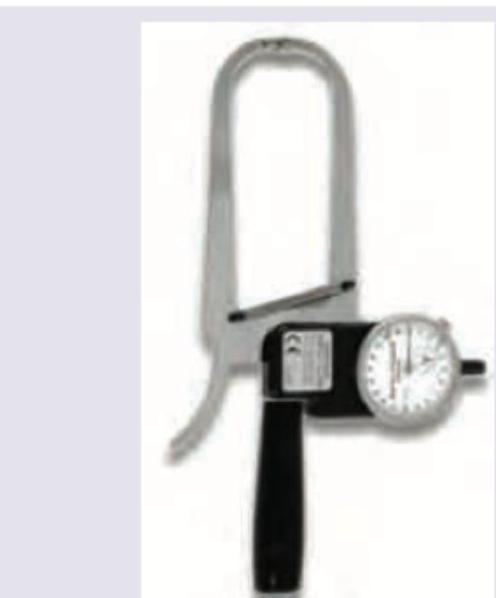
The following instrument is used for the measurement of: (Recent NEET Pattern 2016-17)

The image shows a special ward in a district hospital. What is it called and what should be the minimum number of beds?

NEET-PG 2017 - Community Medicine NEET-PG Practice Questions and MCQs
Question 11: Identify the organization depicted in the image given below:

- A. WHO
- B. World Bank (Correct Answer)
- C. UNDP
- D. UNAIDS
Explanation: ***World Bank*** - The image displays the **official logo of the World Bank**, which is a stylized globe with latitude and longitude lines on a blue background. - This logo is widely recognized as representing the **World Bank Group**, an international financial institution providing financial and technical assistance to developing countries. *WHO* - The **WHO (World Health Organization)** logo features the **Rod of Asclepius** (a snake coiling around a staff) superimposed on a map of the world. - The provided image does **not contain the Rod of Asclepius**, which is a distinct symbol of the WHO. *UNDP* - The **UNDP (United Nations Development Programme)** logo typically features the **UN emblem** (a map of the world projected from the North Pole, encircled by olive branches) in green. - The image shown does **not resemble the UN emblem** or its characteristic green color scheme for the UNDP. *UNAIDS* - The **UNAIDS (Joint United Nations Programme on HIV/AIDS)** logo incorporates the **UN emblem** along with the organization's name, often with a red ribbon or text emphasizing its focus on HIV/AIDS. - The image provided does **not include the UN emblem or any elements related to HIV/AIDS awareness**, which are central to the UNAIDS branding.
Question 12: Which is correct about the Vaccine Vial monitor shown in the image? (Recent NEET Pattern 2016-17)
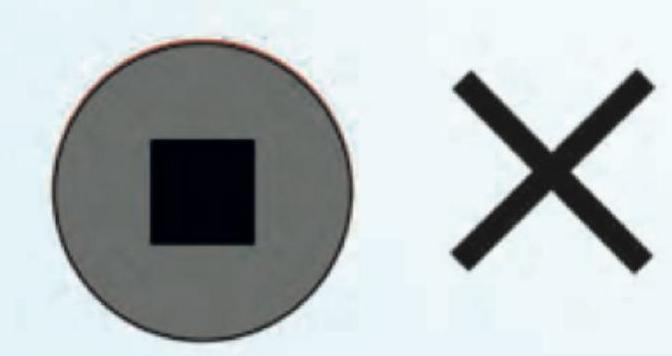
- A. Vaccine can be used, if expiry date not passed
- B. Vaccine can be used, after expiry date
- C. Vaccine cannot be used, irrespective of expiry date (Correct Answer)
- D. Vaccine is at discard point, consult supervisor
Explanation: ***Vaccine cannot be used, irrespective of expiry date*** - The image shows a **darker inner square** compared to the outer circle, indicating that the vaccine has been exposed to detrimental heat. - A VVM turning dark signifies that the vaccine has lost its **potency** and should not be administered, regardless of the expiry date. *Vaccine can be used, if expiry date not passed* - This statement is incorrect because the VVM clearly indicates **heat exposure** has compromised vaccine quality, making it unsuitable for use. - The VVM overrides the expiry date when it shows significant heat damage, as vaccine potency is reduced even if not expired. *Vaccine can be used, after expiry date* - This is incorrect as a vaccine should never be used **after its expiry date**, irrespective of the VVM status, as sterility and potency cannot be guaranteed. - Using expired vaccines poses a **health risk** and may not provide adequate protection. *Vaccine is at discard point, consult supervisor* - While it is at the discard point, consulting a supervisor is not the primary instruction; the vaccine is simply **unsuitable for use**. - The VVM is designed to be a **clear indicator** for immediate action, not necessarily requiring further consultation for the general health worker.
Question 13: The following instrument is used for the measurement of: (Recent NEET Pattern 2016-17)
- A. Head circumference
- B. Chest circumference
- C. Mid arm circumference
- D. Skin fold thickness (Correct Answer)
Explanation: ***Skin fold thickness*** - The instrument shown is a **skin fold caliper**, specifically designed to measure the thickness of subcutaneous fat at various body sites. - This measurement is used to estimate **body fat percentage** and assess nutritional status. *Head circumference* - Head circumference is measured using a **flexible measuring tape**, not a caliper, to assess head growth and detect conditions like microcephaly or hydrocephalus. - This instrument's design is unsuitable for measuring a large, curved circumference. *Chest circumference* - Chest circumference is also measured with a **flexible measuring tape** around the chest, typically at the nipple line, to assess growth and respiratory function. - The caliper's limited span makes it impractical for measuring the chest. *Mid arm circumference* - Mid-arm circumference is measured using a **flexible measuring tape** around the mid-upper arm to assess nutritional status, especially in children. - While a caliper could measure arm *thickness*, it doesn't provide the circumference directly, which is the standard measurement.
Question 14: The image shows a special ward in a district hospital. What is it called and what should be the minimum number of beds?
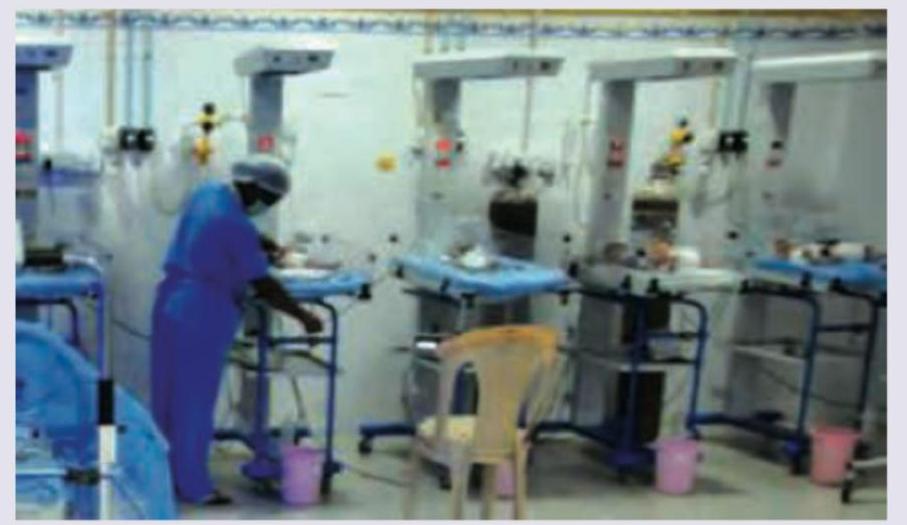
- A. Newborn care corner, 12 beds
- B. Newborn stabilization units, 4 beds
- C. Special newborn care unit, 12 beds (Correct Answer)
- D. Essential newborn care unit, 4 beds
Explanation: ***Special newborn care unit, 12 beds*** - This setup, with multiple incubators and specialized equipment, is characteristic of a **Special Newborn Care Unit (SNCU)**. - An SNCU in a district hospital is designed for critically ill and low birth weight newborns and should have a minimum of **12 beds** to accommodate patient load and provide comprehensive care. *Newborn care corner, 12 beds* - A **Newborn Care Corner** is a much simpler facility, usually found in a delivery room or operating theatre, providing basic care immediately after birth. - It does not involve multiple incubators or the intensive care observed in the image, and the bed count is irrelevant for a care corner. *Newborn stabilization units, 4 beds* - **Newborn Stabilization Units (NBSU)** are meant for stabilizing sick newborns before referral to a higher facility. - They typically have fewer beds (often 4-6) and less advanced equipment than an SNCU, making this option inconsistent with the image's complexity. *Essential newborn care unit, 4 beds* - **Essential Newborn Care (ENC)** primarily focuses on routine care for healthy newborns, such as breastfeeding support, thermal protection, and hygiene. - It does not involve intensive care equipment like incubators and ventilators seen in the picture, and the bed count is too low for the shown facility.