What is the treatment of choice in desmoid tumors?
Which of the following is resected in Whipple's operation, except?
CA Breast may locally spread to all of the following muscles except
A 45-year-old female underwent a modified radical mastectomy with axillary clearance for breast cancer. Post-surgery, she is unable to lift her arm above her head. Which nerve is most likely to be injured?
A 22 year old woman comes with a non progressive mass in the left breast since 6 months. There are no associated symptoms. Examination shows a mobile mass not attached to the overlying skin or underlying tissue. The possible diagnosis is
Which of the following statements about heart transplantation is false?
What is the most common cause of lateral aberrant thyroid tissue?
A patient presents with abdominal pain. On physical examination there was abdominal guarding and tenderness. A plain erect chest X-ray reveals air under diaphragm. Probable diagnosis is
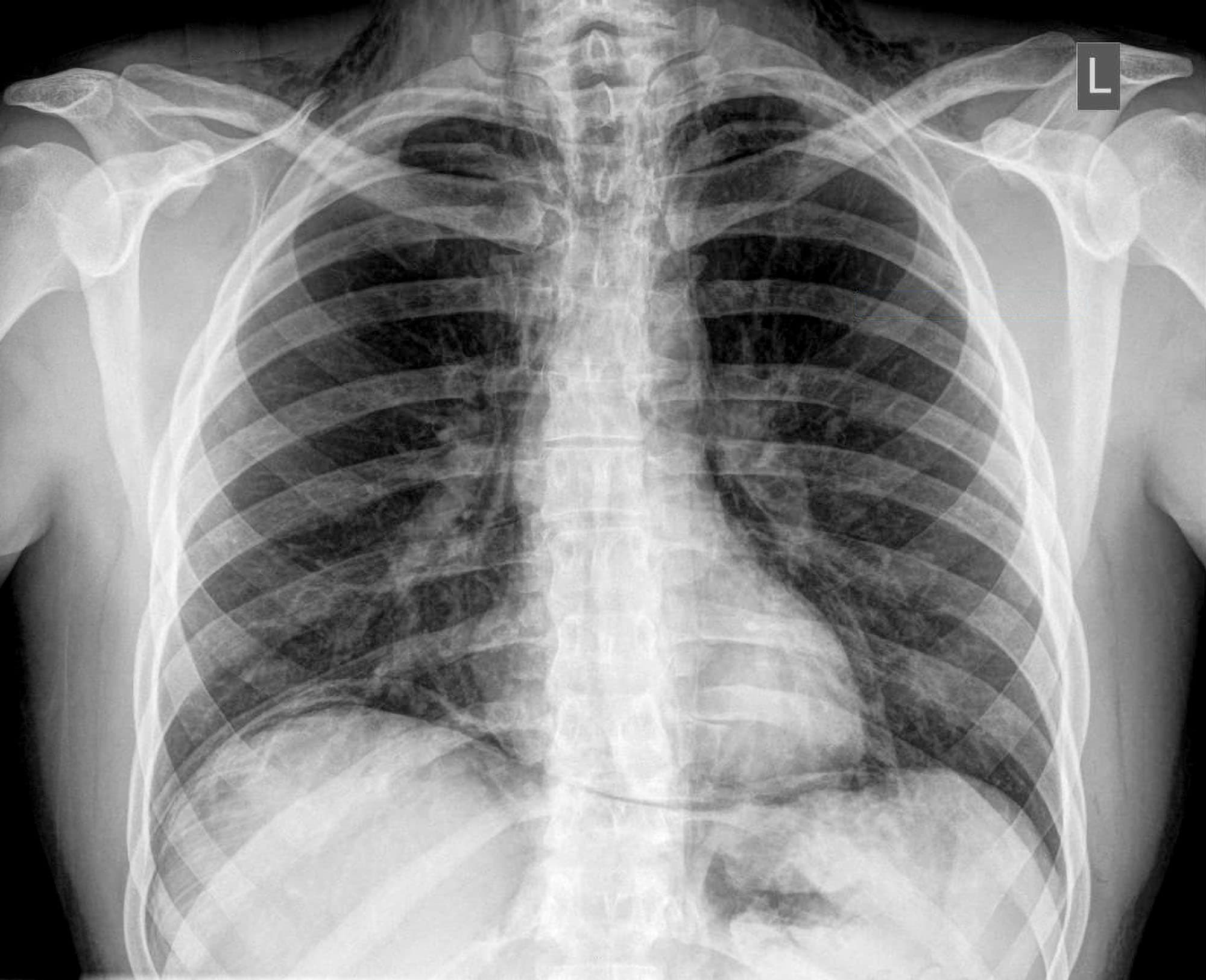
What is the most common site of injury in an underwater blast?
Not true about gas gangrene:
NEET-PG 2015 - Surgery NEET-PG Practice Questions and MCQs
Question 71: What is the treatment of choice in desmoid tumors?
- A. Irradiation
- B. Wide excision (Correct Answer)
- C. Local excision
- D. Local excision following radiation
Explanation: ***Wide excision*** - For **desmoid tumors**, **complete surgical resection with clear margins** is the primary treatment of choice due to their infiltrative nature and high recurrence rates. - This approach aims to minimize local recurrence and prevent tumor progression, which can impact adjacent structures. *Irradiation* - **Radiation therapy** is typically reserved as an **adjuvant** treatment after surgery or for unresectable tumors, not as a primary standalone treatment. - While it can help reduce recurrence rates, it carries risks of **secondary malignancies** and local tissue damage. *Local excision* - **Local excision** alone is insufficient for desmoid tumors due to their **infiltrative growth pattern** and high propensity for **local recurrence** if positive margins remain. - It often leads to incomplete removal, necessitating further intervention and increasing the risk of tumor progression. *Local excision following radiation* - Combining local excision with initial radiation is not the preferred sequence; **wide surgical excision** is typically performed first. - Radiation might be considered preoperatively in specific cases to **reduce tumor size** or postoperatively for **positive margins**, but starting with local excision after initial radiation is not the standard primary management.
Question 72: Which of the following is resected in Whipple's operation, except?
- A. Duodenum
- B. Head of pancreas
- C. Neck of pancreas (Correct Answer)
- D. Common bile duct
Explanation: ***Neck of pancreas*** - In a **Whipple procedure** (pancreaticoduodenectomy), the **neck of the pancreas** is the site of transection (division), not resection. - The **head of the pancreas** (distal to the neck) is removed, while the **body and tail** (proximal to the neck) are preserved. - The transected surface at the neck is anastomosed to the jejunum to maintain pancreatic drainage. *Duodenum* - The **entire duodenum** is resected during a Whipple operation. - This is necessary because the **head of the pancreas** is intimately involved with the duodenum, sharing blood supply and lymphatic drainage. *Head of pancreas* - The **head of the pancreas** is the primary target for resection in a Whipple procedure. - This is typically performed for **malignancies** (pancreatic or periampullary tumors) or severe inflammatory conditions affecting this region. *Common bile duct* - The **distal common bile duct** is resected as part of the specimen to ensure complete tumor excision with adequate margins. - The remaining **proximal common bile duct** is then anastomosed to the jejunum (hepaticojejunostomy).
Question 73: CA Breast may locally spread to all of the following muscles except
- A. Latissimus Dorsi (Correct Answer)
- B. Pectoralis Minor
- C. Serratus Anterior
- D. Pectoralis Major
Explanation: ***Latissimus Dorsi*** - The **latissimus dorsi** muscle is located on the posterior aspect of the trunk and arm, significantly deeper and further away from the breast tissue compared to other surrounding muscles. - Direct local invasion of breast cancer to the latissimus dorsi is rare and typically requires extensive tumor growth or metastasis to more distant sites before affecting this muscle. *Pectoralis Minor* - The **pectoralis minor** muscle lies directly beneath the pectoralis major and is in close proximity to the deeper aspects of the breast tissue. - Tumors that invade the **deep fascia** of the breast can directly extend into this muscle. *Serratus Anterior* - The **serratus anterior** muscle is located on the lateral wall of the thorax, forming part of the chest wall beneath the breast. - **Aggressive breast cancers**, particularly those in the outer quadrants, can invade the fascial planes covering this muscle. *Pectoralis Major* - The **pectoralis major** forms the anterior wall of the axilla and lies directly beneath the majority of the breast tissue. - It is one of the most common muscles to be affected by **direct local invasion** from breast cancer due to its anatomical proximity.
Question 74: A 45-year-old female underwent a modified radical mastectomy with axillary clearance for breast cancer. Post-surgery, she is unable to lift her arm above her head. Which nerve is most likely to be injured?
- A. Intercostobrachial nerve
- B. Nerve to latissimus Dorsi
- C. Lateral Pectoral nerve
- D. Long thoracic nerve of Bell (Correct Answer)
Explanation: ***Long thoracic nerve of Bell*** - Injury to the **long thoracic nerve** (nerve to the serratus anterior) leads to **paralysis of the serratus anterior muscle**. - This muscle is crucial for **upward rotation and protraction of the scapula**, which is essential for arm elevation above the head and preventing **'winging' of the scapula**. *Intercostobrachial nerve* - Injury to the **intercostobrachial nerve** typically causes **sensory loss** or numbness in the medial upper arm. - It does not primarily affect motor function or the ability to lift the arm. *Nerve to latissimus Dorsi* - The **thoracodorsal nerve** innervates the **latissimus dorsi muscle**, which is involved in adduction, extension, and internal rotation of the arm. - Injury to this nerve would impair these movements but not directly prevent arm elevation above the head. *Lateral Pectoral nerve* - The **lateral pectoral nerve** supplies the **pectoralis major muscle**, primarily its clavicular head. - Injury would weaken adduction and flexion of the arm, but the inability to lift the arm above the head strongly points to serratus anterior dysfunction.
Question 75: A 22 year old woman comes with a non progressive mass in the left breast since 6 months. There are no associated symptoms. Examination shows a mobile mass not attached to the overlying skin or underlying tissue. The possible diagnosis is
- A. Fibroadenoma (Correct Answer)
- B. Cystasarcoma Phylloides
- C. Scirrhous Carcinoma
- D. Fibroadenosis
Explanation: ***Fibroadenoma*** - This is the most common benign breast tumor in young women, typically presenting as a **mobile, non-tender, firm mass** with no attachment to surrounding tissues. - The history of a **non-progressive mass** over six months in a 22-year-old woman is highly characteristic of a fibroadenoma. *Cystasarcoma Phylloides* - While it can present as a mobile mass, phyllodes tumors tend to grow **rapidly** and can reach a large size, which contradicts the "non-progressive" nature of the mass described. - Phyllodes tumors often have a **leaf-like architectural pattern** histologically and can be benign, borderline, or malignant. *Scirrhous Carcinoma* - This is a type of invasive ductal carcinoma that typically presents as a **hard, irregular, fixed mass** that is often attached to the skin or underlying tissue, unlike the mobile mass described here. - It is common in older women and often associated with **skin dimpling** or nipple retraction. *Fibroadenosis* - This refers to a group of benign breast changes, often presenting with generalized **lumpiness, pain, or tenderness** that fluctuates with the menstrual cycle, rather than a discrete, solitary mass. - It usually presents as **multiple, diffuse nodules** rather than a single, well-defined mass.
Question 76: Which of the following statements about heart transplantation is false?
- A. High pulmonary arterial resistance is a contraindication
- B. It is only orthotopic and not heterotopic (Correct Answer)
- C. Immunosuppression is started preoperatively
- D. A beating heart cadaver/donor is not always needed.
Explanation: ***It is only orthotopic and not heterotopic*** - This statement is **FALSE**, making it the correct answer to this question asking for the false statement. - While **orthotopic transplantation** (replacing the recipient's heart with the donor heart in its normal anatomical position) is the overwhelmingly predominant method, **heterotopic transplantation** (leaving the recipient's heart in place and implanting the donor heart as an auxiliary "piggyback" pump) has been performed as an alternative technique. - Heterotopic transplantation, though rarely used in modern practice, was described and performed in select cases, particularly when the donor heart is undersized or when severe pulmonary hypertension is present. Therefore, the claim that heart transplantation is "only orthotopic" is incorrect. *Immunosuppression is started preoperatively* - This statement is **TRUE**. - **Immunosuppressive therapy** is typically initiated intraoperatively or in some protocols may begin preoperatively to prevent hyperacute and acute rejection. - Induction immunosuppression aims to suppress the recipient's immune response before it can react to the transplanted organ, improving early graft survival. *High pulmonary arterial resistance is a contraindication* - This statement is **TRUE**. - **Fixed pulmonary hypertension** with elevated pulmonary vascular resistance (PVR >4-5 Wood units or transpulmonary gradient >15 mmHg unresponsive to vasodilators) is a **contraindication** for isolated heart transplantation. - The donor right ventricle may not be able to pump against high pulmonary pressures, leading to acute right heart failure. - Such patients may require combined heart-lung transplantation or medical optimization to reduce pulmonary vascular resistance before transplantation can be considered. *A beating heart cadaver/donor is not always needed* - This statement is considered **TRUE**, though with important caveats. - Traditionally, heart transplantation has relied almost exclusively on **beating-heart donors** (brain-dead donors with maintained cardiac function) to ensure organ viability. - The statement acknowledges that in rare circumstances or with advanced preservation techniques, the absolute requirement for a beating heart might be questioned, though in practical terms beating-heart donation remains the standard for heart transplantation.
Question 77: What is the most common cause of lateral aberrant thyroid tissue?
- A. Ectopic thyroid tissue due to developmental anomalies
- B. Thyroid tissue in the mediastinum
- C. Metastatic thyroid carcinoma (Correct Answer)
- D. Lingual thyroid
Explanation: ***Metastatic thyroid carcinoma*** - **Metastatic papillary thyroid carcinoma** to cervical lymph nodes is the most common cause of lateral aberrant thyroid tissue - The term "lateral aberrant thyroid" is a **historical misnomer** that has been abandoned in modern thyroid surgery - What was previously thought to be ectopic thyroid tissue in lateral neck nodes is virtually always **metastatic disease** - Papillary thyroid carcinoma commonly metastasizes to **regional lymph nodes**, which then contain thyroid follicular cells - This represents **lymph node metastases**, not developmental ectopia *Ectopic thyroid tissue due to developmental anomalies* - True developmental ectopia of thyroid tissue in the **lateral neck is extremely rare to nonexistent** - The thyroid gland originates from the **foramen cecum in the midline** and descends along the thyroglossal duct - Developmental ectopic thyroid occurs in **midline structures** (lingual thyroid, thyroglossal duct remnants), not laterally - The concept of "lateral aberrant thyroid" as a developmental anomaly has been **disproven** *Thyroid tissue in the mediastinum* - Mediastinal thyroid tissue represents **substernal or retrosternal goiter** that has descended into the chest - This describes a different anatomical location (mediastinum vs. lateral neck) - Not related to lateral cervical masses *Lingual thyroid* - Lingual thyroid is ectopic thyroid tissue located at the **base of the tongue** - This is a **midline structure**, not a lateral neck finding - Represents failure of thyroid descent during embryological development
Question 78: A patient presents with abdominal pain. On physical examination there was abdominal guarding and tenderness. A plain erect chest X-ray reveals air under diaphragm. Probable diagnosis is
- A. Perforated abdominal viscus (Correct Answer)
- B. Acute myocardial infarction
- C. Aortic dissection
- D. None of the options
Explanation: ***Perforated abdominal viscus*** - The presence of **abdominal guarding** and **tenderness** indicates peritoneal irritation, while **air under the diaphragm** on an erect chest X-ray (**pneumoperitoneum**) is a classic sign of a perforated hollow abdominal organ. - This combination strongly suggests a **perforated abdominal viscus**, such as a **perforated peptic ulcer** or perforated diverticulitis, leading to the leakage of air and intestinal contents into the peritoneal cavity. *Acute myocardial infarction* - Acute myocardial infarction primarily presents with **chest pain**, radiation to the arm/jaw, and shortness of breath, not typically severe abdominal pain with guarding. - While it can cause some epigastric discomfort, it would not explain the **pneumoperitoneum** seen on the chest X-ray. *Aortic dissection* - Aortic dissection typically causes **sudden, severe tearing chest or back pain**, often radiating to the back. - There is no direct link between aortic dissection and **air under the diaphragm** unless there's a co-existing, unrelated issue, which is not suggested by the primary symptoms. *None of the options* - Given the clear clinical and radiological findings of **pneumoperitoneum** and **peritoneal signs**, a perforated abdominal viscus is the most fitting diagnosis among the choices provided. - This option is incorrect as there is a highly probable diagnosis among the given choices.
Question 79: What is the most common site of injury in an underwater blast?
- A. Lung
- B. GIT (Correct Answer)
- C. Tympanic membrane
- D. Liver
Explanation: ***GIT (Correct Answer)*** - The **gastrointestinal tract (GIT)** is the most common site of injury in an underwater blast due to the presence of air-filled organs that are highly susceptible to pressure changes. - The **rupture of hollow viscera** such as the stomach and intestines can lead to severe abdominal pain, hemorrhage, and peritonitis. - Underwater blasts transmit pressure waves efficiently through water, causing maximum damage to air-filled hollow organs. *Lung (Incorrect)* - While **pulmonary barotrauma** can occur, the lungs are less frequently injured compared to the GIT in underwater blasts unless unprotected or subjected to severe pressure. - Lung injuries may manifest as **pneumothorax**, pulmonary contusions, or air embolism. *Tympanic membrane (Incorrect)* - The **tympanic membrane** is the most frequently ruptured structure in blast injuries and highly vulnerable to pressure changes. - However, while common, it is not the most common site of **major organ damage** or life-threatening injury in an underwater blast scenario. *Liver (Incorrect)* - The **liver**, being a solid organ, is less susceptible to direct blast injury from pressure waves compared to air-filled organs. - Liver injury is more likely to result from secondary effects such as blunt trauma from impact against objects or deceleration forces.
Question 80: Not true about gas gangrene:
- A. Metronidazole is the drug of choice
- B. Cl perfringens produce heat-labile spores (Correct Answer)
- C. Most common cause is Cl perfringens
- D. Extensive necrosis of muscles
Explanation: ***Cl perfringens produce heat-labile spores*** - *Clostridium perfringens* spores are, in fact, **heat-resistant**, allowing them to survive harsh conditions and subsequently germinate into vegetative cells causing infection. - This heat resistance is a crucial factor in food poisoning outbreaks and wound infections, as spores can survive cooking temperatures. *Metronidazole is the drug of choice* - While metronidazole can be used as an adjunct, **penicillin G** is generally the primary antibiotic of choice for gas gangrene, often in combination with other agents like clindamycin. - **Surgical debridement** and **hyperbaric oxygen therapy** are also critical components of treatment, as antibiotics alone are often insufficient. *Most common cause is Cl perfringens* - **_Clostridium perfringens_** is indeed the most frequent cause of gas gangrene (clostridial myonecrosis), accounting for approximately 80-95% of cases. - This bacterium produces potent **exotoxins** that cause rapid tissue destruction and gas formation, leading to the characteristic symptoms. *Extensive necrosis of muscles* - Gas gangrene is characterized by **rapid and extensive necrosis of muscle tissue**, which is caused by the potent toxins produced by clostridial species, particularly alpha-toxin. - This muscle destruction leads to systemic toxicity, pain, and the production of gas within the tissues.