Anatomy
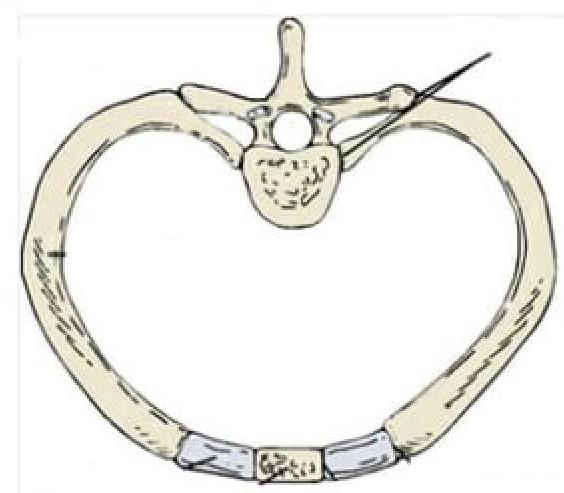
2 questionsIdentify the type of joint in the image provided.
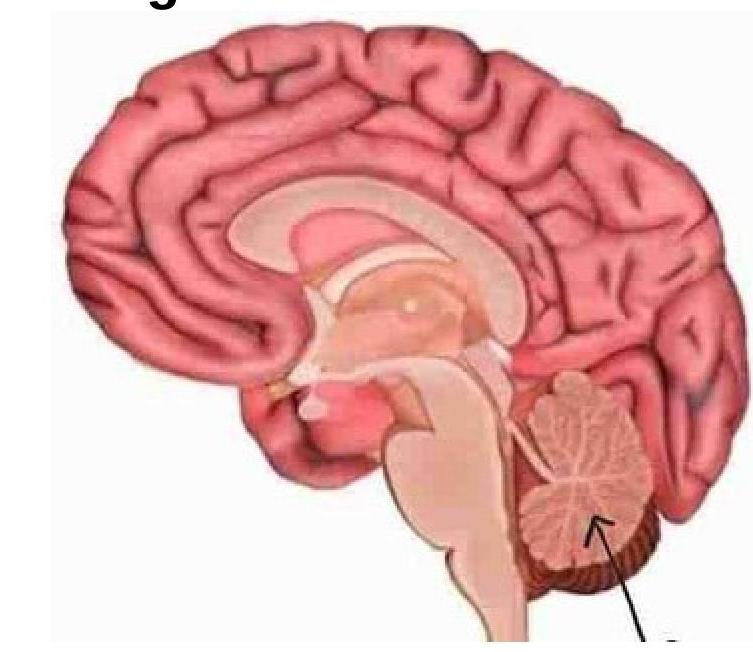
Identify the marked structure in the image.
INI-CET 2024 - Anatomy INI-CET Practice Questions and MCQs
Question 11: Identify the type of joint in the image provided.
- A. Syndesmosis
- B. Synarthrosis
- C. Synovial joint (Correct Answer)
- D. Symphysis
Explanation: ***Synovial joint*** - The image depicts a **costovertebral joint**, which connects a rib to a thoracic vertebra. These joints are **diarthrotic**, meaning they are freely movable, characteristic of synovial joints. - Synovial joints are characterized by the presence of a **synovial cavity**, articular cartilage, an articular capsule, and synovial fluid, allowing for a wide range of motion. *Syndesmosis* - A syndesmosis is a type of **fibrous joint** where two bones are joined by a ligament or a membrane, allowing for very limited movement, such as the distal tibiofibular joint. - This definition does not match the image, which shows a joint designed for movement between the rib and vertebra. *Synarthrosis* - Synarthrosis is a classification for **immovable joints**, such as sutures in the skull. - The costovertebral joints, as shown, allow for movement during respiration and are therefore not synarthrotic. *Symphysis* - A symphysis is a type of **cartilaginous joint** where bones are joined by **fibrocartilage**, allowing for slight movement. Examples include the pubic symphysis or intervertebral discs. - The costovertebral joint shown in the image is a synovial articulation, not a cartilaginous joint.
Question 12: Identify the marked structure in the image.
- A. Cerebrum
- B. Brain stem
- C. Corpus callosum
- D. Cerebellum (Correct Answer)
Explanation: ***Cerebellum*** - The image points to the distinct, posterior inferior structure of the brain, characterized by its **folia** and arbour-vitae-like internal structure, which is the cerebellum. - The cerebellum is primarily involved in **motor control**, including coordination, precision, and accurate timing. *Cerebrum* - The cerebrum is the **largest part of the brain**, located superiorly, responsible for higher functions like thought, voluntary movement, and sensory processing. - It consists of two hemispheres connected by the corpus callosum and is characterized by its **gyri** and **sulci**. *Brain stem* - The brain stem is located inferior to the cerebrum and anterior to the cerebellum, connecting the cerebrum and cerebellum to the **spinal cord**. - It controls vital functions such as **breathing**, heart rate, and sleep, and is composed of the midbrain, pons, and medulla oblongata. *Corpus callosum* - The corpus callosum is a large, C-shaped nerve fiber bundle located deep within the brain, under the cerebral cortex. - Its primary function is to **connect the two cerebral hemispheres**, facilitating communication between them.
Dermatology
1 questionsIdentify the type of skin lesion shown in the image.

INI-CET 2024 - Dermatology INI-CET Practice Questions and MCQs
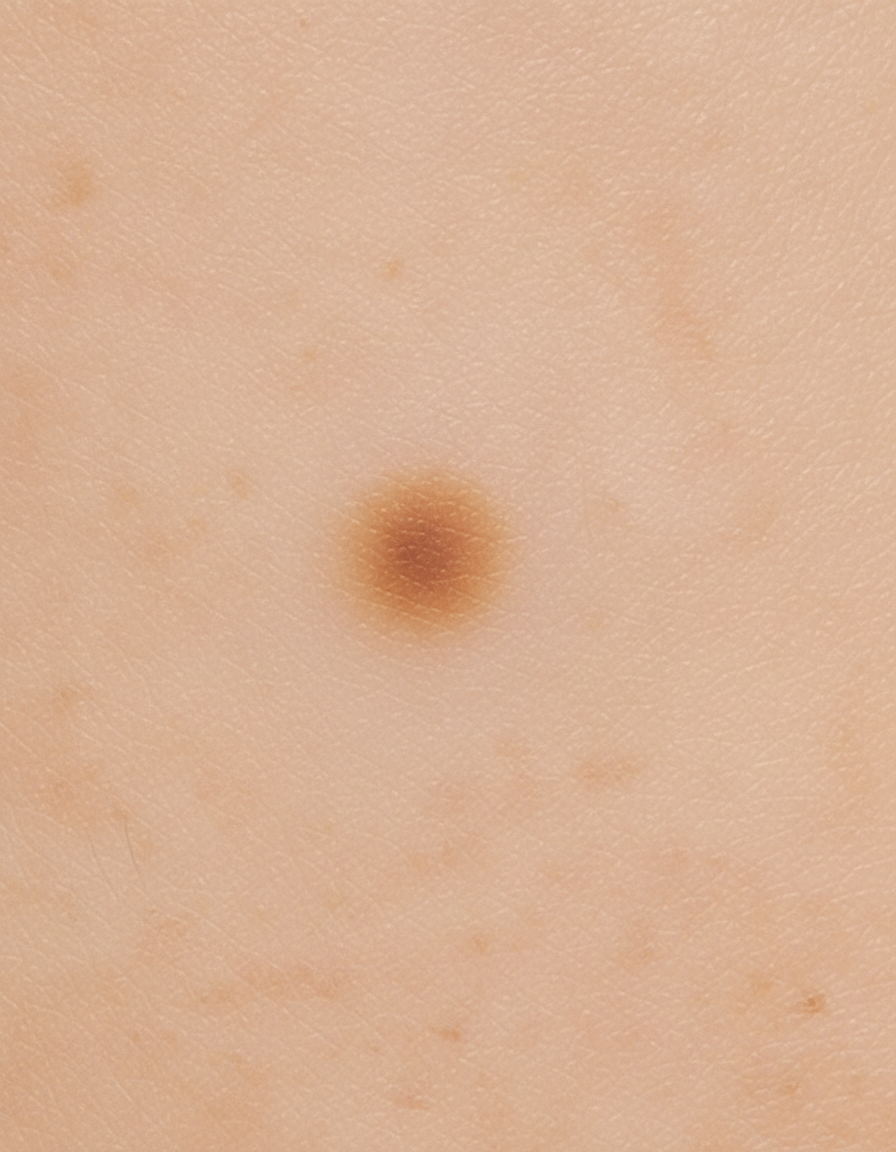
Question 11: Identify the type of skin lesion shown in the image.
- A. Papule
- B. Patch
- C. Nodule
- D. Macule (Correct Answer)
Explanation: ***Macule*** - The lesion shown is a **macule**, characterized by being **flat and circumscribed** with no elevation above the skin surface. - A macule is defined as a **skin discoloration less than 1 cm in diameter** without any palpable change in texture or thickness. - Classic examples include **freckles, flat nevi, and café-au-lait spots**. - The image demonstrates the typical appearance with clear borders and no vertical component. *Papule* - A papule is an **elevated, solid lesion less than 1 cm** in diameter. - Unlike the lesion shown, papules have a **palpable raised component** above the skin surface. - Examples include acne, warts, and lichen planus. *Patch* - A patch is similar to a macule but is **larger than 1 cm in diameter**. - While also flat, the size criterion differentiates it from a macule. - Examples include vitiligo patches and large birthmarks. *Nodule* - A nodule is a **solid, elevated lesion greater than 1 cm** that extends into deeper skin layers. - It has both elevation and depth, unlike the flat lesion shown. - Examples include dermatofibromas, lipomas, and some cysts.
Internal Medicine
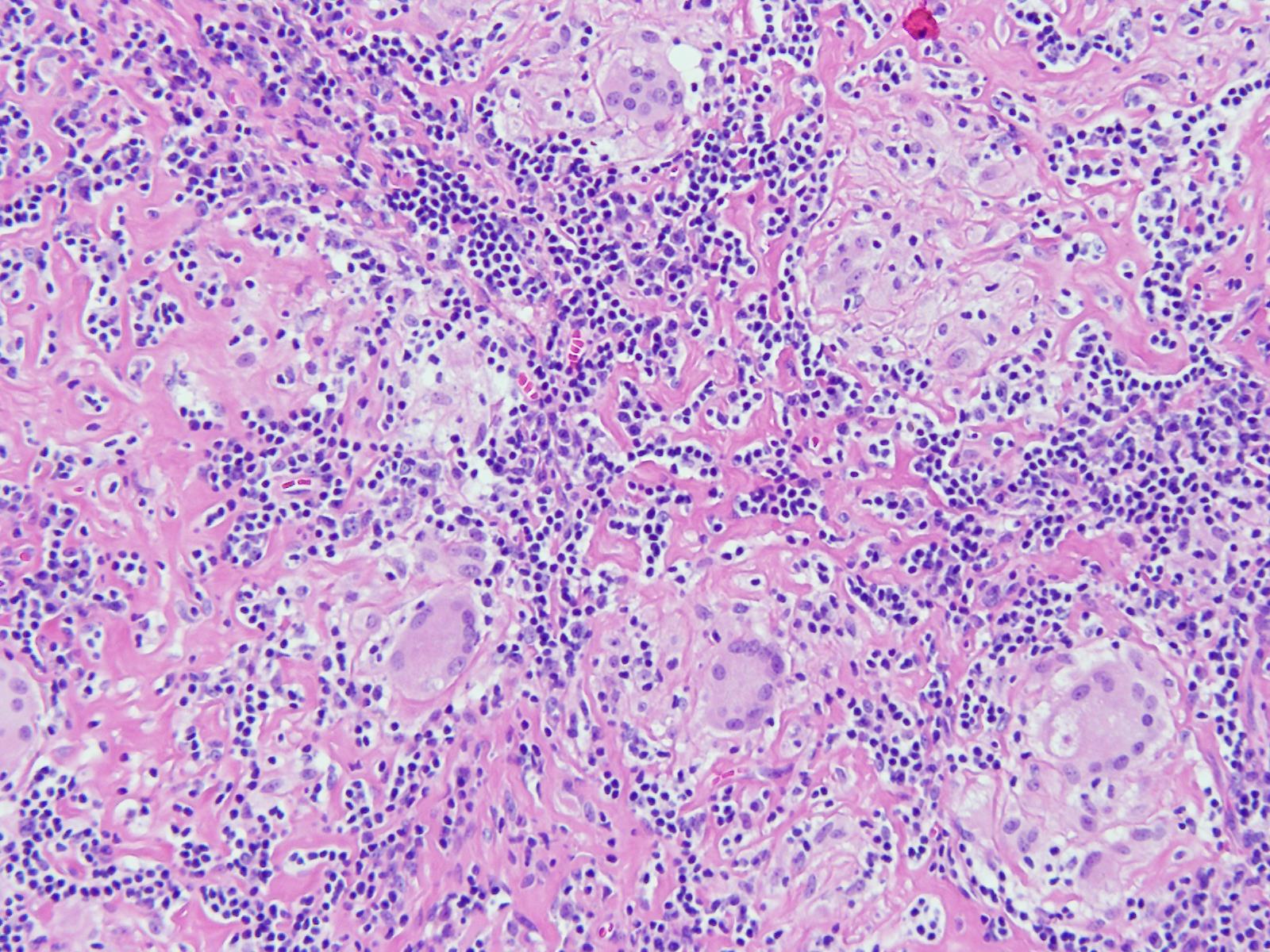
2 questionsAn 11-year-old boy presented with a cough for 15 days. On examination, he was found to have cervical lymphadenopathy. Lymph node biopsy showed the following findings. What could be the diagnosis?

Which of the following is a known risk factor for cholangiocarcinoma?
INI-CET 2024 - Internal Medicine INI-CET Practice Questions and MCQs
Question 11: An 11-year-old boy presented with a cough for 15 days. On examination, he was found to have cervical lymphadenopathy. Lymph node biopsy showed the following findings. What could be the diagnosis?
- A. Leprosy
- B. Sarcoidosis
- C. Syphilis
- D. Tuberculosis (Correct Answer)
Explanation: ***Tuberculosis*** - The image likely displays **granulomatous inflammation** with **caseous necrosis**, which is highly characteristic of **tuberculosis**, especially in someone presenting with a persistent cough and lymphadenopathy. - The presence of **cervical lymphadenopathy** along with a **cough** for 15 days in an 11-year-old boy points towards extrapulmonary tuberculosis or primary tuberculosis infection affecting the mediastinal lymph nodes with cervical involvement. *Leprosy* - While leprosy also causes granulomas, it typically manifests as skin lesions and nerve involvement, and lymphadenopathy is less common or specific as the primary initial presentation. - The granulomas in leprosy are often **epithelioid** with **foamy histiocytes** and numerous acid-fast bacilli, which are not explicitly described or obvious in the provided context for a definitive diagnosis without special stains. *Sarcoidosis* - Sarcoidosis involves **non-caseating granulomas**, meaning there is no central necrosis, which is a key differentiating feature from the caseating necrosis often seen in tuberculosis. - Although sarcoidosis can cause lymphadenopathy and cough, the microscopic features in the image, particularly if showing necrosis, would argue against sarcoidosis. *Syphilis* - Syphilis can cause lymphadenopathy (especially in secondary syphilis), but the characteristic histological finding is usually a **plasma cell-rich infiltrate** with **endarteritis obliterans**, not typically prominent granulomas with caseous necrosis. - Clinical presentation with cough and chronic lymphadenopathy in an 11-year-old would also make syphilis a less likely primary consideration without other suggestive signs.
Question 12: Which of the following is a known risk factor for cholangiocarcinoma?
- A. Giardia lamblia (intestinal protozoa) infection
- B. Ascaris lumbricoides (roundworm) infection
- C. Clonorchis sinensis infestation (Correct Answer)
- D. Paragonimus westermani infestation
Explanation: ***Clonorchis sinensis infestation*** - **Clonorchis sinensis**, also known as the Chinese liver fluke, is a well-established and significant risk factor for the development of **cholangiocarcinoma**. - Chronic inflammation and irritation of the bile ducts caused by the parasite are believed to promote malignant transformation. *Giardia lamblia (intestinal protozoa) infection* - **Giardia lamblia** is a common intestinal parasite causing giardiasis, characterized by diarrhea and malabsorption. - While it affects the gastrointestinal tract, there is **no known association** between *Giardia* infection and an increased risk of cholangiocarcinoma. *Paragonimus westermani infestation* - **Paragonimus westermani** is a lung fluke that primarily causes paragonimiasis, affecting the lungs and leading to cough and hemoptysis. - This parasite is not associated with direct bile duct inflammation or an increased risk of **cholangiocarcinoma**. *Ascaris lumbricoides (roundworm) infection* - **Ascaris lumbricoides** is a large intestinal roundworm that can cause intestinal obstruction or nutrient deficiencies. - Although it can occasionally migrate into the biliary tree, it is **not considered a risk factor** for cholangiocarcinoma [1].
Microbiology
1 questionsA 6-year-old boy presents with fever and chills, cough, rapid breathing, difficulty breathing, and chest pain. A culture from a respiratory sample shows Gram-positive bacteria. What is the most likely organism causing this infection?
INI-CET 2024 - Microbiology INI-CET Practice Questions and MCQs
Question 11: A 6-year-old boy presents with fever and chills, cough, rapid breathing, difficulty breathing, and chest pain. A culture from a respiratory sample shows Gram-positive bacteria. What is the most likely organism causing this infection?
- A. Streptococcus pyogenes
- B. Streptococcus pneumoniae (Correct Answer)
- C. Staphylococcus aureus
- D. Propionibacterium acnes
Explanation: ***Streptococcus pneumoniae*** - This clinical picture describes typical symptoms of **pneumonia** in a child, including fever, cough, rapid and difficult breathing, and chest pain. - **_Streptococcus pneumoniae_** is the most common bacterial cause of community-acquired pneumonia in children. The respiratory sample showing gram-positive bacteria further supports this. *Staphylococcus aureus* - While **_Staphylococcus aureus_** can cause pneumonia, it is less common than _Streptococcus pneumoniae_ in community-acquired cases in healthy children and often associated with more severe, necrotizing forms or post-viral infections. - While it is a **Gram-positive bacterium**, its clinical presentation would not be the most likely first choice for typical pneumonia symptoms in this age group. *Propionibacterium acnes* - **_Propionibacterium acnes_** (now *Cutibacterium acnes*) is primarily associated with **acne vulgaris** and, less commonly, opportunistic infections related to implanted devices or some rare soft tissue infections. - It is not a typical cause of primary respiratory infections like pneumonia. *Streptococcus pyogenes* - **_Streptococcus pyogenes_** (Group A Streptococcus) is known for causing **pharyngitis** (strep throat), skin infections (impetigo, cellulitis), and scarlet fever. - While it can rarely cause pneumonia, it is not a common cause, and the constellation of symptoms points more strongly to _Streptococcus pneumoniae_.
Pathology
2 questionsHBsAg is based on which principle
In which type of lung carcinoma is the p53 mutation most commonly observed?
INI-CET 2024 - Pathology INI-CET Practice Questions and MCQs
Question 11: HBsAg is based on which principle
- A. Chemiluminescence
- B. Immunofluorescence
- C. Immunochromatography assays
- D. ELISA (Correct Answer)
Explanation: ***ELISA*** - **Enzyme-linked immunosorbent assay (ELISA)** is a widely used laboratory test to detect and quantify antigens (like HBsAg) or antibodies in a sample. - It involves an enzyme-linked antibody that reacts with a substrate to produce a detectable signal, making it highly sensitive and specific for **HBsAg detection**. *Immunochromatography assays* - These are typically **rapid diagnostic tests (RDTs)** that provide quick qualitative results, often used for point-of-care testing. - While they can detect HBsAg, they generally have lower sensitivity and specificity compared to ELISA. *Chemiluminescence* - This is a detection method used in some immunoassays where a chemical reaction emits light, often providing higher sensitivity than colorimetric detection. - While it can be incorporated into HBsAg testing platforms, it is a *detection principle* rather than the primary assay principle like ELISA itself. *Immunofluorescence* - This technique uses **fluorescently labeled antibodies** to visualize antigens in cells or tissues under a fluorescence microscope [1]. - It is used for localization and identification of antigens, but not typically the primary method for routine quantitative HBsAg serology [1]. **References:** [1] Cross SS. Underwood's Pathology: A Clinical Approach. 6th ed. (Basic Pathology) introduces the student to key general principles of pathology, both as a medical science and as a clinical activity with a vital role in patient care. Part 2 (Disease Mechanisms) provides fundamental knowledge about the cellular and molecular processes involved in diseases, providing the rationale for their treatment. Part 3 (Systematic Pathology) deals in detail with specific diseases, with emphasis on the clinically important aspects., pp. 259-260.
Question 12: In which type of lung carcinoma is the p53 mutation most commonly observed?
- A. Adenocarcinoma
- B. Squamous cell carcinoma (SCC) (Correct Answer)
- C. Large cell carcinoma
- D. Small cell carcinoma
Explanation: ***Small cell carcinoma*** - **Small cell lung carcinoma (SCLC)** has the highest frequency of **p53 mutations**, occurring in approximately **90-95%** of cases. - These mutations are associated with the **aggressive nature** and **poor prognosis** of SCLC, contributing to its rapid growth and early metastasis. *Adenocarcinoma* - **Adenocarcinoma** has p53 mutations in approximately **50-60%** of cases, which is less frequent than SCLC. - This subtype is more commonly associated with **EGFR mutations** and **ALK rearrangements**, particularly in non-smokers. *Squamous cell carcinoma (SCC)* - **Squamous cell carcinoma** shows p53 mutations in about **70-80%** of cases, but still lower than SCLC. - It is more strongly associated with **smoking** and often displays mutations in **CDKN2A** and **PIK3CA** pathways. *Large cell carcinoma* - **Large cell carcinoma** has variable p53 mutation rates, typically **40-60%** of cases. - This subtype is less well-characterized molecularly and represents a **diagnosis of exclusion** among lung cancers.
Radiology
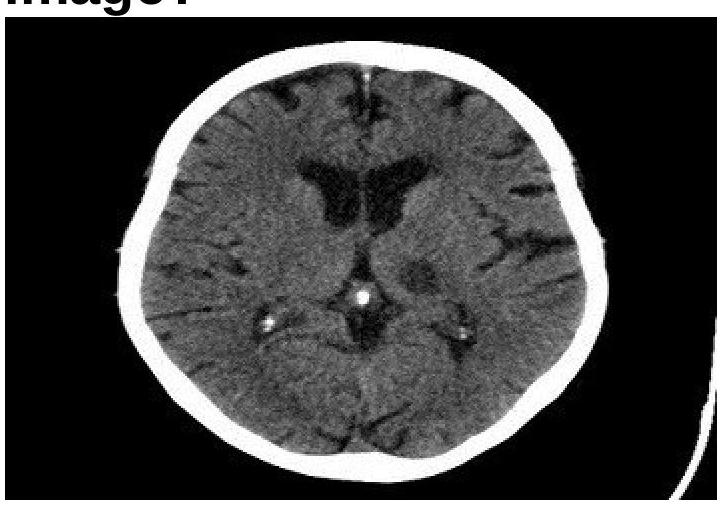
1 questionsIdentify the condition in the image below?

INI-CET 2024 - Radiology INI-CET Practice Questions and MCQs
Question 11: Identify the condition in the image below?
- A. Lacunar infarct (Correct Answer)
- B. Embolic infarct
- C. Thrombotic infarct
- D. Intracerebral hemorrhage
Explanation: ***Lacunar infarct*** - The image displays a small, well-demarcated **hypodensity** (darker area) in the basal ganglia region, characteristic of a lacunar infarct. - Lacunar infarcts are typically caused by **occlusion of small perforating arteries** and result in small, deep infarcts, often appearing as precise, round or ovoid lesions on CT. *Embolic infarct* - Embolic infarcts tend to be **larger**, wedge-shaped, and often extend to the cortical surface, unlike the deep, small lesion seen. - They are commonly associated with a **cardiac source** or large artery atherosclerosis leading to distal embolization. *Thrombotic infarct* - Thrombotic infarcts are usually **larger** areas of infarction due to occlusion of a major artery, often preceded by symptoms like TIAs. - While they also appear hypodense, they are typically **more extensive** and less precisely defined than a lacunar infarct in the early stages. *Intracerebral hemorrhage* - Intracerebral hemorrhage would appear as a **hyperdense** (bright white) area on a non-contrast CT scan due to the presence of acute blood. - The image clearly shows a **hypodense lesion**, ruling out acute hemorrhage.
Surgery
1 questionsA 40-year-old male with a head injury presents with a GCS of 8, BP of 90/60, and HR of 120. A CT scan shows an epidural hematoma. What are the immediate management priorities?
INI-CET 2024 - Surgery INI-CET Practice Questions and MCQs
Question 11: A 40-year-old male with a head injury presents with a GCS of 8, BP of 90/60, and HR of 120. A CT scan shows an epidural hematoma. What are the immediate management priorities?
- A. Intubation and ventilation (Correct Answer)
- B. Administer mannitol for intracranial pressure management
- C. Perform immediate craniotomy
- D. Administer intravenous fluids and monitor vital signs
Explanation: ***Intubation and ventilation*** - A GCS of 8 or less mandates **immediate intubation** to protect the airway and prevent aspiration in a patient who cannot maintain their airway. - In the **ATLS primary survey sequence**, airway management is the first priority, though in practice this is done **simultaneously** with fluid resuscitation. - Maintaining **adequate oxygenation and normocapnia** is crucial for preventing secondary brain injury and managing intracranial pressure. - **Critical point**: While this patient requires both airway management AND fluid resuscitation urgently, securing the airway takes immediate precedence as the patient cannot protect their airway at GCS 8. *Administer mannitol for intracranial pressure management* - While mannitol can reduce ICP, it is **not an immediate priority** before securing airway, breathing, and circulation. - Mannitol is **contraindicated in hypovolemic/hypotensive patients** as it acts as an osmotic diuretic and can worsen hypotension. - ICP management with mannitol should only be considered after hemodynamic stabilization and in the context of signs of herniation. *Perform immediate craniotomy* - Although epidural hematomas typically require **urgent surgical evacuation**, the patient must first be physiologically stabilized. - **No patient should go to the operating room in hemorrhagic shock** without ABC stabilization. - Airway protection, ventilation, and circulatory resuscitation must precede definitive neurosurgical intervention to ensure the patient can safely tolerate anesthesia and surgery. *Administer intravenous fluids and monitor vital signs* - This is a **critical and equally urgent priority** - the patient is in shock (BP 90/60, HR 120), likely from associated injuries or blood loss. - **Hypotension (SBP <90 mmHg) is the most detrimental secondary insult** in head-injured patients and doubles mortality (per Brain Trauma Foundation guidelines). - Fluid resuscitation should begin **simultaneously** with airway management to restore cerebral perfusion pressure. - However, in the ATLS sequence, airway (A) precedes circulation (C), making intubation the first listed priority, though both must be addressed concurrently in practice.