Question 121: To replenish the inventory, blood banks routinely issue blood packets which are close to the expiry date. Which of the following will be the closest to expiry date, according to the anticoagulant used and the method of storage of the packet:
- A. ACD, 14 days
- B. SAGM, 25 days with irradiation (Correct Answer)
- C. CPDA, 27 days
- D. SAGM, 35 days
Explanation: ***SAGM, 25 days with irradiation***
- **SAGM** (Saline-Adenine-Glucose-Mannitol) is an additive solution that extends the storage life of red blood cells significantly.
- While SAGM usually allows for storage up to **42 days**, if the blood is **irradiated**, the shelf life is reduced to **28 days from collection or 14 days from irradiation, whichever is sooner**. Given the options, 25 days with irradiation falls within this reduced shelf life, making it the closest to expiry among the provided choices (implying the Irradiation was done earlier).
*ACD, 14 days*
- **ACD** (Acid Citrate Dextrose) is an older anticoagulant primarily used for apheresis products.
- Red blood cells collected with ACD typically have a maximum storage duration of **21 days**. While 14 days is within this, other anticoagulant-additive combinations offer longer storage, and this option is not the closest to expiry when considering the maximum allowed.
*CPDA, 27 days*
- **CPDA** (Citrate Phosphate Dextrose Adenine) provides a standard shelf life of **35 days** for red blood cells.
- While 27 days represents blood that has been stored for a significant period, it still has 8 more days until its maximum expiry, making it less "close to expiry" than the irradiated SAGM option which would expire sooner.
*SAGM, 35 days*
- **SAGM** (Saline-Adenine-Glucose-Mannitol) allows for the storage of red blood cells for up to **42 days** from collection.
- At 35 days, a unit stored in SAGM still has 7 days until its maximum expiry date (if not irradiated), making it less "close to expiry" than a unit that had been irradiated.
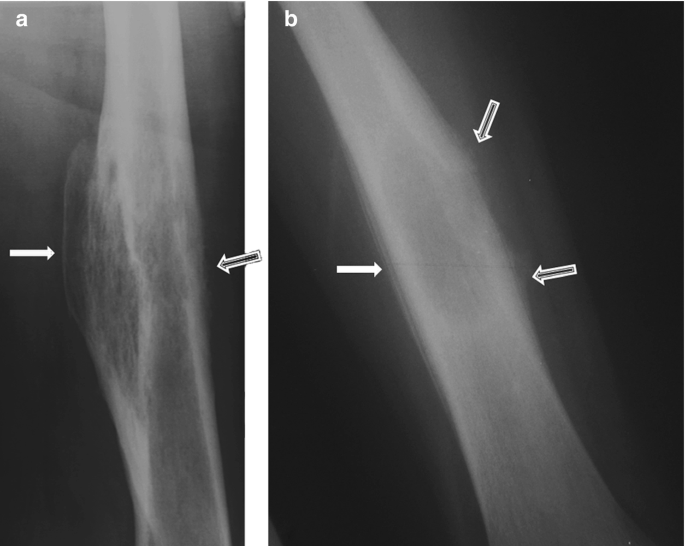
Question 122: A 12-year-old Caucasian male presents with his mother to the pediatrician’s office complaining of right thigh pain. He reports that he has noticed slowly progressive pain and swelling over the distal aspect of his right thigh over the past two months. He denies any recent trauma to the area and his temperature is 100.9°F (38.3°C). On exam, there is swelling and tenderness overlying the distal right femoral diaphysis. Laboratory evaluation is notable for an elevated white blood cell (WBC) count and elevated erythrocyte sedimentation rate (ESR). A radiograph of the patient’s right leg is shown. Biopsy of the lesion demonstrates sheets of monotonous small round blue cells with minimal cytoplasm. Which of the following genetic mutations is most likely associated with this patient’s condition?
- A. t(11;22) (Correct Answer)
- B. RB1 inactivation
- C. TP53 inactivation
- D. t(8;14)
- E. t(X;18)
Explanation: ***t(11;22)***
- The clinical presentation of a **12-year-old male** with progressive **thigh pain and swelling**, fever, elevated WBC and ESR, a radiograph showing a bone lesion [1], and a biopsy revealing **small round blue cells with minimal cytoplasm**, is highly suggestive of **Ewing sarcoma** [2].
- **Ewing sarcoma** is characterized by the **t(11;22)(q24;q12) chromosomal translocation**, which fuses the *EWSR1* gene with the *FLI1* gene, leading to the formation of a chimeric transcription factor.
*t(X;18)*
- The **t(X;18) translocation** is the characteristic genetic abnormality of **synovial sarcoma**, another soft tissue malignancy.
- While synovial sarcoma can also present in young patients, it typically affects older adolescents and young adults, and the histology differs from the small round blue cell pattern seen in Ewing sarcoma [2].
*RB1 inactivation*
- **RB1 gene inactivation** is centrally involved in the pathogenesis of **retinoblastoma**, a childhood eye cancer.
- It also plays a role in various other cancers, such as **osteosarcoma** [3] and small cell lung cancer, but its primary association is not with Ewing sarcoma.
*TP53 inactivation*
- **TP53 gene inactivation** is a common event in a wide range of human cancers, as *TP53* is a critical **tumor suppressor gene**.
- While *TP53* mutations can be found in some sarcomas, it is not the defining or most likely specific genetic mutation for **Ewing sarcoma**.
*t(8;14)*
- The **t(8;14)(q24;q32) chromosomal translocation** is the characteristic genetic abnormality found in **Burkitt lymphoma**.
- This translocation leads to the **c-MYC proto-oncogene** being placed near the immunoglobulin heavy chain locus, promoting its overexpression, which is unrelated to Ewing sarcoma.
**References:**
[1] Cross SS. Underwood's Pathology: A Clinical Approach. 6th ed. Common Clinical Problems From Osteoarticular And Connective Tissue Disease, pp. 671-672.
[2] Kumar V, Abbas AK, et al.. Robbins and Cotran Pathologic Basis of Disease. 9th ed. Bones, Joints, and Soft Tissue Tumors, pp. 1204-1205.
[3] Kumar V, Abbas AK, et al.. Robbins and Cotran Pathologic Basis of Disease. 9th ed. Bones, Joints, and Soft Tissue Tumors, pp. 1200-1202.