Question 1: A laborer's younger child is brought to the OPD with a swollen belly and dull face. He has been fed rice water (rice milk) in his diet mostly. On investigations, the child is found to have low serum protein and low albumin. What is the probable diagnosis?
- A. Kwashiorkor (Correct Answer)
- B. Kawasaki disease
- C. Marasmus
- D. Indian childhood cirrhosis
- E. Nephrotic syndrome
Explanation: ***Kwashiorkor***
- The symptoms of a **swollen belly** (due to **edema** from low albumin), **dull face**, and a diet primarily of **rice water** (low in protein) are classic signs of Kwashiorkor.
- Kwashiorkor is a form of severe protein-energy malnutrition characterized by **protein deficiency** that is greater than the calorie deficit, leading to **hypoalbuminemia** and fluid retention.
- The **dietary history** of rice water (carbohydrate-rich but protein-poor) is the key distinguishing feature.
*Kawasaki disease*
- This is an **acute vasculitis** primarily affecting young children, presenting with fever, rash, conjunctivitis, mouth changes, and lymphadenopathy.
- It does not involve a swollen belly or dull face as primary symptoms, nor is it linked to dietary protein deficiency.
*Marasmus*
- Marasmus is a form of severe malnutrition characterized by an **overall deficiency of calories** and nutrients, resulting in severe **wasting** of muscle and fat.
- While it involves low weight and energy deficit, the prominent **edema** (swollen belly) seen in this case points away from marasmus.
*Indian childhood cirrhosis*
- This is a rare, **fatal liver disease** in young children, often characterized by jaundice, hepatosplenomegaly, and liver failure.
- It is not primarily caused by protein deficiency and its symptoms are distinct from the presentation described.
*Nephrotic syndrome*
- While nephrotic syndrome also presents with **hypoalbuminemia and edema**, it would show **proteinuria** (>3.5 g/day), hyperlipidemia, and lipiduria on urinalysis.
- The **dietary history** and absence of urinary findings distinguish kwashiorkor from nephrotic syndrome.
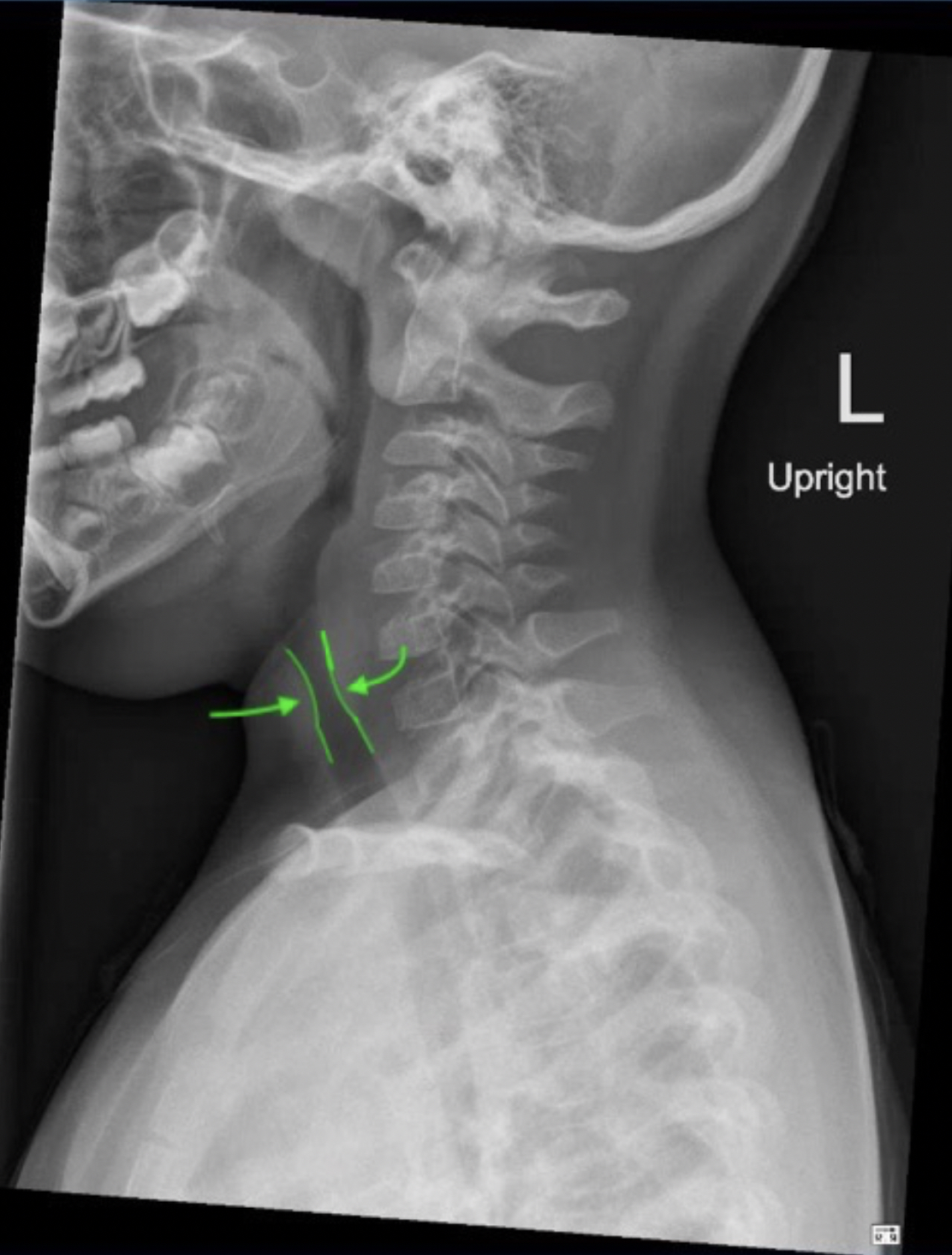
Question 2: A 4-year-old boy presents with low-grade fever, inspiratory stridor, and barking cough for the past 5 days. Examination reveals a hoarse voice, a moderately inflamed pharynx, and a slightly increased respiratory rate. His chest x-ray showed subglottic narrowing appearing like a steeple. Which among the following is not indicated in the treatment of this condition?
- A. Nebulized racemic epinephrine
- B. Intramuscular dexamethasone
- C. Helium oxygen mixture
- D. Parenteral cefotaxime (Correct Answer)
- E. Nebulized budesonide
Explanation: ***Parenteral cefotaxime***
- The clinical presentation (low-grade fever, inspiratory stridor, barking cough, hoarse voice) and the **steeple sign** on chest X-ray are classic for **croup (laryngotracheobronchitis)**, which is predominantly caused by **viral infections**, not bacterial. Therefore, antibiotics like parenteral cefotaxime are generally **not indicated**.
- **Cefotaxime** is a broad-spectrum antibiotic used for serious bacterial infections; its use in viral croup would be inappropriate and could contribute to antibiotic resistance.
*Nebulized racemic epinephrine*
- **Nebulized racemic epinephrine** is a common and effective treatment for moderate to severe croup, as it helps to **vasoconstrict** the subglottic mucosa, reducing edema and improving airflow.
- It provides temporary relief from symptoms, especially stridor, by reducing swelling in the airway.
*Intramuscular dexamethasone*
- **Dexamethasone**, a corticosteroid, is a cornerstone of croup treatment as it reduces inflammation and edema in the airway, improving respiratory symptoms.
- It can be administered orally, intravenously, or intramuscularly, and provides sustained relief, typically for 24-48 hours.
*Nebulized budesonide*
- **Nebulized budesonide** is an alternative corticosteroid treatment for croup that delivers anti-inflammatory medication directly to the airway.
- Studies show it is equally effective to dexamethasone for mild to moderate croup, though dexamethasone is often preferred due to ease of administration and longer duration of action.
*Helium oxygen mixture*
- A **helium-oxygen mixture (heliox)** is a therapeutic gas that is less dense than air, which can reduce the work of breathing in patients with severe airway obstruction, such as refractory croup.
- By decreasing airway turbulence, heliox can temporarily improve air movement past the narrowed subglottic area.