Anesthesiology
1 questionsWhich of the following is the best method to assess the degree of muscle relaxation?
FMGE 2022 - Anesthesiology FMGE Practice Questions and MCQs
Question 11: Which of the following is the best method to assess the degree of muscle relaxation?
- A. Train of four (Correct Answer)
- B. Electromyography
- C. Tetanic Stimulation
- D. Double burst stimulation
Explanation: ***Train of four*** - **Train of four (TOF)** is the most common and reliable method for monitoring the depth of neuromuscular blockade. - It involves delivering four sequential supramaximal electrical stimuli to a peripheral nerve, typically the ulnar nerve, and measuring the resulting muscle twitches. The **TOF ratio** (amplitude of the fourth twitch divided by the first) indicates the degree of relaxation. *Electromyography* - **Electromyography (EMG)** measures the electrical activity of muscles at rest and during contraction, which is useful for diagnosing neuromuscular disorders. - While it measures muscle activity, it is not optimized for continuous, real-time assessment of drug-induced neuromuscular blockade during surgery. *Tetanic Stimulation* - **Tetanic stimulation** involves delivering a high-frequency, continuous electrical stimulus to a peripheral nerve, producing sustained muscle contraction (tetanus). - It is used to assess profound neuromuscular blockade but is less practical for routine monitoring of relaxation depth as it can cause patient discomfort and post-tetanic facilitation, making it less precise for quantifying recovery. *Double burst stimulation* - **Double burst stimulation (DBS)** applies two short bursts of electrical stimuli, separated by a brief interval, and is used to detect residual blockade when the TOF ratio is difficult to assess visually. - While useful for detecting slight residual paralysis, it is not the primary or best method for assessing the *degree* of blockade throughout its entire duration, as it primarily confirms effective recovery rather than quantifying the entire spectrum of relaxation.
Dermatology
1 questionsWhich of the following is the causative agent for acne fulminans?
FMGE 2022 - Dermatology FMGE Practice Questions and MCQs
Question 11: Which of the following is the causative agent for acne fulminans?
- A. Staphylococcus aureus
- B. Malassezia furfur
- C. Propionibacterium acnes (Cutibacterium acnes) (Correct Answer)
- D. Streptococcus pyogenes
Explanation: ***Propionibacterium acnes (Cutibacterium acnes)*** - **Acne fulminans** is a severe, ulcerative form of acne that is considered an **autoinflammatory syndrome** rather than a simple bacterial infection - While the exact etiology remains unclear, ***Cutibacterium acnes*** (formerly *Propionibacterium acnes*) plays a significant role in the pathophysiology - It is believed that acne fulminans may result from a **hypersensitivity reaction to *C. acnes* antigens** or an exaggerated immune response to the bacterium - *C. acnes* is the **most relevant microorganism** associated with all forms of acne, including acne vulgaris and severe variants like acne fulminans - Treatment often includes systemic corticosteroids (to control inflammation) combined with isotretinoin *Staphylococcus aureus* - *Staphylococcus aureus* causes **bacterial skin infections** such as folliculitis, impetigo, furuncles, and cellulitis - While secondary bacterial superinfection with *S. aureus* can complicate acne lesions, it is **not the primary organism** associated with acne fulminans *Malassezia furfur* - *Malassezia furfur* (now classified as *Malassezia globosa* or *M. restricta*) is a **yeast** that causes **pityriasis versicolor** and **Malassezia folliculitis** (also called fungal acne or pityrosporum folliculitis) - It is **not involved** in the pathogenesis of acne vulgaris or acne fulminans *Streptococcus pyogenes* - *Streptococcus pyogenes* is a common cause of **streptococcal infections** including pharyngitis, impetigo, erysipelas, and cellulitis - It is **not associated** with acne or acne fulminans pathogenesis
ENT
1 questionsA 60-year-old male presents with painless cervical lymphadenopathy. On examination, the right ear reveals conductive hearing loss with a dull tympanic membrane. Moreover, decreased mobility of the soft palate was also noted. What is the probable diagnosis?
FMGE 2022 - ENT FMGE Practice Questions and MCQs
Question 11: A 60-year-old male presents with painless cervical lymphadenopathy. On examination, the right ear reveals conductive hearing loss with a dull tympanic membrane. Moreover, decreased mobility of the soft palate was also noted. What is the probable diagnosis?
- A. Adenoid cystic cancer
- B. Nasopharyngeal carcinoma (Correct Answer)
- C. Juvenile nasopharyngeal angiofibroma
- D. Quinsy
Explanation: ***Nasopharyngeal carcinoma*** - This presentation with **painless cervical lymphadenopathy**, **conductive hearing loss** due to Eustachian tube obstruction, and **cranial nerve involvement** (affecting the soft palate mobility) is highly suggestive of nasopharyngeal carcinoma, which often metastasizes early. - The conductive hearing loss, specifically a **dull tympanic membrane**, points to **otitis media with effusion** secondary to Eustachian tube dysfunction, a common presentation of nasopharyngeal masses obstructing the tube. *Adenoid cystic cancer* - While adenoid cystic carcinoma can cause cranial nerve palsies due to **perineural invasion**, it more commonly arises in the salivary glands and not typically presents with nasopharyngeal masses causing Eustachian tube obstruction. - It usually presents with a **palpable mass** or **pain**, which is not the primary presentation here. *Juvenile nasopharyngeal angiofibroma* - This is a **benign vascular tumor** typically presenting in **adolescent males** with episodes of **severe epistaxis** and **nasal obstruction**. - It does not commonly present with cervical lymphadenopathy or cranial nerve involvement and is rare in a 60-year-old. *Quinsy* - Quinsy, or **peritonsillar abscess**, presents acutely with **severe sore throat**, **fever**, **trismus**, and sometimes **uvular deviation**. - It is an **infectious condition** and does not typically cause painless cervical lymphadenopathy or conductive hearing loss as described.
Pediatrics
1 questionsA 4-year-old boy presents with low-grade fever, inspiratory stridor, and barking cough for the past 5 days. Examination reveals a hoarse voice, a moderately inflamed pharynx, and a slightly increased respiratory rate. His chest x-ray showed subglottic narrowing appearing like a steeple. Which among the following is not indicated in the treatment of this condition?
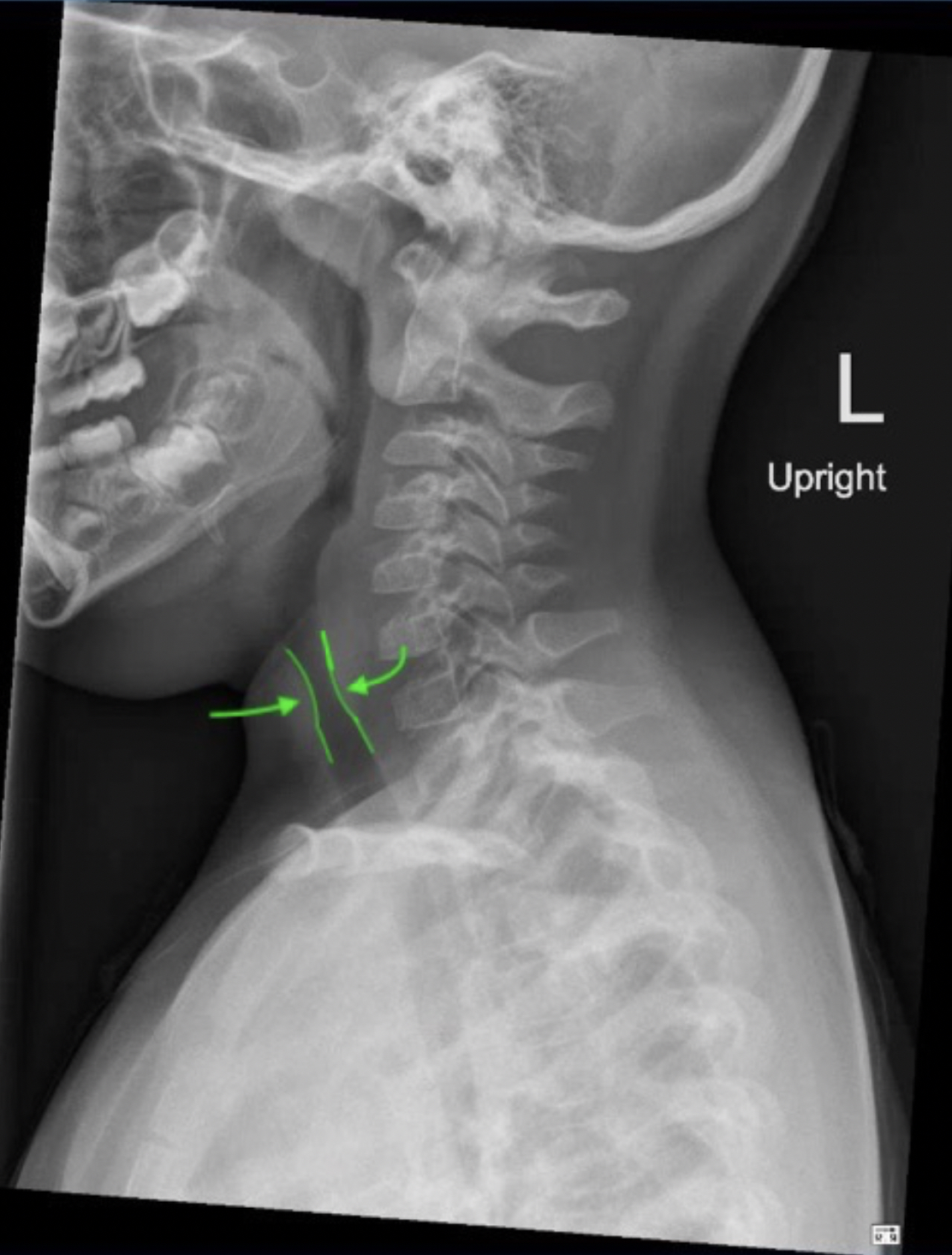
FMGE 2022 - Pediatrics FMGE Practice Questions and MCQs
Question 11: A 4-year-old boy presents with low-grade fever, inspiratory stridor, and barking cough for the past 5 days. Examination reveals a hoarse voice, a moderately inflamed pharynx, and a slightly increased respiratory rate. His chest x-ray showed subglottic narrowing appearing like a steeple. Which among the following is not indicated in the treatment of this condition?
- A. Nebulized racemic epinephrine
- B. Intramuscular dexamethasone
- C. Helium oxygen mixture
- D. Parenteral cefotaxime (Correct Answer)
- E. Nebulized budesonide
Explanation: ***Parenteral cefotaxime*** - The clinical presentation (low-grade fever, inspiratory stridor, barking cough, hoarse voice) and the **steeple sign** on chest X-ray are classic for **croup (laryngotracheobronchitis)**, which is predominantly caused by **viral infections**, not bacterial. Therefore, antibiotics like parenteral cefotaxime are generally **not indicated**. - **Cefotaxime** is a broad-spectrum antibiotic used for serious bacterial infections; its use in viral croup would be inappropriate and could contribute to antibiotic resistance. *Nebulized racemic epinephrine* - **Nebulized racemic epinephrine** is a common and effective treatment for moderate to severe croup, as it helps to **vasoconstrict** the subglottic mucosa, reducing edema and improving airflow. - It provides temporary relief from symptoms, especially stridor, by reducing swelling in the airway. *Intramuscular dexamethasone* - **Dexamethasone**, a corticosteroid, is a cornerstone of croup treatment as it reduces inflammation and edema in the airway, improving respiratory symptoms. - It can be administered orally, intravenously, or intramuscularly, and provides sustained relief, typically for 24-48 hours. *Nebulized budesonide* - **Nebulized budesonide** is an alternative corticosteroid treatment for croup that delivers anti-inflammatory medication directly to the airway. - Studies show it is equally effective to dexamethasone for mild to moderate croup, though dexamethasone is often preferred due to ease of administration and longer duration of action. *Helium oxygen mixture* - A **helium-oxygen mixture (heliox)** is a therapeutic gas that is less dense than air, which can reduce the work of breathing in patients with severe airway obstruction, such as refractory croup. - By decreasing airway turbulence, heliox can temporarily improve air movement past the narrowed subglottic area.
Pharmacology
1 questionsA tourist with a travel history to India presents with complaints of abdominal pain and multiple episodes of watery diarrhea. He reports having food at a local restaurant the previous night. Which of the following antidiarrheal agents is used in this condition?
FMGE 2022 - Pharmacology FMGE Practice Questions and MCQs
Question 11: A tourist with a travel history to India presents with complaints of abdominal pain and multiple episodes of watery diarrhea. He reports having food at a local restaurant the previous night. Which of the following antidiarrheal agents is used in this condition?
- A. Bismuth subsalicylate
- B. Octreotide
- C. Loperamide
- D. Rifaximin (Correct Answer)
- E. Ciprofloxacin
Explanation: ***Rifaximin*** - This patient's symptoms, including **abdominal pain**, **watery diarrhea**, and a recent **travel history to India** coupled with eating at a local restaurant, strongly suggest **traveler's diarrhea**, often caused by bacterial pathogens. - **Rifaximin** is a non-absorbable antibiotic specifically approved for treating non-invasive traveler's diarrhea, as it targets causative bacteria in the gut lumen with minimal systemic absorption. - Rifaximin is preferred due to its **excellent safety profile**, minimal systemic effects, and targeted action against enteric pathogens. *Ciprofloxacin* - **Ciprofloxacin** is a fluoroquinolone antibiotic that can be effective for traveler's diarrhea and has been used historically for this indication. - However, rifaximin is now preferred over ciprofloxacin due to increasing **fluoroquinolone resistance** among enteric pathogens, systemic absorption leading to more side effects, and FDA warnings about serious adverse effects associated with fluoroquinolones. - Ciprofloxacin may be reserved for more severe or invasive diarrhea cases. *Bismuth subsalicylate* - While **bismuth subsalicylate** can be used for symptomatic relief in traveler's diarrhea due to its anti-secretory and anti-inflammatory properties, it is not an antimicrobial agent. - It works by reducing fluid secretion and inflammation but does not directly address the underlying bacterial infection to the same extent as rifaximin. *Octreotide* - **Octreotide** is a somatostatin analog primarily used to treat severe, refractory diarrhea associated with conditions like neuroendocrine tumors or chemotherapy, not typical bacterial traveler's diarrhea. - Its mechanism involves inhibiting gastrointestinal hormone secretion and reducing intestinal motility, which is too potent for this common, self-limiting condition. *Loperamide* - **Loperamide** is an opioid-receptor agonist that acts as an anti-motility agent, reducing the frequency of bowel movements. - It is generally contraindicated as a primary treatment for traveler's diarrhea when an invasive bacterial infection is suspected, as it can prolong the retention of toxins and pathogens in the gut.