Abnormal Uterine Bleeding Indian Medical PG Practice Questions and MCQs
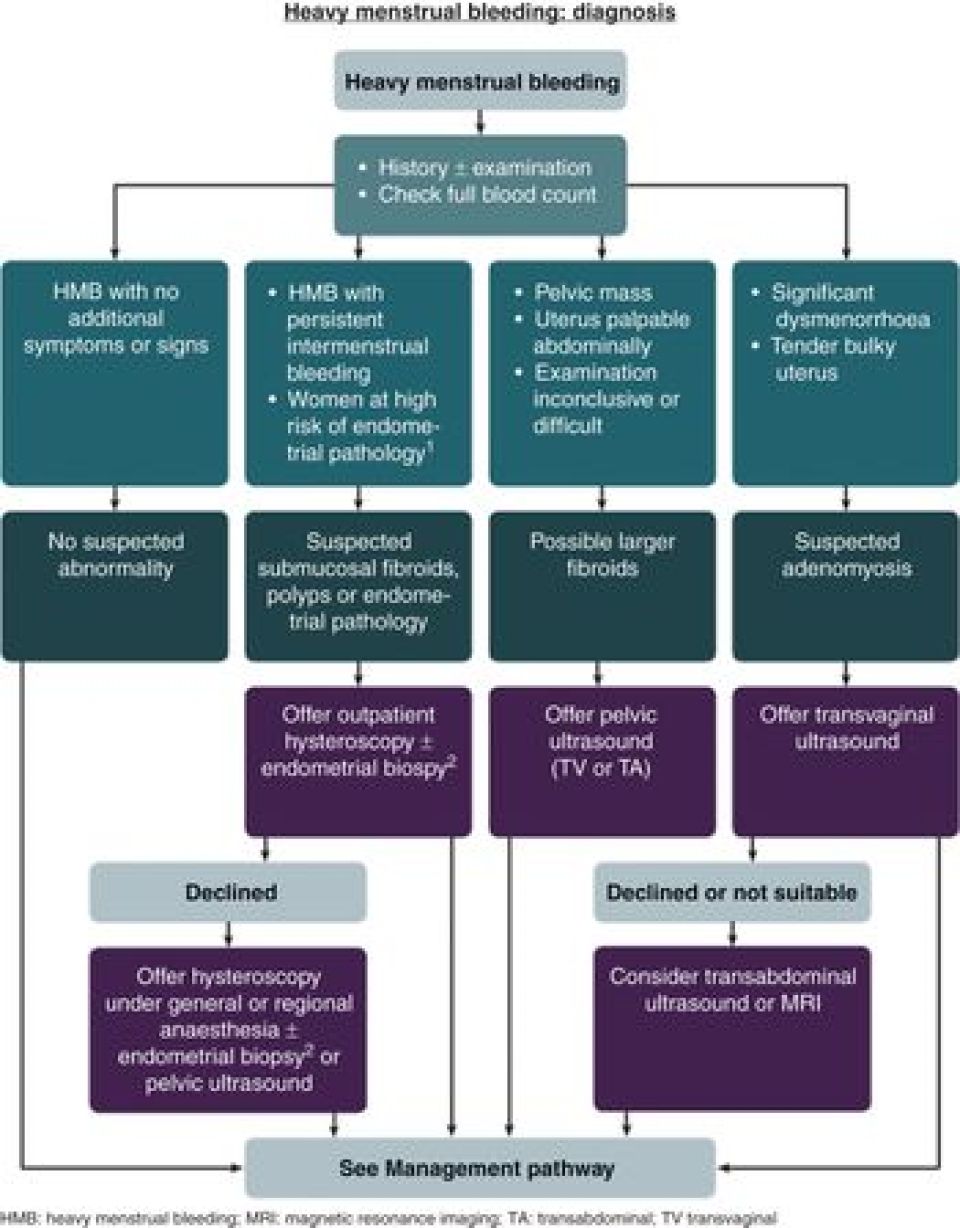
Practice Indian Medical PG questions for Abnormal Uterine Bleeding. These multiple choice questions (MCQs) cover important concepts and help you prepare for your exams.
Abnormal Uterine Bleeding Indian Medical PG Question 1: An obese woman of 49 years of age, with a history of diabetes and hypertension, complains of heavy menstrual bleeding with delayed and irregular cycles. Which of the following is the most important cause that should be ruled out in this patient?
- A. Cancer cervix
- B. Endometrial cancer (Correct Answer)
- C. Fibroid uterus
- D. Polycystic ovaries
Abnormal Uterine Bleeding Explanation: ***Endometrial cancer***
- This patient has multiple risk factors for **endometrial cancer**, including **obesity**, **diabetes**, **hypertension**, and being in the **perimenopausal** age group (49 years old).
- Her symptoms of heavy menstrual bleeding with delayed and irregular cycles are classic presentations of **endometrial hyperplasia** or **endometrial cancer**, warranting prompt investigation.
*Cancer cervix*
- While cervical cancer is a concern, its typical presentation often involves **post-coital bleeding** or **intermenstrual bleeding**, rather than heavy and irregular cycles, making other causes more likely in this specific scenario.
- Risk factors for cervical cancer include **HPV infection**, early age of first intercourse, multiple sexual partners, and smoking, which are not mentioned here.
*Fibroid uterus*
- **Fibroids** can cause heavy menstrual bleeding, but the delayed and irregular cycles, combined with the patient's strong metabolic risk factors, make endometrial pathology a more urgent concern.
- Fibroids are **benign tumors** and do not carry the same immediate malignancy risk as the presenting symptoms suggest for this patient profile.
*Polycystic ovaries*
- **PCOS** often presents with irregular or absent menstruation and infertility, usually in younger women, and is associated with obesity and insulin resistance.
- While PCOS can lead to chronic anovulation and increased risk of **endometrial hyperplasia**, a 49-year-old with acute changes in bleeding pattern and metabolic syndrome points more directly to the need to rule out established endometrial malignancy.
Abnormal Uterine Bleeding Indian Medical PG Question 2: What is the investigation of choice in postmenopausal bleeding?
- A. PAP smear
- B. Laparoscopy
- C. Fractional curettage
- D. Ultrasound (Correct Answer)
Abnormal Uterine Bleeding Explanation: ***Ultrasound***
- An initial **transvaginal ultrasound** is the investigation of choice to assess the endometrial thickness in postmenopausal bleeding. An endometrial thickness of >4-5mm often warrants further investigation.
- It helps in **ruling out endometrial pathologies** like hyperplasia, polyps, or carcinoma.
*PAP smear*
- A **PAP smear** is a screening test for cervical cancer, not typically used to investigate postmenopausal bleeding originating from the uterus.
- While it can detect some endometrial cells, it is **not sensitive** or specific enough to diagnose the cause of postmenopausal bleeding.
*Laparoscopy*
- **Laparoscopy** is a surgical procedure used to visualize pelvic organs and is generally employed for diagnosing and treating conditions like endometriosis, ovarian cysts, or ectopic pregnancies.
- It is **not the initial investigation** for postmenopausal bleeding and is too invasive for primary diagnosis unless other methods have failed or a specific pathology is suspected.
*Fractional curettage*
- **Fractional curettage** involves scraping the lining of the cervix and uterus to obtain tissue samples for histological examination.
- While it can be diagnostic for endometrial pathology, it is typically performed **after an initial ultrasound** has identified increased endometrial thickness or other suspicious findings, and less commonly as a standalone initial investigation.
Abnormal Uterine Bleeding Indian Medical PG Question 3: A 28-year-old woman, G2 P1, with severe PPH unresponsive to oxytocin presents with hypotension and tachycardia. She has a soft uterus and ongoing bleeding. What is the next best step in management?
- A. IM carboprost (Correct Answer)
- B. Immediate hysterectomy
- C. Expectant management
- D. IV tranexamic acid
Abnormal Uterine Bleeding Explanation: ***IM carboprost***
- The **soft uterus** with ongoing bleeding despite oxytocin indicates **uterine atony** as the cause of PPH
- Carboprost (PGF2α) is the **standard second-line uterotonic agent** after oxytocin failure
- Effectively stimulates strong **uterine contractions** to control hemorrhage from the placental bed
- Given intramuscularly at **0.25 mg every 15-90 minutes** (maximum 8 doses)
- Contraindicated in active cardiac, pulmonary, or hepatic disease
*Immediate hysterectomy*
- Peripartum hysterectomy is a **last-resort surgical intervention** for refractory PPH
- Should only be performed after failure of medical management (all uterotonics) and conservative surgical options (uterine tamponade, uterine artery ligation, B-Lynch suture)
- **Too aggressive** as the immediate next step when second-line uterotonics haven't been tried
*Expectant management*
- **Completely inappropriate** for severe PPH with hemodynamic instability (hypotension, tachycardia)
- Ongoing bleeding from uterine atony requires **immediate aggressive intervention**
- Delays increase risk of hypovolemic shock, DIC, maternal morbidity, and mortality
*IV tranexamic acid*
- **Antifibrinolytic agent** that inhibits plasminogen activation, promoting clot stability
- WHO recommends administration **within 3 hours** of PPH onset as an adjunct therapy
- While useful in PPH management, it does **not address uterine atony** (the primary cause indicated by soft uterus)
- Should be given **in addition to uterotonics**, not as a substitute for definitive management of atony
Abnormal Uterine Bleeding Indian Medical PG Question 4: Most common uterine tumor is:-
- A. Adenomyoma
- B. Endometrial cancer
- C. Leiomyosarcoma
- D. Leiomyoma (Correct Answer)
Abnormal Uterine Bleeding Explanation: ***Leiomyoma***
- **Leiomyomas**, also known as **fibroids**, are the most **common benign tumors of the uterus**.
- They are composed of **smooth muscle cells** and can vary in size and location within the uterus.
*Adenomyoma*
- An **adenomyoma** is a benign uterine tumor characterized by the presence of **endometrial glands and stroma** within the myometrium.
- While it is a uterine tumor, it is significantly **less common** than leiomyomas.
*Endometrial cancer*
- **Endometrial cancer** is a **malignant tumor** arising from the endometrium and is the most common gynecologic malignancy.
- However, malignant tumors are generally **less common** than benign tumors like leiomyomas.
*Leiomyosarcoma*
- **Leiomyosarcoma** is a **rare and aggressive malignant tumor** of the smooth muscle tissue of the uterus.
- It accounts for a very small percentage of uterine masses and is much less common than benign leiomyomas.
Abnormal Uterine Bleeding Indian Medical PG Question 5: A 39 year old nulliparous female has presented to Gynaecology OPD with complaint of post-coital bleeding for past six months. The first investigation to be offered to this female will be
- A. Pap smear (Correct Answer)
- B. Hysteroscopy
- C. Ultrasound
- D. Endometrial biopsy
Abnormal Uterine Bleeding Explanation: ***Pap smear***
- **Post-coital bleeding** is a classic symptom of **cervical pathology**, including **cervical cancer**, which a Pap smear is designed to detect.
- As a **screening tool**, a Pap smear is the appropriate initial investigation to broadly assess for abnormal cervical cells.
*Hysteroscopy*
- Hysteroscopy is an invasive procedure primarily used to visualize the **uterine cavity** and would be considered if concerns about intrauterine pathology arise after initial screening.
- It's not the first-line investigation for post-coital bleeding, which typically points to a **cervical or vaginal source**.
*Ultrasound*
- **Pelvic ultrasound** is useful for evaluating uterine, ovarian, and adnexal pathologies but is less effective for directly visualizing the **cervical surface** where post-coital bleeding often originates.
- It would be considered if there are other symptoms suggesting uterine or ovarian issues that aren't typically associated with post-coital bleeding alone.
*Endometrial biopsy*
- An **endometrial biopsy** is indicated for investigating **abnormal uterine bleeding** originating from the endometrium, such as in cases of suspected **endometrial hyperplasia** or cancer.
- Post-coital bleeding is generally not an indication for an initial endometrial biopsy unless other findings suggest an endometrial origin.
Abnormal Uterine Bleeding Indian Medical PG Question 6: Which test is most effective for detecting endometrial cancer in women with abnormal uterine bleeding?
- A. Transvaginal ultrasound
- B. Endometrial biopsy (Correct Answer)
- C. Pap smear
- D. CT scan of the abdomen and pelvis
Abnormal Uterine Bleeding Explanation: ***Endometrial biopsy***
- An **endometrial biopsy** is the most effective diagnostic test for endometrial cancer as it directly obtains tissue for **histopathological examination**.
- This procedure allows for the identification of **malignant cells** and provides definitive diagnosis, grading, and subtype of the cancer.
*Transvaginal ultrasound*
- While a **transvaginal ultrasound** can measure **endometrial thickness**, which is a useful screening tool, it cannot definitively diagnose cancer.
- An abnormal **endometrial thickness** would typically prompt an **endometrial biopsy** for confirmation.
*Pap smear*
- A **Pap smear** screens for **cervical cancer** by detecting abnormal cells from the cervix, not the endometrium.
- It is not an effective test for detecting **endometrial cancer**, although sometimes endometrial cells may be incidentally found.
*CT scan of the abdomen and pelvis*
- A **CT scan** is primarily used for **staging** endometrial cancer once diagnosed, to assess spread to other organs or lymph nodes, rather than for initial detection.
- It does not provide direct visualization or tissue sampling of the **endometrium** itself for diagnostic purposes.
Abnormal Uterine Bleeding Indian Medical PG Question 7: In a woman complaining of AUB following image was seen in endoscopic examination of uterus. What will be the diagnosis?
- A. Leiomyoma (Correct Answer)
- B. Adenomyosis
- C. Ovarian neoplasm
- D. Carcinoma of uterus
Abnormal Uterine Bleeding Explanation: ***Leiomyoma***
- The image shows **well-circumscribed, smooth, rounded masses protruding into the uterine cavity**, which are characteristic of **submucous (intracavitary) leiomyomas (fibroids)** seen on hysteroscopy.
- Submucous leiomyomas are benign smooth muscle tumors that project into the endometrial cavity and commonly cause **abnormal uterine bleeding (AUB)** due to increased endometrial surface area, distortion of the endometrial cavity, ulceration of overlying endometrium, and interference with normal uterine contractility.
- On **hysteroscopic examination**, they appear as firm, pale, smooth-surfaced masses with overlying endometrium.
*Adenomyosis*
- Adenomyosis involves the presence of **endometrial tissue within the myometrium**, leading to diffuse uterine enlargement.
- On hysteroscopy, it may show a **globally irregular endometrial surface** with small endometrial openings or cystic spaces, but not the discrete, well-circumscribed protruding masses seen in the image.
- While it can cause AUB and dysmenorrhea, the appearance is distinctly different from submucous leiomyomas.
*Ovarian neoplasm*
- Ovarian neoplasms originate in the **ovaries**, which are separate from the uterus.
- **Hysteroscopic examination** visualizes only the **endometrial cavity** and cannot directly visualize ovarian pathology.
- Ovarian masses do not protrude into the uterine cavity.
*Carcinoma of uterus*
- Endometrial carcinoma typically presents on hysteroscopy as **irregular, friable, ulcerative, or fungating lesions** with abnormal vascularity and易出血 (easy bleeding).
- The **smooth, well-defined, and rounded appearance** with intact overlying mucosa in the image is characteristic of benign leiomyomas, not malignant growths.
- Uterine sarcomas are rare and would show more irregular, infiltrative features rather than well-circumscribed masses.
Abnormal Uterine Bleeding Indian Medical PG Question 8: Which of the following is the most common cause of perforation of uterus in non-pregnant state?
- A. Dilatation and curettage (Correct Answer)
- B. Laparoscopy
- C. IUCD
- D. Carcinoma Endometrium
Abnormal Uterine Bleeding Explanation: ***Dilatation and curettage***
- **Dilatation and curettage (D&C)** is the most frequent iatrogenic cause of uterine perforation in the non-pregnant state due to the blind nature of the procedure, especially in cases of uterine anatomical variations or reduced uterine wall integrity.
- The risk of perforation is higher in postmenopausal women due to **atrophic, thinned uterine walls**, and in procedures performed for conditions like endometrial hyperplasia or polyps.
*Laparoscopy*
- While laparoscopic procedures involve inserting instruments into the abdomen, **uterine perforation during laparoscopy itself is rare**, as it usually involves instrumentation *outside* the uterus unless direct uterine manipulation or hysteroscopy is part of the procedure.
- Laparoscopy more commonly results in complications like bowel or vascular injury due to trocar insertion, rather than uterine perforation.
*IUCD*
- **Intrauterine contraceptive device (IUCD)** insertion can cause uterine perforation, but it is less common than with D&C, with an estimated incidence of 1-2 per 1000 insertions.
- Perforation during IUCD insertion is typically an immediate event, whereas D&C-related perforations can occur at any stage of the curettage.
*Carcinoma Endometrium*
- **Endometrial carcinoma** does not typically cause spontaneous uterine perforation, though it can weaken the uterine wall, making it more susceptible to perforation during diagnostic or therapeutic procedures like D&C.
- Perforation directly attributable to the carcinoma itself without instrumental intervention is exceedingly rare.
Abnormal Uterine Bleeding Indian Medical PG Question 9: A 25-year-old woman presents to the Gynaecology OPD with complaints of abdominal pain and heavy menstrual bleeding. On examination, there is a mass arising from the hypogastrium corresponding to 16 weeks gravid uterus. Her urine pregnancy test is negative. The most likely diagnosis is
- A. Endometriosis
- B. Ovarian tumour
- C. Uterine fibroid (Correct Answer)
- D. Pelvic inflammatory disease
Abnormal Uterine Bleeding Explanation: ***Uterine fibroid***
- The combination of **heavy menstrual bleeding (menorrhagia)**, **abdominal pain**, and a **palpable mass in the hypogastrium** corresponding to a 16-week gravid uterus in a young woman with a **negative pregnancy test** is classic for uterine fibroid.
- Fibroids (leiomyomas) are **benign smooth muscle tumors** of the uterus that can grow to significant size, causing **bulk-related symptoms** and **abnormal uterine bleeding**.
- This represents a **large symptomatic fibroid** with the classic triad: menorrhagia, pelvic mass, and pelvic pressure/pain.
*Endometriosis*
- While endometriosis can cause **cyclical pelvic pain** and **dysmenorrhea**, it typically does not present as a large, palpable mass mimicking a 16-week gravid uterus.
- Endometriomas (chocolate cysts) can form masses but are usually **adnexal** rather than central, and menorrhagia is not the primary symptom.
*Ovarian tumour*
- An ovarian tumor could present with an **abdominal mass** and **pain**, but heavy menstrual bleeding is not a typical feature unless it's a **hormonally active tumor** (rare).
- The description of the mass specifically corresponding to a "**gravid uterus**" suggests a **uterine origin** rather than an adnexal mass.
- Ovarian masses are typically felt **laterally** or can be more mobile.
*Pelvic inflammatory disease*
- PID commonly causes **acute pelvic pain**, **fever**, **vaginal discharge**, and **cervical motion tenderness**, but does not typically manifest as a large, smooth, palpable mass arising from the hypogastrium.
- Tubo-ovarian abscesses can form masses but are usually **tender**, **irregular**, and associated with **systemic signs of infection**.
Abnormal Uterine Bleeding Indian Medical PG Question 10: A 67-year-old female with hypertension and diabetes presents with heavy vaginal bleeding. What is the next step in management?
- A. Endometrial biopsy (Correct Answer)
- B. Pelvic ultrasound
- C. Detailed history and physical examination
- D. Complete blood count and coagulation studies
Abnormal Uterine Bleeding Explanation: ***Endometrial biopsy***
- **Postmenopausal bleeding is endometrial cancer until proven otherwise** - this is a fundamental principle in gynecology requiring immediate tissue diagnosis.
- **Endometrial biopsy is the first-line investigation** for any postmenopausal woman presenting with vaginal bleeding, as per **ACOG, RCOG, and WHO guidelines**.
- An office endometrial biopsy (using **Pipelle sampler**) can be performed quickly and has **90-97% sensitivity** for detecting endometrial cancer and hyperplasia.
- In this 67-year-old patient with risk factors (hypertension, diabetes), direct tissue sampling is mandatory to rule out **endometrial carcinoma**, which is the most concerning etiology.
- If office biopsy is inadequate or negative but bleeding persists, proceed to **hysteroscopy with directed biopsy** or **dilatation and curettage (D&C)**.
*Pelvic ultrasound*
- While transvaginal ultrasound can assess **endometrial thickness** (cancer unlikely if <4-5mm in postmenopausal women), it **cannot replace histological diagnosis**.
- Ultrasound may be used as an **adjunct** or for **triage in resource-limited settings**, but in established postmenopausal bleeding, **tissue diagnosis takes priority**.
- Some protocols use ultrasound first, but the definitive diagnostic step remains biopsy, and many guidelines recommend proceeding directly to biopsy in postmenopausal bleeding.
*Detailed history and physical examination*
- History and examination are **always performed initially** when a patient presents, but the question asks for the "next step in management" after the presentation is established.
- These would have already been completed to confirm postmenopausal status, exclude obvious causes (trauma, atrophic vaginitis), and assess hemodynamic stability.
- The "next step" implies the specific diagnostic or therapeutic intervention to identify the cause.
*Complete blood count and coagulation studies*
- **CBC** helps assess the degree of anemia from blood loss and guides need for transfusion.
- **Coagulation studies** may identify bleeding disorders but are not routinely indicated unless clinical suspicion exists.
- These investigations are **supportive** but do not identify the **anatomical source** or **histological cause** of bleeding, which is essential for management of postmenopausal bleeding.
More Abnormal Uterine Bleeding Indian Medical PG questions available in the OnCourse app. Practice MCQs, flashcards, and get detailed explanations.