Bordetella and Brucella Indian Medical PG Practice Questions and MCQs
Practice Indian Medical PG questions for Bordetella and Brucella. These multiple choice questions (MCQs) cover important concepts and help you prepare for your exams.
Bordetella and Brucella Indian Medical PG Question 1: Which of the following is the leading cause of death in brucellosis?
- A. Pneumonia
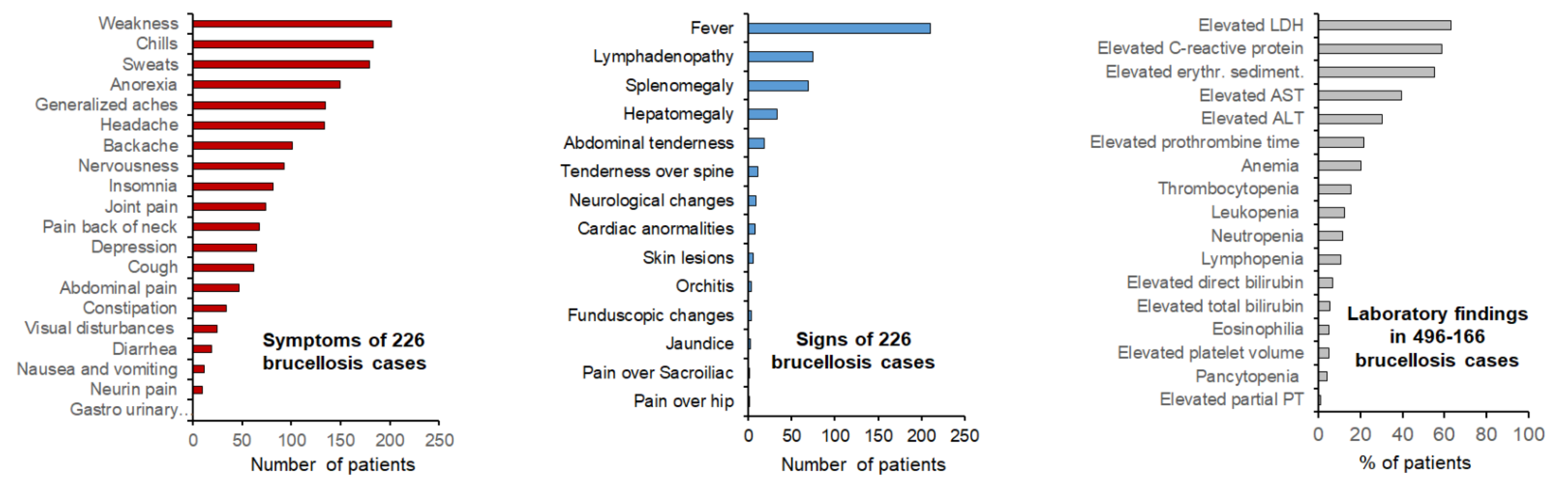
- B. Suppurative abscesses
- C. Endocarditis (Correct Answer)
- D. Mycotic aneurysms
Bordetella and Brucella Explanation: ***Endocarditis***
- **Endocarditis** is the most common cause of death in brucellosis, particularly when involving the **aortic valve** [1].
- It often requires a combination of prolonged **antibiotic therapy** and **surgical intervention**.
*Pneumonia*
- While pulmonary involvement can occur in brucellosis, including **bronchitis** and **pneumonia**, it is rarely the leading cause of death.
- Respiratory symptoms are generally mild and respond well to treatment.
*Suppurative abscesses*
- **Focal abscesses** can form in various organs in brucellosis, such as the liver or spleen [1].
- However, while serious, they are not as frequent a cause of mortality as endocarditis.
*Mycotic aneurysms*
- Though rare, **vascular complications** like mycotic aneurysms can occur in brucellosis, potentially leading to rupture and death.
- However, their incidence is much lower compared to the mortality associated with brucella endocarditis.
Bordetella and Brucella Indian Medical PG Question 2: Young female with 3 days fever presents with headache, BP 90/60 mmHg, Heart rate of 114/min, and pin point spots developed distal to BP cuff. Most likely organism is:
- A. Brucella suis
- B. N. meningitidis (Correct Answer)
- C. Staphylococcus aureus
- D. Brucella abortus
Bordetella and Brucella Explanation: ***N. meningitidis***
- The presentation of **fever**, **headache** [1], signs of **shock** (hypotension, tachycardia), and **petechiae/purpura** (pinpoint spots distal to BP cuff, indicating a bleeding disorder such as thrombocytopenia or DIC often associated with meningococcemia) is classic for **meningococcal sepsis**.
- *Neisseria meningitidis* is well-known for causing **rapidly progressive sepsis with disseminated intravascular coagulation (DIC)** and a characteristic **petechial or purpuric rash**.
*Brucella suis*
- *Brucella suis* causes **brucellosis**, which typically presents with **undulating fever**, **arthralgia**, fatigue, and hepatosplenomegaly.
- While it can cause systemic illness, it does not typically manifest with the acute, severe presentation of **sepsis** and **hemorrhagic rash** seen in this patient.
*Staphylococcus aureus*
- *Staphylococcus aureus* can cause widespread infections, including sepsis characterized by **fever**, **hypotension**, and **tachycardia**, often leading to **toxic shock syndrome**. [2]
- However, while *S. aureus* can cause skin manifestations like cellulitis or abscesses, it is less commonly associated with the specific **petechial rash** in the context of acute sepsis, unless it's an endocarditis with septic emboli, which would have a different clinical scenario. [2]
*Brucella abortus*
- Similar to *Brucella suis*, *Brucella abortus* causes **brucellosis**, a chronic zoonotic infection.
- The clinical picture of **acute fulminant sepsis with hemorrhagic skin lesions** is not characteristic of *Brucella abortus* infection.
Bordetella and Brucella Indian Medical PG Question 3: In a clinical scenario where a patient presents with flaccid paralysis, which of the following toxins is most likely responsible?
- A. Botulism (Correct Answer)
- B. Tetanus
- C. Diphtheria
- D. Cholera
Bordetella and Brucella Explanation: ***Correct Option: Botulism***
- **Botulinum toxin** blocks the release of **acetylcholine** at the neuromuscular junction, leading to **flaccid paralysis**.
- This paralysis typically progresses symmetrically and can affect ocular, bulbar, and peripheral muscles.
*Incorrect Option: Tetanus*
- **Tetanus toxin** inhibits the release of **inhibitory neurotransmitters** (**GABA** and **glycine**) in the central nervous system.
- This leads to uncontrolled muscle contractions, presenting as **spastic paralysis** and **lockjaw**.
*Incorrect Option: Diphtheria*
- **Diphtheria toxin** causes local inflammation and can lead to systemic effects, including **myocarditis** and **neuropathy**.
- The neuropathy can cause weakness, but it is typically a **delayed polyneuropathy** rather than acute flaccid paralysis.
*Incorrect Option: Cholera*
- **Cholera toxin** activates adenylyl cyclase in intestinal cells, leading to excessive fluid and electrolyte secretion.
- The primary symptom is **severe watery diarrhea** and dehydration, not paralysis.
Bordetella and Brucella Indian Medical PG Question 4: A clinically depressed farmer complains of extreme weakness, a daily rise and fall in fever, and night sweats. Small gram-negative rods are isolated from blood cultures after a 2-week incubation period. Which of the following organisms is the most likely etiologic agent?
- A. Campylobacter jejuni
- B. Francisella tularensis
- C. Brucella melitensis (Correct Answer)
- D. Salmonella enteritidis
Bordetella and Brucella Explanation: ***Brucella melitensis***
- This organism is known to cause **brucellosis**, which presents with **undulant fever** (daily rise and fall), night sweats, and fatigue, consistent with the patient's symptoms. The profession of a **farmer** puts him at higher risk due to exposure to infected livestock.
- **Neuropsychiatric manifestations** including depression, fatigue, and malaise are well-recognized features of chronic brucellosis, explaining the patient's clinical depression.
- **_Brucella_ species** are characteristic for their slow growth, often requiring **extended incubation periods** (up to 2 weeks) in blood cultures, and appear as small gram-negative rods.
*Campylobacter jejuni*
- This bacterium is a common cause of **gastroenteritis**, leading to **diarrhea**, abdominal cramps, and fever. While it can cause bacteremia, it typically presents with more prominent gastrointestinal symptoms.
- _C. jejuni_ is a **curved or spiral-shaped** gram-negative rod, distinct from the small rods described, and does not typically cause an undulant fever pattern.
*Francisella tularensis*
- This agent causes **tularemia**, which can manifest with fever, chills, and fatigue, but often includes a characteristic **skin lesion (ulceroglandular)** and prominent lymphadenopathy.
- Although it is a small gram-negative rod, the specific **undulant fever pattern** and the farmer's exposure history are more indicative of brucellosis.
*Salmonella enteritidis*
- This bacterium commonly causes **food poisoning** with symptoms like diarrhea, fever, and vomiting. While it can lead to bacteremia, it is less likely to present with the prolonged, **undulant fever** seen in brucellosis.
- **_Salmonella_ species** are typically readily isolated from blood cultures within a few days, unlike the prolonged incubation needed for _Brucella_.
Bordetella and Brucella Indian Medical PG Question 5: Which of the following organisms causes paroxysmal coughing and is prevented by DPT vaccine?
- A. Neisseria meningitidis
- B. Corynebacterium diphtheriae
- C. Bordetella pertussis (Correct Answer)
- D. Haemophilus influenzae
Bordetella and Brucella Explanation: ***Bordetella pertussis***
- This bacterium is the causative agent of **pertussis**, commonly known as whooping cough, characterized by severe, **paroxysmal coughing fits** followed by a characteristic \"whooping\" sound.
- The **DPT vaccine** (Diphtheria, Pertussis, Tetanus) provides immunity against *Bordetella pertussis*, preventing this highly contagious respiratory infection.
*Neisseria meningitidis*
- This organism causes **meningitis** and **meningococcemia**, which are characterized by fever, headache, stiff neck, and rash, not paroxysmal coughing.
- While there are vaccines for *Neisseria meningitidis*, it is not covered by the DPT vaccine.
*Corynebacterium diphtheriae*
- This bacterium causes **diphtheria**, a disease marked by a **pseudomembrane** formation in the throat, which can lead to airway obstruction and systemic toxin effects like myocarditis.
- Although the 'D' in DPT stands for Diphtheria and this organism is prevented by the DPT vaccine, **diphtheria does not present with paroxysmal coughing** as its characteristic feature.
*Haemophilus influenzae*
- This bacterium can cause a variety of infections, including **meningitis**, **epiglottitis**, and **otitis media**, but not typically paroxysmal coughing.
- The **Hib vaccine** specifically targets *Haemophilus influenzae* type b, not the DPT vaccine.
Bordetella and Brucella Indian Medical PG Question 6: Which of the following is a test for brucellosis?
- A. Standard tube agglutination test
- B. Milk ring test (Correct Answer)
- C. Rose Waaler test
- D. Paul Bunnell test
Bordetella and Brucella Explanation: ***Milk ring test***
- The **milk ring test** is a widely used screening test for detecting **Brucella antibodies** in bulk milk samples.
- It relies on the agglutination of stained *Brucella* cells by antibodies present in infected milk, forming a visible **blue ring** on top of the cream layer.
- Primarily used for **herd screening** in veterinary practice.
*Standard tube agglutination test*
- The **standard tube agglutination test (SAT)** is indeed a serological test for brucellosis, but it is used for **individual patient diagnosis** rather than bulk screening.
- While it can detect Brucella antibodies, the **milk ring test** is specifically designed and more practical for **rapid bulk milk screening** in dairy herds.
- SAT requires serum samples and is more time-consuming than the milk ring test for screening purposes.
*Rose Waaler test*
- The **Rose Waaler test** (also known as the sheep red blood cell agglutination test) is primarily used for the diagnosis of **rheumatoid arthritis**, detecting **rheumatoid factor (RF)**.
- It is not used for the diagnosis of brucellosis.
*Paul Bunnell test*
- The **Paul Bunnell test** is a serological test used to detect **heterophile antibodies** associated with **infectious mononucleosis** caused by the Epstein-Barr virus.
- This test is not relevant for the diagnosis of brucellosis.
Bordetella and Brucella Indian Medical PG Question 7: Four weeks after assisting in several calf deliveries, a farmer develops fever, weakness, muscle aches, and sweats. The fever rises in the afternoon and falls during the night. A Brucella species is isolated. Which Brucella species is a possible bioterrorism agent and is best described by one of the following?
- A. Typically infects goats and sheep, grows well in CO2, and is not inhibited by thionine or basic fuchsin dyes (Correct Answer)
- B. Commonly inhabits the canine respiratory tract and is an occasional pathogen for humans; strongly urease-positive
- C. Gram-negative bipolar stained bacilli that cause diarrhea by means of a heat-stable enterotoxin, with abdominal pain that may be mistaken for appendicitis
- D. Pits agar, grows both in carbon dioxide and under anaerobic conditions, and is part of the normal oral cavity flora
Bordetella and Brucella Explanation: ***Typically infects goats and sheep, grows well in CO2, and is not inhibited by thionine or basic fuchsin dyes***
- This description is characteristic of ***Brucella melitensis***, which is recognized as the most pathogenic **Brucella** species and a potential **bioterrorism agent** (CDC Category B) due to its high infectivity and severe disease course.
- Its specific growth requirements (CO2 preference) and dye resistance patterns (not inhibited by **thionine** or **basic fuchsin**) are key laboratory identifiers that differentiate it from other **Brucella** species (*B. abortus* is inhibited by thionine; *B. suis* is inhibited by basic fuchsin).
- Low infective dose (10-100 organisms) and aerosol transmission capability make it a significant bioterrorism threat.
*Commonly inhabits the canine respiratory tract and is an occasional pathogen for humans; strongly urease-positive*
- This describes ***Bordetella bronchiseptica***, not a **Brucella** species. It is a pathogen primarily associated with animals, especially dogs (kennel cough), and only rarely causes disease in immunocompromised humans.
- While it can be urease-positive, it belongs to a different genus and does not fit the clinical or epidemiological context of brucellosis.
*Gram-negative bipolar stained bacilli that cause diarrhea by means of a heat-stable enterotoxin, with abdominal pain that may be mistaken for appendicitis*
- This description points to ***Yersinia enterocolitica***, not a **Brucella** species. It is a **Gram-negative bacterium** known for causing gastrointestinal infections with symptoms that can mimic **appendicitis** (pseudoappendicitis syndrome).
- Its characteristic **bipolar staining** ("safety pin" appearance) and production of **heat-stable enterotoxin** are distinct from **Brucella** species.
*Pits agar, grows both in carbon dioxide and under anaerobic conditions, and is part of the normal oral cavity flora*
- This description is typical of ***Eikenella corrodens***, not a **Brucella** species. It is a **Gram-negative bacillus** found in the **normal oral flora** that can cause infections related to human bites or dental procedures.
- Its ability to "pit" agar and specific atmospheric growth requirements (CO2 and anaerobic) are unique characteristics that differentiate it from **Brucella** species.
Bordetella and Brucella Indian Medical PG Question 8: A 7-month-old, partially immunized child presented with cough ending in a characteristic whoop. Which of the following is considered the best type of specimen to isolate the organism and confirm the diagnosis?
- A. Tracheal aspirates
- B. Sputum
- C. Cough plate culture
- D. Nasopharyngeal swab (Correct Answer)
Bordetella and Brucella Explanation: ***Nasopharyngeal swab***
- A **nasopharyngeal swab** is the **gold standard** for collecting Bordetella pertussis specimens because the organism primarily colonizes the nasopharynx.
- The flexible wire swab allows for proper collection from the posterior nasopharynx, ensuring a higher yield for culture or **PCR testing**.
*Tracheal-aspirates*
- While tracheal aspirates can be used for respiratory infections, they are generally **too invasive** for routine diagnosis of pertussis in an infant.
- The organism is primarily in the upper respiratory tract, making a less invasive collection method preferable and effective.
*Sputum*
- Sputum samples are often difficult to obtain reliably from infants and are prone to **contamination** with oral flora.
- The organism is not typically found in sufficient quantities in sputum for optimal diagnostic yield.
*Cough plate culture*
- **Cough plate culture** involves holding a specialized agar plate in front of the patient's mouth during a cough, which is **difficult and unreliable** in a 7-month-old.
- This method also carries a high risk of **contamination** from oropharyngeal flora and is less sensitive than nasopharyngeal sampling.
Bordetella and Brucella Indian Medical PG Question 9: A child comes with fever, cold, cough, and a membrane over the tonsils; a nasal swab is taken. On which medium should the culture be done for the earliest diagnosis of diphtheria?
- A. L. J. media
- B. MC Conkey's Agar
- C. Citrate media
- D. Loffler's serum slope (Correct Answer)
Bordetella and Brucella Explanation: ***Loffler's serum slope***
- This medium promotes the rapid growth of *Corynebacterium diphtheriae*, allowing for early identification based on characteristic microscopic morphology within 6-8 hours.
- It enhances the production of **metachromatic granules** (Babes-Ernst bodies), which are key diagnostic features for diphtheria.
*L. J. media*
- **Lowenstein-Jensen (LJ) medium** is primarily used for the isolation and culture of **mycobacteria**, particularly *Mycobacterium tuberculosis*.
- It is not suitable for the rapid growth or specific identification of *Corynebacterium diphtheriae*.
*MC Conkey's Agar*
- **MacConkey agar** is a selective and differential medium used for the isolation and differentiation of **Gram-negative enteric bacilli**.
- It inhibits the growth of Gram-positive bacteria and is not appropriate for culturing *Corynebacterium diphtheriae*, which is Gram-positive.
*Citrate media*
- **Citrate media**, such as Simmons citrate agar, are used to test an organism's ability to utilize citrate as its sole source of carbon.
- This is a biochemical test for bacterial differentiation and not a primary isolation medium for *Corynebacterium diphtheriae*.
Bordetella and Brucella Indian Medical PG Question 10: A child presents with complaints of cough. Characteristic inspiratory whoop present. He is not immunised. Sample for investigation is:
- A. Nasopharyngeal swab (Correct Answer)
- B. Sputum culture
- C. Tracheal aspiration
- D. Cough plate culture
Bordetella and Brucella Explanation: ***Nasopharyngeal swab***
- A **nasopharyngeal swab** is the preferred sample for diagnosing **whooping cough** (pertussis) caused by *Bordetella pertussis*, especially for PCR testing.
- This method provides the best yield for detecting the bacterium which colonizes the **nasopharynx**.
*Sputum culture*
- **Sputum culture** is generally not recommended for diagnosing pertussis as *Bordetella pertussis* is a fastidious organism and less likely to be found in sputum.
- Sputum collection can also be challenging and less effective in young children.
*Tracheal aspiration*
- **Tracheal aspiration** is an invasive procedure and is generally reserved for critically ill patients or those with specific indications like ventilator-associated pneumonia, not routine pertussis diagnosis.
- The primary site for *Bordetella pertussis* colonization is the nasopharynx, not typically deep within the trachea for initial sampling.
*Cough plate culture*
- **Cough plate culture** involves exposing a culture medium directly to a patient's cough, but it is an older technique with lower sensitivity and specificity compared to nasopharyngeal swabs and PCR.
- Modern diagnostic methods, such as PCR from nasopharyngeal samples, offer faster and more accurate results for pertussis.
More Bordetella and Brucella Indian Medical PG questions available in the OnCourse app. Practice MCQs, flashcards, and get detailed explanations.