
Damage Control Surgery — Flashcards

If there is a _____ injury in any of the retroperitoneal zones, surgical management is done.
What is the initial management in a trauma patient presenting with pericardial tamponade?_____
The _____ is the second most common organ involved in blunt abdominal trauma.
If the patient's blood pressure improves to >_____ mm Hg, he needs to be re-evaluated as he may no longer be a candidate for damage control surgery
Initial Tube Thoracostomy drainage of >_____ ml (penetrating injury) or >1500 ml (blunt injury) of frank blood is an indication for thoracotomy
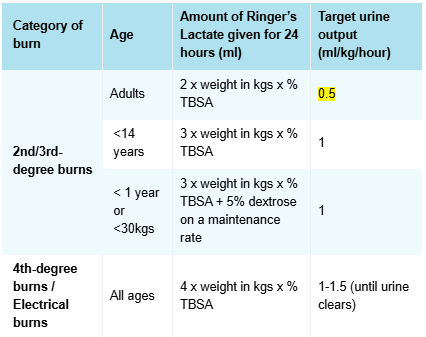
Parkland’s formula for fluid resuscitation in burns: _____
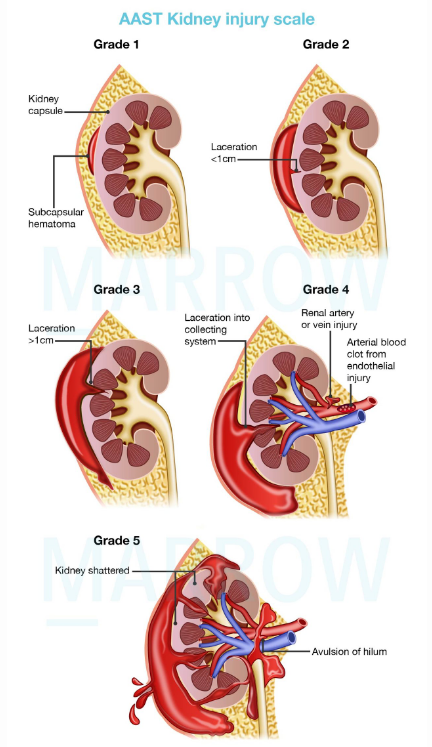
AAST Kidney Injury Scale: A laceration extending into the renal collecting system is classified as Grade _____.
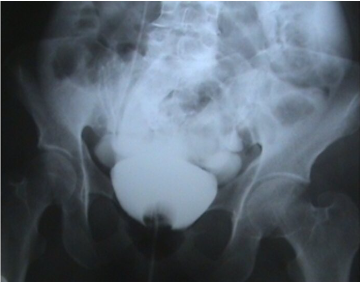
_____ is the next best step to manage a case of intraperitoneal bladder rupture
Deep partial thickness burns are _____ and are painful to pressure only
Hint: blanchable / not blanchable?
Massive transfusion (MT) is defined as the replacement by transfusion of _____ units of pRBCs in 24 hours or more than 4 units of pRBCs in one hour.
Damage Control Surgery Flashcards for NEET-PG
Study 10 flashcards on Damage Control Surgery for NEET-PG Surgery. These active recall cards cover the key concepts, clinical associations, and high-yield facts from this chapter of Trauma. Each card is designed to test your understanding rather than just recognition, building stronger and more durable memories for exam day.
For personalised spaced repetition scheduling and unlimited flashcards, download the Oncourse app.
Frequently Asked Questions
Are Damage Control Surgery flashcards free?
How many flashcards does this chapter have?
How should I use these flashcards for NEET-PG?
Are there more flashcards for Trauma?
Want unlimited flashcards?
Get full access to all flashcards, spaced repetition, and progress tracking.
Scan to download app