Cardiovascular System Indian Medical PG Flashcards - Medical Study Cards
Master Cardiovascular System with OnCourse flashcards. These spaced repetition flashcards are designed for medical students preparing for NEET PG, USMLE Step 1, USMLE Step 2, MBBS exams, and other medical licensing examinations.
Cardiovascular System Flashcard Deck - 171 Cards
Flashcard 1: Does the following cardiac/vascular function graph reflect a patient with chronic anemia or anaphylaxis?
_____
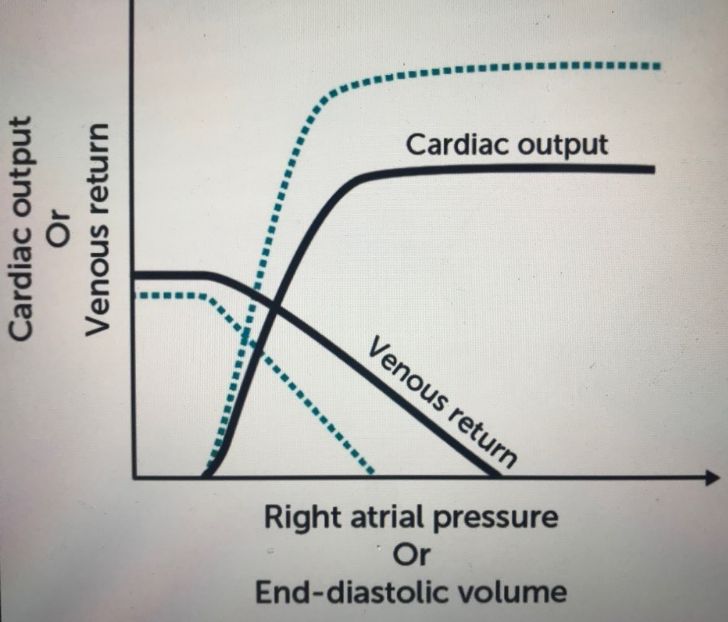
Answer: Anaphylaxis
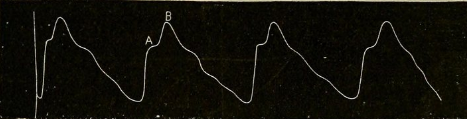
Flashcard 2: The image shows a _____ pulse waveform.
Answer: normal
Flashcard 3: Does the following cardiac/vascular function graph reflect a patient with chronic anemia or anaphylaxis?
_____
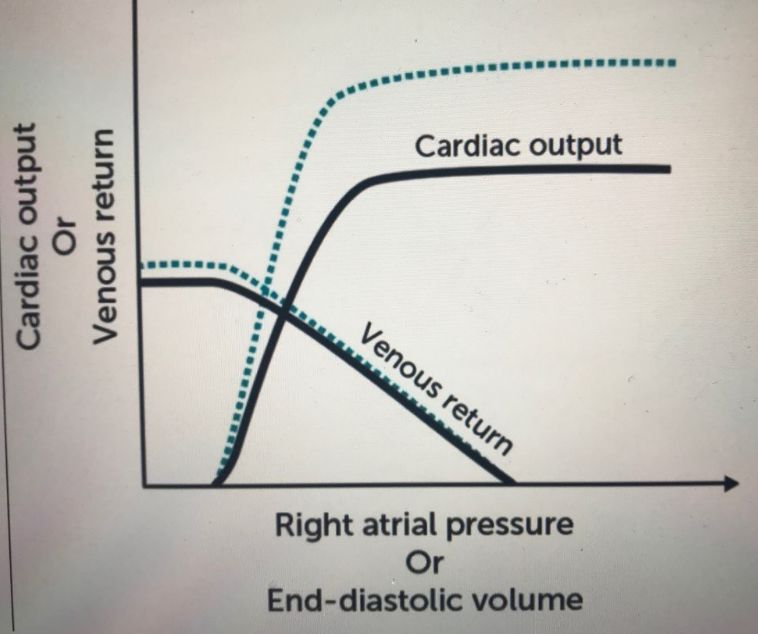
Answer: Chronic Anemia
Flashcard 4: The "blip" in the arterial pressure curve, called the _____, is produced when the aortic valve closes
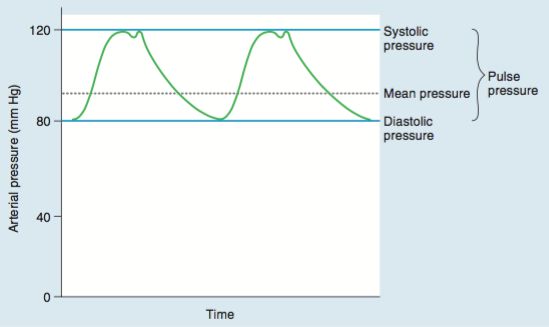
Answer: dicrotic notch
Flashcard 5: Endothelial cells prevent thrombosis by producing _____ and NO
Answer: prostacyclin (PGI2)
Flashcard 6: In the neonatal period, a patent ductus arteriosus becomes a _____-to-right shunt as pulmonary vascular resistance decreases
Answer: left
Flashcard 7: Fetal pulmonary vascular resistance is very _____ because of generalized hypoxic vaso-constriction
Answer: high
Flashcard 8: _____ -soluble substances cross the membranes of capillary endothelial cells by pinocytosis
Answer: Large water
Flashcard 9: Resistance is _____ proportional to the viscosity () of the blood
Answer: directly
Flashcard 10: Capillary hydrostatic pressure (Pc) is highest at the _____ end of the capillary and lowest at the venous end
Answer: arteriolar
Flashcard 11: A decreased blood volume (or venous tone) causes the cardiac output to _____ and right atrial pressure to decrease
Answer: decrease
Flashcard 12: Phase 3 of the SA node action potential is caused by activation of _____ channels and inactivation of Ca2+ channels
Answer: K+
Flashcard 13: Phase _____ of the SA node action potential is characterized by repolarization
Answer: 3
Flashcard 14: Phase _____ of the myocardial action potential is characterized by rapid repolarization
Answer: 3
Flashcard 15: Information from the aortic arch baroreceptors is carried to the _____ via the vagus nerve
Answer: nucleus tractus solitarius (NTS)
Flashcard 16: When resistances are arranged in _____, the total flow through each level of the system is the same
Answer: series
Flashcard 17: A positive inotropic agent causes the cardiac output to _____ and right atrial pressure to decrease
Answer: increase
Flashcard 18: The effects of thromboxane A2(TXA2) are increased platelet _____ and vasoconstriction
Answer: aggreggation
Flashcard 19: _____ and bradykinin are stimuli for NO production in endothelial cells.
Answer: Acetylcholine
Flashcard 20: The hand grip maneuver is used to _____ after-load
Answer: increase
Flashcard 21: _____ septal defect leads to an increased O2 saturation in the RA, RV and pulmonary artery
Answer: Atrial
Flashcard 22: Information from the carotid sinus baroreceptor is carried to the _____ via the glossopharyngeal nerve
Answer: nucleus tractus solitarius (NTS)
Flashcard 23: Atrial baroreceptors respond to _____ blood volume by increasing release of vasopressin (ADH) from the posterior pituitary
Answer: decreased
Flashcard 24: According to the Fick principle: _____ = O2 consumption / (arterial O2 content - venous O2 content)
Answer: Cardiac Output (CO)
Flashcard 25: The reasons there is concentric left ventricular hypertrophy in response to systemic hypertension is that _____ wall thickness decreases wall stress by offsetting increased wall tension
Answer: increased
Flashcard 26: A(n) _____ in TPR causes a clockwise rotation of the vascular function curve
Answer: decrease
Flashcard 27: Cardiac _____ can be estimated by the left ventricular ejection fraction,
Answer: contractility
Flashcard 28: A decrease in mean systemic pressure is reflected in a shift of the _____ function curve to the left
Answer: vascular
Flashcard 29: Resistance is _____ proportional to the fourth power of the radius of the blood vessel
Answer: inversely
Flashcard 30: ADH-activated _____ receptors are located on the vascular endothelium
Answer: V2
Flashcard 31: The pulmonary circulation is normally characterized as a _____ resistance, high compliance system (low or high)
Answer: low
Flashcard 32: _____ splitting is heard in conditions that delay aortic valve closure
Answer: Paradoxical
Flashcard 33: Phase 3 of the myocardial action potential is caused by massive efflux of _____ and closure of voltage-gated Ca2+ channels
Answer: K+
Flashcard 34: The property of elastic recoil is called _____ effect and is seen in large elastic vessels
Answer: windkessel
Flashcard 35: A hyperkinetic pulse is a rapidly rising pulse with high amplitude due to the rapid ejection of a _____ stroke volume against a decreased afterload
Answer: large
Flashcard 36: The integrity of the _____ reflex can be tested with the Valsalva maneuver
Answer: baroreceptor
Flashcard 37: Phase _____ of the SA node action potential is characterized by upstroke
Answer: 0
Flashcard 38: Atrial _____ is preceded by the P wave on ECG, which marks depolarization of the atria
Answer: systole
Flashcard 39: Phase 1 of the myocardial action potential is caused by inactivation of voltage-gated _____ channels and opening of voltage-gated K+ channels
Answer: Na+
Flashcard 40: Electromechanical systole is the time interval between _____ wave and second heart sound.
Answer: Q
Flashcard 41: In cardiac cells, the absolute refractory period begins with the _____ and ends after the plateau
Answer: upstroke
Flashcard 42: Isovolumetric _____ corresponds to the end of the T wave on ECG
Answer: relaxation
Flashcard 43: A _____ inotropic agent causes the cardiac function curve to shift downwards
Answer: negative
Flashcard 44: When a person moves from standing to supine position, the heart rate _____, due to activation of baroreceptor reflex
Answer: decreases
Flashcard 45: AV shunts _____ preload and decrease afterload
Answer: increase
Flashcard 46: During the early stages of exercise, cardiac output is maintained by increased _____ and stroke volume
Answer: heart rate
Flashcard 47: The Frank-Starling relationship states that the force of _____ is proportional to the end-diastolic length of the cardiac muscle fiber
Answer: contraction
Flashcard 48: Phase _____ of the myocardial action potential is characterized by initial repolarization
Answer: 1
Flashcard 49: A negative inotropic agent causes the cardiac output to _____ and right atrial pressure to increase
Answer: decrease
Flashcard 50: The _____ valve closes slightly before the tricuspid valve, thus heart sound S1 may be split
Answer: mitral
Flashcard 51: Increased _____ results in an increased width on a pressure-volume loop curve
Answer: preload
Flashcard 52: Phase 2 of the myocardial action potential (plateau) is caused by a balance of _____ efflux and Ca2+ influx through voltage-gated channels
Answer: K+
Flashcard 53: Bradykinin causes arteriolar _____ and venous constriction
Answer: dilation
Flashcard 54: Activation of _____ adrenergic receptors on the SA node causes increased heart rate
Answer: 1
Flashcard 55: Closure of the ductus arteriosus occurs in response to increased _____ and decreased PGE (from respiration and placental separation, respectively)
Answer: O2
Flashcard 56: ECF volume _____ produces a(n) decrease in capillary hydrostatic pressure (Pc)
Answer: contraction
Flashcard 57: When a blood vessel is injured, _____ binds exposed subendothelial collagen
Answer: von Willebrand factor (vWF)
Flashcard 58: Phase _____ of the myocardial action potential is characterized by a return to resting membrane potential
Answer: 4
Flashcard 59: The most important local metabolic factors for coronary circulation are _____ and adenosine (vasodilatory)
Answer: nitric oxide (NO)
Flashcard 60: _____, or diastasis, is the longest phase of the cardiac cycle
Answer: Reduced ventricular filling
Flashcard 61: A tension pneumothorax may lead to _____ intrathoracic pressure, leading to decreased cardiac function
Answer: increased
Flashcard 62: In the fetal period, the ductus arteriosus acts as a _____-to-left shunt
Answer: right
Flashcard 63: An increase in mean systemic pressure is reflected in a shift of the _____ function curve to the right
Answer: vascular
Flashcard 64: Resistance is _____ proportional to the length of the blood vessel
Answer: directly
Flashcard 65: Cerebral perfusion pressure (CPP) is equal to the difference between _____ and ICP
Answer: MAP
Flashcard 66: Activation of _____ adrenergic receptors on the cardiac myocytes causes increased cardiac contractility
Answer: 1
Flashcard 67: A decreased TPR causes the cardiac output to _____ and venous return to increase
Answer: increase
Flashcard 68: Relaxation of a myocardial cell occurs when:- Ca2+ is reaccumulated in the sarcoplasmic reticulum by the action of _____- Ca2+ is pumped out of the cell by the Na+/Ca2+ exchanger (NCX)
Answer: Ca2+ ATPase (SERCA)
Flashcard 69: The rate of phase _____ in the SA node action potential cycle determines heart rate
Answer: 4
Flashcard 70: The indication of the end of the isovolumetric relaxation phase is when _____ pressure falls below atrial pressure.
Answer: ventricular
Flashcard 71: Inspiration delays closure of the _____ valve which causes splitting of the S2 heart sound
Answer: pulmonic
Flashcard 72: _____ are a type of blood vessel with the highest resistance in the cardiovascular system
Answer: Arterioles
Flashcard 73: Depolarization proceeds from the _____cardium to the epicardium in an intact cardiac muscle.
Answer: endo
Flashcard 74: When Reynolds' number is _____, there is a greater tendency for turbulent blood flow
Answer: increased
Flashcard 75: _____ septal defect leads to an increased O2 saturation in the RV and pulmonary artery
Answer: Ventricular
Flashcard 76: The influx of calcium during the plateau phase of a myocardial action potential triggers release of Ca2+ from the _____, causing myocyte contraction
Answer: sarcoplasmic reticulum
Flashcard 77: A _____ dromotropic effect increases the PR interval on an ECG
Answer: negative
Flashcard 78: _____ is a maneuver that is used to increase preload, afterload, and venous return
Answer: Rapid squatting
Flashcard 79: The third phase of Lewis' triple response is _____ which occurs due to local edema, secondary consequent extravasation of fluid
Answer: wheal
Flashcard 80: A(n) _____ in TPR causes a counterclockwise rotation of the vascular function curve
Answer: increase
Flashcard 81: _____ is released from ventricular myocytes in response to increased tension
Answer: B-type (brain) natriuretic peptide (BNP)
Flashcard 82: Primary hypertension is related to increased _____ and TPR
Answer: cardiac output
Flashcard 83: An increased TPR causes the cardiac output to _____ and venous return to decrease
Answer: decrease
Flashcard 84: _____ is released from atrial myocytes in response to increased blood volume and atrial pressure
Answer: Atrial natriuretic peptide (ANP)
Flashcard 85: Bradykinin causes vaso-_____ and increased vascular permeability
Answer: dilation
Flashcard 86: When resistances are arranged in _____, the pressure through each level of the system is the same
Answer: parallel
Flashcard 87: Type _____ failure, also called as shock, is because of hypoperfusion of respiratory muscles in patients with shock
Answer: IV
Flashcard 88: Cerebral blood flow is autoregulated extremely well between arterial pressure limits of _____ and 140 mm Hg
Answer: 60
Flashcard 89: _____ rhinitis occurs due to parasympathetic overactivity which causes vasodilatation and congestion.
Answer: Vasomotor
Flashcard 90: Activation of A1 receptors in the myocardium by adenosine _____ outward K+ current
Answer: increases
Flashcard 91: Standing up and the valsalva maneuver are both used to _____ pre-load
Answer: decrease
Flashcard 92: A(n) _____ in TPR causes a(n) downward shift of the cardiac function curve
Answer: increase
Flashcard 93: The second phase of Lewis' triple response is _____ which occurs due to arteriolar dilatation, secondary to axon reflex
Answer: flare
Flashcard 94: Increased _____ results in a(n) decreased width and increased height on a pressure-volume loop curve
Answer: afterload
Flashcard 95: Increased _____ results in an increased width and increased height on a pressure-volume loop curve
Answer: contractility
Flashcard 96: An increased blood volume (or venous tone) causes the cardiac output to _____ and right atrial pressure to increase
Answer: increase
Flashcard 97: Activation of _____ adrenergic receptors causes coronary and skeletal muscle vaso-dilation
Answer: 2
Flashcard 98: The _____ function curve is a plot of the relationship between pressure of the right atrium and venous return
Answer: vascular
Flashcard 99: The heart sound _____ can be associated with ventricular noncompliance
Answer: S4
Flashcard 100: The normal mean pulmonary artery pressure is between _____ and 14 mmHg
Answer: 10
Flashcard 101: Phase _____ of the SA node action potential is characterized by slow depolarization
Answer: 4
Flashcard 102: Cardiovascular (Antiarrhythmics) _____-kalemia induced arrhythmias may present on ECG with U waves at the end of the T wave
Answer: Hypo
Flashcard 103: The first phase of Lewis' triple response is _____ which occurs due to capillary dilatation, secondary to pressure
Answer: red reaction
Flashcard 104: Surgical removal of kidney leads to _____ in cardiac output because of increase in TPR
Answer: decrease
Flashcard 105: Only clinical indicators of perfusion of the gastrointestinal tract and muscular beds are the global measures of _____ and the mixed venous oxygen saturation
Answer: lactic acidosis
Flashcard 106: Preload is approximated by _____ ventricular end-diastolic volume (EDV)
Answer: left
Flashcard 107: The most important local metabolic factors for cerebral circulation are _____ and H+ (pH)
Answer: CO2
Flashcard 108: The _____ function curve is a plot of the relationship between cardiac output of the left ventricle and pressure of the right atrium
Answer: cardiac
Flashcard 109: A(n) _____ in TPR causes a(n) upward shift of the cardiac function curve
Answer: decrease
Flashcard 110: _____ is a good approximation of left atrial pressure
Answer: Pulmonary capillary wedge pressure (PCWP)
Flashcard 111: _____ -soluble substances cross the membranes of capillary endothelial cells by aqueous clefts (between endothelial cells)
Answer: Small water
Flashcard 112: _____ isoform of myosin heavy chain predominates in the adult ventricles.
Answer: Alpha
Flashcard 113: The vasodilator metabolites produced by tissues as a result of increased metabolic activity may be remembered using the mnemonic "CHALK":C: _____H: H+A: AdenosineL: LactateK: K+
Answer: CO2
Flashcard 114: Phase _____ of the myocardial action potential is characterized by rapid upstroke/depolarization
Answer: 0
Flashcard 115: Most of the deoxygenated blood from the fetal SVC is conducted to the _____ via the ductus arteriosus, which bypasses the lungs
Answer: descending aorta
Flashcard 116: A _____ inotropic agent causes the cardiac function curve to shift upwards
Answer: positive
Flashcard 117: _____ isoform of myosin heavy chain predominates in the adult atria.
Answer: Alpha
Flashcard 118: Activation of the _____ adrenergic receptor causes vaso-constriction
Answer: 1
Flashcard 119: The _____ of a pressure-volume loop is the stroke volume
Answer: width
Flashcard 120: _____ have both unitary and multiunit smooth muscle systems
Answer: Blood vessels
Flashcard 121: What phenomenon is responsible for blood flow through the capillaries?_____
Answer: Vasomotion
Flashcard 122: Laminar non-turbulent blood flow is associated with the production of _____ transcription factor
Answer: KLF2
Flashcard 123: The _____ system is regarded as the drainage system of coarse type
Answer: lymphatic
Flashcard 124: _____ beats- occur when a sinus and ventricular beat coincides to produce a hybrid complex
Answer: Fusion
Flashcard 125: What is the formula for cardiac index?_____
Answer: Cardiac Index = Cardiac output / body surface area.
Flashcard 126: The total fetal cardiac output at term is approximately _____ mL/kg/min.
Answer: 450
Flashcard 127: _____ is gradient in pressure between the portal vein and the inferior vena cava (IVC).
Answer: Hepatic venous pressure gradient (HVPG)
Flashcard 128: Cardiac muscle cannot be tetanized due to _____ refractory period.
Answer: long (short/long)
Flashcard 129: Duration of the AV nodal delay is _____s
Answer: 0.09
Flashcard 130: Effect of valvular diseases on PV loop:The pressure-volume curve is shifted to the left and down in _____
Answer: Mitral stenosis
Flashcard 131: The _____ system is regarded as the drainage system of fine type
Answer: venous
Flashcard 132: Nevus anemicus occurs because of increased sensitivity of local cutaneous blood vessels to _____
Answer: catecholamines
Flashcard 133: _____ are the most common activators, of sympathetic vasomotor system
Answer: Baroreceptors
Flashcard 134: The main regulatory factor for vasomotion is tissue _____ concentration.
Answer: oxygen
Flashcard 135: _____ Raynaud's phenomenon refers to the vasospasm of the cardiac arterial bed
Answer: Cardiac
Flashcard 136: CNS ischemic response doesnt activate till arterial pressure drops to _____mmHg or less, hence it is principally a emergency mechanism
Answer: 60
Flashcard 137: Sympathetic stimulation leads to a _____ in epicardial blood flow
Answer: decrease
Flashcard 138: In abdominal compartment syndrome, venous return _____
Answer: decreases
Flashcard 139: Platelet-activating factor (PAF) causes vaso_____
Answer: constriction
Flashcard 140: x descent on JVP: Corresponds to the _____ as the ventricular systole pulls the tricuspid valve.
Answer: atrial relaxation
Flashcard 141: Effect of valvular diseases on PV loop:The pressure-volume curve is shifted to the right and is wide and tall in _____
Answer: Aortic regurgitation
Flashcard 142: The normal portal venous pressure is _____ mmHg
Answer: 5 to 10
Flashcard 143: _____ waves are due to the variation of arterial pressure due to reflex changes in nervous control of blood pressure
Answer: Mayer
Flashcard 144: In abdominal compartment syndrome, central venous pressure _____
Answer: increases
Flashcard 145: Bainbridge Reflex is the _____cardia in response to right atrial distension.
Answer: tachy
Flashcard 146: When the skin is stroked firmly with a pointed instrument, the triple response (also k/a _____), is seen.
Answer: Lewis triple response
Flashcard 147: _____ means intermittent contraction of meta arterioles and precapillary spinchter.
Answer: Vasomotion
Flashcard 148: 'c' waves are produced by bulging of the tricuspid valve into the right atrium during the _____ of the right ventricle.
Answer: Iso-volumetric contraction (phase)
Flashcard 149: Modified Shock Index is calculated using?_____
Answer: HR/MAP
Flashcard 150: Functional closure of the fetal circulatory adjustments occurs in the following sequence: _____
Answer: Ductus venosus > Foramen ovale > Ductus arteriosus
Flashcard 151: Capillary refill time becoming faster is typically indicative of a _____ compromise
Answer: venous
Flashcard 152: In _____ hypoxia, blood flow is very low; so, more oxygen is extracted causing an increase in reduced hemoglobin cyanosis.
Answer: stagnant
Flashcard 153: The main site of peripheral vascular resistance is precapillary _____
Answer: arterioles
Flashcard 154: Baroreceptors provide _____ feedback in responses to changes in blood pressure
Answer: negative
Flashcard 155: Thin-walled and delicate vessels like capillaries are less prone to rupture and this can be explained by _____
Answer: Laplace law.
Flashcard 156: In normally flowing blood in venules, _____ cells are confined to a central axial column
Answer: red blood
Flashcard 157: The presence of hemoglobin in normal arterial blood increases its O2 concentration approximately by _____ times
Answer: 70
Flashcard 158: Activation of chemosensitive vagal C fibers located in the cardiopulmonary region, causing bradycardia, hypotension, and apnea followed by rapid shallow breathing, is known as _____ reflex
Answer: Bezold-Jarisch
Flashcard 159: Increased sympathetic discharge causes, increases venous tone and mean systemic filling pressure, and causes a(n) _____ in venous return
Answer: increase
Flashcard 160: Height of contraction in a preloaded muscle contraction is _____ than afterloaded muscle contraction
Answer: more
Flashcard 161: Effect of valvular diseases on PV loop:The pressure-volume curve is tall with steep slope in _____
Answer: Aortic stenosis
Flashcard 162: _____ can be responsible for Bezold Jarisch reflex.
Answer: Serotonin
Flashcard 163: Fick principle, _____, and ECHO can be used to measure cardiac output.
Answer: thermodilution
Flashcard 164: When the value of Reynold s number is 2000-3000, the flow is said to be _____
Answer: Transitional
Flashcard 165: In Baroreceptor reflex pathway, Nucleus tractus solitarius (NTS) releases _____
Answer: Glutamate
Flashcard 166: Peak ventricular pressure occurs during _____
Answer: ventricular ejection::Cardiac cycle phase
Flashcard 167: Cardiac output is _____ immediately following delivery.
Answer: maximum
Flashcard 168: Among the fetal blood vessels, the _____ has the lowest oxygen concentration.
Answer: superior vena cava (SVC)
Flashcard 169: Increase in blood pressure at the beginning of the Valsalva maneuver is due to increase in intrathoracic pressure adding to _____ pressure.
Answer: aortic
Flashcard 170: Low blood pressures tend to _____ and high blood pressures become _____ as the individuals grow older.
Answer: remain low; higher
Flashcard 171: Hypothyroidism leads to a decrease in myocardial contractility and pulse rate, resulting in _____ stroke volume and bradycardia.
Answer: reduced
Keywords: Cardiovascular System flashcards, medical flashcards, NEET PG preparation, USMLE Step 1 flashcards, Anki alternative, spaced repetition medical, OnCourse flashcards