
Sulfonamides and Trimethoprim — Flashcards

The fluoroquinolones _____ and moxifloxacin can be used to treat Streptococcus pneumoniae, Haemophilus spp. (community-acquired pneumonia)
Cephalosporins that contain a _____ group can cause hypoprothrombinemia (factor II) and thereby bleeding problems.
_____ and ofloxacin have the maximum bioavailability among fluoroquinolones.
Hypersensitivity reactions are common with Sulfa drug use; result in fever, hypotension, _____ and rash
_____ inhibits the enzyme dihydrofolate reductase in prokaryotes (pyrimidine synthesis)
_____ inhibits the enzyme dihydrofolate reductase in protozoa (pyrimidine synthesis)
_____ are commonly used in patients that cannot tolerate aminoglycosides due to renal insufficiency.
_____ and Pneumocystis jirovecii are treated prophylactically in HIV patients with Trimethoprim-sulfamethoxazole (TMP-SMX)
Which step ([A] - [E]) of Bacterial Protein Synthesis do Aminoglycosides inhibit? _____
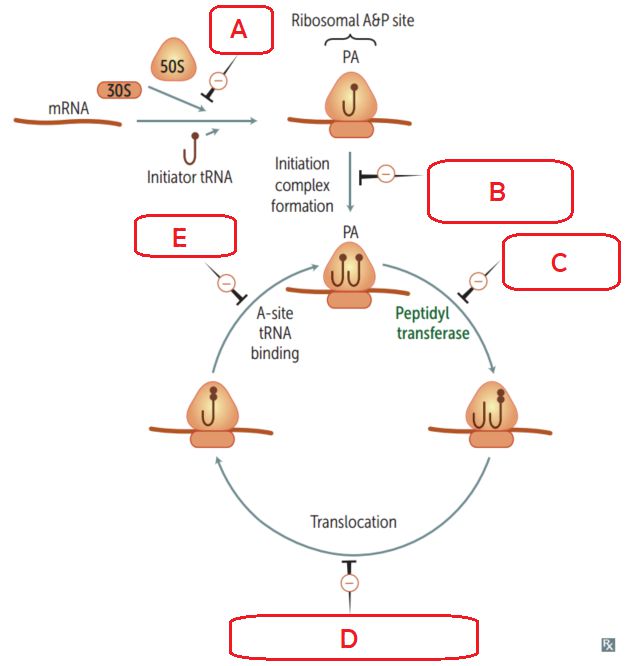
Which step ([A] - [E]) of Bacterial Protein Synthesis does Clindamycin inhibit? _____
Sulfonamides and Trimethoprim Flashcards for NEET-PG
Study 10 flashcards on Sulfonamides and Trimethoprim for NEET-PG Pharmacology. These active recall cards cover the key concepts, clinical associations, and high-yield facts from this chapter of Antimicrobial Agents. Each card is designed to test your understanding rather than just recognition, building stronger and more durable memories for exam day.
For personalised spaced repetition scheduling and unlimited flashcards, download the Oncourse app.
Frequently Asked Questions
Are Sulfonamides and Trimethoprim flashcards free?
How many flashcards does this chapter have?
How should I use these flashcards for NEET-PG?
Are there more flashcards for Antimicrobial Agents?
Want unlimited flashcards?
Get full access to all flashcards, spaced repetition, and progress tracking.
Scan to download app