
Gastroenterology — Flashcards

On this page
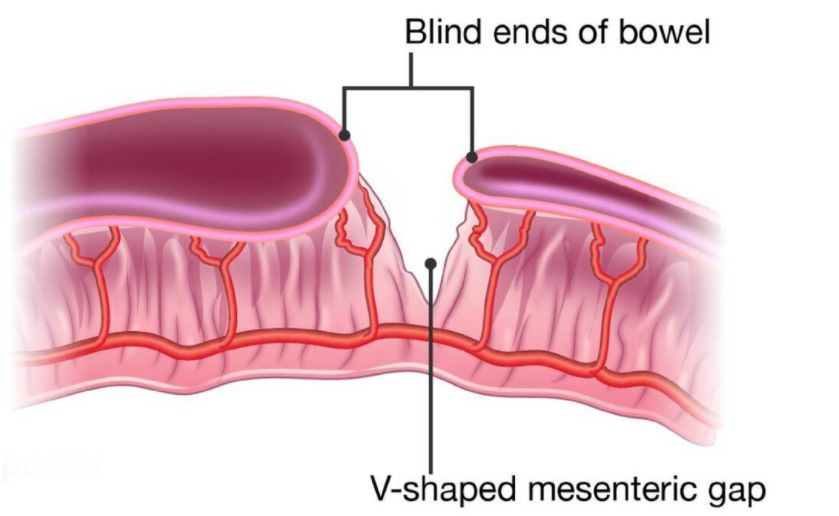
What is the classification of the following type of jejunoileal atresia? _____
_____ vaccine is contraindicated after abdominal surgery
_____ syndrome is fulminant liver failure and encephalopathy in children with viral illness who take aspirin
Hirschsprung disease is characterized by _____ ("squirt sign") and an empty rectal vault on digital rectal exam
Most common anomaly associated with extra-hepatic biliary atresia (EHBA) is _____ and preduodenal portal vein
Intermittent paroxysmal spells of generalized stiffening and opisthotonic posturing that are caused by _____ in infants, is also called as Sandifer syndrome
Cystic fibrosis may cause malabsorption with _____ and consequent fat-soluble vitamin deficiencies
Hint: bowel condition
Persistent diarrhea is defined as stool volume of more than _____ g/kg/day in toddlers/infants and greater than 200 g/day in older children that lasts for 14 days or more.
_____ is characterized by necrosis of intestinal mucosa with possible perforation, which can lead to:- free air in the bowel wall (pneumatosis intestinalis)- free air in the abdomen (pneumoperitoneum) - portal venous gas on imaging
_____ is associated with the rotavirus vaccine due to enlargement of peyer's patches which act as a lead point
Study by Chapter
Gastroesophageal Reflux
Flashcards
Peptic Ulcer Disease
Flashcards
Inflammatory Bowel Disease
Flashcards
Celiac Disease
Flashcards
Malabsorption Syndromes
Flashcards
Acute and Chronic Diarrhea
Flashcards
Constipation and Encopresis
Flashcards
Gastrointestinal Bleeding
Flashcards
Intestinal Obstruction
Flashcards
Liver Diseases in Children
Flashcards
Pancreatic Disorders
Flashcards
Pediatric Nutritional Support
Flashcards
About Gastroenterology Flashcards for NEET-PG
These Gastroenterology flashcards are designed for NEET-PG Pediatrics preparation, using active recall to help you retain high-yield concepts, clinical correlations, and commonly tested facts. Each card prompts you to retrieve information from memory rather than passively reviewing notes, which research shows leads to significantly better exam performance.
The 36 cards in this deck cover the most important topics in Gastroenterology, including key mechanisms, diagnostic criteria, treatment protocols, and clinical pearls that frequently appear in NEET-PG examinations. Cards are organised by chapter so you can focus on specific areas or work through the entire topic systematically.
For personalised spaced repetition scheduling that adapts to your performance, unlimited flashcards, and detailed progress analytics, download the Oncourse app.
Frequently Asked Questions
Are Gastroenterology flashcards free on Oncourse?
How do flashcards help with NEET-PG preparation?
How many Gastroenterology flashcards are available?
Can I study Gastroenterology flashcards by chapter?
What topics do these Pediatrics flashcards cover?
Want unlimited flashcards?
Get full access to all flashcards, spaced repetition, and progress tracking.
Start For Free