Respiratory Pathology Indian Medical PG Flashcards - Medical Study Cards
Master Respiratory Pathology with OnCourse flashcards. These spaced repetition flashcards are designed for medical students preparing for NEET PG, USMLE Step 1, USMLE Step 2, MBBS exams, and other medical licensing examinations.
Respiratory Pathology Flashcard Deck - 85 Cards
Flashcard 1: Histopathology showing the _____ effect are suggestive of a small cell carcinoma of the lung.
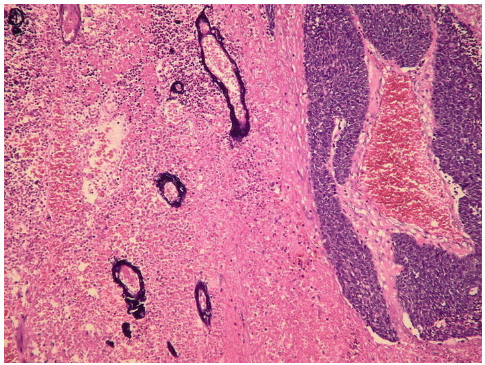
Answer: Azzopardi
Flashcard 2: _____ bodies are seen in cryptogenic organizing pneumonia.
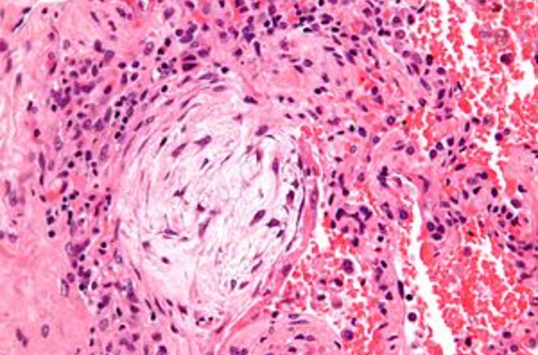
Answer: Masson
Flashcard 3: The diagnosis is _____ carcinoma of the lung.
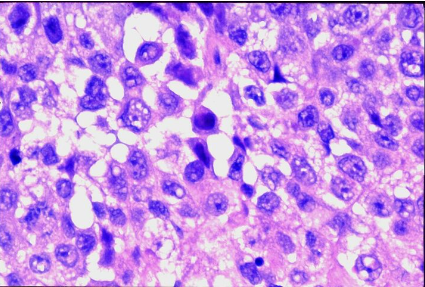
Answer: large cell
Flashcard 4: Asbestos bodies contain _____ and thus may be visualized using a Prussian blue stain
Answer: iron
Flashcard 5: _____ is a malignancy of the lung pleura that is highly associated with asbestosis
Answer: Mesothelioma
Flashcard 6: Primary lung _____ is Napsin-A positive and Thyroid Transcription Factor (TTF-1) positive
Answer: adenocarcinoma
Flashcard 7: _____ pleural effusion is characterized by high protein content
Answer: Exudative
Flashcard 8: Most pneumoconiosis involves the _____ lobes of the lung (coal worker's pneumoconiosis (CWP), silicosis, berylliosis), except asbestosis
Answer: upper
Flashcard 9: _____ is characterized histologically by columnar cells containing mucus that grow along pre-existing bronchioles and alveoli
Answer: Adenocarcinoma in situ
Flashcard 10: _____ is characterized by macrophages laden with carbon, causing inflammation and fibrosis
Answer: Coal workers' pneumoconiosis
Flashcard 11: The final phase of lobar pneumonia is _____ with regeneration of tissue via type II pneumocytes
Answer: resolution
Flashcard 12: _____ carcinoma of the lung is the most common tumor in male smokers
Answer: Squamous cell
Flashcard 13: _____ of the lung is characterized histologically by a glandular pattern that often stains positive for mucin
Answer: Adenocarcinoma
Flashcard 14: _____ cells are large foam cells with a central nucleus and vacuolated cytoplasm containing causative bacilli, seen in rhinoscleroma
Answer: Mikulicz
Flashcard 15: Histopathology showing the _____ effect are suggestive of a small cell carcinoma of the lung.
Answer: Azzopardi
Flashcard 16: _____ may be caused by an 1-antitrypsin deficiency, resulting in excess elastase activity in alveoli
Answer: Emphysema
Flashcard 17: _____ results in centriacinar emphysema that is most severe in the upper lobes of the lung
Answer: Smoking
Flashcard 18: Bronchiectasis is due to chronic _____ inflammation or obstruction which results in permanently dilated airways
Answer: necrotizing
Flashcard 19: _____ is characterized by scattered, patchy consolidation centered around bronchioles
Answer: Bronchopneumonia
Flashcard 20: _____ pneumonia is characterized by diffuse, patchy inflammation that is localized to interstitial areas at alveolar walls
Answer: Atypical
Flashcard 21: Emphysema is due to an imbalance of _____ (e.g. elastase) and antiproteases (e.g. 1-antitrypsin)
Answer: proteases
Flashcard 22: _____ leads to an increased Reid index, which is the thickness of mucus glands relative to the overall bronchial wall thickness
Answer: Chronic bronchitis
Flashcard 23: In chronic bronchitis, the Reid index is > _____% (normal is < 40%)
Answer: 50
Flashcard 24: In ARDS, activation of _____ by proinflammatory cytokines induces free radical and protease-mediated damage of both type I and II pneumocytes
Answer: neutrophils
Flashcard 25: Between bronchogenic carcinoma and mesothelioma, patients exposed to asbestos are far more likely to develop _____ than mesothelioma
Answer: bronchogenic carcinoma
Flashcard 26: Primary lung _____ is Napsin-A negative and Thyroid Transcription Factor (TTF-1) negative
Answer: squamous cell carcinoma
Flashcard 27: Hypersensitivity pneumonitis is a mixed type _____/IV hypersensitivity reaction
Answer: III
Flashcard 28: Basophilic staining of the vessel wall (_____ effect) are suggestive of a small cell carcinoma of the lung
Answer: Azzopardi
Flashcard 29: Lung carcinoma is classically divided into two categories: _____ (15%) and non-small cell carcinoma (85%)
Answer: small cell carcinoma
Flashcard 30: Asthma pathogenesis: TH2 cells secrete IL-_____ which attracts eosinophils
Answer: 5
Flashcard 31: _____ carcinoma of the lung is characterized histologically by keratin pearls and intercellular bridges
Answer: Squamous cell
Flashcard 32: Lymphatic pleural effusion is characterized by a _____-appearing fluid with increased triglycerides
Answer: milky
Flashcard 33: Pulmonary hypertension is characterized by _____ hypertrophy of pulmonary arteries
Answer: smooth muscle (medial)
Flashcard 34: _____ is an autoimmune reaction that generates granulomas in response to inhaled organic antigens (e.g. pigeon breeders lung)
Answer: Hypersensitivity pneumonitis
Flashcard 35: Secondary pulmonary hypertension due to Chronic _____ may arise with recurrent pulmonary embolism or microthrombi
Answer: Thromboemboli
Flashcard 36: Inhalation injury results in the development of chemical _____, pulmonary edema, and pneumonitis
Answer: tracheobronchitis
Flashcard 37: _____ is likely related to cyclical lung injury, with TGF- from injured pneumocytes inducing increased collagen deposition and fibrosis
Answer: Idiopathic pulmonary fibrosis
Flashcard 38: _____ is a type I hypersensitivity reaction caused by Aspergillus fumigatus
Answer: Allergic Bronchopulmonary Aspergillosis (ABPA)
Flashcard 39: _____ pneumonia is characterized by neutrophils in the air sacs with an intra-alveolar exudate (location)
Answer: Lobar
Flashcard 40: _____ lesions are small, vascular channels that may be seen with severe, long standing pulmonary hypertension
Answer: Plexiform
Flashcard 41: Bronchial _____ tumor is characterized histologically by nests of well differentiated neuroendocrine cells
Answer: carcinoid
Flashcard 42: In an asthmatic response, mast cells lead to generation of leukotrienes _____, D4, and E4 (early-phase reaction)
Answer: C4
Flashcard 43: _____ eventually results in diffuse fibrosis with end-stage 'honeycomb' lung on CT
Answer: Idiopathic pulmonary fibrosis
Flashcard 44: A _____ is a caseating granuloma located near the pleura in the middle or lower lobes of the lung (tuberculosis infection)
Answer: Ghon focus
Flashcard 45: Heritable _____ can be due to inactivating mutations of the BMPR2 gene
Answer: pulmonary hypertension
Flashcard 46: Pulmonary hypertension is characterized by _____ fibrosis of pulmonary arteries
Answer: intimal
Flashcard 47: _____ is associated with increased risk for lung carcinoma and mesothelioma (cancers)
Answer: Asbestosis
Flashcard 48: _____ is a pneumoconiosis that presents with noncaseating granulomas in the lung, hilar lymph nodes, and systemic organs
Answer: Berylliosis
Flashcard 49: _____ is characterized by the destruction of alveolar air sacs
Answer: Emphysema
Flashcard 50: Primary lung small cell carcinoma is Napsin-A _____ and Thyroid Transcription Factor (TTF-1) positive (positive or negative)
Answer: negative
Flashcard 51: What is the prognosis of bronchial carcinoid tumor? _____
Answer: Excellent (low-grade malignancy
Flashcard 52: Pneumoconioses are due to release of _____ factors from alveolar macrophages that have engulfed foreign, fibrogenic particles
Answer: fibrogenic
Flashcard 53: _____ results in panacinar emphysema that is most severe in the lower lobes of the lung
Answer: 1-antitrypsin deficiency
Flashcard 54: Primary lung squamous cell carcinoma is CK7 _____ and CK20 negative (positive or negative)
Answer: negative
Flashcard 55: Lung tumors of _____ cm or less in diameter characterized by lepidic growth pattern without stromal invasion are now called adenocarcinoma in situ
Answer: 3
Flashcard 56: Pulmonary hypertension leads to RV _____ with eventual cor pulmonale
Answer: hypertrophy
Flashcard 57: _____ emphysema may develop in simple coal worker's pneumoconiosis
Answer: Centriacinar/Centrilobular
Flashcard 58: Cryptogenic organizing pneumonia contains alveolar spaces filled with balls of fibroblasts, also known as _____ bodies
Answer: Masson
Flashcard 59: Bronchial cysts are usually _____loculated
Answer: multi
Flashcard 60: _____ emphysema involves respiratory bronchioles and alveoli of the lung
Answer: Panacinar
Flashcard 61: Autosomal dominant familial interstitial lung disease has absent surfactant protein _____
Answer: SP-C.
Flashcard 62: _____ defines a degeneration of the ciliated cells due to viral infections, which is seen in acute respiratory infection
Answer: Ciliocytophthoria (CCP)
Flashcard 63: What type of atelectasis occurs due to accumulation of fluid, tumor or air within the pleural cavity?_____
Answer: Compression atelectasis
Flashcard 64: _____ emphysema involves only alveoli of the lung
Answer: Paraseptal
Flashcard 65: Creola bodies are columnar ciliated bronchial cell clusters seen in _____
Answer: asthma
Flashcard 66: What type of atelectasis occurs due to focal or generalized pulmonary/pleural fibrosis preventing full expansion?_____
Answer: Contraction atelectasis
Flashcard 67: What is the most sensitive and specific marker for squamous cell carcinoma of the lung?_____
Answer: p40
Flashcard 68: In Chronic _____ tonsillitis, tonsillar crypts are full of infected cheesy material which shows on the surface as yellowish spots.
Answer: follicular
Flashcard 69: Hyaline membrane seen in the lung is composed of _____
Answer: fibrin
Flashcard 70: What type of atelectasis occurs due to complete obstruction of an airway?_____
Answer: Resorption atelectasis
Flashcard 71: Pulmonary alveolar proteinosis shows autoantibody against _____ which is involved in the clearance of surfactant
Answer: GM-CSF
Flashcard 72: Is lung cancer possible secondary to bronchiectasis?_____
Answer: No
Flashcard 73: _____ bodies are seen in cryptogenic organizing pneumonia.
Answer: Masson
Flashcard 74: The commonest site of chronic pulmonary tuberculosis is the apex of the lung (supraclavicular region), also known as _____.
Answer: Puhl s lesion
Flashcard 75: _____ emphysema involves respiratory bronchioles of the lung
Answer: Centriacinar
Flashcard 76: Pulmonary alveolar proteinosis shows accumulation of a periodic acid-Schiff (PAS) stain-positive _____ that is derived from surfactant
Answer: phospholipoprotein
Flashcard 77: Mouse bitten appearance of vocal cords is seen in _____ of larynx
Answer: tuberculosis
Flashcard 78: _____ syndrome is a subtype of interstitial lung disease associated with the histological pattern of acute interstitial pneumonia
Answer: Hamman-Rich
Flashcard 79: Which subtypes of idiopathic interstitial pneumonia are associated with smoking?_____
Answer: Respiratory bronchiolitis associated ILD (RB-ILD) and Desquamative interstitial pneumonia (DIP)
Flashcard 80: In acute respiratory distress syndrome (ARDS), tissue injury is caused mainly by _____.
Answer: neutrophils::Immune cell
Flashcard 81: In ARDS, acute tissue injury is caused mainly by _____.
Answer: neutrophils
Flashcard 82: _____ is the classic form of lung transplant rejection and presents with lymphocytic infiltrate and fibrosed airways on biopsy
Answer: Bronchiolitis obliterans
Flashcard 83: _____ bodies are characteristically seen in cryptogenic organizing pneumonia (COP).
Answer: Masson
Flashcard 84: Immunohistochemical markers in adenocarcinoma lung are _____ and _____.
Answer: thyroid transcription factor-1 (TTF-1); napsin A
Flashcard 85: Immunohistochemical markers in adenocarcinoma lung are _____ and _____.
Answer: thyroid transcription factor-1 (TTF-1); napsin A
Keywords: Respiratory Pathology flashcards, medical flashcards, NEET PG preparation, USMLE Step 1 flashcards, Anki alternative, spaced repetition medical, OnCourse flashcards