
Pelvic Floor Anatomy and Function — Flashcards

Injury to the levator ani muscles results in _____ hypermobility and can result in prolapse of the anterior vaginal wall and the bladder
_____ repair for stress urinary incontinence includes apposing the medial fibres of the puborectalis muscles in the midline under the bladder neck region to elevate it via a vaginal approach.
_____ incontinence is characterized by leakage when there is an increased intra-abdominal pressure (e.g. sneezing, lifting)
The _____ operation for stress urinary incontinence involves suturing the bladder neck and the paraurethral tissues to the periosteum on the back of the pubic symphysis via an abdominal approach.
Pubocervical fascia anteriorly and rectovaginal fascia and septum posteriorly are a part of level _____ of DeLancey's levels of support
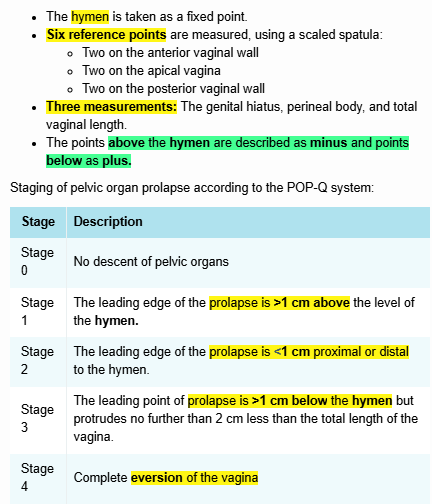
When the vaginal apex is visible at the introitus, it is said to be a _____ degree prolapse
_____ incontinence is due to outlet incompetence (e.g. urethral hypermobility or intrinsic sphincter deficiency)
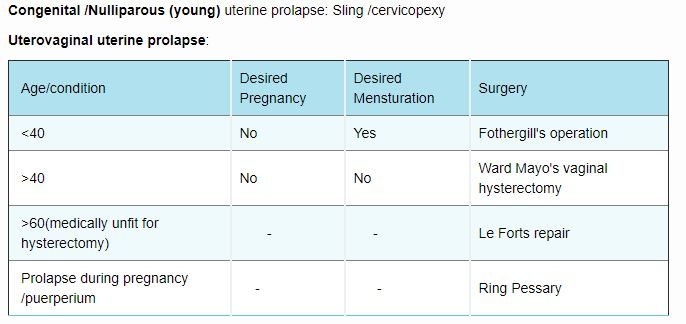
Common surgical procedures for **Uterovaginal Prolapse**: - Fertility preservation: _____ - Completed family: Vaginal Hysterectomy (Ward-Mayo's) - Nulliparous prolapse: Sling operations (e.g., Shirodkar's/Purandare's)
The fixed anatomical landmark used as the reference point in the **Pelvic Organ Prolapse Quantification (POP-Q) system** is the _____.
Mc Ardle index of >_____ is intolerable
Pelvic Floor Anatomy and Function Flashcards for NEET-PG
Study 10 flashcards on Pelvic Floor Anatomy and Function for NEET-PG Obstetrics and Gynecology. These active recall cards cover the key concepts, clinical associations, and high-yield facts from this chapter of Urogynecology. Each card is designed to test your understanding rather than just recognition, building stronger and more durable memories for exam day.
For personalised spaced repetition scheduling and unlimited flashcards, download the Oncourse app.
Frequently Asked Questions
Are Pelvic Floor Anatomy and Function flashcards free?
How many flashcards does this chapter have?
How should I use these flashcards for NEET-PG?
Are there more flashcards for Urogynecology?
Want unlimited flashcards?
Get full access to all flashcards, spaced repetition, and progress tracking.
Scan to download app